Toca Boca World
Educational4.4 out of 5
For Android & iOS · Play Piknik
 Analysis by Gamesive
I like Toca Boca Hair Salon 4 best as a low-pressure creative toy, not as a lesson plan disguised as a game. It gives children room to experiment with a character’s look and change direction when an idea doesn’t work. That makes it a cheerful choice for a short stretch of play, especially for kids who enjoy styling and imaginative make-believe. Its main trade-off is that the freedom can feel less satisfying to a child who wants clear goals, instructions, or a steady sense of progress.
Developed by Play Piknik, this educational game is aimed at Everyone and is free to start. Its central appeal is easy to understand: children can spend time creating a look rather than following a demanding sequence of challenges. In my view, that open-ended approach is a better fit for casual creative play than for children expecting a structured game with levels to beat.
The salon theme also gives children a familiar starting point. They can treat styling as pretend play: choose a direction, see how it looks, and decide whether to keep going or try something different. The value is in the process, not in reaching one “correct” result. That can make it a useful option when a child wants to make something of their own without needing an adult to explain complicated rules first.
The title’s “create, style, repeat” idea comes through most strongly as an invitation to revise. A child can approach a look as a series of small decisions instead of one big commitment. That freedom to change course is the game’s clearest strength, particularly for young players who enjoy trying possibilities more than completing objectives.
Hair styling is a good subject for open-ended play because it naturally encourages comparison: a child can consider one choice, look at the result, and decide what feels right. That small cycle supports creative decision-making without turning the session into a test. I would describe the educational value modestly: it is primarily playful experimentation, not a substitute for a more focused learning activity.
One practical way to get more from a session is to give it a simple theme before handing over the device. Ask a child to imagine a character getting ready for a party, a day outdoors, or a made-up story. The prompt gives play a little direction without imposing a score or telling them what the final look should be. It also makes it easier for a parent to join in briefly, then let the child take over.
Another useful approach is to encourage a “before and after” conversation. Rather than judging whether a style looks good, ask what the child changed and why. That turns a few minutes of tapping into a chance to explain choices and revise an idea. It works particularly well for children who like narrating what they are doing, though a child who simply wants quiet solo play may prefer not to be questioned as they go.
For a realistic use case, I can see this working during a calm wait at home while an adult prepares dinner: the child can focus on making a look, then show the result when there is a natural pause. It is also suited to a short break between other activities. Because the appeal rests on making choices, a parent can set a simple boundary such as “one styling session, then we put the tablet away” without needing to explain a long mission or unfinished story.
That said, it is not automatically the right screen-time choice for every moment. If a child is already restless and needs movement, conversation, or a clear task, a styling game may not hold their attention for long. I would also avoid presenting it as a reward that needs to be “earned” through a perfect result; the best part of the experience is trying ideas, not producing a polished outcome for an adult.
Compared with dress-up apps that focus broadly on outfits or role-play games built around a larger world, this one has a more specific salon identity. That focus can be a plus for a child who repeatedly asks to play with hair and appearance. It is a narrower choice for someone who wants varied activities, a narrative, or different kinds of creative projects in one place. A drawing app may suit a child who wants to invent a picture from scratch, while a puzzle game is a better pick for someone who needs clear right-and-wrong feedback.
The game is free to download, but it includes in-app purchases ranging from $0.99 to $79.99 per item. That range is worth discussing with a child before play, especially if they use a shared device or can make purchase decisions independently. I’d check the device’s purchase controls and agree on a simple rule in advance. The free entry point is convenient, but it should not be mistaken for a promise that every part of the experience is included at no cost.
There is also a difference between creative freedom and variety. A child who enjoys repeating a favorite kind of play may happily return to the salon idea; another may want new goals each time. If your child tends to ask, “What do I do next?” or quickly loses interest without unlocks and milestones, this may feel too loose. In that case, a game with explicit tasks is likely a better match than expecting this one to supply structure it is not built around.
The broader reception is mixed rather than universally glowing: it has a 3.8 average from around 176,000 ratings, with roughly 7,300 written reviews. I would treat that as context, not a verdict for an individual child. Preferences matter a lot here: open-ended styling can be absorbing for one player and repetitive for another. The useful question is less whether everyone likes it and more whether your child enjoys making and revising visual choices without needing a win condition.
I’d recommend it to children who like salon pretend play, enjoy experimenting with appearances, and are comfortable deciding what to do next. It can also work for a parent looking for a gentle shared activity: offer a playful scenario, let the child take the lead, and ask about their choices rather than directing each step. Its Everyone age rating makes its intended audience broad, but individual comfort with touch-screen play and open-ended activity still matters.
The game has reached over 50 million installs, which shows that it has found a large audience, though popularity alone doesn’t tell me whether it fits a particular household. It was released on March 11, 2020, and the current version is 3.1; it requires operating system version 7.0 or later. Those details are useful when checking an older device, but I would still look at the app store on the device you plan to use before making a decision.
I would skip it for a child who wants competitive play, a strong story, or a sequence of increasingly difficult challenges. I would also look elsewhere if your priority is a wide range of creative tools rather than a salon-centered activity. There is nothing wrong with a focused game, but its focus is precisely why it will not suit every child who likes games for kids.
Toca Boca Hair Salon 4 is at its best when I treat it as an invitation to experiment, not as a game that must keep delivering new objectives. Its specific appeal is easy to explain to a child: make a look, reconsider it, and enjoy the process. That can support imaginative play and give a child a small creative project to own, while keeping the adult’s role light.
The limitations are real: the open-ended format may feel repetitive to children who need direction, and in-app purchases mean parents should set expectations before a child explores. For the right player, though, those drawbacks do not cancel out the simple pleasure of trying ideas without worrying about getting a score. I’d choose it for a child who loves salon role-play and likes making their own decisions; for a child who wants clear missions or broader activities, I’d pick a more structured or varied alternative instead.
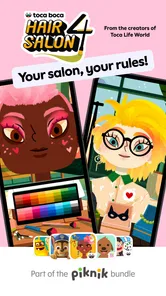
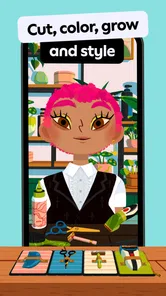
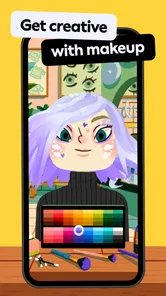
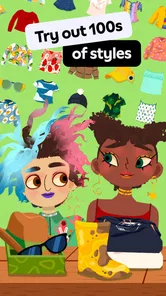
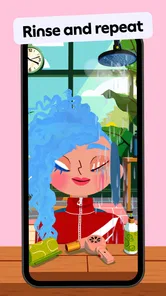
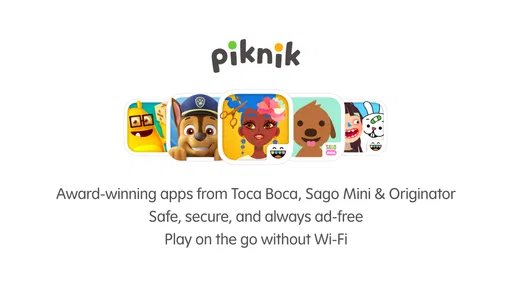
Toca Boca Hair Salon 4 is a creative makeover game where you can style characters using tools for cutting, coloring, washing, and arranging hair. You can also change outfits, add makeup, and decorate characters with accessories or face paint. The experience is open-ended rather than goal-driven, so it is mainly about experimenting with looks and creating characters your own way.
The game is designed with children in mind, with colorful visuals, playful characters, and simple touch controls that are easy to explore. There are no typical action-game challenges or competitive pressure. As with any app, parents should check the current store listing and device settings for details about age guidance, advertising, in-app purchases, and privacy, since those details can vary by platform, region, or app version.
Pricing and available purchases can depend on whether you download the game on Android or iOS, as well as your region and the current store listing. The app may offer optional paid content or purchases, so review the price and purchase information before installing or letting a child use the device. You can also use device-level purchase controls to help prevent accidental spending.
The salon activities are generally designed as hands-on, single-player play, so an internet connection may not be needed for the core styling experience after installation. However, downloading the game, restoring purchases, or accessing certain store-related features can require connectivity. Offline availability can also be affected by device settings and app updates, so it is worth checking the current listing and testing the game on your device.
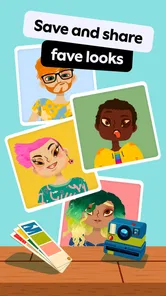
Toca Boca Hair Salon 4 focuses on free-form play rather than a sequence of levels, scores, or required objectives. You can experiment with different tools and combinations without having to complete a particular task. Options for saving or sharing creations may depend on the app version, device permissions, and available features, so check the in-game menus and review photo or sharing permissions before using them.
On Android, Toca Boca Hair Salon 4 asks for these permissions.
Toca Boca Hair Salon 4 is also available in 2 other languages on our site.
3.8 out of 5
176,486 reviews
Educational · Play Piknik

Educational4.4 out of 5
Educational4.3 out of 5

Educational4.5 out of 5
Educational4.1 out of 5
Educational3.3 out of 5
Educational4.4 out of 5
Educational3.3 out of 5
Educational3.6 out of 5
Educational4.4 out of 5

Educational3.3 out of 5
Educational4.5 out of 5

Educational4.6 out of 5
Educational4.5 out of 5
Educational4.5 out of 5
Educational4.6 out of 5
Educational4.5 out of 5
Educational4.4 out of 5

Educational4.6 out of 5

Educational4.5 out of 5

Educational4.4 out of 5



Gamesive reviews games on its own and is not paid by developers for scores. We do not host game files: the download buttons open the official Google Play and App Store pages. Names, icons and screenshots belong to their owners.