
Magic Sort!
For Android & iOS · Grand Games A.Ş.
- 4.6 out of 5Rating
- 609.07KReviews
- 10.00M+Downloads
- PuzzleGenre
Game details
- Version
- 0.0.3309
- Updated
- Requires
- 8.0
- Price
- Free
- Age rating
- Everyone
- In-app purchases
- $0.99 - $199.99 per item
Screenshots






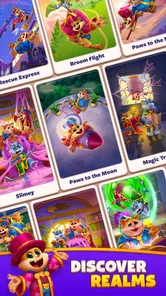

Magic Sort! review
 Analysis by Gamesive
I like puzzle games that ask me to think without demanding a long stretch of attention, and Magic Sort fits that mood. Its central challenge is to sort colored liquid between containers until each one holds a single color. That sounds simple, but a cramped set of tubes can turn a few casual pours into a proper planning problem. I found it best when I wanted a quiet, self-contained puzzle rather than a story, a competition, or a game that needed my full evening.
How a typical puzzle plays out
The basic routine is easy to understand: choose a tube, pour its available color into another tube where the move is allowed, and keep rearranging until the colors are separated. Empty space matters as much as the colors themselves. An open tube gives you room to reorganize; fill every spare space carelessly and a puzzle can become much harder to untangle.
That small constraint is what gives the game its satisfying rhythm. I often begin by identifying which colors are already grouped and which tubes have room to act as temporary storage. Then I look for moves that uncover a useful color or free up a tube, rather than pouring simply because a move is available. The difference between a neat solution and a frustrating tangle can be one early decision about where to keep an unfinished stack.
The appeal is in the gradual change from disorder to clarity. A board that initially looks like a jumble becomes easier to read once a few matching sections are brought together. When the last colors fall into place, the result feels earned without requiring elaborate rules. If you enjoy familiar sorting puzzles, you will recognize the basic idea quickly; the challenge comes from managing space and thinking a few moves ahead.
For a realistic everyday use, I would reach for it while waiting for a meal, taking a short break, or settling down when I want something more engaging than scrolling. The rules are simple enough to pick up again after putting the phone down. Still, a puzzle can hold my attention longer than I intended if I keep trying to repair a poor sequence, so it is not always the best choice when I have only a few seconds to spare.
Build a repeatable approach, not a rushed one
My most reliable habit is to treat empty tubes as working space rather than as convenient places to dump a color. Before a pour, I check whether it helps form a larger group, reveals a color that is blocking progress, or merely shifts the same problem elsewhere. That quick test prevents a lot of aimless tapping. When a move does not improve the layout, I pause and look for a better use of the available space.
A useful second habit is to keep track of colors that are nearly complete. If one tube is close to holding a single color, I try not to break it apart unless that move opens a more important route. This gives the board a clearer priority: finish a promising group, preserve enough room for unfinished colors, and avoid creating several small fragments that all need attention later.
I also find it helpful to focus on one blockage at a time. Rather than trying to solve the entire board in my head, I look for the color that is preventing a useful pour and ask what must move to uncover it. That turns a vague puzzle into a smaller sequence of decisions. It is especially effective when several colors are layered through the same tubes and the obvious move would only shift the obstruction.
What to check before settling into a routine
Magic Sort is a free puzzle game from Grand Games A.Ş., with in-app purchases ranging from $0.99 to $199.99 per item. I would check the purchase options before handing the game to a child or treating it as a completely cost-free pastime. The game is rated Everyone, but that age label does not make optional spending irrelevant; it is sensible to use the device’s purchase controls if accidental purchases are a concern.
It is also worth checking whether the installed version behaves well on your device before building a daily habit around it. The current version is 0.0.3309, and the minimum operating-system requirement is 8.0. If your device can run it, the main practical question is less about learning complicated controls and more about whether this kind of repeated, deliberate sorting holds your interest. I would try a few sessions before deciding whether it belongs in my regular rotation.
The game’s average rating is 4.6 from around 609,000 ratings, and it has more than 10 million installs. Those figures suggest that the basic sorting idea has found a large audience, but they do not guarantee that every player will enjoy its pace. There are also around 5,000 written reviews, which can be useful if you want to compare other players’ experiences, though I would judge the game by whether its hands-on puzzle loop suits you.
Small habits that make moves count
Experienced play, in my view, is less about tapping quickly and more about avoiding moves that consume flexibility. I try to preserve a clear route for colors that have not yet been grouped, and I avoid using every available space just to make the screen look tidier. A tube that appears messy may be doing useful temporary work; empty space that looks unused may be the key to finishing a difficult arrangement.
When I get stuck, I mentally rewind to the last moment the board had several open possibilities. That is often more productive than repeating the same failed chain of pours. I then ask which move reduced my options and whether I can undo that choice in my reasoning before continuing. This approach is useful in any sorting puzzle, but it is particularly relevant here because the visible progress of grouping colors can tempt me into a move that leaves too little room for the rest.
Another practical trick is to make a short plan before a session ends. If I need to put the phone away mid-puzzle, I take a moment to note which tube is serving as temporary storage and which color I was trying to uncover. That mental bookmark makes it easier to resume without starting over emotionally or making a careless first move. It is a small habit, but it suits a game designed around compact, understandable decisions.
I would not assume that settings or shortcuts can replace that planning. The game’s core appeal is the board itself, and the most dependable improvement comes from reading the arrangement carefully. If you prefer games where automation, elaborate tools, or a broad set of modes do the work for you, this focused format may feel limited. I would rather approach it as a clean logic exercise than expect it to become a deep strategy system.
Where the sorting format can feel restrictive
The same simplicity that makes Magic Sort approachable can also make it repetitive. The central action remains moving colors between containers, so players who want a changing narrative, character development, or a wide variety of puzzle mechanics may tire of the loop. It gives me a focused task, not a large world to explore. That distinction matters if you are choosing one game to occupy long sessions rather than a quick break.
There is also a real difference between a puzzle that is difficult because it requires thought and one that feels difficult because an early move has boxed you in. When I make a poor choice, I can end up spending time untangling a mess that I created myself. I see that as part of the genre’s appeal, but it may frustrate players who want every move to feel immediately rewarding. Slowing down at the start is more useful than trying to rescue every layout through frantic experimentation.
Compared with word puzzles, number grids, or match-based games, this one depends more on spatial planning than on vocabulary, arithmetic, or spotting a quick pattern. That makes it a good alternative when I want visual logic without a timer-driven feel. On the other hand, if I want varied objectives or a sense of progression beyond solving one arrangement after another, a broader puzzle game will probably keep me interested for longer.
The game is free to start, but the range of optional purchase prices is wide enough that I would not treat spending as an afterthought. I would decide in advance whether I am happy to play within the free experience and avoid purchasing anything simply because I am impatient to move past a difficult moment. The sorting challenge is most satisfying when I solve it with a considered plan, not when I pay to bypass the reason I opened a puzzle game in the first place.
Who will enjoy it, and who should pass
I would recommend Magic Sort to someone who likes tidy visual puzzles, wants rules that can be learned quickly, and enjoys improving through patience rather than reflexes. It works particularly well for short breaks because I can focus on one board and then leave the game without needing to remember a plot or a complicated set of controls. The fact that it is free to install makes it easy to try, while the Everyone rating makes its general audience clear.
I would skip it if repeated sorting feels like busywork to you, if you need a constant stream of new mechanics, or if you prefer puzzles with a strong narrative payoff. It may also be a poor fit when you are trying to avoid optional in-app purchases altogether and do not want to manage those choices. The basic concept is straightforward, but that does not mean its repetition will suit every player.
Magic Sort is a modest, focused game from Grand Games A.Ş. that succeeds when I let it be exactly that: a few minutes of color-sorting logic, with enough room management to reward careful thought. Its large audience and strong average rating make it easy to see why the formula appeals, but the deciding factor is whether you enjoy revisiting the same kind of spatial challenge. My recommendation is to try it for calm, deliberate puzzle breaks, while keeping your moves—and any optional spending—under control.
What we like
- Easy-to-learn rules make it approachable for casual players.
- Colorful visuals make sorting progress easy to follow.
- Short levels suit quick play sessions.
- Increasing challenges provide a gradual sense of progress.
- Sorting gameplay can feel relaxing and satisfying.
What could be better
- Later levels may require patience and repeated attempts.
- The core sorting mechanic can become repetitive over time.
- Some puzzles may feel difficult without a clear hint.
- Frequent interruptions can disrupt a relaxed play session.
- The game may offer limited variety between puzzle stages.
Frequently Asked Questions
What is Magic Sort!?
Magic Sort! is a casual color-sorting puzzle game built around organizing layers of colored liquid in containers. You move liquid between containers until each one holds a single color, using the available empty space to plan your moves. Its simple rules make it easy to pick up, while increasingly involved layouts can offer a more thoughtful challenge. Exact features and presentation may vary by version.
How do you play Magic Sort!?
Tap a container to select its top layer, then tap another container to pour it there when the move is allowed. You generally need to match the colors at the destination or use an empty container, and you must leave enough room for the liquid. The goal is to separate all colors into their own containers. Plan ahead: a move that looks convenient can block access to a color you need later.
Is Magic Sort! free to download and play?
Magic Sort! is commonly offered as a free download, but availability, pricing, and included features can differ by platform, country, or version. Free games may include advertisements or optional in-app purchases, such as items that help with difficult puzzles. Check the app-store listing on your device for current pricing and purchase details before installing, and review the listing if you want to know whether an internet connection is needed.
Does Magic Sort! have hints or ways to undo a move?
Puzzle games in the color-sorting genre may provide options such as undoing a move, adding an extra container, or using a hint, sometimes through buttons, rewarded ads, or in-app purchases. The controls and availability can vary between releases, so check the current version rather than assuming every option is included. If you get stuck, consider restarting the level and trying a different order of moves before using a helper.
Is Magic Sort! suitable for children, and what should I check before downloading?
The basic sorting mechanic is straightforward and may suit players who enjoy calm, casual puzzles, but suitability depends on the specific version and the child. Before downloading, review the age rating, store description, privacy information, and details about ads or in-app purchases. If a child will play, consider parental controls for purchases and advertising, and check whether the game’s permissions and online features match your preferences.
Permissions
On Android, Magic Sort! asks for these permissions.
- Photos/Media/Files
- read the contents of your USB storage, modify or delete the contents of your USB storage
- Storage
- read the contents of your USB storage, modify or delete the contents of your USB storage
- Wi-Fi connection information
- view Wi-Fi connections
- Other
- view network connections, full network access, control vibration, prevent device from sleeping
User reviews
4.6 out of 5
609,072 reviews
- 73%
- 16%
- 7%
- 1%
- 2%
Download Magic Sort!
Puzzle · Grand Games A.Ş. · Free
Games like Magic Sort!
View all: Games like Magic Sort!
Block Blast!
Puzzle4.8 out of 5

Gossip Harbor: Merge & Story
Puzzle4.4 out of 5

Rotate Rings
Puzzle4.8 out of 5

Meowdoku: Brain Puzzle Games
Puzzle4.7 out of 5

Word Tiles - Relaxing Puzzle
Puzzle4.9 out of 5
About this listing
- Game
- Magic Sort!
- Developer
- Grand Games A.Ş.
- Package
- com.grandgames.magicsort
- Version reviewed
- 0.0.3309
Gamesive reviews games on its own and is not paid by developers for scores. We do not host game files: the download buttons open the official Google Play and App Store pages. Names, icons and screenshots belong to their owners.