Toca Boca World
Educational4.4 out of 5
For Android & iOS · RV AppStudios
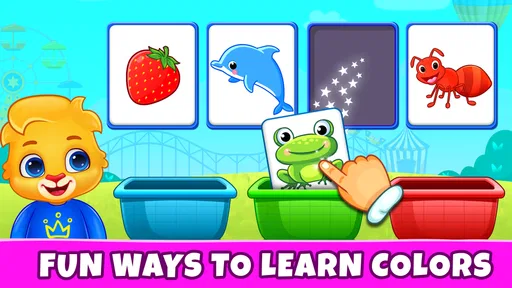
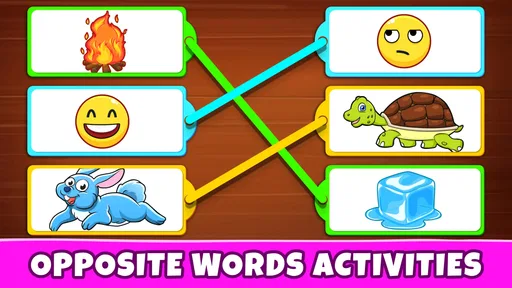
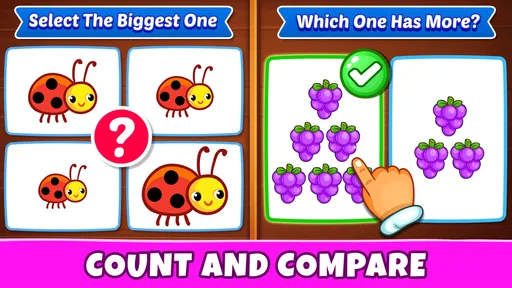
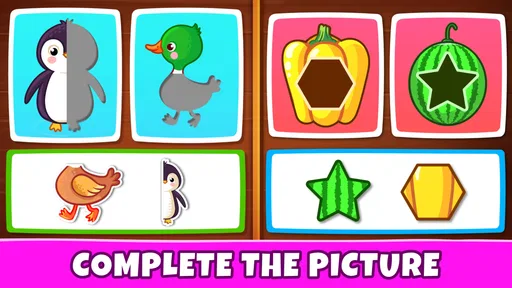
 Analysis by Gamesive
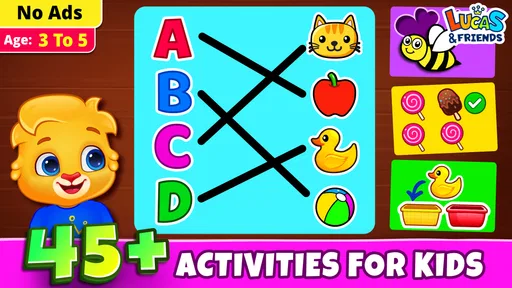
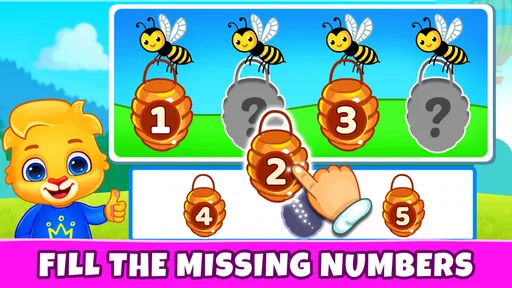
Kids Games: For Toddlers 3-5 is an educational game aimed at making playtime feel like a chance to learn. Its simple store description promises learning games for children of different ages, so the appeal is easy to understand: give young players a playful introduction to educational activities without making the experience feel like a lesson. I find that focus appealing for families looking for a child-friendly game, though parents will naturally want to see how its activities fit their own child’s interests and stage of development.
Listed for children aged three to five, Kids Games: For Toddlers 3-5 is presented as a game for early childhood rather than a general-purpose entertainment app. That distinction matters. At this age, the best digital activities tend to work when they invite curiosity and let children explore at a comfortable pace. The game’s educational framing makes it a possible option for short, supervised play sessions, especially when a caregiver wants to offer something more purposeful than a purely entertainment-focused game.
The title is also known simply as “Kids Games,” a concise label that reflects its broad positioning. Rather than promising a single narrow activity, the overall pitch is a collection of learning and educational games for children. That breadth may appeal to parents who are still figuring out which kinds of play capture their child’s attention. It also means expectations should stay grounded: the title tells us the intended audience and educational direction, but not a detailed curriculum or a particular learning outcome.
RV AppStudios is the developer, and the game is free to install. Its Everyone content rating positions it as suitable for a general audience, while the toddler-focused title gives parents a clearer sense of who it is meant for. I’d treat those signals as a useful first impression, not a substitute for checking the game together. Young children vary widely in what they can navigate independently, so an adult’s first look can help decide whether the presentation feels comfortable and age-appropriate for a particular child.
“Educational game” can cover plenty of different experiences, from activities that introduce basic concepts to playful exercises that encourage observation and problem-solving. Here, the public description stays broad, so it’s best not to assume a specific subject, teaching method, or progression system. The practical appeal is the combination of children’s games with a learning-oriented purpose. For families, that gives the game a sensible place in a rotation of activities, rather than making it something that has to carry the full weight of early education.
I also like that the intended age range is made visible in the title. Parents searching for a toddler learning game can quickly tell that this is aimed at younger children, even before exploring further. Still, age labels are only a starting point. A child’s confidence with touch controls, patience, and interests can matter just as much as the number on the package, so a brief shared session is a good way to judge whether the game feels like a match.
For toddlers, a digital game tends to work best as one small part of a varied day. I’d approach this one as an optional activity to explore together, rather than a replacement for books, toys, conversation, or hands-on play. An adult can help keep the experience social by asking a child what they notice, celebrating attempts, and taking a break when attention wanders. That kind of involvement can make an educational app feel less like passive screen time and more like a shared moment.
The game’s broad positioning may also suit families with more than one young child, since its description speaks to children of all ages. That does not guarantee that every activity will suit every age equally, but it does suggest a general family audience rather than a highly specialized niche. Parents can use their own judgment about when to introduce it, how long to play, and whether a child is ready to explore without constant help.
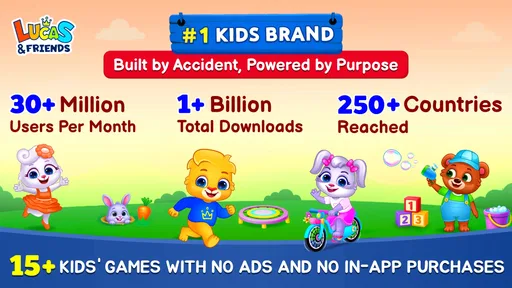
The game was released on February 22, 2022, giving it an established presence rather than the feel of a brand-new launch. That history is relevant when considering a children’s app: families often prefer something with a visible record of use over an unknown title, while still wanting to assess the experience for themselves. Its audience is substantial, with more than 50 million installs, and the average rating is 4.5 from around 68,000 ratings. Those figures point to broad reach and generally positive reception, though no rating can tell a parent exactly how their own child will respond.
There are also 366 written reviews, which can give prospective users a sense of the kinds of reactions other players have shared. I’d read those with the usual care: individual experiences can differ, and reviews may focus on personal preferences rather than the details that matter to a particular family. The stronger takeaway is that Kids Games has attracted a sizeable audience over time, making it a recognizable option among educational games for kids.
The verified release date is a meaningful point in the game’s history, but it does not by itself show how the product has changed since launch. I wouldn’t infer new activities, design updates, or changes to its learning approach without clear evidence. For now, the most reliable picture is the one the game presents today: a free educational game from RV AppStudios, aimed at young children and described as offering learning games.
For someone considering the game now, the established install base may offer reassurance that it is not an obscure, untested release. At the same time, popularity is not a guarantee of a perfect fit. Some children may enjoy a broad selection of playful activities, while others may prefer a quieter or more focused experience. I’d use the game’s age-oriented presentation and educational purpose as a guide, then let a child’s actual reaction decide whether it deserves a place on the device.
Existing users can think of the title as a familiar educational option within a larger collection of children’s apps. The release date provides a historical anchor, while the present-day store description communicates the current overall pitch. What it does not establish is a detailed timeline of changes. That separation is important: a product can have a long-running presence without every aspect of its development being publicly summarized in a way that supports firm conclusions.
Because the game is free, it is easy for families to consider as a low-barrier option. Free access can be appealing when parents are comparing several kids learning games, but it should not be taken as a promise about every aspect of the experience. I recommend approaching any children’s app thoughtfully, looking at how it feels in use and deciding whether it meets the family’s preferences before making it a regular part of a child’s routine.
The available description gives a clear high-level idea, but it leaves the learning approach broad. That is a reason to keep expectations practical rather than a reason to dismiss the game. It can be considered as an educational play option, but parents should not assume it teaches a specific skill, follows a structured lesson plan, or adapts to each child. Those details would need to be assessed through the experience itself, not inferred from the category or title.
For the same reason, I would avoid treating a high average rating as a measure of educational effectiveness. Ratings capture user opinions, and people may value different things: convenience, a child’s enjoyment, or the general feel of the app. The rating is a useful sign of reception, but it cannot replace a parent’s own assessment of whether the content feels suitable and engaging for their child.
The game’s strongest clear identity is its combination of children’s play and educational intent. That makes it a straightforward candidate for families searching for a free educational game for toddlers. The best way to decide whether it works is to explore it together and observe whether the child seems interested, comfortable, and ready for the activities. If the experience holds their attention in a positive way, it may be a welcome addition to a broader mix of learning and play.
When choosing a game for a young child, I’d pay attention to how easily the child understands what to do, whether the experience encourages active participation, and how naturally it fits into a supervised routine. These are practical questions for any toddler-focused app, not claims about particular features in this one. A short first session can answer more for a family than a long list of assumptions based on a store description.
I’d also watch for clear communication about the app’s intended audience and educational purpose as the product continues to be presented to families. The current pitch is broad and accessible, which is helpful for an initial search. More detail about the kinds of learning activities would make it easier for parents to decide whether it suits their child’s interests, but it is better to judge only what is actually visible rather than fill in the blanks with guesses.
For returning users, the useful question is whether the game continues to feel enjoyable and appropriate for the child using it. For new users, the key is to treat the game as one possible resource, not a guaranteed solution for learning or screen-time decisions. Either way, staying involved gives caregivers a chance to notice what works and to make the experience more interactive through conversation and encouragement.
Overall, Kids Games: For Toddlers 3-5 is an approachable option for families seeking a child-focused game with an educational purpose. Its broad description, free price, and established audience make it easy to consider, while the toddler-centered title helps set expectations about who it is for. I’d recommend giving it a supervised try if you’re looking for a playful digital activity for a young child, then deciding based on the child’s response. The most sensible way to use it is as a small, shared part of a varied routine—one that leaves plenty of room for real-world play, conversation, and discovery.
Kids Games: For Toddlers 3-5 is an educational game collection aimed at young children, particularly preschoolers. Its activities are intended to introduce early concepts through simple, playful interactions that little learners can explore with a parent or caregiver nearby. The age range in the title is a guide, not a guarantee that every activity will suit every child, so check the app’s current description and try it together before leaving a child to play independently.
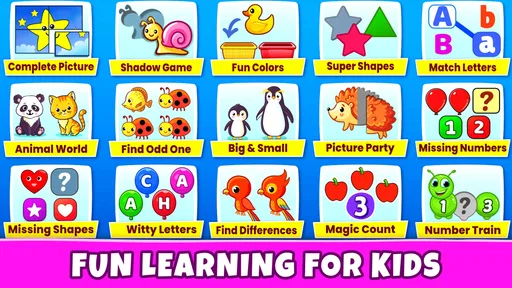
The app is presented as a collection of games for toddlers rather than a single, continuous game. Activities may focus on early-learning skills such as recognizing shapes, colors, numbers, or everyday objects, depending on the version available in your app store. The exact selection can change with updates or differ by platform, so review the listing and in-app content to confirm what is included before downloading.
Pricing, advertising, and purchase options can vary by device, region, and app version. Check the Google Play or Apple App Store listing for the latest price and disclosures, and review any purchase prompts before letting a child use the app. If ads or optional purchases are present, parental controls and supervised play can help prevent accidental taps or unexpected spending.
The game is aimed at toddlers and preschoolers, so its activities are intended to be approachable for young users. However, a child’s ability to navigate screens varies, and the experience may include menus, instructions, or prompts that need adult assistance. Try the app together first, check whether the controls and content suit your child, and supervise play, especially if the device is connected to the internet or has payment options enabled.
Offline availability can depend on the app version and whether its content has already been downloaded, so do not assume every activity works without an internet connection. Before installing, check the store listing for device compatibility, permissions, privacy details, and any internet requirements. Parents should also review the app’s content and settings, and confirm that their phone or tablet has enough storage and a suitable operating-system version.
On Android, Kids Games: For Toddlers 3-5 asks for these permissions.
Kids Games: For Toddlers 3-5 is also available in 2 other languages on our site.
4.5 out of 5
68,187 reviews
Educational · RV AppStudios

Educational4.4 out of 5
Educational4.3 out of 5
Educational4.5 out of 5

Educational4.1 out of 5
Educational3.3 out of 5

Educational4.4 out of 5
Educational4.4 out of 5
Educational4.5 out of 5
Educational4.5 out of 5

Educational4.6 out of 5
Educational4.4 out of 5

Educational3.3 out of 5
Educational4.5 out of 5

Educational4.6 out of 5
Educational4.5 out of 5

Educational4.5 out of 5
Educational4.6 out of 5

Educational3.8 out of 5
Educational4.4 out of 5

Educational4.6 out of 5

Educational4.5 out of 5

Educational4.4 out of 5



Gamesive reviews games on its own and is not paid by developers for scores. We do not host game files: the download buttons open the official Google Play and App Store pages. Names, icons and screenshots belong to their owners.