Toca Boca World
Educational4.4 out of 5
For Android & iOS · KIGLE
 Analysis by Gamesive
Some children are fascinated by what happens at the dentist; others would rather not talk about it. Cocobi Dentist - Kids Hospital gives the subject a playful setting, with Cocobi characters at the center of a simple dental-care game. I see its best use as a gentle conversation starter: a parent can play alongside a child and use the fictional visit to make dental routines feel less mysterious. It is not a substitute for an explanation from a caregiver, but its approachable theme gives families an easy place to begin.
This is an educational game from KIGLE, aimed at children and rated Everyone. It is free to download, with optional in-app purchases priced at $1.99 per item. The current version is 1.0.32, and it requires Android 7.0 or later. Those details make it relatively easy to consider as a low-commitment activity, though families should still check purchase settings before handing a device to a child.
The game’s premise is immediately understandable: Cocobi friends and dentistry belong together here. That clarity matters for young players, who may be more willing to explore a familiar character-led scenario than a direct lesson about oral health. I would introduce it as pretend play rather than promise that it will teach every step of a real appointment. A child can enjoy the theme while an adult supplies accurate context about their own dentist and what to expect.
Its audience is broad in the ordinary sense: the Everyone rating signals that the content is considered suitable for general audiences, and the game is listed as educational. That does not mean every child will find it equally comfortable or engaging. A child who likes character-based play may warm to it quickly; one who is anxious about dental treatment might need an adult nearby to pause, explain, or switch to another activity.
For a young child, readable navigation is not just about text size. It is also about whether the purpose of an activity is easy to grasp and whether the child can make sense of what to do without a long explanation. The dental setting gives this game a useful anchor: when an adult names the characters and connects the play to familiar routines, the child has a simple frame for the activity.
I would start the first session together rather than assume a child can navigate independently. Sit close enough to point out what is on screen, let the child choose where to focus, and ask them to describe what they think is happening. This makes the game a conversation instead of a test. It also gives a parent a chance to notice whether the child understands the prompts and enjoys the pace.
There is a practical distinction between a game being easy to recognize and being easy for every child to operate. A familiar character or clear dental theme can help with comprehension, but it does not by itself establish that the interface suits a child who has difficulty reading, processing visual information, or understanding instructions. If a child gets stuck, I would treat that as a cue to offer help or stop—not as a reason to keep prompting until they finish.
The game has reached more than 10 million installs, and its average rating is 3.8 from around 5,500 ratings. Those figures suggest that many families have tried it, while the rating leaves room for mixed experiences. I would use that as context, not as a guarantee that it will fit a particular child’s needs, attention span, or comfort with dental themes.
Dental play can be emotionally loaded even when the characters are friendly. For a child who already feels uneasy about checkups, the subject may help them rehearse the idea of care—or make the worry more noticeable. I would let the child set the pace, keep the first session short, and talk about what feels fun or uncomfortable. If the game increases distress, there is no educational benefit in insisting on continuing.
Touch-based games also vary in how demanding they feel to different hands. A child with limited fine-motor control may need an adult to help with tapping or other interactions, if those prove difficult in play. Rather than taking over, I would offer a hand-over-hand demonstration only if the child welcomes it, then let them try at their own pace. The aim is participation, not completing every activity quickly.
For children sensitive to busy screens, movement, sound, or bright visual effects, it is sensible to preview the game together before using it as a calming activity. I would not assume that a cheerful theme automatically means a low-stimulation experience. Try it in a quiet moment, keep the volume at a comfortable level, and watch for signs that the child is becoming overloaded. If the screen itself is the problem, a picture book or a pretend conversation may work better.
One useful approach is to make the game a short part of a broader routine rather than the whole lesson. A parent might play briefly, then brush alongside the child or talk through what happens at their own checkup. That transition brings the topic back into everyday life and avoids treating screen play as a replacement for real practice.
Because it is a free game, it can be an easy option to try at home before deciding whether it belongs in a child’s regular rotation. It may also suit a quiet waiting period when a parent can stay nearby, especially if the child is already curious about dentists. I would avoid relying on it as a guaranteed distraction during an appointment: a clinic has its own demands, and a child who needs reassurance may benefit more from direct attention than from a screen.
For a realistic everyday use, imagine a child asking what a dentist does the evening before a routine visit. A parent could open the game together, let the child explore the dental theme, and ask what they think the characters are experiencing. The adult can then explain which parts resemble their upcoming visit and which parts are just make-believe. That small distinction is valuable: it uses the game to open a discussion without presenting a cartoon scenario as a precise preview of medical care.
It can also be useful when a child wants to play independently for a few minutes, provided the adult has already checked that the content and controls suit them. The app is available for devices running Android 7.0 or newer, so compatibility is worth checking before planning around it. Families using an older device may need a different activity rather than discovering the mismatch at the moment they hoped to play.
On the iOS side, families should look in the app store they normally use and check compatibility and purchase details before downloading. I would not assume that the same device requirements or store terms apply across platforms. In either case, keep an eye on in-app purchases: a free download can still present optional paid items, and a child may not understand the difference between playing and making a purchase.
Compared with a general children’s game, the advantage here is the focused dental setting and familiar Cocobi cast. That makes it more relevant when the goal is to talk about teeth or appointments than a broad collection of unrelated mini-games. Compared with a real-life demonstration, a book, or a conversation with a dentist, however, the game is less dependable as an explanation of what a child personally will experience. I would choose the format according to the need: playful engagement for curiosity, direct adult explanation for reassurance, and professional guidance for health questions.
It is also not the right choice for every child simply because it is educational. If a child dislikes character games, struggles with touch interaction, or becomes more worried when dental care is mentioned, a non-screen activity may be kinder. A parent can use a toothbrush, a toy, or a simple story to discuss routines without asking the child to engage with a digital dental scenario. The better option is the one that leaves the child more comfortable and willing to talk.
For caregivers, a useful trade-off is independence versus shared attention. Letting a child explore alone may give them a sense of control, but sitting together makes it easier to explain unfamiliar ideas and notice discomfort. I would begin with shared play, then give the child more room only if they seem confident. That is a small adjustment, but it can turn an ordinary game session into a more supportive experience.
The game’s educational label should not be taken as evidence that it covers every aspect of dental health or offers clinical advice. I would avoid using it to settle questions about pain, treatment, or what a dentist will do in a particular case. Those are better answered by a caregiver or dental professional, with the game serving only as a friendly prompt for discussion.
There are also ordinary practical limits. A child may need help understanding what to do, and a parent may need to manage purchases or decide when screen time ends. Those are not reasons to rule it out; they are reasons to treat it as a shared tool rather than an automatic babysitter. Its free entry point lowers the barrier to trying it, while the optional paid items mean it is still sensible to review the purchase controls on the device.
Released on March 14, 2023, the game has a straightforward place in a family’s options: an accessible-to-try, character-led dental activity, not a complete preparation plan. Its popularity and broad audience rating may make it familiar to parents browsing children’s games, but a child’s response is the better measure of fit. Give them room to enjoy it, ask questions, or move on.
My overall view is that Cocobi Dentist - Kids Hospital is most useful when a parent wants a playful opening to a conversation about dental care. The theme is specific, the cost to start is zero, and the game can be tried without committing to a paid download. Its strongest potential is not replacing a dentist’s explanation but making the subject feel approachable enough for a child to discuss.
Its limits matter just as much: comfort, touch control, reading ability, and sensory preferences differ from child to child, and a cheerful dental theme will not suit everyone. I would recommend trying it together, keeping the session low-pressure, and switching to a book, toy, or direct conversation if the child is unsettled. For families seeking a gentle bit of pretend play around teeth, it is worth a look; for children who need a precise preview of treatment or who find screens overwhelming, another approach is likely better.
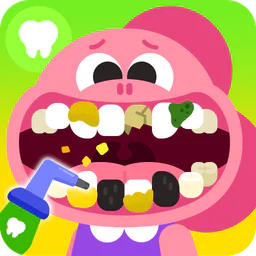
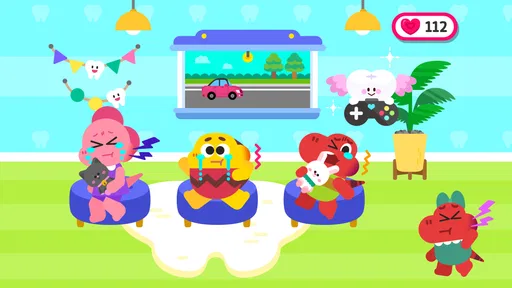
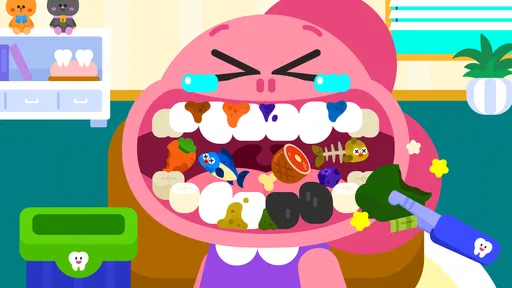
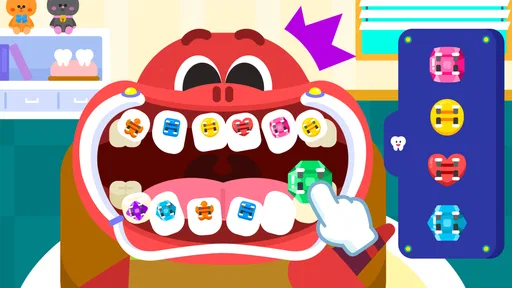
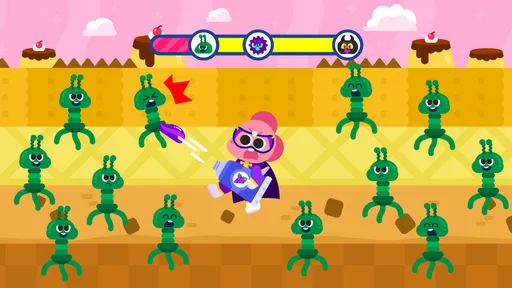
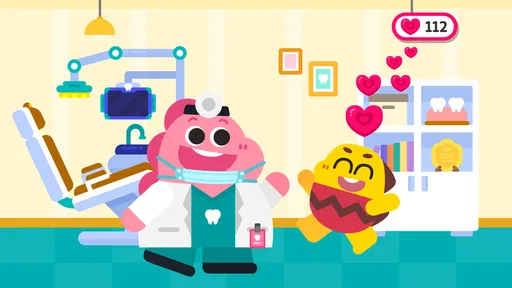
Cocobi Dentist - Kids Hospital is a child-friendly dental-care game in which players help Cocobi characters with different oral-health problems. You take on the role of a dentist, examine patients, choose suitable tools, and complete activities such as cleaning teeth or treating cavities. The game presents these tasks through colorful visuals and simple touch controls, making it more approachable for young children than a realistic medical simulation.
The game is designed for children, with cartoon characters, straightforward interactions, and dental-care activities presented in a playful way. Younger players may still need help navigating menus or understanding what each tool does, depending on their age and familiarity with mobile games. Parents should check the age rating and current store listing for their region, and try the game themselves to decide whether its content and controls suit their child.
Some parts of a mobile game may work without an internet connection, but offline availability can depend on the app version, device, and whether the game has finished installing or loading its content. Online access may also be needed for features such as advertisements, purchases, or updates. Before relying on offline play during travel, open the game in airplane mode and test the activities your child wants to use.
Its monetization can vary by platform, country, and version, so check the Google Play or Apple App Store listing before downloading. The store page should indicate whether the app contains advertising or offers in-app purchases, but it is also sensible to review the game’s settings and purchase prompts. If a child will play unsupervised, use your device’s parental controls to restrict purchases and manage exposure to ads where available.
Download the game from its official listing in Google Play or the Apple App Store rather than from an unfamiliar website or a third-party installation file. Confirm that the developer and app name match the listing you intended to install, then review the requested permissions, age rating, recent reviews, and privacy information. Keeping your device’s operating system and the app updated can also help address compatibility and security issues.
On Android, Cocobi Dentist - Kids Hospital asks for these permissions.
Cocobi Dentist - Kids Hospital is also available in 2 other languages on our site.
3.8 out of 5
5,543 reviews
Educational · KIGLE

Educational4.4 out of 5
Educational4.3 out of 5
Educational4.5 out of 5

Educational4.1 out of 5
Educational3.3 out of 5

Educational4.4 out of 5
Educational3.8 out of 5
Educational4.4 out of 5

Educational3.3 out of 5
Educational4.5 out of 5

Educational4.6 out of 5
Educational4.5 out of 5
Educational4.5 out of 5

Educational4.6 out of 5
Educational4.5 out of 5
Educational3.8 out of 5
Educational4.4 out of 5

Educational4.6 out of 5

Educational4.5 out of 5



Gamesive reviews games on its own and is not paid by developers for scores. We do not host game files: the download buttons open the official Google Play and App Store pages. Names, icons and screenshots belong to their owners.