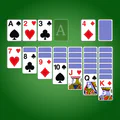
Solitaire - Classic Card Games
Card4.9 out of 5
For Android & iOS · Gimica GmbH
 Analysis by Gamesive
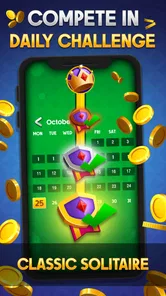
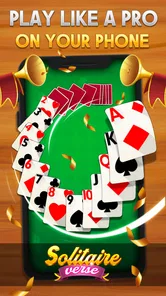
The first thing I like about Solitaire Verse is how little ceremony there is between opening it and getting to the point: arranging cards, looking for the next move, and deciding whether to keep working through a layout or start over. It is a free card game from Gimica GmbH, built around the familiar solitaire format rather than a larger collection of modes or a story to follow. That focus makes it easy to pick up when I have a few spare minutes, though it also means the appeal depends on whether I enjoy repeating the same kind of puzzle.
Solitaire is at its best when I want a small task that occupies my attention without demanding a long commitment. I can settle in for a deliberate game, or use a brief pause to make a few moves and see whether the layout opens up. The rules are familiar enough that experienced players can get started without a tutorial-heavy introduction, while newcomers can learn by watching how each move changes the board.
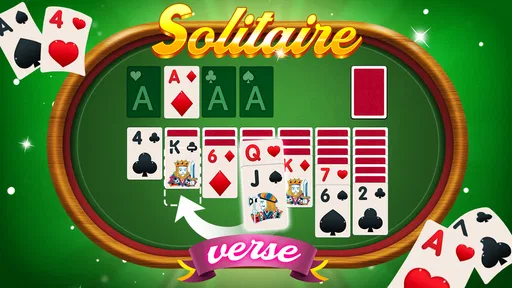
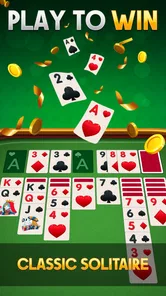
The basic action is simple: scan the visible cards, move what can be played, and uncover more possibilities. The interesting part is not the mechanics themselves but the choices around them. Do I move a card now because it fits, or wait because shifting it might block a useful sequence? Do I prioritize exposing a hidden card, or preserve the order of the cards already in play? Those little decisions give a routine card game enough texture to hold my attention.
This is a good fit for a phone because solitaire naturally breaks into small turns. I do not need to remember a plot or coordinate with another person, and I can stop thinking about the game as soon as real life calls. That makes it a reasonable companion for waiting rooms, a quiet commute, or the few minutes before bed. I would not choose it when I want a social game or a demanding strategic challenge, but I would choose it when I want a calm, self-contained puzzle.
There is comfort in recognizing the task immediately. Compared with card apps that offer several game types, themed progression, or competition, this one keeps the focus on classic solitaire. That simplicity is a strength for anyone who wants the game rather than a busy wrapper around it. It is also a limitation: players who quickly tire of a single core format may prefer a broader card collection or a game with more varied objectives.
My practical advice is to treat each layout as a short reasoning exercise rather than a test of speed. Before moving a card just because it can move, check whether the move helps reveal a hidden card or preserves a useful sequence. That small pause can prevent the common habit of making every legal move immediately and then discovering that the board has become harder to work with.
A satisfying solitaire round has a distinct rhythm. I make a move, the board changes, and I quickly reassess what is now possible. When a useful card is uncovered, the reward is immediate: the layout offers another route forward. When no helpful move appears, I have to reconsider the order of my choices or accept that the current arrangement may not resolve the way I hoped. That cycle of action and feedback is the real reason I keep playing.
The feedback is mental rather than dependent on a complicated game system. A newly exposed card can turn a blocked column into a working one; a move that looked harmless can also remove flexibility. I like that the game invites me to learn from the board itself. If I repeatedly move cards without considering what they uncover or keep available, I can see why the game stalls. The lesson is concrete, and it carries into the next attempt.
One useful habit is to look for moves that increase options, not just moves that clear space. A move that reveals a face-down card may be more valuable than rearranging a sequence that is already visible. Likewise, when two plays are available, I try to notice whether one preserves more possible placements for later. This does not guarantee a win, but it makes the choices feel less random and helps me stay engaged even when a layout becomes awkward.
There is a trade-off in that steady, familiar rhythm. Solitaire can be relaxing precisely because the pressure is low, but a run of unproductive turns can make it feel repetitive. If I am tired and want something that plays itself, this is not quite passive enough; I still need to scan the board and make decisions. If I want a game with constant novelty, the repeated structure may wear thin. It works best when I am in the mood to focus lightly, not when I am looking for a stream of new surprises.
For a quick break, I set a simple goal: make a few thoughtful moves and stop when I need to return to what I was doing. That keeps the game from turning a spare moment into an open-ended commitment. If I have more time, I can slow down and compare the consequences of different moves before committing. Solitaire suits both approaches because the central decision-making remains understandable at either pace.
For a more deliberate session, I avoid treating every visible move as equally good. I first check which moves expose unknown cards or create room for later sequences, then consider whether a move might remove a useful card from where it can help. This is a general strategy rather than a guarantee; card order still limits what is possible. The point is to make each turn informative, so even a stalled game teaches me something about how I approached it.
The reward in solitaire is modest but clear: a board that starts to open, a sequence that finally connects, or the satisfaction of finishing a round through careful choices. I do not need a leaderboard or an elaborate collection of unlocks to understand why a good run feels good. The payoff comes from seeing a cluttered arrangement become more manageable because I made useful decisions.
That reward is not guaranteed every time, which is part of the format’s character. Some layouts give me room to plan; others can feel constrained before I find a productive route. I try not to confuse a blocked position with poor play. Sometimes the best response is to reconsider the available moves; sometimes it is simply to reset and approach the next layout with a fresh mind. That willingness to begin again is central to the loop, not a failure of it.
The reset also makes the game easy to fit around everyday interruptions. If a call comes in or my break ends, I can leave the session rather than needing to finish a long campaign. When I come back, the familiar rules make it easy to re-enter the activity. This makes the game more practical than a narrative or competitive title for people who play in short, uneven bursts.
Still, the repeatability cuts both ways. Restarting can be satisfying when I want another chance to make better choices, but repeated resets can feel like going around in circles if I am not enjoying the puzzle itself. I would skip this if I need a strong sense of progression across many sessions or if I find card layouts frustrating when they do not cooperate. A broader card game may be a better choice for someone who wants variety built into each visit.
Against multiplayer card games, solitaire has the advantage of being entirely self-paced: there is no opponent to wait for and no need to keep up with a table. In exchange, it lacks the social unpredictability that makes playing against another person engaging. Compared with apps that bundle several card games together, Solitaire Verse is more focused, which reduces distraction but offers less variety within the same app.
I would recommend it to someone who already likes solitaire and wants a straightforward way to return to it on a phone. It is also a sensible starting point for a casual player who wants to learn the flow of moving cards and thinking ahead without first mastering a complicated system. Someone who wants head-to-head play, frequent changes of pace, or a deep strategic ladder should look elsewhere; those are different pleasures, and this game does not need to imitate them to serve its audience.
The app’s broad reach is easy to understand: it has a 4.6 average from around 361,000 ratings, and has passed 10 million installs. It is rated for Everyone, so its basic card-play premise suits a wide age range. Those figures suggest that the familiar format has found a substantial audience, but they do not change the personal question that matters most: do I enjoy taking a quiet moment to think through a card layout?
For me, the answer is yes when I want a calm game with a quick start and no social obligation. I appreciate that the core loop stays legible: make a move, see what it reveals, enjoy a useful opening, and reset when the board stops offering a satisfying route. The game is free, and version 1.17.1 is the current release. It first appeared on November 16, 2021, and runs on Android 7.0 or later.
My recommendation is simple: choose it if classic solitaire is already the kind of small puzzle you return to, or if you want an uncomplicated way to try the format. Skip it if you need fresh mechanics every session, competition, or a longer-term progression system to keep you motivated. For the right player, its strongest feature is not novelty but the dependable loop of looking, deciding, seeing the result, and choosing whether one more round sounds worthwhile.
That is why Solitaire Verse works best as a game for the gaps in a day rather than the centerpiece of a long gaming session. I can open it with a clear idea of what I will be doing, make a few considered moves, and leave when I am ready. If that small, repeatable ritual sounds appealing, this is an easy card game to keep in mind; if you want a more varied or social experience, another option will suit you better.
Solitaire Verse is a mobile card game centered on solitaire-style play. Before downloading, check the store listing to confirm which solitaire variants are included, since available modes and features can differ between versions. The app may also offer extras such as challenges, statistics, or customization, but these should be verified in the current listing rather than assumed.
Check the Google Play or App Store listing for the current price and in-app purchase details. A game can be free to install while offering optional purchases, subscriptions, or advertising, and those arrangements may change over time or vary by region. Review the payment information before downloading, especially if you plan to let a child use the device.
Offline access depends on the version and on which features you want to use. Basic solitaire games often work without an internet connection, while online features such as leaderboards, cloud saves, events, or advertisements may require connectivity. If offline play matters to you, check the app’s store description and test the relevant modes before relying on them while traveling.
Solitaire Verse may suit newcomers if its version includes familiar rules, clear card controls, and helpful guidance. Solitaire rules and features can vary, so look at the screenshots and description to see what is offered before installing. If you are learning, choose a mode with straightforward instructions and remember that hints or undo options, if available, can make practice less frustrating.
Confirm that your device meets the listed operating-system requirements, and review the app’s recent update date, ratings, and developer information. Read the privacy details to understand what data may be collected, and check whether the game includes ads, in-app purchases, or permissions you do not expect. Download only from the official Google Play or Apple App Store listing.
On Android, Solitaire Verse asks for these permissions.
Solitaire Verse is also available in 2 other languages on our site.
4.6 out of 5
360,701 reviews
Card · Gimica GmbH

Card4.3 out of 5

Card4.7 out of 5

Card4.2 out of 5

Card4.6 out of 5

Card4.7 out of 5

Card4.6 out of 5

Casual4.5 out of 5

Casual4.5 out of 5

Word4.5 out of 5

Word4.4 out of 5
Card4.9 out of 5

Card4.5 out of 5
Card4.8 out of 5

Card4.8 out of 5

Card4.5 out of 5
Card4.7 out of 5
Card3.9 out of 5
Card4.7 out of 5

Card4.5 out of 5
Card4.5 out of 5

Card4.8 out of 5
Card4.9 out of 5



Gamesive reviews games on its own and is not paid by developers for scores. We do not host game files: the download buttons open the official Google Play and App Store pages. Names, icons and screenshots belong to their owners.