Tiki Solitaire TriPeaks
Card4.5 out of 5
For Android & iOS · Playtika






 Analysis by Gamesive
I like poker games best when they make it easy to play a few hands without pretending that a phone table is the same thing as a live card room. WSOP Poker is a free card game from Playtika, built around familiar poker play and a recognizable tournament-poker identity. Its appeal is straightforward: you can open it for a quick session, or spend longer getting comfortable with the decisions that make Texas Hold’em interesting. I’d recommend it to someone who wants a casual poker game on a phone, with the important caveat that free entry and optional purchases are not the same as a cost-free experience for every player.
The game has been available since November 5, 2013, and its current version is 13.21.0. It carries a 4.2 average from about 1.7 million ratings, with roughly 234,000 written reviews and more than 50 million installs. Those figures suggest a long-running, widely played title, though popularity alone does not tell you whether its pace or purchase options will suit you. Its Teen rating is also worth keeping in mind if you are choosing a game for a younger player.
You can download and play WSOP Poker for free. That makes it easy to try before deciding whether it belongs in your regular rotation; there is no upfront purchase price to weigh against the game’s appeal. The distinction I would keep clear is that free access does not mean every in-game choice is free. Optional in-app purchases are listed from $0.99 to $799.99 per item, a range broad enough that I’d advise setting a firm spending boundary before playing if you are susceptible to impulse purchases.
I would not treat the largest listed purchase as a recommendation or a normal cost of playing. It is simply a reason to be deliberate: decide whether you are comfortable with optional spending, and use any purchase controls available through your device if you want extra protection from accidental or spontaneous transactions. If you only want to play without paying, the sensible approach is to start free and judge the experience on that basis rather than assuming a purchase is necessary.
That distinction matters especially in poker, where a player can be tempted to spend after a disappointing run or when hoping to extend a session. I try to separate the decision to play from the decision to buy: take a break before spending, and never treat a purchase as a way to recover losses. This is a casual game, not a source of income, and spending more does not turn it into a better fit for someone who mainly wants a low-pressure pastime.
The central draw is the familiar card-table decision-making: assess your hand, consider what other players might hold, and choose whether to continue. Texas Hold’em is the obvious starting point for many people because its basic rhythm is easy to recognize, while good decisions still depend on patience and reading the situation. The title also presents itself around poker more broadly, including video poker and Omaha in its store summary, so it may appeal to players who want a poker-focused destination rather than a single isolated mode.
For a newcomer, I’d use short sessions to learn the table rhythm instead of trying to make every hand a lesson in advanced strategy. Pay attention to how often you are committing to a hand before you have a strong reason to do so. A useful habit is to notice the situations where folding would have saved you from chasing a weak possibility. That kind of self-review is more valuable than treating every win as proof that a decision was sound; poker has uncertainty, and a lucky result can reinforce a poor choice.
One practical way to keep the game enjoyable is to choose a session goal before opening it. For example, you might play until a short break, or focus on making calmer decisions rather than trying to end with a particular result. That helps keep a mobile game from quietly stretching into a long session. It also makes the experience easier to fit around ordinary moments, such as waiting for a friend or unwinding briefly after work, without turning every spare minute into another table.
Compared with a simple single-player card game, this is a better fit if you enjoy poker’s social, competitive feel and the uncertainty of decisions against other players. If you want a quiet puzzle with a guaranteed outcome, a solitaire-style game is likely more relaxing. And if your priority is learning poker theory in a structured way, a dedicated training tool or a book may be more useful than a general mobile game. I see this as entertainment with room to practice judgment, not a complete poker course.
The biggest tradeoff is the relationship between free play and optional spending. The game is free to start, but a wide purchase range can make the spending side hard to ignore for people who prefer a strictly no-purchase environment. If you are comfortable ignoring offers and keeping your own limits, that may not bother you. If purchase prompts tend to interrupt your enjoyment, or you find yourself tempted to pay after a poor run, a simpler card game without the same purchase emphasis may be a better match.
Another tradeoff is that poker is not equally relaxing for everyone. The decisions can be engaging, but losing hands are part of the format, and a string of them can feel frustrating even when you made reasonable choices. I would skip it if you need a game with predictable progress, no competitive tension, or a calm result every time you play. It is also not my first suggestion for someone who wants to play poker for real-world stakes; this is a mobile game, and its entertainment value should be judged separately from any real-money poker experience.
Because this is a long-running title with a substantial audience, it may suit people who want an established poker game rather than an obscure new release. Still, the number of installs and ratings cannot tell you whether its presentation, table flow, or purchase balance feels right on your own device. I’d treat a free first session as a test: see whether the pace feels comfortable, whether you enjoy the decisions, and whether anything about the spending options changes your mood. If it does, stopping early is a perfectly sensible outcome.
I think it works best for casual poker fans who already know the basic rules, or for curious beginners willing to learn gradually. A person who enjoys reading a hand, deciding when to stay in, and accepting that outcomes are uncertain can get more out of it than someone who taps through cards without caring about the choices. It is also a reasonable option for a short, self-contained session when you want a recognizable card game rather than a large role-playing world or a lengthy story.
Picture a commute with a few minutes to spare: you could play a brief session, make a handful of decisions, then put the phone away when you reach your stop. I’d set that stopping point in advance, since poker’s “one more hand” pull can make a short break longer than intended. Another good use is low-pressure practice with basic hand awareness. Instead of trying to win every table, notice which starting situations make you confident and which ones leave you guessing; that gives each session a small purpose without requiring a formal study routine.
On the other hand, I would steer away from it if you dislike competitive card play, are looking for a completely purchase-free environment, or want every session to be brief and predictable without self-discipline. A conventional card game with no opponent-driven uncertainty may serve those needs better. Parents should also take the Teen content rating into account and decide whether the game’s style and optional purchasing environment are appropriate for the person using the device.
For a free-to-download card game, the value is in having a familiar poker pastime available without an upfront commitment. The title’s scale and longevity make it an easy one to try if poker is already your kind of game, and the broader poker identity gives it a clearer purpose than a generic deck-of-cards app. I would not call it a must-have for every phone, though: its appeal depends on whether you enjoy poker’s competitive decisions, and the optional purchase range is a real consideration rather than a detail to brush aside.
My recommendation is to give it a free trial session if you want casual poker, then keep playing only if the experience stays enjoyable without spending. Use a personal time limit, make purchase decisions away from the heat of a frustrating hand, and don’t mistake a lucky win for a reliable strategy. If you want structured instruction, a more peaceful card game, or a firm no-purchase experience, choose another option. If you simply want a familiar poker game to dip into during spare moments, Playtika’s offering is worth trying on those terms.
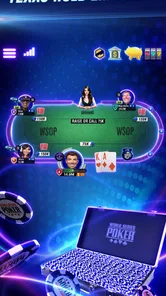
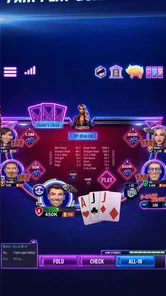
WSOP Poker: Texas Holdem Game is a mobile poker game centered on Texas Hold’em, where players compete in virtual tournaments and cash-game-style tables. It is designed for entertainment and lets you practice poker decisions, join events, and progress through the game’s features. The app uses virtual chips rather than providing a way to win real-money poker prizes, so check the current app listing for details about its modes and availability.
WSOP Poker is generally presented as a free-to-play game with virtual chips, not as a real-money gambling service. Chips earned or purchased in the app should not be treated as cash and typically cannot be withdrawn or exchanged for money. In-app purchases may be available, so review their prices and terms before buying. Availability and rules can vary by region, and the game is intended for users who meet the applicable age requirements.
The game is built around online play, so an internet connection is normally needed to access tables, tournaments, account features, and other players. Depending on the version and available features, you may be able to connect with friends or join social tables, but options can change with updates and regional availability. A stable connection helps avoid interruptions during a hand, and you should check the game’s current settings for sign-in and social-play choices.
Beginners can use WSOP Poker to get familiar with the flow of Texas Hold’em, including dealing, betting rounds, and comparing hands. The app’s play can provide practice, but it should not be assumed to offer a complete poker course or explain every strategy choice. New players may want to review the rules and hand rankings before entering competitive tables. Since opponents and table formats vary, start with low-stakes virtual play and learn at your own pace.
The game is commonly available as a free download, but it may include optional in-app purchases, advertisements, or other monetization features depending on the platform and version. Review the store listing before installing to confirm compatibility, current costs, and any age guidance. As with other online games, account and device information may be processed to support gameplay and services. Read the privacy policy and adjust permissions or purchase controls to suit your preferences.
On Android, WSOP Poker: Texas Holdem Game asks for these permissions.
WSOP Poker: Texas Holdem Game is also available in 1 other languages on our site.
4.2 out of 5
1,685,039 reviews
Card · Playtika
Card4.3 out of 5
Card4.7 out of 5

Card4.6 out of 5
Card4.7 out of 5

Card4.6 out of 5
Card4.9 out of 5
Card4.5 out of 5
Card4.8 out of 5

Card4.8 out of 5

Card4.5 out of 5
Card4.7 out of 5
Card3.9 out of 5
Card4.7 out of 5

Card4.5 out of 5
Card4.6 out of 5
Card4.5 out of 5

Card4.8 out of 5
Card4.9 out of 5



Gamesive reviews games on its own and is not paid by developers for scores. We do not host game files: the download buttons open the official Google Play and App Store pages. Names, icons and screenshots belong to their owners.