Solitaire - Classic Card Games
Card4.9 out of 5
For Android & iOS · PuzzleMaker - block puzzle
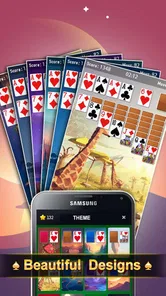
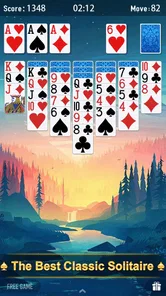
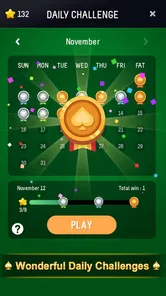
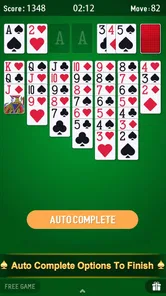
 Analysis by Gamesive
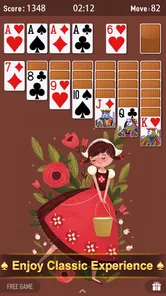
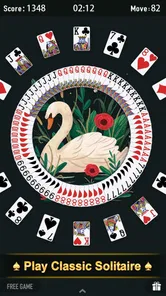
I like Solitaire most when I can pick it up for a few minutes, make a handful of thoughtful moves, and put it down without needing to follow a long story or learn a complicated system. Solitaire: Puzzle Card Games is aimed squarely at that kind of play: a familiar card game on Android, with the appeal coming from working through the cards rather than mastering a collection of modes. That focused simplicity is its main strength—and also the reason it will not suit everyone.
This is a free card game from PuzzleMaker - block puzzle, released on March 6, 2019. It is rated for Everyone, and its current version is 1.42.305. The game has an average rating of 3.9 from around sixteen thousand ratings, with roughly fourteen hundred written reviews, and has passed ten million installs. Those figures suggest a widely tried option, though they do not tell me whether its particular style will fit your habits.
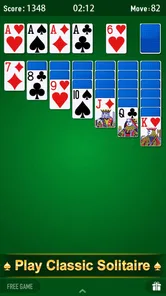
What matters more in daily use is the straightforward premise. You open a solitaire game and focus on arranging cards, making decisions one move at a time. That makes it easy to approach without a tutorial-heavy introduction or a commitment to a long session. If you already know the basic rhythm of solitaire, you can get to the part you enjoy quickly; if you are new, the familiar card layout gives you a clear problem to read as you go.
I would describe its central capability as turning a small pocket of spare time into a self-contained card puzzle. You do not need to coordinate with other players or keep track of a campaign. The appeal is in looking at the cards, considering what can move, and deciding whether to take an obvious step or preserve an option for later.
Solitaire’s rules are recognizable to many players, but the interesting part is not simply moving cards into place. A move can open up another choice, and a choice that looks convenient may limit what you can do next. That gentle tension is why the game can feel engaging even when played in short bursts. I find it particularly useful when I want something more active than scrolling but less demanding than a strategy game that asks me to remember a long sequence of events.
The familiar format also lowers the cost of returning after an interruption. If I have to stop because a call comes in or I reach my stop, I do not have to reconstruct a complicated plot before I can enjoy the next session. That makes the game a natural fit for waiting rooms, quiet breaks, or a few minutes between errands. It is a small advantage, but one that matters more in a casual game than a flashy feature would.
In practice, I recommend treating each move as a question rather than a reflex. Before making an easy-looking move, check whether it reveals a useful card or simply shifts cards around. When several options are available, favor the move that gives you more information or keeps more routes open. That habit makes the puzzle feel less like busywork and helps avoid the frustration of reaching a point where the board looks stuck.
A second useful habit is to pause when the next move is not obvious. Solitaire is often more satisfying when I scan the whole layout before acting, rather than moving the first card that appears playable. This is not a promise that every hand can be solved; it is a way to make the decisions you do have feel intentional. If you enjoy spotting patterns, that little moment of planning is likely to be the part you return for.
It also helps to set a modest goal for a session. Instead of insisting on finishing every hand, I might play until I have made a few interesting decisions or until my break ends. That keeps a casual game from becoming an unwanted chore. For anyone who tends to chase “one more try,” deciding in advance when to stop is a practical way to keep the game in the background of the day rather than letting it take over.
Picture a short wait before an appointment. You have enough time to concentrate, but not enough to start a multiplayer match or a long level in a larger game. A solitaire hand gives that interval a clear shape: look over the cards, make a few moves, and stop when you need to. The same approach works during a lunch break or while waiting for someone to arrive, provided you are somewhere it is comfortable to look at your screen.
That use case also points to a sensible limit. I would not choose this as a substitute for an activity that needs to be interrupted constantly while I am walking, cooking, or keeping an eye on something else. Even a simple card puzzle asks for attention; making a move without checking the layout can turn a relaxing break into a frustrating one. It is best for moments when you can give the cards a little focus.
Compared with a physical deck, a phone game is easier to start when there is no table or space to spread cards out. Compared with more elaborate digital card games, this one is better suited to someone who wants the basic solitaire experience rather than deck-building, multiplayer competition, or a broader progression system. Those alternatives may be more rewarding if you need variety or a strong long-term goal; the advantage here is that the core activity stays easy to understand.
A focused solitaire game has a narrow source of variety: the card puzzle in front of you. If what you enjoy is carefully weighing moves, that focus is a benefit. If you need new mechanics, changing objectives, a social element, or a sense of ongoing progression, the same focus may feel repetitive. I would not install this expecting a broad card-game collection; its appeal is the familiar solitaire loop.
The game’s 3.9 average across a substantial audience is worth reading as a general signal, not a guarantee. Ratings can reflect different expectations, and solitaire players often care about details such as how a game feels to control or how much variety it offers. I would use the rating as a reason to approach it with realistic expectations: it is a popular, accessible choice, but not necessarily the best match for someone seeking a polished competitive experience or lots of modes.
There is another tradeoff in the format itself. Because the game depends on a clear view of the cards and deliberate choices, it is less compelling when you want a fast burst of action or a challenge that keeps changing its rules. In those moments, a more energetic puzzle game or a card game with opponents may hold attention better. I prefer this one when I want a quiet mental reset, not when I am looking for a major new hobby.
I would recommend it to people who already enjoy solitaire, anyone looking for a simple card puzzle for occasional breaks, and players who value being able to understand the basic activity at a glance. It can also be a good starting point for someone curious about digital solitaire, since the familiar card format does not demand knowledge of a complicated game world. Android users can run it on devices with Android 6.0 or later.
I would steer away from it if you mainly want multiplayer matches, a large range of card variants, frequent novelty, or a game built around a long-term challenge. A traditional deck may be preferable if you enjoy arranging cards physically with another person, while a more feature-rich digital alternative may better serve players who want several modes in one place. Choosing the right alternative depends on what you want the cards to do for you, not on which option has the longest feature list.
For me, the strongest reason to try this game is the low-friction way it turns a quiet moment into a small exercise in attention. The best way to enjoy it is to slow down, scan the layout, and make moves that preserve useful choices instead of tapping through a hand on autopilot. If that sounds relaxing, Solitaire: Puzzle Card Games is an easy one to consider. If you need constant variety or competition, I would look elsewhere rather than expecting a simple solitaire game to provide those things.
Solitaire: Puzzle Card Games is a mobile card game built around familiar solitaire-style play, with puzzle elements that may add goals or challenges beyond simply clearing the tableau. The exact modes and rules can vary by version, so check the in-game instructions before starting a new mode. It is generally suited to short, casual sessions, whether you are learning solitaire or looking for a fresh challenge.
The app may be available to download without an upfront purchase, but that does not necessarily mean every feature is free. Many mobile solitaire games offer optional purchases, such as boosters, extra lives, or cosmetic items, and may include advertisements. Review the store listing and the purchase details shown in the app before spending money. If a child will play, consider setting purchase controls on the device.
Some solitaire games allow core card play without an internet connection, while features such as ads, daily rewards, events, cloud saving, or leaderboards may require connectivity. Offline availability can also depend on the specific version and mode. If you plan to play while travelling or away from Wi-Fi, try opening the game in advance and check which features remain accessible when your device is offline.
Solitaire: Puzzle Card Games can be approachable for beginners if its version includes clear instructions, hints, or undo options. These tools make it easier to learn card placement and understand how a puzzle objective differs from traditional solitaire. Rules and difficulty may vary between modes, however, so new players should read each mode's tutorial and start with easier challenges before moving on to more demanding levels.
Check that the app is compatible with your Android or iOS version and that your device has enough available storage. Read the current store listing for information about ads, in-app purchases, permissions, and any online requirements, since these details can change with updates. It is also worth checking recent user reviews and the developer's privacy information so you know what to expect before installing.
On Android, Solitaire: Puzzle Card Games asks for these permissions.
Solitaire: Puzzle Card Games is also available in 2 other languages on our site.
3.9 out of 5
16,360 reviews
Card · PuzzleMaker - block puzzle

Card4.3 out of 5
Card4.7 out of 5

Card4.2 out of 5

Card4.6 out of 5
Card4.7 out of 5

Card4.6 out of 5
Card4.9 out of 5
Card4.5 out of 5
Card4.8 out of 5
Card4.8 out of 5
Card4.5 out of 5
Card4.7 out of 5
Card4.7 out of 5

Card4.5 out of 5
Card4.6 out of 5
Card4.5 out of 5

Card4.8 out of 5
Card4.9 out of 5



Gamesive reviews games on its own and is not paid by developers for scores. We do not host game files: the download buttons open the official Google Play and App Store pages. Names, icons and screenshots belong to their owners.