Solitaire - Classic Card Games
Card4.9 out of 5
For Android & iOS · The Pokémon Company International




 Analysis by Gamesive
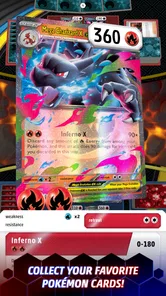
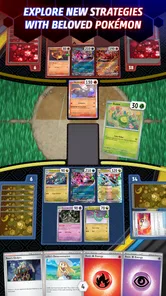
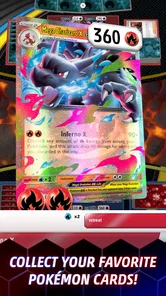
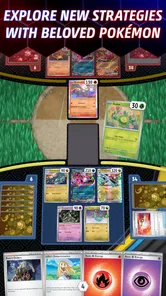
I find Pokémon TCG Live easiest to understand when I treat it as a place to learn and play the Pokémon Trading Card Game, not as a shortcut to owning physical cards. It is a free digital card game from The Pokémon Company International, and its central appeal is familiar: build a deck, make decisions one turn at a time, and see how your choices hold up against another player. If you have cards already, the digital format can also give you another way to engage with the game. If you are new, it offers a less intimidating first step than trying to learn across a table while keeping track of every card effect yourself.
The app has been available since November 11, 2022, and its current version is 1.44.0. It has a 4.5 average from around 107,000 ratings, with more than 10 million installs. Those figures suggest a sizeable audience, but they do not tell you whether the rhythm of a turn-based card game suits you. I would recommend trying it if you like planning several moves ahead, adjusting a deck when a strategy falls short, or learning a collectible card game at your own pace. If you want a quick action game with constant movement, this is a very different kind of entertainment.
The basic pleasure here is the same one that makes trading card games absorbing: a deck gives you options, but you have to make the best of the cards and situation in front of you. You are not simply watching a match unfold. You need to pay attention, decide what matters now, and think about what your opponent may do next. I like that this gives even a short session a clear purpose. A match can be a chance to test a deck, practise reading the board, or spot a decision you want to handle differently next time.
Because it is a card game, the pace is deliberate. You will spend more time considering choices than tapping through spectacle, and that is a strength for players who enjoy strategy but a poor fit for anyone seeking something fast and reflex-driven. The digital format makes the rules and board state easier to follow than a first physical match can be, but it does not remove the learning curve. Card text, combinations, and timing still take attention, especially when several effects interact.
I would also set expectations around what “free” means in practice. The game costs nothing to install, so it is easy to try without committing to a purchase. That does not mean every player will immediately have the exact deck they want or that collecting and improving cards will be effortless. For a first session, I would focus on understanding how a match works rather than judging the whole experience by whether your first deck feels ideal. Learning what your cards can do is a more useful early win than chasing a particular build.
Compared with a physical Pokémon card match, the app is convenient: you can play without laying out cards or finding someone nearby. The trade-off is that digital play feels less tactile, and it cannot replace the social experience of handling a collection with a friend. Compared with other digital card games, its strongest reason to choose it is obvious but meaningful: you want to play Pokémon’s card game, not a similar game with a different theme. If that specific game is what you enjoy, the digital setting is a practical way to keep playing.
On first opening the game, I would make my goal modest: get into a match, follow the flow of play, and learn what decisions are available. New players often try to understand every card and every strategic possibility before they begin. That can make a card game feel like homework. It is more reassuring to learn in layers: first recognise the basic rhythm of a match, then notice which cards are doing useful work, and only after that think about changing the deck.
A useful habit is to pause briefly before committing to a move and ask what the move is meant to accomplish. Are you trying to make progress now, preserve options for a later turn, or respond to the opponent’s position? Even when you do not know the strongest play, naming your intention makes the outcome easier to learn from. This approach is more valuable than copying a strategy you do not yet understand, because it helps you see why a decision succeeded or failed.
When I install a card game, I prefer to keep the first setup focused. Get through the game’s initial entry and learning steps, then start playing before spending time exploring every menu. The first match is often the point at which unfamiliar terms and card interactions become concrete. If you have played the physical Pokémon Trading Card Game, you may recognise the general ideas, but I would still give the digital version’s presentation a little time before assuming every detail works exactly as you expect.
For someone starting from scratch, it helps to treat the opening match as guided practice, even if you are not following a formal tutorial. Read the card text that affects your current choice, rather than trying to memorise a whole deck at once. If a play surprises you, take note of the interaction and look for it again later. That small routine turns confusion into a checklist of things to learn, instead of a reason to quit after one unfamiliar turn.
There is another practical point: choose a time when you can give a match your attention. A turn-based game may look easy to fit into a spare minute, but interruptions can make it harder to follow the board and remember what you were planning. A quiet break is better than opening it while rushing between tasks. Once the basic flow is familiar, it becomes easier to judge whether a shorter session suits your routine.
I would count a first success as more than winning. It could be recognising why a card was useful, making a deliberate choice rather than tapping at random, or finishing a match with a clearer idea of what you want to try next. That definition matters because early results can be affected by unfamiliarity and by the cards available to you. If your first game does not go your way, it does not automatically mean you have built a bad deck or that the game is not for you.
For a realistic everyday example, imagine opening the app during a relaxed evening break. Instead of browsing every option, you play one match and concentrate on a single question: which of your available moves helps you most right now? Afterward, you remember one moment where another choice might have been better. That is a small but real improvement, and it gives your next session a purpose. I find this more satisfying than treating each match as a pass-or-fail test of whether I am good at the game.
When a match goes well, resist the temptation to change everything at once. Keep track of the cards and decisions that seemed useful, then make one considered adjustment when you have enough experience to explain why you are changing something. Changing several things together makes it difficult to tell what helped. This is a simple deck-building discipline, but it is especially helpful for beginners who might otherwise mistake a single loss for proof that the whole approach needs replacing.
The first likely confusion is the difference between knowing the rules in theory and recognising a good move in context. A card can look powerful but be awkward at the wrong moment; a less dramatic option may preserve a better line for later. I try to read the board before focusing on a single exciting card. That habit keeps me from treating every strong-looking play as automatically correct.
Another source of frustration is not knowing whether a poor result came from the deck or from the decision-making. Early on, it is usually too soon to separate those causes confidently. I would replay the situation in my head: what did I expect the move to do, and what happened instead? If the same problem keeps appearing across matches, that is a more useful signal than one unlucky game. This gives you a way to improve without assuming that every setback calls for a completely new deck.
It is also easy to confuse collecting with learning. Wanting a particular card or deck can be motivating, but you do not need to turn your first sessions into a hunt for an ideal collection. Pay attention to the cards you already use and to the choices they encourage. If you later decide you want to pursue a more specific strategy, you will have a better sense of what role you are trying to fill. I would avoid making a commitment based only on a deck idea you have not yet tested in play.
Finally, remember that the app’s digital convenience is not the same as a private puzzle or a solo card experience. If you mainly want a calm activity that never asks you to respond to another player’s decisions, an opponent-based card game may not match your mood every time. I would choose a different kind of game when I want something completely passive or when I only have a moment of attention to spare. Pokémon TCG Live is most rewarding when I can focus on a match and learn from it.
This is a good fit for Pokémon fans who are curious about the card game, for returning players who want a digital way to play, and for strategy-minded newcomers willing to learn gradually. The Everyone age rating makes it broadly accessible, though younger or completely new players may still benefit from having someone explain card-game ideas at first. The rules and decisions are the main challenge, not a need for quick reflexes.
I would steer away from it if you dislike reading card effects, prefer games where progress depends mainly on action and timing, or want the feel of physically trading and showing off a collection. Someone who enjoys the social ritual of a tabletop match may get more from playing with real cards and a friend. Someone who wants a digital card game specifically should choose this one when Pokémon is the draw, rather than expecting it to suit every preference that other card games might serve.
The app is free, which lowers the barrier to trying it, and its large player base is a reassuring sign that it is not an obscure experiment. Still, popularity is not a substitute for personal fit. I would give it enough time to understand a match, but I would not force myself to keep playing if the turn-by-turn planning feels like a chore. Card games depend heavily on whether you enjoy thinking through choices, and there is no shame in preferring a different pace.
Once the basic flow makes sense, choose one next step rather than trying to master everything at once. You might replay a familiar style of match to practise making decisions more deliberately, or inspect your deck with a specific question in mind: which cards help me carry out the plan I am trying to follow? That question keeps deck changes grounded in experience. It also makes each session feel connected to the last instead of like a series of unrelated games.
If you already play the physical game, use the app to explore how comfortable you are with digital matches and to practise thinking through turns. If you are a newcomer, keep the focus on recognising what your cards do and noticing how your choices affect the board. In either case, a short post-match reflection is useful: name one decision you liked and one you would reconsider. That is enough to create a practical learning loop without turning a casual game into a study session.
My recommendation is to try Pokémon TCG Live if the Pokémon card game itself interests you and you are happy to learn through play. Its free entry, familiar world, and strategic pace make it approachable, while the need to read, plan, and tolerate an early learning curve keeps it from being effortless entertainment. I would start with one match, aim for a clear decision rather than a perfect result, and then decide whether the card-by-card thinking is the kind of challenge I want to return to.
Pokémon TCG Live is a digital game for collecting cards and playing the Pokémon Trading Card Game against other players. You can build decks, learn the rules through tutorials, and take part in matches and seasonal events. It is designed for phones, tablets, and computers, with account-based progress that lets you access your collection on supported devices.
Yes, you can download and play Pokémon TCG Live without paying for an initial purchase. The game includes ways to earn cards and other in-game rewards through play, missions, and progression. Physical Pokémon TCG products may include code cards that can be redeemed for digital items. Check the game’s current store listing and in-game details for available purchases, regional availability, and any changes to its reward system.
Pokémon TCG Online was discontinued, and eligible collection data was migrated to Pokémon TCG Live when players connected their accounts during the migration process. Not every item necessarily transfers in the same way, and some older cards may have limitations on how they can be used. If you are returning after a long break, sign in with the account associated with your previous collection and review the game’s current migration and card-usage information.
Pokémon TCG Live supports online play, including matches with friends, as well as play against other players through its matchmaking features. The game is available on supported mobile devices and computers, and signing in to the same Pokémon Trainer Club account can help keep your progress and collection accessible across platforms. Features and compatibility can vary by device, operating system, and region, so check the official requirements before installing.
An internet connection is required for the main experience because matches, account data, and many game features are online. Beginners can use the tutorials and introductory decks to learn the rules, although the number of card abilities and competitive strategies may take time to understand. A supported device, sufficient storage, and a stable connection can make play smoother; parental guidance may also be useful for younger players using online features.
On Android, Pokémon TCG Live asks for these permissions.
Pokémon TCG Live is also available in 2 other languages on our site.
4.5 out of 5
107,276 reviews
Card · The Pokémon Company International

Card4.3 out of 5
Card4.7 out of 5

Card4.2 out of 5

Card4.6 out of 5
Card4.7 out of 5

Card4.6 out of 5
Card4.9 out of 5
Card4.5 out of 5
Card4.8 out of 5

Card4.8 out of 5
Card4.7 out of 5
Card3.9 out of 5
Card4.7 out of 5

Card4.5 out of 5
Card4.6 out of 5
Card4.5 out of 5

Card4.8 out of 5
Card4.9 out of 5



Gamesive reviews games on its own and is not paid by developers for scores. We do not host game files: the download buttons open the official Google Play and App Store pages. Names, icons and screenshots belong to their owners.