Solitaire - Classic Card Games
Card4.9 out of 5
For Android & iOS · Blackout Lab
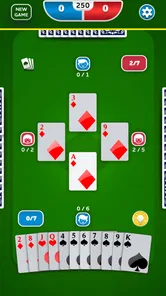
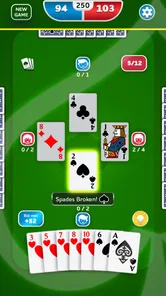
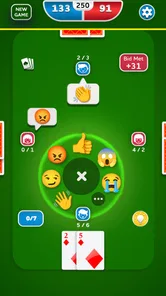
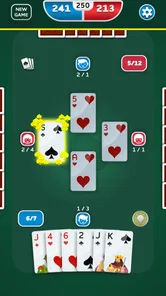
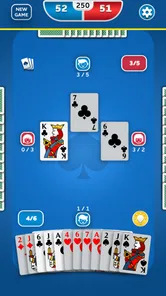

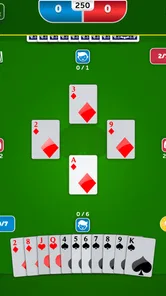
 Analysis by Gamesive
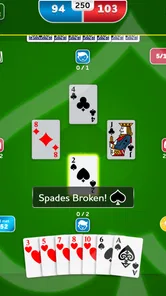
I would recommend Spades - Card Game to someone who already enjoys the trick-taking classic or wants a low-pressure way to learn it. It is a focused card game from Blackout Lab, with offline and online play and a smart AI option. That range makes it useful both for a quick solo game and for playing with other people, though the experience still depends on whether you enjoy bidding and coordinating with a partner.
Spades is a game of planning as much as card luck. Before each hand, players estimate how many tricks they can take; then they try to meet that bid while paying attention to what has already been played. A digital version can take care of the dealing and turn order, leaving you to focus on reading the hand. If you are new, expect to learn through repeated decisions rather than through a long, formal tutorial.
The game is free to install and is rated for Everyone. Its broad appeal is easy to understand: it brings a familiar tabletop card game to a phone, where you can play when a full group is not available. The app’s 4.8 average from around 332,000 ratings suggests it has found a substantial audience, but that does not mean every match or opponent will suit every player.
The key choice is whether you want a patient solo practice session or a more social game. Offline play gives you a way to spend a few minutes with the cards without needing other people online. Online play is the more natural fit if your enjoyment comes from testing bids against human opponents. If you mainly want a calm, self-paced puzzle, the AI route is the easier place to begin.
I would point a Spades fan toward this game when they want the rules and rhythm of a familiar card table without organizing a group. It also suits a newcomer willing to learn one hand at a time. The game has passed 10 million installs, and its scale makes clear that mobile Spades has a sizable audience; still, the best reason to try it is the actual play style, not popularity alone.
It is less suitable if you dislike taking calculated risks, or if you want a card game built around rapid visual effects and frequent changes of mode. Spades rewards remembering cards and adjusting expectations. A strong opening hand does not guarantee a successful bid, and a partner’s choices can matter as much as your own. Players who prefer a purely individual challenge may find that partnership dynamic frustrating rather than engaging.
When you first open the game, keep the goal simple: understand the flow of a hand before trying to make clever bids. Watch how the cards are led, which suits other players can follow, and when a spade changes the outcome of a trick. Instead of trying to memorize every detail at once, concentrate on one question: what is the smallest number of tricks I can confidently expect from this hand?
That conservative estimate is a useful beginner habit. It is tempting to count every high card as a guaranteed trick, but a card’s value depends on what has already been played and what other players may hold. I would rather start with a cautious bid, then learn from the result, than repeatedly overpromise and feel that the game is punishing me. Treat each hand as practice in judging uncertainty, not as a test you must ace immediately.
For a first session, choose offline play and let the AI provide a steady environment to learn the sequence. You can concentrate on the cards without also wondering how an unfamiliar online table will behave. Once the basic rhythm feels clear, try a few hands with a different approach to bidding: make one cautious estimate, then compare it with a slightly more ambitious one when the hand genuinely supports it. The point is to notice how your reasoning changes, not to chase a perfect score.
A good first milestone is not winning a whole session. It is making a bid you can explain, then playing the hand in a way that gives that bid a fair chance. Before the first card is played, identify the cards you expect to control a trick and the uncertain ones you should not rely on. During play, update that picture as high cards and important suits disappear. Even if the final result misses your target, you will have made a reasoned decision rather than guessing.
One practical technique is to avoid spending a strong card merely because it is available. Think about whether it can secure a trick now, or whether holding it may be more valuable once you know what other players have shown. At the same time, do not cling to a plan after the table has changed it: if a suit is exhausted or a key card has been played, revise what you expect. This small habit—planning, observing, revising—is the point where Spades begins to feel less like random dealing.
A realistic use case is a short break when you have no one nearby to play with. Start an offline hand, set a modest goal of making a sensible bid, and stop after a few rounds if you have learned something useful. If you have more time and want the social pressure of a live table, move online after you are comfortable with the turn flow. That gradual path keeps the first experience manageable without making the game feel like homework.
The hardest early distinction is between taking tricks and taking the number of tricks you promised. Winning more than your bid is not automatically a better outcome; the bid is a commitment, so the aim is to judge your likely result accurately and play toward it. If you focus only on collecting every trick you can, you may miss the more important question of whether your team’s overall plan is still realistic.
Partnership can create another source of confusion. Your teammate is not simply another opponent, and a move that looks odd in isolation may make sense in relation to the team’s bids and the cards already visible. Try to assess the whole table instead of assuming every play is intended to help your individual hand. When a round goes badly, review the bid and the sequence before blaming one card or one decision.
The AI is helpful for practice, but it is not a perfect stand-in for every human opponent. Offline games let you focus on mechanics and steady decision-making; online games introduce the unpredictability and social element that make card play feel different. If a strategy works against the computer, treat that as a useful clue, not proof that it will work unchanged against people. Switching between the two is a sensible way to keep practice and challenge in balance.
Once you can follow a hand without stopping to work out whose turn it is or what the bid requires, online play becomes a more useful next step. You will still make mistakes, but you can now pay attention to the part that makes a live match interesting: how other players’ decisions alter your estimate. I would not move online because you feel you have mastered Spades; I would move when the basic rules no longer occupy all your attention.
There is a trade-off between convenience and social unpredictability. Offline play is the safer choice when you want an uninterrupted solo session or are learning. Online play is better when you want opponents who bring different habits and choices. If you prefer to control the pace and avoid relying on a partner, neither mode may fully match your ideal; a solo-focused card puzzle could be a better alternative than a partnership game.
Compared with a physical deck, the app removes setup and makes it easy to begin without arranging a table. In return, you give up the face-to-face conversation and the freedom to agree on house rules with friends. Compared with other mobile card games, Spades asks for more attention to bids, partnerships, and previously played cards than a simple draw-and-match game. That extra thought is its strength for fans, but also the reason it will not be everyone’s relaxing choice.
The game is free, with optional in-app purchases priced from $0.99 to $99.99 per item. I would approach those as optional extras rather than as a reason to start spending: first see whether you enjoy the core card play and whether the available modes fit your routine. The current version is 2.7.0, and it requires Android 7.1 or later, so checking device compatibility before installing is a practical first step.
Blackout Lab has kept the premise deliberately recognizable: this is still Spades, not a reinvention of the card game. That focus is welcome if you want to practice bids or fill a quiet moment, but it also means the app’s appeal depends on your interest in the underlying rules. If you want a story, a collection of unrelated mini-games, or a strongly individual challenge, I would look elsewhere rather than expect this game to become something it is not.
My recommendation is to begin offline, make conservative bids, and use each hand to notice one thing you missed—perhaps a card that changed the likely outcome or a moment when you should have revised your plan. Then try online play if you want the added challenge of human decisions. The most satisfying progress comes from learning to read the table, not from treating every hand as a guaranteed win. If that kind of gradual improvement sounds enjoyable, Spades - Card Game is an easy one to keep on your phone for a spare moment.
Spades - Card Game is a digital version of the classic trick-taking card game. Players compete in teams or individually, depending on the selected mode, and predict how many tricks they expect to win before each hand. Spades are the trump suit, so they can beat cards from other suits. The exact rules, scoring, and available modes can vary by version, so check the in-game instructions before starting.
Many Spades apps offer play against computer-controlled opponents, which can make practice possible without an internet connection. Online multiplayer, leaderboards, daily challenges, or other connected features generally require internet access. Availability can differ between versions and may also depend on the device or app settings. If offline play is important to you, confirm that the current listing or in-game menu identifies an offline or single-player mode.
Some versions let you play online against other players or invite friends to a private table, while others focus mainly on solo games against computer opponents. The way invitations, matchmaking, and team selection work depends on the specific app. Look for multiplayer, friends, or private-room options in the game menu, and check whether an account or internet connection is needed before planning a game with others.
The app may be free to download, but that does not always mean every feature is available at no cost. Some versions include advertisements, optional in-app purchases, subscriptions, or unlockable content. The exact pricing and purchase options can change, so review the app-store listing and purchase details for your device before downloading. If the app offers paid features, you can usually play only what is included in its free version.
Spades is approachable once you understand bidding, trick-taking, and the role of the trump suit, and many digital versions provide instructions or practice against computer opponents. However, rule options are not identical across apps. Some may let you adjust scoring, difficulty, or table settings, while others use a fixed ruleset. Review the tutorial and settings before beginning a competitive match, especially if you are used to a particular house-rule variation.
On Android, Spades - Card Game asks for these permissions.
4.8 out of 5
331,745 reviews
Card · Blackout Lab

Card4.3 out of 5

Card4.7 out of 5

Card4.2 out of 5

Card4.6 out of 5

Card4.7 out of 5

Card4.6 out of 5
Card4.9 out of 5

Card4.5 out of 5

Card4.8 out of 5

Card4.5 out of 5
Card4.7 out of 5
Card3.9 out of 5

Card4.7 out of 5

Card4.5 out of 5
Card4.6 out of 5
Card4.5 out of 5

Card4.8 out of 5
Card4.9 out of 5



Gamesive reviews games on its own and is not paid by developers for scores. We do not host game files: the download buttons open the official Google Play and App Store pages. Names, icons and screenshots belong to their owners.