Tiki Solitaire TriPeaks
Card4.5 out of 5
For Android & iOS · Mattel163 Limited
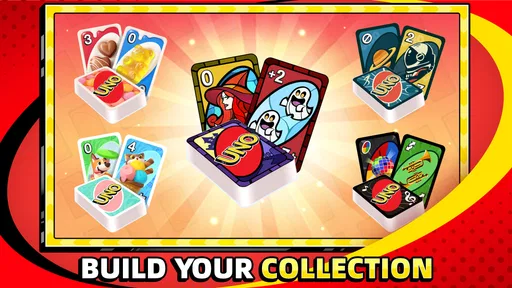
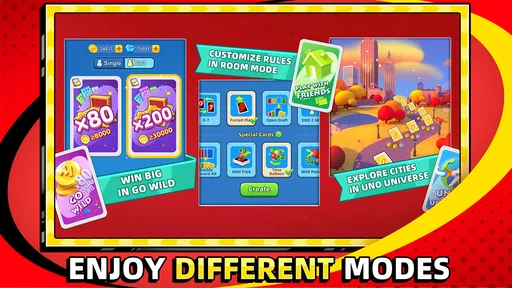

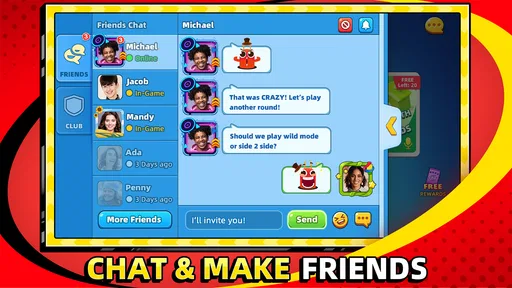
 Analysis by Gamesive
I like UNO!™ best when I treat it as a quick card game rather than a substitute for a long evening around a table. A spare few minutes can become a lively round, and the familiar rules make it easy to understand what is happening even when I haven’t played for a while. The catch is that a mobile version also brings progression and purchases into the experience, so the simplest way to enjoy it is to know what kind of play I want before I start.
This is a free card game from Mattel163 Limited, built around the recognizable UNO format. I can grasp the basic appeal immediately: match the card in play by color or number, use action cards to disrupt the turn order, and remember to call UNO when I am down to one card. Its accessibility is a real strength. I can hand the idea to someone who has never played the app and explain the central rules in a moment.
The game has a 4.3 average from around 2.6 million ratings, and it has been installed over 100 million times. Those figures suggest a large audience, but the more practical point is that this is a well-established take on a game people already know. It is rated for Everyone, costs nothing to install, and includes optional in-app purchases. The listed purchase range runs from $0.29 to $299.99 per item, a span worth noticing if you prefer games with no spending prompts at all.
I would not mistake the familiar premise for a guarantee that every session feels like a living-room game. Playing on a phone changes the pace: turns happen through a screen, opponents may be strangers, and the app’s surrounding progression can matter as much to the experience as the cards. When I want a quick, recognizable diversion, that format works. When I want relaxed conversation and the freedom to set house rules, a physical deck is still the better fit.
A realistic use case is a commute break or a few minutes waiting for someone. A round gives me something more engaging than a passive feed, but it does not demand the planning or concentration of a deeper strategy game. I can pay attention to the current hand, make a choice, and return to whatever I was doing afterward. That makes the game easy to pick up in small pockets of time.
There is a trade-off: a short session is only convenient if I am comfortable with the online-game rhythm and interruptions that come with playing on a phone. I would not open it during a meeting, while walking, or in any situation where I might need to stop instantly and leave a match. A tabletop deck is easier to pause between turns; a digital round asks me to stay present until it is finished.
The game is also a reasonable choice for someone who wants to play a familiar card game without finding a deck or gathering a group in person. It is less compelling for someone who dislikes competing with strangers, prefers quiet solo play, or wants a card game where careful long-term planning outweighs chance. UNO has always depended partly on the cards you receive, and a digital setting does not remove that basic uncertainty.
My most useful habit is to look beyond the card I can legally play. If I have a choice, I consider which color I want to leave active and whether using an action card now is more valuable than saving it. That does not turn UNO into a game of perfect control, but it gives each turn a little purpose beyond simply getting rid of a card.
I also try not to spend a powerful card just because it is available. Holding one can be useful when the next turn might put pressure on me, but holding too long can leave me with fewer options later. The right choice depends on the hand and the players’ positions. This tension is part of the fun: a tidy plan can be thrown off by one card, so I aim for flexible decisions rather than pretending I can predict the whole round.
Another practical tip is to keep track of who is close to finishing. A player with only a few cards changes the urgency of the table. I may choose a defensive move over the play that looks best for my own hand, especially if the immediate alternative could let that player end the round. That kind of attention is a more useful skill than memorizing a single “best” strategy, because the value of each card shifts as the table changes.
UNO!™ is not just a digital deck sitting still on a screen; it is packaged as a mobile game, with a current version of 1.18.7042 and a continuing app experience around its core card play. That context matters to me because progression can make another round feel purposeful, but it can also make a casual game feel like something I am supposed to keep up with. If I only want a clean match and then to close the app, I try to focus on the round rather than treating every surrounding prompt as an obligation.
The useful distinction is between enjoying a game and chasing progress. I can play a hand because I want the moment-to-moment decisions, not because I feel compelled to collect or unlock something. If a session starts to feel like a task, stepping away is a sensible choice. A quick card game should be easy to leave when it stops being enjoyable.
For a new player, I would first learn the flow of the digital matches before making any purchase. That gives a clearer sense of whether the basic experience is satisfying on its own. It is also a good way to decide whether the app fits your habits: some people enjoy a steady sense of advancement, while others would rather have a bare-bones game that begins and ends with the cards.
The app is free to download, and it offers in-app purchases with listed items ranging from $0.29 to $299.99. That is the concrete spending context I would keep in mind. The presence of purchases does not by itself tell me what any particular item contains or whether buying it changes a match, so I would not assume that spending is necessary—or that it has no effect—without checking the purchase details shown in the app store and in the game.
If you share a device with a child, the Everyone age rating is useful context for the game’s content, but it does not answer questions about spending controls. I would use the device’s purchase protections and review any confirmation prompts before handing over the phone. That is a practical precaution for any free game with optional purchases, especially when the listed range includes both very small and very large amounts.
I would also set a personal limit before browsing optional items. The low end of the range can make a purchase look minor, while the high end makes clear why it is sensible to pause and check exactly what is being bought. Since the available facts do not establish the effect or value of individual items, my advice is simple: treat every purchase as optional until you understand its contents, and do not spend just to solve frustration after a rough run of cards.
In any version of UNO, luck can swing a round. A player can make sensible choices and still draw awkward cards, while another can benefit from a favorable hand. I see that as part of the game rather than evidence that a match is unfair. The digital format may make wins and losses feel sharper because opponents are represented by players on a screen, but it cannot make random card outcomes disappear.
On purchases, I take a careful position: the fact that purchases are available is confirmed, but their specific competitive effect is not established here. I would not claim that they give players an advantage, nor would I promise that they never do. If competitive balance is your main concern, look at the details attached to each item before spending and decide whether you are comfortable with what it offers.
Compared with a physical UNO deck, the app is more convenient when no one is nearby and you have only a phone. A tabletop game gives the group more control over the setting and any house rules, and it avoids the question of optional digital purchases. Compared with more complex online card games, UNO is far easier to learn, but it gives less room for elaborate tactics. Choose it for quick, familiar interaction—not for a simulation of a serious tournament card game.
I would recommend it to casual players who already enjoy UNO, people who want a familiar game on hand, and friends or family looking for an easy entry point into mobile card play. It also suits someone who likes making small tactical choices without needing to study a complicated rulebook. The app’s large audience makes it feel like a mainstream option rather than an obscure adaptation, though that alone does not guarantee that every opponent or session will match your preferences.
I would skip it if I strongly dislike chance, want a completely purchase-free environment, or need a game that can be abandoned at any moment without concern for a match in progress. I would also choose a physical deck for a group that enjoys talking through turns, inventing house rules, or keeping phones away from the table. Those are not flaws in the app so much as situations where the original tabletop format does the job better.
UNO!™ succeeds because it keeps the central appeal of a familiar card game within easy reach. I like that I can understand a round quickly and still find small decisions worth thinking about, especially when choosing a color or deciding whether to play defensively. Its weakest fit is for players who want deep strategy, full control over the rules, or certainty about how optional purchases relate to competitive play.
For a free download, I think it is worth trying if you want casual UNO on a phone and are comfortable keeping purchases firmly optional in your own mind. I would begin with ordinary play, learn the app’s rhythm, and only consider spending after checking what a specific item does. That approach lets the card game—not the pressure to progress or buy—decide whether the app deserves a place on your device.
UNO!™ brings the familiar color- and number-matching card game to mobile. On your turn, play a card that matches the discard pile’s color or number, or use a suitable action or wild card, and try to empty your hand before your opponents. The app guides you through turns, but it is worth learning the rules shown in the selected mode because some events and variants may use different rules.
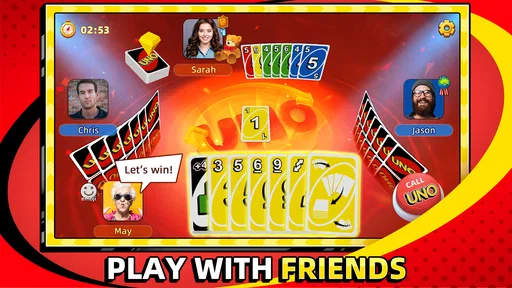
Yes. UNO!™ offers online play, including ways to play with friends and matches with other players. To invite someone, look for the friend, room, or private-match options in the game, as the exact menus can change with updates. Online play requires an internet connection, and availability may depend on the selected mode, player activity, and the app’s current matchmaking or event settings.
UNO!™ is generally available as a free download, but the app may offer optional in-app purchases, such as currency, bundles, or other items. Some rewards and features may also be tied to events or progression. You can play without buying anything, though purchases or limited-time offers may appear during use. Check the store listing and your device’s purchase controls for current pricing and available spending safeguards.
The basic gameplay is recognizable, but the mobile version may include additional modes, events, or house-rule variations. Details such as how certain action cards work, whether stacking is allowed, or how a round is scored can depend on the mode you choose. Before starting a match, review its rules or instructions so you know what to expect; do not assume every online game uses the same rules as your home version.
Many of UNO!™’s main features, especially online matches, require an internet connection, so it may not be suitable if you need fully offline play. Before downloading, check the current Google Play or App Store listing for supported devices, operating-system requirements, app size, and any regional restrictions. Also review the permissions and privacy information, and consider that online play may involve communication or interaction with other players.
On Android, UNO!™ asks for these permissions.
UNO!™ is also available in 2 other languages on our site.
4.3 out of 5
2,599,850 reviews
Card · Mattel163 Limited
Card4.7 out of 5

Card4.2 out of 5

Card4.6 out of 5
Card4.7 out of 5

Card4.6 out of 5
Card4.9 out of 5
Card4.5 out of 5
Card4.8 out of 5
Card4.8 out of 5
Card4.5 out of 5
Card4.7 out of 5
Card3.9 out of 5
Card4.7 out of 5

Card4.5 out of 5
Card4.6 out of 5
Card4.5 out of 5

Card4.8 out of 5
Card4.9 out of 5



Gamesive reviews games on its own and is not paid by developers for scores. We do not host game files: the download buttons open the official Google Play and App Store pages. Names, icons and screenshots belong to their owners.