
Tiki Solitaire TriPeaks
Card4.5 out of 5

For Android & iOS · MobilityWare






 Analysis by Gamesive
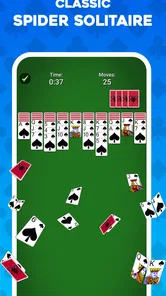
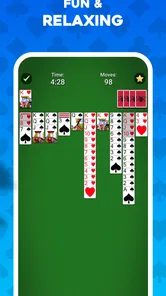
I find Spider Solitaire most appealing when I want a card game I can start without a long tutorial or a commitment to a full gaming session. The familiar goal—building descending sequences and clearing them from the table—makes the first minutes easy to understand, while the hidden cards leave enough room for careful decisions. Its best quality is the balance between a recognizable routine and choices that still matter.
Spider Solitaire: Card Games is MobilityWare’s take on the classic solitaire format, presented as a free card game for Android. It is rated for Everyone, and its appeal is easy to grasp: it is made for short, self-directed play rather than a story, a collection of characters, or competition that demands regular attention. The game has been available since September 15, 2011, and its current version is 7.8.5.4996.
The basic rhythm is straightforward. You move cards to form descending runs, uncover face-down cards when you can, and use the available stock when the tableau no longer offers a useful move. A completed run can be cleared, opening space and changing what is possible elsewhere. The rules are simple to explain, but planning several moves ahead is where the challenge begins.
That makes it a comfortable choice if you have played solitaire before, but it is also approachable if Spider is new to you. I would not expect a big opening spectacle or a complex progression system; the satisfaction comes from spotting a useful sequence, freeing a blocked card, and gradually making the layout easier to manage. A quick round can be a small mental reset, while a stubborn layout gives you something to work through more deliberately.
The game has a broad audience: it has passed 50 million installs, with an average rating of 4.6 from around 749,000 ratings. Those figures suggest that many players enjoy this kind of familiar, repeatable card play, though they do not mean every deal will suit every mood. If you want constant novelty or a strong social element, a traditional solitaire game may feel too quiet.
On opening the game, I would focus on learning the board rather than trying to solve the whole deal at once. Look for cards that can be moved immediately, especially moves that reveal a hidden card or bring cards into a useful descending order. The first meaningful success is often not clearing a full run; it is uncovering one card and gaining a new option.
That small goal is helpful because Spider can look more tangled than it really is. A visible move may be legal but not useful if it buries a card you need or breaks up an orderly sequence. When two moves seem equally plausible, I tend to prefer the one that exposes information or keeps a clean run together. It is a practical habit, not a guarantee of a win, and it makes the game feel less like random shuffling.
Think of a move as a choice about future access. A short transfer can open a column, while a longer sequence may look tidy but leave important cards trapped. When a column becomes empty, that space can be valuable for temporarily moving cards and rearranging the tableau. I avoid filling it automatically: sometimes keeping a column open gives more flexibility for the next few decisions.
One useful discipline is to delay dealing from the stock until you have made the helpful moves already available. Stock cards can add new possibilities, but they can also cover the tableau with fresh obstacles. If you can uncover a face-down card or improve a sequence first, you may have more room to respond after the deal. This is especially useful when the layout still has obvious moves that do not require new cards.
Another practical tip is to watch the shape of a run, not just its length. Cards arranged in a clean descending sequence are easier to move together than a mixed pile that happens to contain many cards. If a move creates a more orderly run, it may be worth choosing over a superficially larger stack. This becomes particularly helpful when you are trying to use a vacant column as temporary storage.
There is also a useful distinction between progress and cleanup. Clearing a completed sequence feels satisfying, but the best route to that moment may involve leaving a promising run untouched while you uncover blocked cards elsewhere. I try not to chase the first possible completion if doing so would leave the rest of the tableau less flexible. Spider rewards patience more than speed, even when I am only playing for a few minutes.
A common source of confusion is that a card can often be placed on another card of the next higher rank, but that does not mean every group of cards will move together as one unit. A properly ordered sequence is easier to shift; a run interrupted by a different suit or rank arrangement can limit what you can pick up. If a move does not behave as expected, check whether the cards form a movable sequence rather than assuming the game has ignored a valid plan.
Another point worth remembering is that revealing a face-down card is valuable even if the card does not immediately solve a problem. It gives you information and may create a better route later. Conversely, a move that looks productive can reduce your options if it blocks a column or breaks a sequence you were relying on. When the board appears stuck, revisit the small transfers: a card moved to a different column may expose a path that was not obvious at first.
It is also normal for a deal to become awkward after stock cards arrive. That does not necessarily mean you made a mistake; new cards can interrupt runs and narrow your choices. I treat those moments as a prompt to reassess the whole tableau, rather than repeatedly trying the same move. If you prefer games where every round can be solved with a clear, predictable route, the uncertainty here may feel frustrating.
This is the sort of game I would open during a quiet break, while waiting for an appointment, or at the end of the day when I want something more active than scrolling but less demanding than a fast action game. A realistic routine is to play one deal while waiting for a kettle to boil: first scan for moves that reveal cards, then decide whether the tableau is ready for the stock, and stop when the break is over. The game’s turn-based pace makes it easy to pause mentally between decisions.
For a first-time player, I would set a modest target: uncover a few hidden cards, make one well-ordered sequence, or simply understand why a particular move helps. That keeps an early session satisfying even if the deal does not reach a full clear. If a layout becomes frustrating, stepping away is sensible; the pleasure of solitaire comes from working through choices, not forcing one deal to cooperate.
Compared with other familiar solitaire formats, Spider asks for more attention to sequencing and column management than a quick, highly automatic card puzzle. It is a better fit when you enjoy planning and rearranging, while a simpler solitaire variant may suit you more when you want almost no decisions or a very brief distraction. Compared with competitive card games, it is private and unhurried, which is a strength for relaxation but a limitation if you want opponents or shared goals.
The game is free to download, and it includes in-app purchases ranging from $1.99 to $29.99 per item. I would approach those purchases as optional rather than part of the basic reason to try the game: the central appeal is the solitaire challenge itself. If you are sensitive to spending prompts or prefer a fully paid game with no purchase options, check the in-app purchase details in the store before installing.
MobilityWare has kept this particular card game in circulation for years, and the current Android version is 7.8.5.4996. The minimum operating system is Android 8.0, so checking your device’s Android version before downloading is a simple way to avoid a compatibility surprise. Since it is free and rated Everyone, it is also an easy game to consider for a casual player who wants familiar card rules rather than mature themes.
Its long-running popularity does not make it the right choice for every player. I would skip it if you need constant visual variety, a narrative to follow, or a competitive reason to return each day. I would also choose a different card game if you want rules that involve opponents, bidding, or a changing set of objectives. Spider’s pleasure is narrower and more thoughtful: you work with the cards in front of you and try to leave yourself a better position than you had a moment ago.
Spider Solitaire is a sensible pick for someone who wants a familiar, low-pressure card game with enough planning to stay engaging. New players can get a meaningful start by focusing on uncovering hidden cards and preserving orderly sequences, rather than expecting to master every tactic in one sitting. Experienced solitaire fans may appreciate the deliberate tableau work, especially when they want a quieter alternative to faster games.
My advice is to treat each deal as a sequence of small decisions, not a race to clear the board. Make moves that reveal information, protect flexibility where you can, and avoid dealing fresh cards before you have used the options already visible. If that kind of measured problem-solving sounds relaxing, this is an easy game to try. If you want social play, dramatic progression, or a different puzzle every few seconds, another game will probably suit you better.
Spider Solitaire is a single-player card game focused on arranging cards into descending sequences of the same suit. The goal is to complete full sequences from King down to Ace, which are then removed from the tableau. You can move eligible cards between columns, uncover face-down cards, and deal additional cards when you are stuck. Exact rules and available options may vary by version.
Many Spider Solitaire games can be played without an internet connection because the core gameplay does not require live multiplayer. However, features such as advertisements, daily challenges, cloud saves, leaderboards, or other online services may need a connection. Check the app’s store listing and test its offline behavior before relying on it while traveling or away from Wi-Fi.
Spider Solitaire is commonly offered in one-suit, two-suit, and four-suit modes. One suit is generally the easiest starting point, while more suits require greater planning and make it harder to build complete sequences. The modes available depend on the specific app version, so review its description or in-game settings to confirm which difficulty options are included.
The price and monetization model depend on the particular Spider Solitaire: Card Games listing and the platform where you download it. Some versions are free to install but show ads, while others may offer optional purchases for removing ads or unlocking features. Check the store page for current pricing, in-app purchase details, and any subscription terms before downloading.
Confirm that the app is compatible with your Android or iOS device and that you are downloading the intended game from an official app store. Review its recent update date, permissions, privacy information, ratings, and user feedback. Also check whether it includes the suit modes and accessibility or customization options you want, and whether ads or internet access could affect your experience.
On Android, Spider Solitaire: Card Games asks for these permissions.
4.6 out of 5
748,704 reviews
Card · MobilityWare

Card4.3 out of 5

Card4.7 out of 5

Card4.2 out of 5

Card4.7 out of 5

Card4.6 out of 5
Card4.9 out of 5

Card4.7 out of 5
Card4.5 out of 5

Card4.8 out of 5

Card4.8 out of 5

Card4.5 out of 5
Card4.7 out of 5
Card3.9 out of 5

Card4.7 out of 5

Card4.5 out of 5

Card4.6 out of 5
Card4.5 out of 5

Card4.8 out of 5

Card4.9 out of 5



Gamesive reviews games on its own and is not paid by developers for scores. We do not host game files: the download buttons open the official Google Play and App Store pages. Names, icons and screenshots belong to their owners.