Solitaire - Classic Card Games
Card4.9 out of 5
For Android & iOS · Mattel Game Studios HK Limited




 Analysis by Gamesive
The appeal of Phase 10: Casual Card Game is its focus on building particular combinations rather than simply shedding cards as quickly as possible. Each hand asks you to work toward a phase, so I’m weighing what I collect against the risk that another player will finish first. That small change makes familiar rummy-style play feel more deliberate: I can’t treat every useful card as equally valuable, and a promising hand may still leave me with plenty to do.
Made by Mattel Game Studios HK Limited, this free card game brings Phase 10 to mobile. Its central appeal is the phase-by-phase structure: progress depends on completing the requirement for the current phase, not merely on having a collection of cards that looks good. That gives each turn a clear purpose and makes decisions easy to understand even when the table becomes competitive.
I like that the goal gives me a reason to plan without demanding a long explanation before playing. When I’m collecting toward a combination, a new card can be valuable because it advances that goal, while another card that would normally look handy may be a distraction. The tension comes from deciding how long to keep pursuing a difficult hand and when to make the best of what I have.
This is still a casual card game, not a heavy strategy title. Luck affects the cards available, and I can’t make every round go my way. But the changing target gives each hand a little identity, which helps it feel less repetitive than playing one simple objective over and over.
The key practical difference is that collecting cards is not automatically progress. I need to pay attention to the requirement in front of me, then judge whether my current hand is moving toward it. If I focus only on discarding unwanted cards, I may miss the chance to keep something that completes the combination I actually need.
That creates a useful rhythm: check the goal, consider what the hand can still become, and avoid holding onto cards just because they might be useful in some other situation. I find that this makes turns more engaging without making them feel like a chore. A quick decision can matter, but I’m not expected to calculate a long sequence of moves.
There is also a social benefit to a shared objective. Players can see that the table is working toward recognizable combinations, so it is easier for a mixed group to follow the stakes than in a game built around less visible strategy. Newcomers can learn by watching how a hand develops, while experienced card players can still look for better ways to manage what they keep.
When I start a round, I first identify the current phase and sort my attention around that requirement. I look for cards that already support it, then decide which cards are worth keeping while I wait for a better fit. This sounds simple, but it prevents a common mistake: treating a hand as a collection of individually useful cards instead of a path toward a specific target.
A practical tip is to reassess after each draw rather than sticking stubbornly to an early plan. If the cards I need have not appeared, I can still make sensible choices about what to hold and what to let go. The game’s structure rewards flexibility: pursuing the phase matters, but blindly clinging to a weak plan can make the rest of the hand harder to manage.
I also try not to judge a turn only by whether I complete the phase immediately. A hand can be useful because it improves my position for the next decision, even if it doesn’t produce a satisfying breakthrough right away. That perspective makes the luck of the draw easier to accept and keeps a slow round from feeling like a personal failure.
For a family or friend group, I’d explain the phase goal before play begins and let the first hand serve as a learning round. That keeps the rules discussion grounded in the cards everyone can see. It is a better way to bring in a casual player than expecting them to remember every possibility before they have experienced how the objective shapes a turn.
The clearest everyday use is a relaxed break with people who want something more involving than a quick matching game but less demanding than a long strategy session. I can imagine opening it while waiting for dinner, or using it as a shared activity when a group has a few spare minutes and different levels of card-game experience. The changing phases give people something to talk about, and the basic turn-by-turn decisions are approachable.
It can also suit a family that already enjoys card games and wants a familiar format with a more structured objective. The age rating is Everyone, which makes it broadly suitable from a content perspective. That does not mean every player will immediately understand the tactics, so younger or entirely new players may appreciate a patient first round with someone explaining why a card is being kept.
Compared with a conventional shedding game, where the main question is often how quickly to empty a hand, Phase 10 asks me to balance that impulse against building the required combination. Compared with a more complex collectible card game, it has a much lighter strategic footprint: I’m responding to the cards and the current phase rather than assembling a deck or learning a broad system. If the group wants quick, low-friction matching, another simple card game may be a better fit; if it wants a shared goal with room for tactical choices, this one has more to offer.
The same phase-based focus that gives the game direction can also make an unlucky hand feel drawn out. If I’m missing a key piece, I may spend several turns hoping for the right card, and no amount of planning can guarantee it will arrive. Players who want every move to produce immediate progress may prefer a game with shorter rounds or less dependence on drawing useful cards.
It is also not the best choice for someone looking for a deep solo puzzle or a highly customizable card battler. Its appeal is the recognizable Phase 10 experience and the way a shared objective supports casual play. I would choose a more involved strategy game if I wanted extensive long-term planning, or a very simple shedding game if my priority were learning the rules in seconds and finishing quickly.
As a mobile release, it is worth remembering that free to download does not mean every optional purchase is free. In-app purchases range from $0.99 to $399.99 per item, so I would check the purchase screen carefully and use the device’s purchase controls if children will be playing. The game remains accessible without treating spending as part of the basic appeal, but the breadth of listed purchase prices is a sensible reason to be attentive.
The version is 1.15.8128 and it requires Android 6.0 or later. Those details matter if I’m checking whether an older Android device can run it. The game is also available as a card title on mobile, but anyone choosing a particular device should confirm compatibility in their app store before downloading.
I’d recommend it to people who already like Phase 10, families who enjoy taking turns around a shared goal, and casual players who want a bit more planning than a basic discard race provides. Its 4.7 average from around 640,000 ratings, alongside more than 10 million installs, suggests that it has found a wide audience; those figures are useful context, though they can’t tell me whether its pace suits a particular group.
The game has around 59,000 written reviews, and it was released on October 11, 2019. I see its staying power as consistent with the simple appeal of a familiar card format: players can understand the central task quickly, then improve their choices through experience. I wouldn’t take popularity as proof that every table will enjoy the same rhythm, especially if the group dislikes waiting on a lucky draw.
For me, the strongest reason to play is the way a changing phase turns ordinary card management into a small, readable puzzle. The strongest reason to skip it is equally clear: if I want fast, predictable rounds with little dependence on chance, this may feel too patient. But when I’m playing with friends or family and want a casual game that gives us a reason to think and talk between turns, Phase 10 is an easy one to bring along.
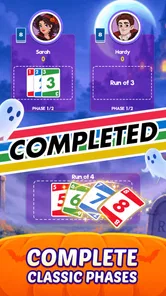
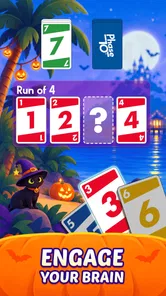
Phase 10 is a rummy-style card game in which players try to complete ten specific card combinations, called phases, in order. A phase might require sets of matching numbers, runs of consecutive numbers, or cards of a particular color. On each turn, you draw a card and discard one; once you complete your current phase, you can play cards onto completed combinations. The exact rules and available modes may vary by version.
The game may offer different ways to play, such as matches against computer-controlled opponents and online games with other players. Online multiplayer generally requires an internet connection, while offline availability depends on the current app version and mode. Check the in-game options before relying on offline play, and make sure friends are using compatible versions if you plan to join or invite them to a match.
The app may be free to download, but free access does not always mean every feature is available without limits. Depending on the version, you may encounter advertisements, optional in-app purchases, or resources used to enter certain matches. Store listings can change, so review the current price, purchase details, and age or payment settings for your device before downloading, especially if children will be playing.
The digital game is based on the familiar Phase 10 objective of completing ten phases in sequence, but its presentation, match options, and some rule details may differ from the tabletop edition. The app typically handles dealing, turn order, and card combinations automatically, which can make it easier to learn. Read the rules or tutorial in the game to understand how that version treats special cards, scoring, and missed turns.
Check the Google Play or Apple App Store listing for the latest device requirements, supported operating-system versions, and privacy disclosures. The app may request an internet connection for online features and could collect data described in its store privacy information; those details can change with updates. If privacy is a concern, review the developer’s disclosures and your device permissions, and avoid sharing personal information in player names or chats.
On Android, Phase 10: Casual Card Game asks for these permissions.
Phase 10: Casual Card Game is also available in 2 other languages on our site.
4.7 out of 5
640,377 reviews
Card · Mattel Game Studios HK Limited
Card4.3 out of 5
Card4.7 out of 5

Card4.2 out of 5

Card4.6 out of 5

Card4.7 out of 5

Card4.6 out of 5
Card4.9 out of 5

Card4.5 out of 5
Card4.8 out of 5

Card4.8 out of 5

Card4.5 out of 5
Card4.7 out of 5
Card3.9 out of 5

Card4.5 out of 5
Card4.6 out of 5
Card4.5 out of 5

Card4.8 out of 5
Card4.9 out of 5


Gamesive reviews games on its own and is not paid by developers for scores. We do not host game files: the download buttons open the official Google Play and App Store pages. Names, icons and screenshots belong to their owners.