Tiki Solitaire TriPeaks
Card4.5 out of 5
For Android & iOS · Supertreat - A Playtika Studio






 Analysis by Gamesive
I find Solitaire Grand Harvest easiest to judge as a familiar card game wrapped in a bright, farm-themed presentation. The basic appeal is simple: play a round of Tripeaks solitaire, clear cards from the layout, and return for another hand when you have a spare moment. That makes it approachable for people who already know solitaire and for newcomers willing to learn one variant. The decoration gives the game more personality than a plain card table, though it also means this is not the most restrained option for anyone who wants cards and nothing else.
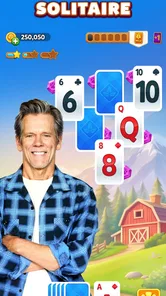
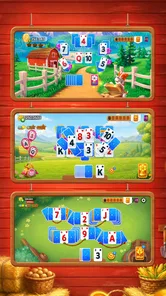
The central activity is card play, so readability matters more here than elaborate menus. In my experience, the card faces and their ranks are the information you need to follow continuously: you compare exposed cards with the card in play and decide what can be removed next. The farm setting makes the screen feel welcoming, but the cards remain the practical focus. If you are deciding whether the presentation will suit you, try a short session and see whether you can distinguish the ranks comfortably on your own device.
Navigation is tied to a progression-style game rather than a bare collection of solitaire tables. That gives each hand a sense of place and makes returning feel more inviting, but it also asks you to engage with the surrounding game presentation. Players who prefer to open a conventional solitaire app, choose a deal, and ignore everything else may find this busier than necessary. I would describe its interface as approachable in theme, not necessarily minimal in purpose.
A useful habit is to slow down before committing to a move. Tripeaks rewards looking across the available cards instead of tapping the first legal choice, and a brief scan can help you spot a sequence that keeps more options open. This is especially helpful when you are learning: focus first on the ranks you can remove and the cards that will become accessible, rather than trying to understand every part of the farm presentation at once.
The game is made by Supertreat - A Playtika Studio and sits squarely in the card game category. It is free to install, with optional in-app purchases ranging from $0.49 to $349.99 per item. That range is worth noticing before you start, particularly if you are setting spending limits on a shared device. You can enjoy the basic idea without treating purchases as part of the appeal, but I would keep an eye on any prompts and make sure purchase controls are appropriate for whoever will be playing.
The cheerful farm theme can make a familiar card format feel less stark, which I think is a genuine strength for casual play. It also brings visual activity beyond the cards. For some people that makes sessions more pleasant; for others, it competes with the calm, uncluttered feeling they want from solitaire. If visual simplicity is a priority, a traditional solitaire app with a plain table may be a better match.
I would not assume that a friendly art style automatically makes every screen comfortable for every player. Card games depend on quick recognition, and comfort can vary with screen size, eyesight, brightness, and how long you play. A practical first check is to play a few hands in the lighting where you expect to use the game. If you find yourself leaning in or losing track of ranks, that is a real reason to choose a clearer, more adjustable alternative rather than forcing yourself through it.
Card games can be a good fit for people who prefer a simple repeated action and a clear decision at each step. Here, the main interaction is choosing cards, so it does not demand the kind of rapid, multi-button input common in action games. Still, repeated tapping can become tiring, and the pace may not suit someone who needs a slower or more physically comfortable way to interact. I would test a short session before settling into longer play, especially if tapping a phone screen is uncomfortable.
For players who are sensitive to busy visuals, the right approach is to keep sessions short and notice how the animated farm setting feels alongside the card layout. I cannot promise that the presentation will be soothing for everyone: cheerful color and decorative movement can be enjoyable for one player and distracting for another. The most useful personal test is whether you can keep attention on the cards without feeling pulled around by the surrounding screen.
There is also a small strategic benefit to not rushing. Rather than treating every playable card as an equally good choice, pause to consider which removal may reveal useful cards or preserve a longer run. That habit makes the game feel more like a puzzle than a reflex test, and it is a helpful way to play when you want a little mental focus without committing to a complex strategy game. If even that level of decision-making feels like work after a long day, a simpler matching or low-pressure puzzle may be more relaxing.
I can see this working well during a quiet wait, a short break between tasks, or a relaxed evening when I want something more engaging than scrolling but less demanding than a long game session. The round-based card format lends itself to picking up the game for a hand and then putting it down. A sensible routine is to decide in advance how long you want to play, because the themed progression can make one more round feel tempting even when you meant to take only a brief break.
For a commuter, the main question is not just whether solitaire is suitable for a short interval, but whether the setting is comfortable enough to concentrate on cards. On a bright day, in a crowded space, or while moving, small-screen card recognition can be harder. I would save it for a moment when you can look at the display steadily rather than trying to play while walking or splitting attention across several things. That is both more comfortable and more likely to make the tactical choices enjoyable.
The game is free and rated for Everyone, which makes it easy to consider for a broad range of players, including families. That does not mean every child will be equally comfortable with the purchase prompts or progression presentation, so I would set expectations about optional spending before handing over a device. It is also worth remembering that a family member who mainly wants a straightforward solitaire deal may prefer a simpler app with fewer surrounding distractions.
Compared with a conventional solitaire app, Solitaire Grand Harvest offers a stronger themed identity and a sense of ongoing progression around its card sessions. That can make it easier to return to when a plain deck feels repetitive. The trade-off is that the game is less purely about the cards: the farm framing is part of the experience, and players who want a quiet, direct card table may consider it unnecessary. My recommendation depends on which side of that trade-off sounds appealing to you.
It is also different from a competitive card game. The appeal here is not learning a broad set of rules to outplay another person; it is making choices within a solitaire layout and enjoying the repeated puzzle of clearing cards. If you want social competition or a demanding multiplayer strategy, this is not the substitute I would choose. If you want solo card play with a more decorative wrapper, it makes more sense.
The audience numbers suggest that it has found a large following: it has more than 50 million installs, a 4.7 average from around 2.2 million ratings, and about 248,000 written reviews. Those figures do not decide whether the display suits your eyesight or whether the theme suits your taste, but they do show that this is a well-established choice rather than an obscure experiment. I would still judge it by the feel of a few hands, not by popularity alone.
When starting out, give yourself a few hands to learn the rhythm before deciding whether the game is too busy or too easy. In a Tripeaks layout, a move can affect what becomes available next, so it is worth scanning the exposed cards before tapping. This simple pause is more useful than trying to optimize every decision from the start. It also lets you judge whether the game’s visual style helps you stay engaged or makes it harder to concentrate.
If you are sharing the device, check purchase settings and make sure the person playing understands that optional purchases exist. The listed range runs from $0.49 to $349.99 per item, so it is particularly sensible not to treat the word “free” as a promise that every possible in-game option costs nothing. That is not a reason to avoid the game outright; it is a reason to set boundaries before a casual session turns into an unexpected purchase.
The current version is 2.429.1, and the game supports Android 7.0 and newer. It was released on June 27, 2017, so it has had a long life as a mobile game. For a practical decision, the operating-system requirement is the key detail: check that your Android device meets it before planning to play. The age rating is Everyone, but individual comfort with screen effects, taps, and purchase prompts still matters more than the label when choosing for a particular person.
I would recommend Solitaire Grand Harvest to someone who already enjoys solo card games and wants a more colorful setting than a plain deck, especially if short puzzle-like sessions fit naturally into their day. It is also a reasonable choice for a player who likes returning to a familiar format with a themed sense of progress. The card decisions stay central enough to give each hand a purpose, while the farm presentation distinguishes it from more stripped-back alternatives.
I would steer away from it if you want an entirely plain solitaire table, dislike decorative visual activity, or need a screen layout that you have already confirmed works well for your specific vision or motor needs. I would also choose another option if your main goal is head-to-head competition, a completely purchase-free environment, or a game that asks for almost no attention. Those are not flaws that can be fixed by liking the theme; they are mismatches between the game and the player.
What I like most is the way the familiar Tripeaks format gives me a clear, repeatable puzzle while the farm setting adds warmth. What I like less is that the surrounding presentation may be more than a solitaire purist wants, and the optional purchases call for sensible boundaries, particularly on a shared device. Neither point makes it a poor choice, but both are worth weighing before you settle in.
My advice is to try a brief session in your usual playing environment and pay attention to three things: whether the card ranks are comfortable to read, whether tapping feels manageable, and whether the themed screen helps or distracts you. If those fit, this is an inviting free card game for a quiet break. If not, a simpler solitaire app will likely serve you better. For me, Solitaire Grand Harvest works best when I want solitaire with a little personality, not when I want the cards to be the only thing on screen.
Solitaire Grand Harvest is a casual card game built around TriPeaks solitaire. You clear cards from the board by selecting one rank higher or lower than the face-up card, then use the stock pile when no move is available. Between rounds, you grow and harvest crops on a farm, which gives the game a light progression and decorating theme alongside its card puzzles.
You can download and play Solitaire Grand Harvest for free, but it includes optional in-app purchases. Coins and other resources can help you start levels, obtain extra cards, or continue after running short of moves, depending on the current game features. Progress is possible without paying, though difficult levels may require patience, careful play, or waiting to collect more free rewards.
Some previously available levels may work without an internet connection, but you should not expect every feature to be available offline. Events, reward claims, purchases, account synchronization, and other online services generally require connectivity, and availability can vary with the app version. If you plan to play while traveling, open the game and check that the content you need is accessible before disconnecting.
You can generally begin playing without creating a separate account, but connecting through a supported account or platform service can help protect and synchronize progress across devices. The available sign-in and backup options may differ between Android and iOS and can change with updates. Before switching phones or reinstalling, check the game’s settings and confirm that your progress is linked to the intended service.
Solitaire Grand Harvest has simple card rules and colorful farm visuals, so it can be easy for many players to understand, but its suitability depends on the child and the family’s preferences. The game may show advertising and offers in addition to optional purchases, so review its store listing, privacy details, and device purchase controls. An adult should supervise spending and check age guidance before downloading.
On Android, Solitaire Grand Harvest asks for these permissions.
4.7 out of 5
2,217,072 reviews
Card · Supertreat - A Playtika Studio

Card4.3 out of 5
Card4.7 out of 5

Card4.2 out of 5

Card4.6 out of 5

Card4.6 out of 5
Card4.9 out of 5
Card4.5 out of 5
Card4.8 out of 5

Card4.8 out of 5
Card4.5 out of 5
Card4.7 out of 5
Card3.9 out of 5
Card4.7 out of 5

Card4.5 out of 5
Card4.6 out of 5
Card4.5 out of 5

Card4.8 out of 5
Card4.9 out of 5



Gamesive reviews games on its own and is not paid by developers for scores. We do not host game files: the download buttons open the official Google Play and App Store pages. Names, icons and screenshots belong to their owners.