Word Collect - Word Games Fun
Word4.7 out of 5
For Android & iOS · PlaySimple Games
 Analysis by Gamesive
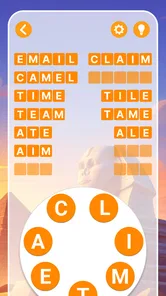
I like word games that are easy to pick up without demanding a long, quiet session, and Word Trip fits that sort of routine. It is a free word puzzle game from PlaySimple Games, built around finding words rather than racing through a story or mastering a complicated set of rules. In my view, its appeal is the small, satisfying loop: look at a group of letters, try combinations, and keep going when a word clicks.
That makes it a natural choice for a coffee break, a short wait, or a few minutes before bed. It is less suited to someone seeking a deep narrative, competitive action, or a word game that rigorously tests specialist vocabulary. The central question is not whether it offers a huge range of activities; it is whether its straightforward puzzle format makes a few spare minutes feel enjoyable. For casual players, I think it often can.
The game is free to download, so you can try its basic word-puzzle experience without an upfront purchase. That is the clearest part of the value proposition: you can see whether the letter-search routine suits you before deciding whether spending anything makes sense. In-app purchases are available, with individual items ranging from $0.49 to $54.99, so the free entry point should not be confused with a promise that every optional purchase costs very little.
I would treat those purchases as optional spending, not as a necessary part of the game’s appeal. The listed range gives a useful boundary for what an item may cost, but it does not by itself tell you what each item does or whether it is worthwhile for your play style. My practical advice is to begin without buying anything. If you later encounter a specific point where an optional item would genuinely improve your experience, consider that choice on its own rather than treating purchases as part of the download price.
Word Trip is rated Everyone, which makes its general audience broad. That rating is helpful for families deciding whether the game is age-appropriate, though it does not mean every player will find the puzzles equally engaging. A young casual player may enjoy spotting familiar words, while someone who wants advanced vocabulary challenges may find the format too gentle or repetitive.
The main activity is easy to understand: work with the letters presented and find words that fit the puzzle. I appreciate that this kind of structure lets you start playing quickly instead of learning a long rulebook. It also gives each short session a clear purpose. You can focus on the current set of letters, test likely combinations, and stop when you have had enough.
One useful way to play is to change your approach when you get stuck instead of repeatedly trying the same obvious word. I usually scan for short combinations first, then look again for less familiar arrangements and different word endings. This is not a guaranteed solution method, but it breaks the habit of staring at the letters and hoping inspiration appears. It can also make the puzzle feel more like deliberate pattern-spotting than random guessing.
A second practical tip is to use the game as a brief attention reset, not as a task that has to be completed in one sitting. If I have a few minutes between errands, a word puzzle gives me something focused to do without needing to remember a complex plot or coordinate with other people. When a puzzle starts to feel tiring, taking a break is often better than turning a relaxing diversion into a chore.
Compared with a crossword, this is a more immediate kind of word play. Crosswords ask you to interpret clues and connect answers across a grid; Word Trip’s central pleasure is finding possible words from a supplied group of letters. That makes it a better fit when I want a quick verbal warm-up and a weaker choice when I want clue-solving, general knowledge, or the longer satisfaction of filling a grid.
It also differs from word games built around direct competition. If your favorite part of a word app is racing another player, comparing scores, or planning moves against an opponent, this may not scratch that particular itch. Its straightforward puzzle focus is a strength for relaxed solo play, but that same focus can feel limited to players who need social pressure or a changing set of mechanics to stay interested.
There is a tradeoff in the format itself: letter puzzles are approachable, but the core action can become familiar. I would not recommend it as a replacement for every kind of word game. Instead, I see it as a convenient option to keep alongside crosswords or competitive word titles, choosing it when I want something lighter and less demanding.
The most obvious limitation is repetition. Because the game keeps returning to word-finding, players who quickly tire of one central mechanic may stop enjoying it even if they like words in general. It is worth asking yourself whether you enjoy trying combinations for their own sake. If you mainly want a puzzle to tell a story, teach a structured course, or continually introduce new rules, this is probably not the right match.
Another point to keep in mind is that puzzle difficulty is personal. A set of letters can feel obvious to one player and stubborn to another, depending on vocabulary, spelling habits, and how readily someone spots word patterns. When I hit that wall, I find it helps to pause and return with fresh eyes. But if you prefer every challenge to have a clear clue or a predictable difficulty curve, a crossword or a more guided word app may feel fairer.
The purchase range is also a reason to be intentional. Free access makes trying the game low-commitment, while the presence of optional items means it is sensible to pay attention before confirming a purchase. I would not spend simply because I had already invested time in a puzzle; I would spend only if I understood what I was buying and felt it addressed a real need. That keeps the game’s value grounded in the enjoyment you get from playing, not in the assumption that paying must improve it.
I think this is a good fit for casual word-game fans who like solving in short bursts, especially people who enjoy rearranging letters and noticing words they might otherwise overlook. It can suit a commute or a waiting room when you want a quiet activity that does not require a long commitment. A realistic routine is to open it while waiting for an appointment, solve for a few minutes, then put the phone away without feeling that you have abandoned a complicated session.
It may also work for someone who wants a gentle daily mental warm-up. I would keep expectations modest: a word puzzle can encourage attention to spelling and letter patterns, but I would not treat it as a substitute for a formal learning program or claim that it guarantees a particular improvement. The value is more immediate and personal: it gives you a focused little challenge that can make idle time more engaging.
On the other hand, I would point a competitive player toward a game with a stronger head-to-head focus, and a clue enthusiast toward crosswords or cryptic puzzles. People who dislike repeating the same basic kind of task should also skip it, even if they generally enjoy language. Knowing that in advance is useful: the free download gives you a chance to test the core loop, but no price point can make a gameplay style enjoyable if it is not what you want.
The game was released on June 20, 2017, and its current version is 1.846.0. It has an average rating of 4.9 from around 595,000 ratings, alongside about 103,000 written reviews and over 10 million installs. Those figures suggest that many players have chosen to try it and respond positively, though popularity is not a guarantee that its simple format will suit your taste.
For device compatibility, the listed minimum operating system is 8.0. If you are deciding whether to install it on an older device, checking your operating system against that requirement is a sensible first step. The version information also gives you a point of reference when comparing the app with what you already have installed, rather than assuming that every device or setup will offer an identical experience.
My verdict is to try Word Trip if you want a free, low-friction word puzzle for spare moments and enjoy finding words from letters. I would skip it if you need competitive play, rich clue work, or a constantly changing set of mechanics. The best value here is the chance to test a focused puzzle habit without paying upfront; optional purchases deserve a deliberate look, but they do not change the basic question of whether you like the game’s central activity.
For my own recommendation, I would download it as a casual companion rather than expecting it to become an all-purpose word-game collection. Start with a short session, notice whether the letter combinations keep you curious, and avoid spending until you know exactly what you want from an optional item. If that simple loop feels relaxing instead of repetitive, it is an easy game to return to when a few idle minutes need a little more purpose.
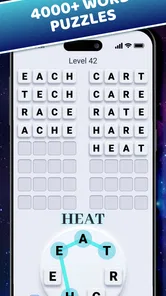
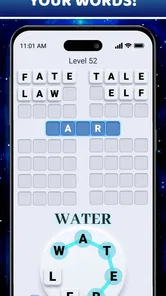
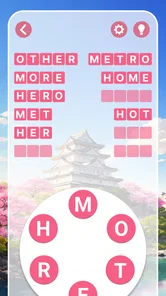
Word Trip is a word puzzle game in which you connect letters to form words and fill in a crossword-style board. It combines familiar word-search and anagram mechanics with themed destinations and a sense of progression as you advance through levels. The game is designed for short sessions, but finding every word can take patience, especially when the letter combinations become less obvious.
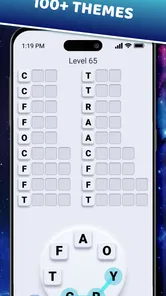
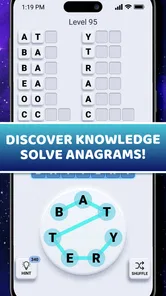
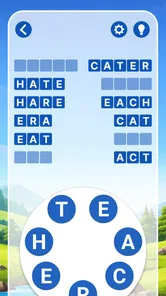
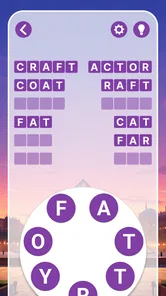
Each puzzle presents a set of letters and a board containing spaces for the words you need to discover. Swipe across the letters to make a word, then submit it to place it on the board if it fits. Early levels introduce the basics at a relaxed pace, making the game approachable for beginners. Later puzzles can be more challenging, so hints are useful when you get stuck.
Word Trip may offer puzzle play without a continuous connection, which can make it convenient for travel or brief offline sessions. However, features such as advertisements, rewards, events, or other connected services may require internet access, and availability can vary by version. If you plan to play offline, download and open the game beforehand, then check which features remain available after disconnecting.
Word Trip is generally available as a free download, but free-to-play games commonly support themselves with advertisements and optional in-app purchases. These may relate to hints, coins, or other convenience features, depending on the current version. You can usually make progress by solving puzzles, though purchases may offer shortcuts. Check the store listing and your device’s purchase settings for current pricing and options.
Before downloading, confirm that the app is offered for your device and operating-system version, and review the current store listing for its size, permissions, age rating, and privacy details. Word Trip is centered on word puzzles, but advertising, optional purchases, and connected features may be part of the experience. If you are downloading for a child, review parental controls and disable or restrict purchases as appropriate.
On Android, Word Trip - Word Puzzle Game asks for these permissions.
4.9 out of 5
595,088 reviews
Word · PlaySimple Games
Word4.8 out of 5
Word4.7 out of 5

Word4.9 out of 5

Word4.9 out of 5
Word4.8 out of 5
Word4.8 out of 5
Word4.9 out of 5

Word4.8 out of 5

Word4.9 out of 5
Word4.8 out of 5
Word4.7 out of 5

Word4.5 out of 5

Word4.9 out of 5
Word4.7 out of 5
Word4.8 out of 5
Word4.7 out of 5
Word4.9 out of 5
Word4.9 out of 5

Word4.5 out of 5

Word4.1 out of 5

Word4.6 out of 5
Word4.9 out of 5



Gamesive reviews games on its own and is not paid by developers for scores. We do not host game files: the download buttons open the official Google Play and App Store pages. Names, icons and screenshots belong to their owners.