
Heads Up!
Word4.5 out of 5
For Android & iOS · Super Free
 Analysis by Gamesive
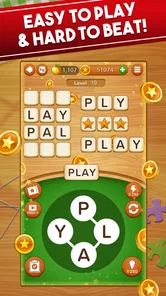
I like word games best when they fit into the spare minutes of a day rather than demanding a long session. Word Collect - Word Games Fun is aimed squarely at that kind of play: it gives me a compact word-finding challenge, with the added pleasure of spotting words I might have overlooked at first glance. It is an approachable word puzzle game, but it is not a substitute for every kind of vocabulary game. Its appeal is strongest if you enjoy quick rounds and the small satisfaction of finding another answer.
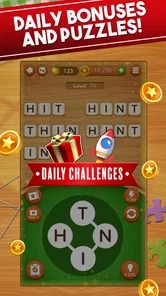
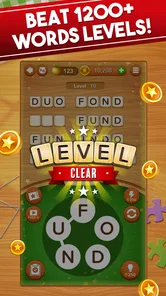
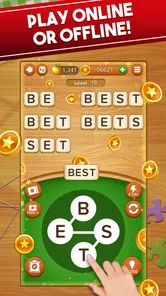
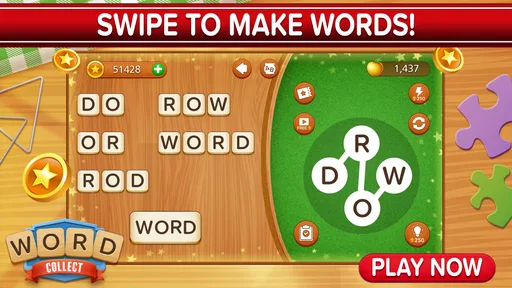
At its core, Word Collect asks you to make words from the letters presented in a puzzle. The simple premise is easy to understand, so I can get started without learning a complicated set of rules. The challenge comes from trying different letter combinations, noticing less obvious possibilities, and deciding when I have found enough to move on.
That makes it a natural choice for a short break: I can open it, focus on one puzzle, and put it down when I need to return to something else. It also works when I want a light mental warm-up rather than a demanding test. I would not choose it when I am looking for a deep narrative, a competitive multiplayer match, or a word game built around detailed definitions and language lessons.
Super Free develops the game, which sits in the word category and is free to download. Its average rating is 4.7 from around 599,000 ratings, with roughly 127,000 written reviews and over 10 million installs. Those figures suggest that the format has found a large audience, though popularity alone does not tell me whether its particular pace will suit every player.
The current version is 2.081. That gives existing players a useful reference point if they are comparing an installed copy with a newer one in their app store. I would treat the version number as a sign of the present release, not as proof of any specific new feature or redesign. Without a confirmed change list, it would be misleading to claim that a particular mechanic or screen has recently changed.
The game was released on November 16, 2017, so it is not a brand-new entry in the category. That history can be reassuring for someone who prefers an established puzzle app over a newly launched experiment. At the same time, the release date does not tell me how often its puzzles or interface have been revised. For current users, the practical approach is to check the version shown in the app store and decide based on how the game itself feels on their device.
For someone who already plays, the basic appeal remains the central loop: look at the available letters, try combinations, and work through the puzzle. If you have been away for a while, I would not assume that returning automatically means relearning a complex system. The rules are straightforward enough to pick up again, while the puzzles still give your attention something concrete to do.
One useful habit is to start with the shortest plausible words instead of chasing a long answer immediately. Short combinations help me understand which letters can work together, and that can make a longer word easier to see afterward. If I only search for impressive answers, I can overlook the ordinary combinations that move the puzzle forward.
I also find it helpful to change the direction of my search when I get stuck. Rather than staring at the same letter order, I mentally anchor on a different letter and test what can come before or after it. This is a simple adjustment, but it breaks the feeling that I am repeating the same guess. It is especially useful when I have a spare minute and do not want to turn a casual round into a frustrating hunt.
A second practical tip is to stop when attention starts to drift. Word puzzles reward fresh eyes; continuing to tap through guesses while distracted can make the game feel more tedious than it is. I would rather pause and return later than treat every unsolved combination as a test of persistence. That makes the app easier to fit around a commute, a waiting room, or a short break between tasks.
There is also a useful distinction between playing for completion and playing for language practice. I can use the puzzles to notice letter patterns and retrieve familiar words, but I would not treat success in a round as a reliable measure of vocabulary. The game’s central activity is word-finding, not a structured lesson in spelling, definitions, or grammar. Anyone seeking deliberate language study will get more from a dedicated learning tool.
I would recommend it to people who like anagrams and bite-size puzzles, especially anyone who wants a casual activity that does not require coordinating with other players. It is also a reasonable option for families looking for an Everyone-rated game, though younger players may still benefit from an adult nearby if they encounter unfamiliar words or want help with tricky combinations.
For a realistic everyday use, imagine having a few minutes before an appointment. A quick round gives that pause a clear focus: scan the letters, test likely words, and see what else you can uncover. Unlike a long strategy game, there is no need to reserve a whole evening or remember a complicated plan. If you are interrupted, the short-session style is a better fit than a puzzle that depends on following a lengthy story.
It is less suitable if you want a rigorous dictionary challenge. Some players prefer games that explain why a word is valid, build vocabulary through definitions, or let them compete directly against an opponent. In those cases, a crossword, a spelling trainer, or a head-to-head word game may be a better match. Word Collect’s straightforward letter-combination approach is its strength, but that same focus can feel repetitive if you need varied modes or a more social experience.
Compared with a traditional crossword, this game asks less of you in terms of general knowledge and clue interpretation. Compared with a competitive word-board game, it puts less emphasis on tactical play against another person. I see it as a relaxed alternative for moments when I want to work with letters without setting up a match or wrestling with a clue. If your favorite part of word games is strategic placement or cryptic clues, this is probably not the one to replace those habits.
The game is free, which makes it easy to try without paying upfront. It includes in-app purchases ranging from $0.99 to $499.99 per item, so I would check the purchase details in the app store and use device-level purchase controls if children share the device. The presence of optional purchases does not mean every player needs to spend money, but it is worth knowing about before handing over a phone or tablet.
Its minimum operating-system requirement is 7.0. If you use an older device, check compatibility before planning to install it; if your system is current, the listed minimum is unlikely to be the main decision point. The more important question is whether you enjoy the game’s particular rhythm: a focused search through letters, repeated across puzzles, rather than a progression built around story or competition.
The main friction for me is that a simple format can become samey over a long session. When I am in the mood to unwind, repetition is part of the comfort; when I want variety, it is a reason to switch to another kind of game. It also asks the player to supply patience when a word does not come to mind. That is fair for a puzzle, but it means the experience is not equally relaxing for everyone.
For current and returning players, the most useful thing to watch is how future versions affect the feel of solving puzzles: whether the interface remains comfortable to use, whether the challenge stays inviting, and whether any changes make short sessions easier or more frustrating. The current version number is a snapshot, not a promise about what will come next. I would wait for confirmed release notes before drawing conclusions about upcoming additions.
I would also keep an eye on the balance between free play and optional purchases. Since the game can be downloaded for free but has paid items, players should make their own judgement about whether the available experience works for them without spending. That is particularly relevant for families and anyone who prefers to set a firm budget for mobile games.
Overall, I find Word Collect - Word Games Fun easiest to recommend as a low-pressure word puzzle for short breaks. Its familiar letter-search loop is simple to pick up, and a few practical changes in how you scan the letters can keep a stuck round from feeling hopeless. I would choose it for casual solo play, but not as my first pick for competitive matches, deep clue-solving, or structured vocabulary study. If that distinction matches what you want from a word game, it is worth trying; if you need more variety or a stronger social element, another style will serve you better.
Word Collect - Word Games Fun is a casual word puzzle game built around finding words from a small set of letter tiles. Players swipe or connect letters to fill in crossword-style spaces, with puzzles generally becoming more challenging as they progress. It may suit people who enjoy vocabulary games and short brain-training sessions. The exact features, puzzle selection, and available modes can vary by version and device.
The game is generally offered as a free download, but free access does not necessarily mean every part of play is free of interruptions or purchases. Mobile word games commonly include advertisements and may offer optional in-app purchases, such as hints or other benefits. Check the app-store listing on your device for current pricing, purchase details, and any regional differences before installing.
Some word puzzles may be playable without an internet connection, which can make the game convenient during travel or in areas with limited service. However, connectivity may still be needed for features such as advertisements, rewards, updates, or online events, if those are available in your version. Try loading a puzzle before going offline, and consult the store listing for the developer's current connection requirements.
The core activity is solving word puzzles, so it can be appropriate for players who enjoy vocabulary challenges, but suitability depends on the child and the version available in their region. Ads, optional purchases, and any online features are worth checking before handing over a device. Review the app-store age rating and privacy information, and consider using device-level parental controls for purchases and screen time.
Check that the listing is for the intended game and review its developer, recent update date, device compatibility, age rating, and permissions. Also look at user reviews and the details about ads, in-app purchases, and data handling, since these can change over time or differ by platform. Download through the official Google Play Store or Apple App Store, and make sure your device has enough storage for installation and updates.
On Android, Word Collect - Word Games Fun asks for these permissions.
4.7 out of 5
599,025 reviews
Word · Super Free
Word4.8 out of 5

Word4.7 out of 5

Word4.9 out of 5

Word4.9 out of 5
Word4.8 out of 5
Word4.8 out of 5
Trivia4.8 out of 5
Word4.5 out of 5

Word4.9 out of 5
Word4.7 out of 5
Word4.8 out of 5
Word4.7 out of 5
Word4.9 out of 5
Word4.9 out of 5

Word4.9 out of 5

Word4.5 out of 5

Word4.1 out of 5

Word4.6 out of 5
Word4.9 out of 5



Gamesive reviews games on its own and is not paid by developers for scores. We do not host game files: the download buttons open the official Google Play and App Store pages. Names, icons and screenshots belong to their owners.