Word Collect - Word Games Fun
Word4.7 out of 5
For Android & iOS · AAA Fun
 Analysis by Gamesive
I’d choose Word Maker: Words Games Puzzle when I want a word game that is easy to pick up in spare moments, rather than a tool for studying vocabulary in a structured way. Its central appeal is simple: make words from available letters and work through a large collection of puzzles. That makes it a natural fit for a commute, a short break, or a quiet few minutes at home. The important decision is whether that compact, puzzle-first routine sounds satisfying to you; players looking for a story, competitive matches, or formal language lessons should look elsewhere.
Word games can feel quite different even when they share the same basic ingredients. Some are built around a timed challenge, some ask you to find every possible word on a board, and others teach vocabulary through definitions or lessons. Word Maker takes the more direct route of connecting letters to form words. I find that format useful when I want a clear objective without having to learn a complicated set of rules first.
The game is free to download, is rated Everyone, and is made by AAA Fun. It has a 4.5 average from around 54,000 ratings, with more than 10 million installs. Those figures suggest it has reached a broad audience, but they don’t tell you whether its particular puzzle rhythm will suit you. The better question is whether you enjoy spotting letter combinations and testing possibilities at your own pace.
Its scale is another practical consideration. The game offers more than 3,000 levels, so it is designed for ongoing casual play rather than a handful of puzzles you finish in one sitting. That does not mean every level will feel fresh to every player: word-building games depend heavily on how much you enjoy repeating the same core action with new letter challenges. If you like that loop, a long level path is a real advantage; if you tire quickly of rearranging letters, a large number alone will not solve that problem.
The most convincing everyday use case is filling an awkward gap in the day. I can imagine opening it while waiting for an appointment, solving a puzzle or two, then putting the phone away without needing to remember a long storyline or coordinate with anyone else. Word formation gives each short session a definite task, which makes it easier to stop than a game built around an ongoing match or a lengthy campaign.
It can also be a pleasant alternative to scrolling when I want something mildly engaging but not demanding. I would treat it as a little mental warm-up, not as proof that I am improving my vocabulary or IQ. The store’s promotional language makes that kind of promise tempting, but a word puzzle is best approached as entertainment with a language-flavored challenge. A dictionary, reading habit, or dedicated learning app is a better choice if measurable study is the goal.
The format rewards flexible thinking more than speed. When a set of letters seems stubborn, a useful approach is to stop trying to force one obvious answer and instead look for shorter word shapes, alternate starting letters, or endings you may have overlooked. That small change in method often makes a puzzle feel less like guessing and more like systematic searching. It is a helpful habit for this kind of game, especially when an answer is just outside the first few combinations that come to mind.
Another practical tip is to notice which letters you keep overlooking. Players tend to focus on familiar beginnings and endings, then miss a valid word that uses the same letters in a less expected order. I would use a brief pause between attempts rather than repeatedly tapping through combinations; stepping back can make a pattern stand out. This is not a special feature claim, just a way to get more enjoyment out of the game’s central word-making task without turning every level into a trial-and-error grind.
The large level collection also gives the game a different role from a daily puzzle with one fixed challenge. It can be something to return to whenever I have time, rather than an activity that depends on keeping up with a schedule. That makes it convenient for irregular players. The trade-off is that a long sequence of levels can begin to feel repetitive if the core mechanic is not itself satisfying, so I would judge the game by the first stretch of play rather than assuming that thousands of puzzles guarantee lasting variety.
Compared with crossword-style puzzles, this is a better fit if I prefer forming words from letters over interpreting clues. Crosswords can offer richer general-knowledge prompts and a stronger sense of solving a connected grid, while a letter-making game is more immediate and easier to approach without a broad store of trivia. If clue interpretation is what you enjoy most, a crossword app will likely hold your attention longer.
Compared with word-search games, the appeal here is less about visually scanning a grid for hidden words and more about trying different arrangements of letters. A word search may feel calmer and more visual; this kind of puzzle asks for more active rearranging. Neither is inherently better. I would choose based on whether I enjoy spotting a word already laid out or working out how a group of letters can be combined.
It also differs from multiplayer word battles and timed spelling games. Those alternatives can be more exciting for someone who wants pressure, social competition, or a reason to react quickly. Word Maker is the more sensible choice when I want a solitary puzzle that I can fit around other things. If I need rivalry to stay engaged, I would pick a competitive word game instead rather than expecting this one to provide that kind of energy.
I would skip this game if my main aim were to learn a language from the ground up. Making words can expose me to familiar vocabulary, but it is not the same as guided lessons, pronunciation practice, grammar explanations, or spaced review. For those needs, a dedicated learning app or a book will provide a clearer path. Similarly, players who want elaborate characters, exploration, or narrative consequences may find a straightforward sequence of word puzzles too bare-bones.
It may also be a poor match for anyone who dislikes repetition or gets frustrated when a puzzle depends on recognizing a word they do not already know. A broad vocabulary can make word games feel more rewarding, while an unfamiliar term can make the same challenge feel arbitrary. I would not treat a stuck level as a measure of intelligence; sometimes the answer simply does not come to mind. If that sort of pause spoils the fun, choose a game with more visual variety or a different kind of challenge.
There is a modest purchasing consideration, too. The game is free, with optional in-app purchases ranging from $0.99 to $45.99 per item. I would start without spending and decide first whether I enjoy the basic puzzle loop. If you are setting up a device for a child, the Everyone age rating is reassuring as a broad content classification, but it is still worth checking purchase settings on the device. The game’s free entry point is convenient; the sensible approach is to keep optional spending deliberate.
Switching between word games is easy in one sense: the basic skill of spotting letter patterns carries over. You do not need to abandon that practice if you move from this game to a crossword, word search, or language app. The bigger cost is losing the continuity of a long level sequence and adjusting to a new style of challenge. If you are enjoying the steady progression, that continuity may be reason enough to keep it installed alongside other games rather than replacing everything with one alternative.
On the technical side, the current version is 1.54.00 and it requires Android 8.0 or later. It is listed as a game for Android, so I would check compatibility in the app store on the device I plan to use. I would also avoid choosing it solely because a friend prefers a different word format: a game that works well in short solo sessions serves a different purpose from a shared or competitive one.
I recommend Word Maker to casual players who enjoy building words from letters and want a substantial set of puzzles to dip into without committing to a long session. Its strongest case is convenience: a clear central activity, a free starting point, and enough levels to support repeated returns. I would try it when I want a quiet brain teaser rather than a lesson, a story, or a contest.
I would choose a different category if I wanted structured vocabulary study, clue-rich crosswords, visual word searches, or head-to-head competition. For everyone else, the decision is straightforward: give the opening puzzles a fair try and notice whether rearranging letters feels satisfying or tedious. If it clicks, the long run of levels makes this an easy game to keep nearby; if the same mechanic wears thin, no amount of progression is likely to change your mind.
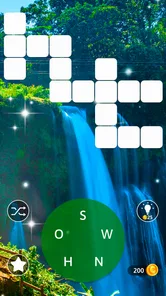
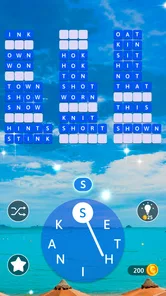
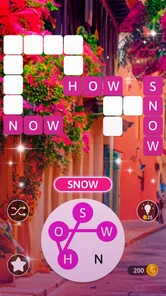
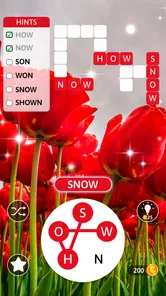
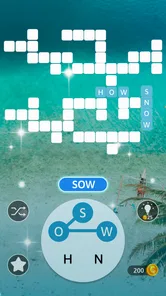
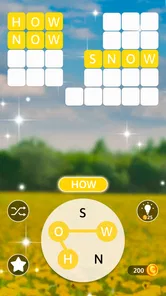
Word Maker: Words Games Puzzle is a word puzzle game built around forming words from a set of letters. Players look for valid combinations to fill in puzzle spaces and progress through levels. The basic idea is easy to understand, but later puzzles may take more thought as the available letters and target words become less obvious. It is suited to short play sessions as well as longer stretches of word-solving.
At each puzzle, you use the letters provided to create words that fit the level’s answer slots. Depending on the puzzle, you may need to find several words from the same letter set, so trying different combinations is part of the challenge. If you get stuck, look for alternate arrangements or use any hint options offered in the game. The precise controls and available assistance can vary by version.
The game may be available to download without an upfront purchase, but that does not necessarily mean every feature is free. Some versions of mobile word games include advertising, optional in-app purchases, or paid options for hints and other extras. Check the listing for your device before installing, and review the current price, in-app purchase details, and any subscription terms shown there, as these can change over time.
Offline availability depends on the version of Word Maker: Words Games Puzzle and how it handles features such as ads, rewards, and progress syncing. Core puzzles may work without an internet connection in some versions, while certain extras could require connectivity. If offline play matters to you, check the app’s store listing and test the game after installation with your connection disabled. Avoid assuming that every mode or feature will be available offline.
Word puzzles can be approachable for a range of ages, but suitability depends on the specific app version and its content, ads, and purchase options. Before downloading for a child, check the age rating, privacy information, and whether the app includes advertising or in-app purchases. You may also want to review device parental controls and set purchase restrictions, since store ratings and app features can differ by region and update.
On Android, Word Maker: Words Games Puzzle asks for these permissions.
Word Maker: Words Games Puzzle is also available in 1 other languages on our site.
4.5 out of 5
54,146 reviews
Word · AAA Fun
Word4.8 out of 5

Word4.7 out of 5

Word4.9 out of 5

Word4.9 out of 5
Word4.8 out of 5

Word4.8 out of 5
Word4.7 out of 5

Word4.5 out of 5

Word4.9 out of 5
Word4.7 out of 5
Word4.8 out of 5
Word4.7 out of 5
Word4.9 out of 5
Word4.9 out of 5
Word4.9 out of 5

Word4.1 out of 5

Word4.6 out of 5
Word4.9 out of 5



Gamesive reviews games on its own and is not paid by developers for scores. We do not host game files: the download buttons open the official Google Play and App Store pages. Names, icons and screenshots belong to their owners.