Word Collect - Word Games Fun
Word4.7 out of 5
For Android & iOS · PlaySimple Games
 Analysis by Gamesive
I enjoy word puzzles most when they give me a small, satisfying problem to carry around rather than demanding a long, uninterrupted session. PlaySimple Cryptogram is built around that kind of thinking: work out which letters stand for which others, use the emerging words to test your guesses, and gradually make sense of a coded message. It is a focused take on the word-game format, and I find its appeal is less about speed than about noticing patterns.
As a free word game from PlaySimple Games, it offers a straightforward reason to open it: solve cryptograms and other word puzzles. The central appeal is that each guess gives you something to reason from. A repeated symbol might point to a repeated letter; a short word can narrow down possibilities; a tentative answer elsewhere can help confirm a pattern. The pleasure comes from building a case rather than simply tapping through a quiz.
That makes it a good fit for a quiet break, a commute when you can look at your screen, or a few minutes between tasks. I would not choose it while walking or doing something that repeatedly interrupts my attention: a cryptogram is easier to solve when I can hold a couple of possible letter mappings in mind. But the underlying activity is easy to understand, so it does not require a lengthy tutorial or a big block of free time before you can get started.
The store summary describes challenging cryptograms and word puzzles, but the useful distinction is the kind of challenge involved. This is not primarily a vocabulary test where you either know an obscure word or do not. It rewards deduction, checking how letters recur, and being willing to revise a guess. That gives a player who likes language a chance to make progress even when the answer is not immediately obvious.
When I approach a cryptogram, I try not to commit too early to a single reading. I first look for repeated patterns: a short sequence that appears more than once, or a long word whose shape suggests familiar endings. Then I test a plausible letter and see whether it makes several parts of the message more coherent. This method is more reliable than guessing from the apparent topic of a sentence, because an early thematic hunch can make every later clue look misleadingly convincing.
A practical habit is to treat guesses as provisional. If one letter makes a word look promising but produces awkward combinations elsewhere, I go back and reconsider it rather than forcing the sentence to fit. That is especially helpful in a game built on letter substitution, where one incorrect assumption can ripple through multiple words. The most rewarding solves are often the ones where a small, cautious deduction unlocks a larger part of the message.
There is a trade-off here: cryptograms can feel more deliberate than quick word searches or casual spelling games. If I want a burst of rapid feedback, a timed word challenge is a better choice. If I want to settle into a puzzle and work through clues at my own pace, this format is more satisfying. It asks for attention, but the task remains familiar enough to pick up without specialist knowledge.
Compared with a conventional crossword, a cryptogram shifts the challenge away from filling a grid with definitions. The key question is not simply “What word matches this clue?” but “Which letters make this whole message consistent?” That can make the puzzle feel more interconnected: one well-supported mapping may help several words at once. It also means that a player who dislikes letter-by-letter deduction may prefer crosswords, anagrams, or word searches.
Compared with an anagram game, the emphasis is less on rapidly rearranging a known set of letters and more on testing a sequence of hypotheses. I find that distinction useful when deciding what mood I am in. Anagrams are better for brisk pattern spotting; cryptograms are better when I want a little mental space and a reason to pause over a clue. Neither style is universally better, and this game is most appealing to people who enjoy the second kind of effort.
It is also worth setting expectations about the experience. The store’s short description calls it PlaySimple Cryptogram, while the game itself is presented as a word puzzle experience. I would approach it for the core pleasure of decoding, rather than assuming it will replace every kind of word game or offer a broad collection of unrelated activities. Its strongest reason to exist is the cryptogram format itself.
The current version is 1.210.0, and the game was released on August 29, 2024. Those are useful points of reference for someone deciding whether to try it, but they do not by themselves reveal what has changed over time. I would not infer a particular new puzzle mode, interface overhaul, or feature from a version number alone. What I can say is that the present product is positioned as an active word-game choice centered on cryptograms and word puzzles.
For someone already playing, a version number is a practical check when comparing the installed app with the version offered through the app store. It is not a promise that a particular issue has been fixed or that a specific feature has arrived. I recommend judging an update by the experience you can actually see: whether the puzzle remains comfortable to use, whether your progress behaves as expected, and whether the current version suits the way you like to solve.
The game has a 4.8 average from around 29,000 ratings, and it has passed one million installs. That level of interest suggests it has found an audience among mobile word-game players, but ratings cannot tell me whether its particular solving style will suit you. A person who enjoys careful deduction may value it much more than someone who wants fast rounds, even if both enjoy word games in general.
If you have played before, the most useful way to assess the current experience is to return with a specific expectation: do you still enjoy decoding messages, and does the puzzle fit the time you have available? A short break can be enough to make progress on a clue, but a message that has you stuck may be easier to revisit later with fresh eyes. I sometimes stop at the point where I have one or two plausible mappings, rather than making a chain of hurried guesses just to finish.
That pause is a small but valuable workflow. Before closing the game, I mentally note the strongest clue I have found and the letter I am least confident about. On returning, I test the uncertain part first instead of rereading the entire puzzle without a plan. It is a simple way to make a cryptogram feel less like staring at a wall of symbols and more like a sequence of manageable decisions.
Another useful approach is to separate what you know from what you suspect. A repeated pattern is evidence; a word that merely fits the sentence’s apparent meaning is a hypothesis. Keeping that distinction in mind helps avoid overconfidence and makes the eventual solution feel earned. It also gives the game a different rhythm from word puzzles where every attempt is simply right or wrong.
The game is free to install, with in-app purchases ranging from $0.99 to $29.99 per item. That gives curious players a way to try the core experience before spending, but anyone who prefers a completely purchase-free mobile game should check the purchase options in the app store before getting invested. I would also make a deliberate choice about spending rather than treating a purchase as a requirement for enjoying the basic idea.
It is rated Everyone and requires Android 8.0 or later. Those details make the intended audience broad, though the actual enjoyment still depends on whether the player likes reading and deduction. I would recommend it to adults who enjoy language puzzles and to younger players who are comfortable working through written clues. For a child who mainly wants animated action or hands-on competition, a different game would probably hold attention better.
I would skip it if I wanted multiplayer competition, a fast reflex challenge, or a puzzle that can be solved without much reading. I would also choose another word game if I strongly prefer a clear clue-and-answer format, as in many crosswords, or a visual search task with less reliance on reasoning about letters. The specific pleasure here is patient decoding, and that can feel slow if you open the app expecting immediate, rapid wins.
The game’s 1.6K reviews add another useful signal alongside its rating: people have taken the time to describe their experiences, not just score them. Still, I would use user feedback as a way to spot recurring concerns rather than as a substitute for trying the puzzle style yourself. Your tolerance for a tricky message, and your preference for a calm or brisk pace, matter more than an average score when deciding whether this is your sort of game.
For future updates, I would pay attention to whether the game continues to make the solving process comfortable for both new and returning players. A cryptogram benefits from clear presentation because the challenge should come from interpreting the code, not from struggling to keep track of a guess. I would also value changes that preserve the pleasure of reasoning instead of turning every puzzle into a rushed sequence of taps.
Those are things to watch, not claims about features already present. The confirmed release and current version give a snapshot of where the app stands, while future additions or adjustments remain something to judge when they appear. If you already enjoy the game, checking what an update actually changes is more useful than assuming a higher version number means a new mode or a better fit for your preferences.
My overall recommendation is simple: try PlaySimple Cryptogram if you like to solve words by testing patterns and revising your assumptions. It is a better match for a thoughtful pause than for a frantic session, and its free entry point makes it easy to see whether that rhythm works for you. I would keep it in rotation as a focused word puzzle, not as a universal replacement for crosswords, anagrams, or quick casual games.
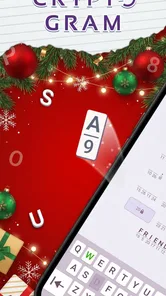
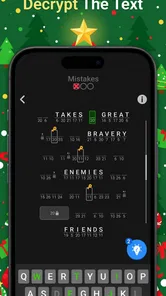
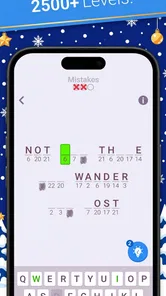
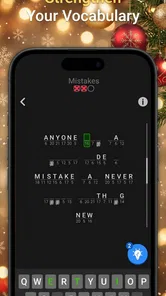
PlaySimple Cryptogram is a word puzzle game built around decoding short messages. Each letter in a quote or phrase is replaced by another letter, and you use the clues and patterns in the puzzle to work out the original text. It is designed for casual play, so you can solve a puzzle at your own pace rather than racing against other players.
To solve a cryptogram, tap a letter in the encrypted message and enter the letter you think it represents. The same substitution applies throughout that puzzle, so filling in one answer also helps reveal matching letters elsewhere. Look for repeated patterns, common short words, and familiar phrases. If you get stuck, the game may provide hints, depending on the version and puzzle.
The game is generally offered as a free download, but availability, pricing, and included features can vary by platform and region. Free-to-play versions may show advertisements or offer optional in-app purchases, such as hints or other convenience features. Check the listing in the Google Play Store or Apple App Store for the current details before downloading, and review purchase settings if children may use the device.
Whether puzzles work without an internet connection can depend on the app version and how its content is delivered. Some previously loaded puzzles may remain available offline, while features such as advertisements, updates, or online events may require a connection. If offline play matters to you, try opening the game in airplane mode after installation and check the store listing or in-app help for the developer’s current requirements.
Cryptograms can be approachable for beginners because you can test possible letters and gradually reveal the message, but early puzzles may still take a little practice. Hints, if available in your version, can help when you reach a difficult passage; their cost or limits may vary. The game is a good fit for players who enjoy vocabulary and deduction, though it may feel challenging if you prefer puzzles with explicit instructions.
On Android, PlaySimple Cryptogram asks for these permissions.
4.8 out of 5
28,612 reviews
Word · PlaySimple Games
Word4.8 out of 5

Word4.7 out of 5

Word4.9 out of 5

Word4.9 out of 5
Word4.8 out of 5

Word4.8 out of 5
Word4.9 out of 5
Word4.9 out of 5

Word4.8 out of 5

Word4.9 out of 5
Word4.7 out of 5

Word4.5 out of 5

Word4.9 out of 5
Word4.7 out of 5
Word4.8 out of 5
Word4.7 out of 5
Word4.9 out of 5
Word4.9 out of 5
Word4.9 out of 5

Word4.5 out of 5

Word4.1 out of 5

Word4.6 out of 5



Gamesive reviews games on its own and is not paid by developers for scores. We do not host game files: the download buttons open the official Google Play and App Store pages. Names, icons and screenshots belong to their owners.