Word Collect - Word Games Fun
Word4.7 out of 5

For Android & iOS · Fugo Games
 Analysis by Gamesive
I like word games that give me a clear little problem to solve without demanding a long session, and Words of Wonders: Guru is built around that kind of quick engagement. It is a word puzzle game from Fugo Games, with a travel theme that gives the solving a sense of progression. The central appeal is straightforward: look at a set of letters, work out which words fit, and keep going when the next puzzle is ready.
That simplicity is a strength, but it also sets expectations. This is a better fit for someone who enjoys searching for familiar words and testing possible combinations than for a player looking for a story, competitive matches, or a deep language course. I find its best use is as a focused break: a few puzzles while waiting, or a calm routine when I want something more involving than scrolling but less demanding than a full game session.
The game is free to download, so trying its basic word-puzzle experience does not require an upfront payment. It also offers in-app purchases, with listed items ranging from $0.39 to $49.99 each. Those figures describe the range of available purchases, not a requirement to pay or a promise that any particular purchase is good value. I would treat the free entry point and optional spending as separate questions: first see whether the puzzles suit you, then decide whether anything offered inside is worth your money.
That distinction matters because “free” alone does not tell you how much a game will ask for as you play. I would not assume that every useful aid, convenience, or progression option is included without cost, nor would I assume that purchases are necessary to enjoy the core activity. If you prefer to avoid unexpected spending, check the purchase prompts carefully and use your device’s purchase controls. The practical approach is to begin without buying anything and judge the experience on the puzzles themselves.
The game is rated for Everyone, which makes it broadly approachable as a casual word game. It has an average rating of 4.9 from around 365 thousand ratings, and more than 10 million installs. Those figures suggest a large audience and a very positive reception, but they cannot tell me whether the puzzle style will click for you personally. A high rating is useful context, not a substitute for trying a few rounds and seeing whether the word search feels satisfying or repetitive.
The basic pleasure here comes from turning a small pool of letters into a set of answers. I enjoy the moment when a word has been sitting in plain sight, but I have been reading the letters in the wrong order. That makes the game rewarding in short bursts: each puzzle gives me a bounded task, and I can stop after solving it without needing to remember a complicated plot or manage a team.
The travel framing helps the sequence feel like more than an endless row of unrelated letter challenges. It gives the game a light sense of movement as I progress, while the actual work remains firmly about vocabulary and pattern recognition. That is a useful balance for players who want a little atmosphere but do not want story scenes or elaborate world systems to get between them and the puzzle.
A practical way to play is to scan for short, obvious words first, then use those discoveries to reconsider the remaining letters. Instead of repeatedly guessing long answers, I look for common endings, beginnings, and letter pairs, and then test whether they can form a valid word. This reduces aimless tapping and makes the game feel more like a small deduction exercise. When I get stuck, stepping away for a minute can be more effective than forcing guesses; a fresh look often reveals a combination I had overlooked.
That also makes it useful in everyday situations where attention is divided. On a short break, I can finish a puzzle or make progress without setting aside an uninterrupted evening. On a commute, it can occupy a quiet stretch, though I would avoid playing when I need to watch my surroundings. At home, it works well as a low-pressure alternative to a more demanding game: I can pick it up, solve a few clues, and put it down again.
There is a modest language benefit in the sense that puzzles encourage noticing spellings and possible word forms. I would not mistake that for a structured way to learn a language, though. Recognizing a word from letters is different from learning how to use it in conversation, and a player hoping for lessons, grammar explanations, or guided vocabulary practice should choose a dedicated learning app instead. The game is most enjoyable when the goal is solving, not studying.
Compared with a crossword, this style of puzzle puts more emphasis on rearranging letters and spotting possible words than on interpreting written clues. That can make it easier to approach when I want a direct challenge without reading a clue for every answer. On the other hand, crossword fans who enjoy wordplay, general knowledge, and the satisfaction of filling intersecting entries may find the letter-focused routine less varied.
It also differs from word-search games, where the task is usually to locate visible words in a grid. Here, the challenge is to identify what can be made from the available letters, so I am working through combinations rather than scanning rows and columns. Players who like anagrams and vocabulary puzzles will probably find that distinction appealing; someone who wants a fast visual hunt may prefer a conventional word search.
Against competitive word games, the appeal is its more solitary, self-paced feel. There is no need to coordinate with an opponent or worry about a timed match to get something from a session. That is a plus when I want to unwind, but a downside if the reason I play word games is to test myself against other people. The right choice depends less on which format is “better” and more on whether you want calm word solving or social competition.
One useful personal rule is to notice what kind of difficulty feels fun. If I am enjoying the search and trying fresh combinations, the puzzle is doing its job. If I am tapping at random because the answer feels obscure, the session becomes less satisfying. I would rather pause, take a break, or use any in-game assistance cautiously than turn every puzzle into a test of patience. That keeps the game in its strongest role: a pleasant mental diversion, not an obligation.
The clean, repeatable puzzle format can become familiar quickly. Once the basic routine is comfortable, players who need a steady stream of new mechanics may find that solving one letter set after another does not offer enough variety. I see that as the main tradeoff: the same focused loop that makes the game easy to return to can also make longer sessions feel repetitive.
Vocabulary is another source of uneven difficulty. A word that seems obvious to one player may be unfamiliar to another, depending on age, reading habits, and language experience. When that happens, the puzzle can feel less like deduction and more like guessing what answer the game expects. If you are playing with a child or someone still building confidence with words, keeping the mood relaxed matters more than treating every unsolved entry as a measure of ability.
There is also a difference between getting value from a free game and finding value in a paid item. The game’s free price makes it easy to sample, but optional purchases should be assessed individually. I would not spend simply because I had already invested time; that is a sunk-cost trap, not a reason to buy. If a purchase is presented, consider whether it solves a problem you genuinely have and whether the amount feels comfortable. If the free puzzles are not enjoyable on their own, paying is unlikely to change that basic fit.
For the technical side, the current version is 3.6.0, and the minimum operating-system requirement is version 8.0. That gives prospective players a straightforward compatibility check before downloading. Since the game is free to install, checking that requirement is a sensible first step on an older device, followed by trying the game before making any purchase decision.
I would recommend it to casual puzzle fans who like anagrams, enjoy finding words in a limited set of letters, and prefer to play at their own pace. It is especially suited to people who want short sessions with a clear objective and little setup. The travel theme may also appeal if you like a light sense of progression without needing a narrative-heavy adventure.
It is a less obvious choice for someone who wants to compete directly with friends, practice a language through lessons, or discover a substantially different activity every time they open a game. It may also frustrate players who dislike encountering words they do not know or who feel pressured by optional purchase prompts in free-to-play games. For those players, a clue-led crossword, a social word duel, or a structured language-learning tool may be a better match.
For a family setting, I would treat it as a shared word challenge rather than assume that every puzzle will suit every reader equally. Taking turns suggesting words can turn a stuck moment into a cooperative one, and younger players can focus on spotting familiar combinations. The Everyone rating makes it broadly accessible by age, but individual vocabulary and patience still shape how enjoyable it feels.
I think Words of Wonders: Guru is worth trying if the simple act of building words from letters sounds satisfying to you. Its free entry point lowers the risk of testing that preference, while its travel theme gives a little context to a puzzle loop that remains easy to understand. The strong audience response is encouraging, but the deciding factor should be whether you enjoy the actual letter-solving rather than the popularity figure.
My advice is to start with the free experience, play in short sessions, and resist buying anything until you know what you want from it. If you enjoy spotting patterns, solving a handful of puzzles during spare moments, and returning later without needing a complicated setup, it can be a pleasant addition to your phone. If you are looking for deep strategic systems, multiplayer rivalry, or a true language course, I would skip it in favor of a game built around those goals. For the right player, the value is not that it promises to teach everything or entertain endlessly; it is that it offers an easy, focused word challenge whenever a small mental break sounds good.
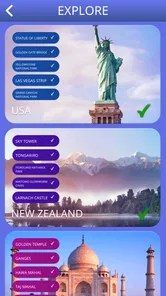
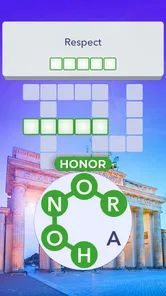
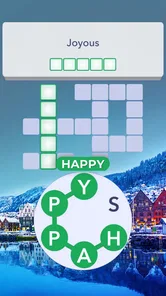
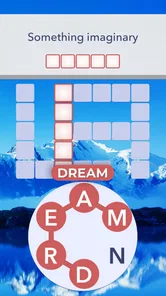
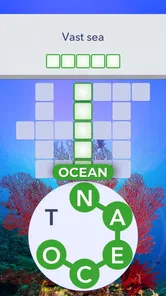
Words of Wonders: Guru is a word puzzle game built around connecting letters to form words and fill in a crossword-style grid. Its levels are organized around themed stages, giving the game a travel-inspired presentation as you progress. The central challenge is to find the required words from a limited set of letters, while optional extra words can add another layer of discovery.
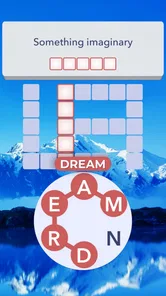
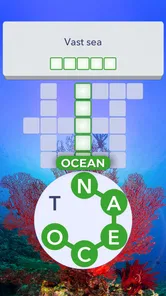
Each puzzle gives you a group of letters and a crossword-like board containing empty spaces. Swipe across the letters to create a word, then the game places it in the grid if it fits. You need to identify the words required to complete each stage, using crossings to reveal helpful letters. Some possible words may not belong in the grid, so experimenting with different combinations is part of the experience.
Words of Wonders: Guru can generally be downloaded and played without paying upfront, but availability and payment options may vary by platform and region. Like many free mobile puzzle games, it may include advertising and optional in-app purchases, such as items that help with challenging levels. Check the current Google Play Store or Apple App Store listing for the latest pricing, ads, and purchase details before downloading.
Many of the core word puzzles may be playable without a continuous internet connection, which can make the game convenient for travel or short breaks. However, features such as advertisements, purchases, events, or syncing progress may require connectivity, and offline availability can depend on the version and device. For the most reliable information, try launching a level in airplane mode after installation and review the store listing for current requirements.
The game’s word-building format can be enjoyable for players who like vocabulary challenges, and it may encourage attention to spelling and letter patterns. Its usefulness for language learning depends on the words and language settings available in your version; it should not be treated as a structured language course. Puzzle difficulty can vary, so younger players may occasionally need help. Parents should also check the app’s age rating, ads, and in-app purchase settings.
On Android, Words of Wonders: Guru asks for these permissions.
Words of Wonders: Guru is also available in 2 other languages on our site.
4.9 out of 5
364,550 reviews
Word · Fugo Games
Word4.8 out of 5

Word4.7 out of 5

Word4.9 out of 5

Word4.9 out of 5
Word4.8 out of 5
Word4.8 out of 5
Word4.9 out of 5

Word4.9 out of 5

Word4.8 out of 5
Word4.7 out of 5

Word4.5 out of 5
Word4.7 out of 5
Word4.8 out of 5

Word4.7 out of 5
Word4.9 out of 5
Word4.9 out of 5
Word4.9 out of 5

Word4.5 out of 5

Word4.1 out of 5

Word4.6 out of 5
Word4.9 out of 5



Gamesive reviews games on its own and is not paid by developers for scores. We do not host game files: the download buttons open the official Google Play and App Store pages. Names, icons and screenshots belong to their owners.