Word Collect - Word Games Fun
Word4.7 out of 5
For Android & iOS · PeopleFun

 Analysis by Gamesive
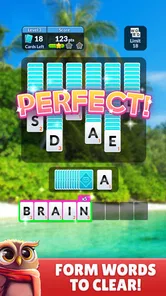
I like word games that give me a small, clear goal without demanding a long session, and Wordscapes Solitaire aims for just that kind of easygoing appeal. It brings word puzzles together with solitaire, giving each round a mix of vocabulary and card play rather than asking me to stick with only one kind of challenge. The result is a casual game that feels suited to a short break, while still offering enough variety to keep the next round tempting.
That combination is the main reason I’d suggest trying it if you enjoy relaxing word games. PeopleFun has built a recognizable audience around the game: it has a 4.7 average from around 267,000 ratings, with over a million installs. Those numbers point to broad interest, but the more important question is whether the play itself feels satisfying. For me, the appeal is in having a simple objective to focus on and a different kind of thinking to use as the session unfolds.
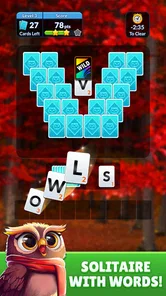
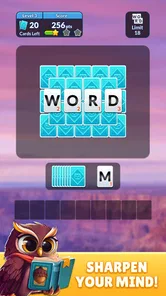
The central idea is refreshingly straightforward: Wordscapes Solitaire combines word games and solitaire. That pairing gives the game an identity beyond a standard vocabulary quiz or a conventional card game. Word play invites me to look for connections between letters, while solitaire brings its own familiar sense of sorting and planning. Switching between those styles helps the experience feel varied without making it difficult to understand what the game is about.
I also appreciate that the game’s stated aim is to help players relax and have fun. That sets a different expectation from a competitive puzzle title built around pressure or demanding mastery. Here, I can settle into the activity, look at the immediate task, and take it one step at a time. The concept doesn’t need a complicated explanation: it’s a casual word-and-card game, and that clarity makes it easy to approach.
As a word game, it has a broad appeal for players who like noticing patterns and working through a puzzle at their own pace. As solitaire, it draws on a familiar style of play that many people already understand. The combination should be especially appealing if you enjoy both, but it also gives fans of either genre a reason to explore the other side. I found that this blend is the game’s strongest hook: it offers two recognizable pleasures in one package.
A good casual game needs to make the first step feel manageable. This one benefits from a premise I can understand quickly: play through a word-and-solitaire experience, take on the current objective, and see what comes next. That approachable framing matters because a puzzle can lose its charm if the player has to learn a stack of rules before enjoying it. The appeal here is the chance to get into the activity without treating every session like a major commitment.
Early goals are an important part of that first impression. A clear task gives me a reason to focus, while the word and card elements provide two kinds of engagement. The word side encourages me to think about language; the solitaire side offers a more visual, methodical rhythm. Moving between them can help a session feel active without needing elaborate systems or a steep learning curve to make it interesting.
The game’s free-to-play entry point also makes it approachable for people who want to try the concept before deciding how much time they want to spend with it. It is free to download, with optional in-app purchases ranging from a few cents to just under a hundred dollars per item. That range is worth keeping in mind, particularly if you prefer to set limits on optional spending. The core attraction, though, is the word-and-solitaire format rather than the idea of buying your way into a different kind of game.
In a casual puzzle game, progress doesn’t have to be presented as a huge achievement to feel rewarding. Sometimes it is enough to finish the task in front of me and have a clear reason to continue. The combination of word play and solitaire lends itself to that kind of steady momentum: I can focus on the immediate puzzle, enjoy the change in mental rhythm, and treat each completed stretch as a small step forward.
Those progress signals matter because they help a game avoid feeling like a collection of disconnected rounds. A goal provides direction; a sense of movement gives that goal weight. Wordscapes Solitaire’s broad concept makes it easy to understand why I might want to continue: I’m not only revisiting the same mental action, but moving between two styles that complement one another. That variety is a useful source of freshness, especially during a quick session.
I would describe the appeal as gentle momentum rather than relentless achievement. The game’s relaxation-focused pitch suits players who want something enjoyable to return to, not a demanding test that dominates their attention. That makes it a good fit for a spare moment when I want to do something more engaging than passively scroll, but don’t want a deep, complicated game to learn.
Word puzzles and solitaire both create challenge through attention and decision-making, but they ask for different kinds of focus. Words reward careful observation and language sense; solitaire asks me to think through a card-based puzzle. That contrast gives the game a natural way to vary its mental demands. When one style starts to feel familiar, the other can make the overall experience feel less repetitive.
The challenge is best approached with a relaxed mindset. I wouldn’t pick this game expecting a hard-core competitive test; its identity is built around casual enjoyment. That doesn’t mean there is nothing to think about. Even a simple puzzle can be satisfying when I pause, consider the available choices, and work toward a goal. The key is that the challenge feels like part of a pleasant routine rather than a source of pressure.
For players who like seeing improvement, the word element can make each round feel like a small exercise in recognition and recall. The card element, meanwhile, changes the texture of play, so the experience isn’t only about finding words. That variety is a smart design choice for a game intended to be easy to pick up. It gives me more than one reason to stay engaged, without requiring the game to present itself as a complex strategy title.
Pacing is where a relaxing game can either become a welcome habit or start to feel like a chore. I prefer experiences that let me enjoy a quick round and leave when I’m ready, rather than making every session feel like a commitment. Wordscapes Solitaire’s simple genre mix supports that kind of flexible play: the basic idea is easy to return to, and the different mental styles help soften repetition.
That said, any game built around continued progression has to balance the desire to keep playing with the value of taking a break. The best reason to return is that the puzzles are enjoyable, not because I feel pressured to keep up. I’d approach this title as something to dip into when I’m in the mood for a casual word game with solitaire mixed in. That keeps the experience aligned with its relaxed tone and helps prevent a small pastime from turning into an obligation.
Optional purchases are another part of the experience to consider. The game is free, and its in-app items span from a few cents to nearly a hundred dollars. That broad range means I’d pay attention before making a purchase and decide in advance whether I want to spend at all. Players who prefer to keep casual games entirely free can simply treat spending as an optional choice, rather than as the reason to try the game.
There is also a practical compatibility detail for prospective players: the game’s minimum operating-system requirement is version 7.1. It is rated Everyone, which makes its content broadly accessible. These details support its approachable positioning, though the best way to judge whether it suits you is to consider the core activity: a relaxed mix of words and solitaire, designed for casual play.
I’d recommend it first to people who already like word puzzles and want a little variation in their casual routine. Solitaire fans may also enjoy having a word-game element alongside familiar card play. If you want something that is straightforward to understand and doesn’t demand constant attention, the combination makes sense. It gives you a clear activity to focus on while keeping the mood light.
It may be less appealing if you’re looking for a deep story, a highly competitive environment, or an intense strategy challenge. Those aren’t the reasons I’d choose a game whose pitch is built around relaxing and having fun. Its value lies in the small-scale pleasure of working through puzzles, enjoying a change of pace, and returning when another quick session sounds good.
The game has been developed by PeopleFun and was released on August 1, 2024. Its current version is 2.12.0. Those details place it as a modern casual title, but the lasting appeal depends on the play itself: whether the word-and-solitaire blend feels enjoyable enough to revisit. For me, that combination gives it a clear identity and a sensible audience among fans of accessible puzzle games.
Overall, I see Wordscapes Solitaire as an approachable casual game whose strongest feature is its pairing of word puzzles with solitaire. It gives players an easy premise, a clear reason to focus on each round, and a change in mental rhythm that can help sustain interest. Its relaxed character is a better fit for short, enjoyable sessions than for anyone seeking a demanding, high-pressure challenge.
The progression works best when I treat it as a series of small goals rather than a race. That mindset lets the puzzle and card elements provide the entertainment, while keeping the experience light. The game’s broad player interest—supported by a 4.7 average across roughly 267,000 ratings—suggests that the concept has found an audience, though personal enjoyment will still depend on whether this particular mix suits your taste.
If you’re searching for a relaxing word game with a familiar solitaire flavor, this is an easy title to consider. I like that it offers two kinds of puzzle enjoyment without making its premise feel intimidating. Keep optional purchases in mind, choose your own pace, and approach it as a pleasant way to spend a spare moment. For me, that’s where the game succeeds: it makes simple goals feel enjoyable enough to return to.
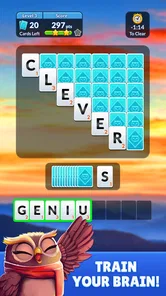
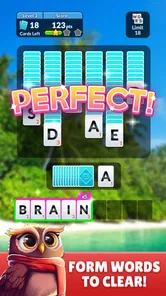
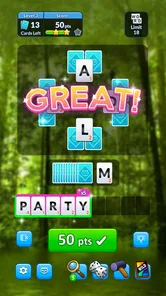
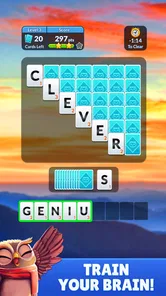
Wordscapes Solitaire combines solitaire-style card play with word and vocabulary elements. Rather than simply clearing cards, you work through levels that ask you to find or form words, with cards serving as part of the puzzle. It is designed for short sessions and a relaxed pace, though later challenges may take more thought. If you enjoy casual card games as well as word puzzles, its blend may appeal to you.
The basic goal is to complete each level by using the available cards to uncover or build the required words. You select cards according to the rules shown in the game, and the layout or available choices can affect which moves are possible. Pay attention to the letters and cards still in play before making a move, since using one option may reveal or block another. The game provides a tutorial to explain its specific mechanics.
Wordscapes Solitaire is generally offered as a free-to-download mobile game, but availability and store details can vary by device and region. Free games may include advertisements, optional purchases, or both; check the listing and in-game purchase information before downloading. You can usually begin playing without paying, but avoid assuming every feature or convenience is free. Review purchase settings, especially if children use the device, and confirm any charges before approving them.
Some parts of Wordscapes Solitaire may be playable without a continuous connection, but features such as advertisements, rewards, updates, or syncing progress can depend on internet access. Offline behavior may also change between versions, so the safest approach is to check the game after installing it and before relying on it during travel. Keep in mind that playing offline may limit certain bonuses or prevent progress from syncing across devices.
The game’s word puzzles and card mechanics are generally approachable for a broad audience, but suitability depends on a child’s age and comfort with ads or optional purchases. Before installing, review the age rating, privacy information, and permissions shown on the official app-store page. Privacy practices can change and may vary by region, so check the developer’s current policy. For a child’s device, consider enabling parental controls and purchase approval.
On Android, Wordscapes Solitaire asks for these permissions.
4.7 out of 5
266,795 reviews
Word · PeopleFun
Word4.8 out of 5

Word4.7 out of 5

Word4.9 out of 5

Word4.9 out of 5
Word4.8 out of 5
Word4.8 out of 5
Word4.7 out of 5

Word4.7 out of 5

Puzzle4.8 out of 5
Word4.7 out of 5

Word4.5 out of 5

Word4.9 out of 5
Word4.7 out of 5
Word4.8 out of 5
Word4.7 out of 5
Word4.9 out of 5
Word4.9 out of 5
Word4.9 out of 5

Word4.5 out of 5

Word4.1 out of 5

Word4.6 out of 5



Gamesive reviews games on its own and is not paid by developers for scores. We do not host game files: the download buttons open the official Google Play and App Store pages. Names, icons and screenshots belong to their owners.