
Piano Game: Classic Music Song
Music4.0 out of 5
For Android · Dream Tiles Piano Game Studio




 Analysis by Gamesive
I like rhythm games most when they give me a clear job from the first moment: listen, react, and try again when I miss a beat. Piano Beat: Music Game is built around that compact, repeatable appeal. It is a free music game from Dream Tiles Piano Game Studio, aimed at players who want a quick burst of timing-focused play rather than a lesson in piano technique. Its central draw is the way a song turns into a sequence of small decisions: keep pace, stay attentive, and see how long your run holds together.
The first thing I would expect from a game with this name is a straightforward musical challenge, and that is the right way to approach it: treat each attempt as a short test of timing and concentration. The appeal is not that it teaches you to perform a piece on a real keyboard. It is that music gives your actions a pulse, making even a brief play session feel more involving than tapping through an ordinary menu or puzzle.
That distinction matters if you are choosing between Piano Beat and a piano-learning app. A learning tool is the better fit when you want notation, structured practice, or skills you can transfer to an instrument. This is better suited to casual play: you want to engage with music, keep your hands busy, and enjoy the immediate challenge of matching your actions to a beat.
I would start with a relaxed attempt rather than treating the first run as a high-score test. Rhythm games ask for attention in a particular way: you need to notice the pattern, respond promptly, and recover mentally if you slip. Playing without pressure makes it easier to tell whether the timing feels natural to you and whether the musical presentation keeps you interested.
The game is rated Teen, so I would keep that in mind when deciding whether it is appropriate for a younger player. It is available for Android devices running version 6.0 or later. The current version is 1.7.6, and the game has been available since June 20, 2025. Those details are useful when checking compatibility, but the practical question is whether your device meets the minimum and whether you enjoy this kind of quick-response play.
The basic rhythm-game loop is easy to understand, but it still gives each attempt a small mental arc. You begin by settling into the pace; then you try to keep your responses consistent as the music continues. That makes Piano Beat suitable for moments when I have only a little time, such as waiting for a ride or taking a short break. I can approach it as a focused diversion without needing to set aside a long block of time.
A useful tip is to give the audio your attention instead of relying only on visual reaction. In a music game, the sound can help you anticipate when the next response is due, while watching the screen helps you confirm what is happening. Switching between those cues can make a run feel less frantic, especially if your first instinct is to stare at every movement and react late.
There is a trade-off, though: anyone who prefers slower, exploratory games may find this kind of play demanding rather than relaxing. A rhythm challenge rewards concentration, and a missed beat can interrupt the flow you were building. If you want a game that lets you pause frequently, wander around, or make choices at your own pace, a puzzle or narrative game may suit you better.
The satisfying part of a rhythm game is the close link between action and feedback. When your timing feels aligned with the music, the play becomes less like a series of separate taps and more like following a pattern. When you lose that alignment, you notice it immediately in your own concentration, even before deciding whether to start another attempt. That quick sense of cause and effect is what makes a simple premise engaging.
For a better first session, I would avoid playing while splitting attention between the game and a conversation or video. A brief distraction can be enough to throw off your sense of timing, and then it becomes hard to tell whether a run ended because the challenge was difficult or because you were not fully focused. Playing with the sound at a comfortable level and giving the screen your full attention is a more useful test of whether the game clicks for you.
That focus also makes the game a poor choice in situations where you need to stay alert to your surroundings. I would not recommend a timing-based session while walking through a busy area or doing anything that requires your eyes and hands elsewhere. The best everyday use case is a safe, stationary break: a few minutes at home, on a quiet commute while seated, or between tasks when you can give the game your attention.
Piano Beat has a 4.1 average rating from around 48,000 ratings, alongside 109 written reviews. It has passed 50 million installs, which suggests it has reached a broad audience, but those figures do not tell me whether its style will suit an individual player. I would use them as context, not as a substitute for trying the rhythm and deciding whether its pace feels enjoyable rather than stressful.
In a compact music game, reward does not need to mean a complicated progression system. The immediate satisfaction can come from feeling that your timing improved, holding concentration longer, or simply getting into the musical flow. That small personal payoff is often enough to make another round appealing. For me, the strongest reason to return is the chance to do a little better on the next attempt, not a promise that every session will reveal something new.
That distinction helps set expectations. If you enjoy repeating a challenge to sharpen your reactions, Piano Beat has a natural reason for another session. If repetition quickly feels like grinding to you, the same loop may lose its charm. It is a more sensible pick for someone who enjoys short attempts and incremental improvement than for a player who needs a large world, a story, or frequent changes in activity to stay engaged.
There is also a practical way to keep the reward from turning into frustration: stop after a run that feels satisfying instead of immediately chasing a perfect result. Rhythm games can encourage the familiar “one more try” response, but a short break can reset your attention and make the next attempt feel deliberate. If you are repeatedly reacting late, stepping away is likely more useful than forcing another run while annoyed.
The game is free to download, with in-app purchases ranging from $0.99 to $39.99 per item. I would keep that in mind if you are setting a spending limit on your device, particularly if the game will be used by a younger player. You can try the basic experience without paying, while any optional purchase should be considered separately from whether the core rhythm challenge is enjoyable to you.
Every attempt in a timing game is also a reset: you return to the challenge with a little more familiarity and a clearer idea of how it feels. The useful question after a miss is not only “Can I do better?” but “What changed in my attention?” Maybe you were watching too closely, rushing, or playing while distracted. Treating a restart as a chance to adjust one habit makes repeat sessions more purposeful than tapping through them automatically.
I would also use the game differently depending on the moment. For a quick break, one or two focused attempts are enough to provide a musical change of pace. If I want a longer session, I would make sure I am comfortable and not trying to squeeze it into a moment when I need to stop every few seconds. The game’s appeal depends on maintaining a rhythm, so frequent interruptions can make the experience feel choppy rather than satisfying.
Compared with other music games, Piano Beat belongs to the casual, reflex-led side of the category rather than the instrument-practice side. A dedicated rhythm title with more involved performance systems may suit players seeking technical depth, while a piano tutor is preferable for learning real pieces or reading music. Piano Beat makes more sense when the goal is accessible musical interaction and a repeatable challenge, not a substitute for either of those experiences.
It is also worth being honest about personal tolerance for repetition. The loop that makes a short session easy to start can make longer play feel samey if you are not motivated by timing and self-improvement. I would skip it if I were looking for broad strategic choices, a strong narrative, or an experience that changes substantially from one session to the next. That is not a flaw for every player; it is simply the boundary of what this style does well.
I would recommend Piano Beat to someone who enjoys music-themed games, likes quick reactions, and wants something they can pick up for a short break. It is especially suitable for players who find satisfaction in refining timing through repeat attempts. The game’s music focus gives the action a more expressive feel than a generic reflex test, while its straightforward premise makes it easy to understand what kind of experience it is offering.
I would be more cautious about recommending it to a player who gets irritated by missed timing, dislikes repeating challenges, or expects a piano game to teach them to play an instrument. I would also suggest checking the Teen rating and purchase settings before handing it to a younger family member. These are practical considerations, not reasons everyone should avoid it; they help match the game to the person who will actually use it.
Overall, Piano Beat is most convincing when I treat it as a focused, bite-sized rhythm challenge. Its action is easy to grasp, its feedback encourages another attempt, and restarting can feel worthwhile when I use each run to settle into the beat rather than chase perfection. If you want a free music game for brief, attentive sessions, it is worth trying. If you want music instruction or a deeper, varied game structure, I would choose a different kind of app instead.
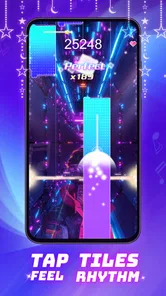
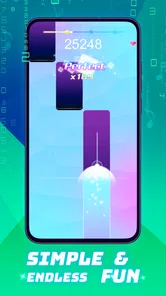
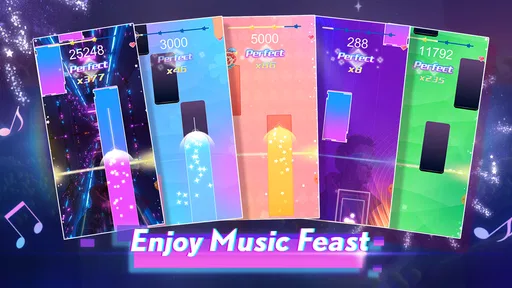
Piano Beat: Music Game is a rhythm game where you tap tiles in time with the music as they move across the screen. The main challenge is to follow the beat, keep a steady rhythm, and avoid missing notes. It is designed for quick play sessions and can suit players looking for a simple music-themed game, though the exact song selection and features may vary by version.
The game may be available to download for free, but that does not necessarily mean every feature is free. Apps in this category can include advertising, optional purchases, or content that becomes available through progression. Check the store listing for the current price, in-app purchase details, and any subscription terms before installing. Availability and payment options can differ between Android and iOS and may change over time.
Offline play depends on how the current version handles songs, ads, and other online services. Some rhythm games let you replay downloaded or unlocked tracks without an internet connection, while other features may require connectivity. If you expect to play while travelling or away from Wi-Fi, check the app’s listing and test the game before relying on offline access. Online features and requirements can change with updates.
The tile-tapping gameplay is straightforward, but parents should review the store’s age rating and the app’s privacy information before letting a child play. Pay attention to whether the game contains advertising, in-app purchases, external links, or online features, as these can affect the experience. The rating and available parental controls may differ by platform, region, and version, so check the relevant store page.
Confirm that the app is compatible with your device and operating-system version, and review its current permissions, privacy disclosures, file size, and store rating. It is also worth checking recent reviews for comments about performance, ads, touch responsiveness, and available songs. Store information and features can change after updates, so use the official Google Play or Apple App Store listing for the latest details before installing.
On Android, Piano Beat: Music Game asks for these permissions.
Piano Beat: Music Game is also available in 2 other languages on our site.
4.1 out of 5
48,233 reviews
Music · Dream Tiles Piano Game Studio

Music4.3 out of 5

Music4.6 out of 5

Music3.1 out of 5
Music4.5 out of 5

Music4.2 out of 5
Music3.7 out of 5
Music4.0 out of 5

Music3.5 out of 5
Music4.0 out of 5

Music4.6 out of 5

Music4.3 out of 5
Music4.3 out of 5

Music3.7 out of 5

Music4.4 out of 5

Music4.6 out of 5

Music4.5 out of 5

Music4.8 out of 5

Music4.6 out of 5

Music4.0 out of 5
Music4.8 out of 5



Gamesive reviews games on its own and is not paid by developers for scores. We do not host game files: the download buttons open the official Google Play and App Store pages. Names, icons and screenshots belong to their owners.