
Piano Fire: Edm Music & Piano
Music4.6 out of 5
For Android & iOS · BADSNOWBALL HONGKONG LIMITED
 Analysis by Gamesive
I think of Smash Colors: Music Ball Rush as a game that fits neatly into the small gaps of a busy day: a quick turn while waiting for someone, a short break between chores, or a few minutes on a shared tablet. Its appeal is easy to understand from the first rounds: music sets the pace, a ball moves through a colorful track, and you try to match the colors as you play. It asks for attention and timing, not a long commitment or a complicated setup.
That simplicity makes it tempting to pass around at home, but it also changes how I’d recommend using it. The game is better suited to individual, brief turns than to a household expecting a shared campaign, family profiles, or coordinated multiplayer sessions. If you treat it as a casual music game that one person plays at a time, it can be an enjoyable little distraction. If you want a game built around group play or a deep collection of musical challenges, you may be happier elsewhere.
The basic loop is direct: listen to the music, watch the color cues, and guide the ball to match what is ahead. That connection between sound and movement gives each round more character than a plain reflex test. I find it most satisfying when I can focus on the rhythm instead of trying to play while talking, walking, or keeping an eye on something else.
That makes the game a reasonable fit for a shared phone or tablet, provided everyone understands that a turn belongs to one player at a time. It is easy to picture a household taking turns after dinner: one person tries a run, hands over the device, and the next person has a go. The short-session feel is useful here because nobody has to plan an evening around it.
There is a practical trade-off, though. A shared device does not automatically mean a shared experience. The central appeal is personal timing and concentration, so chatting over the music or reaching for the screen during someone else’s run can spoil the flow. I’d agree on a simple turn-taking routine rather than assuming the game itself will manage household coordination.
For a parent or caregiver, that distinction matters. This is not the sort of title I would choose specifically to encourage siblings to cooperate. It is better for taking turns, comparing how a round felt, or letting someone play independently while others wait. If the goal is a game where several people act together, a party game designed around shared decisions is a more natural choice.
The color matching is the main test, but the music is not just background decoration: it helps give the action its pulse. I recommend starting when you can give the screen and audio your attention, then deciding whether the pace feels comfortable before settling into a longer session. A noisy room can make a rhythm-led game less absorbing, while a quiet moment lets the beat and visual cues work together.
One useful habit is to avoid treating every mistake as a reason to rush into another attempt. Pause for a moment and notice whether you lost track of the color, the timing, or your own input. That small reset can make the next run feel more controlled, especially if you are playing in short bursts. It is a better approach than tapping impatiently through repeated attempts and blaming the game for a mistake you did not have time to understand.
There is also a difference between playing for a quick diversion and playing to improve. In a spare minute, I would focus on staying attentive and enjoying the song-driven pace. If I wanted to do better, I would play somewhere I could hear the music and hold the device comfortably. That advice sounds modest, but it is more useful than expecting a reflex game to feel fair when you are distracted or sharing the screen mid-round.
The game is free to download, but it includes optional in-app purchases priced from $0.99 to $19.99 per item. On a household device, I would make that clear before handing it to a child or letting several people use the same phone. Free access and optional purchases are not the same thing, so it is sensible to check the device’s purchase arrangements and agree who is allowed to buy anything.
I would also keep expectations modest about what a shared-device setup can do. The game may be installed on a device used by more than one person, but that alone does not establish separate progress, profiles, or household controls. I would not promise each player an isolated history or assume the game will distinguish one person’s turns from another’s. If keeping progress separate is important, check how the game behaves on your own device before making it the family’s regular choice.
This is a useful boundary for adults as well as children. If one person is trying to improve and another casually picks up the device, their play may not feel like a private practice session. A household can avoid confusion by deciding whether the device is being used for individual play or simply passed around for fun. The game’s straightforward premise suits the latter, but it does not replace a plan for shared accounts or purchases.
On a commute or during a wait, I would use it as a self-contained break rather than a game to keep running in the background. The rhythm and matching demand attention, and playing while crossing a street, navigating a crowded station, or doing another task is a poor fit. For a stationary pause, though, a short round can be more engaging than scrolling without purpose.
Smash Colors: Music Ball Rush is rated Mature 17+, so I would not treat its bright, approachable presentation as a substitute for checking its age classification. That rating is especially worth discussing in a household where younger players share a device with adults. A game can look simple and still carry an age designation that parents should consider before deciding who gets access.
The title is made by BADSNOWBALL HONGKONG LIMITED, and its broad popularity is reflected in an average rating of 4.2 from around 346,000 ratings, with over 100 million installs. Those figures suggest that many people have tried it, but popularity is not a household suitability check. I would use the age rating and the family’s own comfort level to make that decision, rather than treating a large audience as proof that it is right for every child.
For adults sharing a device with teenagers, the most useful conversation is often practical rather than dramatic: who may play, whether purchases are allowed, and whether the game is for quick breaks or longer sessions. If a younger child is likely to pick up the phone without asking, consider the device’s own purchase and access settings instead of assuming the game will provide the boundaries you need.
The version currently available is 1.1.79, and the minimum operating system is 7.0. That makes compatibility worth checking before you plan to install it on an older shared device. If the game is being considered for a family tablet that rarely gets updated, check the operating system first; otherwise, a failed install can turn a simple hand-me-down-device plan into unnecessary troubleshooting.
Compared with music games centered on tapping lanes or following a familiar note chart, this one makes color matching the visible anchor of play. That gives it a clear, immediate premise, and it can feel approachable for someone who is curious about rhythm games but does not want to learn a complicated arrangement first. The trade-off is that players seeking precise instrument-like play or a more deliberate musical challenge may find this style too focused on quick visual reactions.
It also differs from a conventional puzzle game. You are not settling in to plan several moves ahead; the appeal is responding as the track unfolds. That makes it easier to pick up for a brief break, but less suited to someone who wants a quiet, methodical experience. If the music is what you care about most, rather than movement and matching, a music-listening app or a game built around playing notes may serve you better.
For a household choosing one game to play together, I would compare it with actual party or multiplayer titles rather than with other solo rhythm games. Its strengths are quick access and a simple turn-taking possibility, not evidence of team play. That distinction helps avoid disappointment: it can be shared socially by passing the device around, but that is not the same as playing together in a coordinated mode.
I would recommend it to someone who enjoys lively, short challenges and likes having music tied to what happens on screen. It is also a reasonable option for adults who want a casual game to pick up during an idle moment without learning a large set of rules. If you share your device, it can work as a pass-the-phone diversion as long as everyone is comfortable with one player taking a turn at a time.
I would skip it if you need a carefully structured family game, a cooperative experience, or a calm title that is easy to play while distracted. I would also look elsewhere if you prefer music games that emphasize note accuracy over color-based reactions, or if the Mature 17+ rating makes it unsuitable for the intended player. Those are not minor details to overlook simply because the game looks accessible.
For me, the best way to approach it is to keep the first session simple: install it only on a compatible device, try a few focused rounds, and decide whether the color-and-rhythm combination feels enjoyable rather than stressful. If other people use the device, agree on turn-taking and purchase boundaries first. That gives you a fair sense of the game without expecting it to solve household account management or provide a group activity it is not designed to be.
Overall, Smash Colors: Music Ball Rush is a straightforward music game with a distinct color-matching hook and an easy place in a short break. Its free entry is appealing, while the optional purchases, age rating, and shared-device considerations deserve a little thought. I’d keep it in mind for individual bursts of play or casual turns among people who already share a device, but I would choose a dedicated multiplayer game when the aim is for everyone to participate at once.
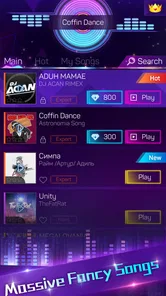
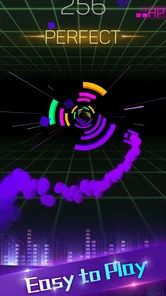
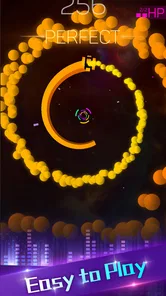
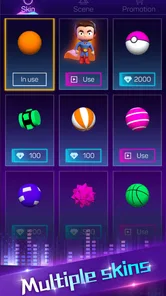
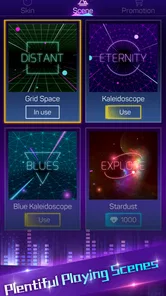
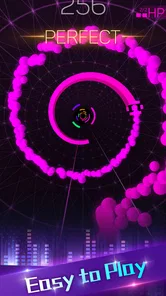
Smash Colors: Music Ball Rush is a rhythm game in which you guide a colored ball along a track and try to hit matching targets in time with the music. Its main appeal is the combination of quick reactions, beat-based play, and bright visual effects. It is easy to understand, but staying on rhythm and avoiding mistakes can become more challenging as you progress.
You control the ball by moving it across the track so it strikes targets of the matching color while following the song’s beat. Pay attention to upcoming obstacles and color changes, since reacting at the right moment is central to keeping a run going. The controls are designed to be simple, although precise timing and practice may be needed to improve your accuracy and score.
Offline availability can depend on the version and how the game delivers its songs, advertisements, or other content. Some gameplay may work without a connection once the necessary resources are available on your device, but online access might be needed for initial downloads, updates, or certain features. Check the game’s current store listing and try it with your device offline to confirm what is available.
The game may offer advertisements or optional in-app purchases, as is common with free-to-download mobile games. These can relate to rewards, additional content, or other conveniences, but their availability and terms may vary by platform, region, and app version. Review the store listing and the purchase prompts in the game before spending money, and use device-level purchase controls if children may play.
Before downloading, confirm that your Android or iOS device meets the current compatibility requirements and has enough free storage for the game and its updates. Check the latest store listing for the developer, permissions, age rating, privacy details, and any costs or advertising disclosures. Rhythm games can also involve repeated tapping or swiping, so consider whether the controls and visual effects are comfortable for you.
On Android, Smash Colors: Music Ball Rush asks for these permissions.
4.2 out of 5
346,200 reviews
Music · BADSNOWBALL HONGKONG LIMITED

Music4.3 out of 5
Music4.6 out of 5
Music3.1 out of 5
Music4.5 out of 5
Music3.7 out of 5

Music4.0 out of 5

Music3.7 out of 5
Music4.6 out of 5

Music4.3 out of 5
Music4.3 out of 5
Music3.7 out of 5
Music4.4 out of 5

Music4.1 out of 5
Music4.6 out of 5

Music4.5 out of 5

Music4.8 out of 5

Music4.6 out of 5
Music4.0 out of 5
Music4.8 out of 5



Gamesive reviews games on its own and is not paid by developers for scores. We do not host game files: the download buttons open the official Google Play and App Store pages. Names, icons and screenshots belong to their owners.