
Piano Game: Classic Music Song
Music4.0 out of 5
For Android · Adaric Music



 Analysis by Gamesive
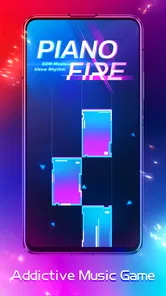
The first few moments with Piano Fire are all about timing: follow the music, tap the tiles, and try to keep your actions in step with the beat. It is a straightforward invitation, but that simplicity is exactly what makes the game easy to pick up. I can see myself opening it for a quick musical challenge, then staying for another attempt when a run ends just short of feeling satisfying.
Piano Fire: Edm Music & Piano is a free music game from Adaric Music. Its central idea is clear from the start: ping the tiles, chase the rhythm, and let the piano-inspired action turn listening into a hands-on challenge. Rather than asking me to learn a complicated set of rules first, it puts the emphasis on reacting to the music and keeping my timing steady.
That direct approach suits the game’s pick-up-and-play appeal. A tap is an immediate decision, and the rhythm gives that decision context. I am not simply pressing at random; I am trying to connect what I hear with what I do. When those two things line up, the game feels lively and rewarding. When they drift apart, I have a clear reason to concentrate on the next beat.
The music-focused format also gives the experience an energetic character. The store describes it as an addictive music game, and that wording fits the basic loop: act in time, see how the attempt goes, and feel tempted to try again. For players who enjoy rhythm challenges, that familiar combination can be more compelling than a longer setup or a story-heavy opening.
The first action is refreshingly easy to understand. I watch for the tiles and tap along, using the music as a guide. That simple interaction makes the game approachable even if I am only looking for a short distraction. There is no need to settle in for a long explanation before getting to the point: the challenge is to stay with the rhythm.
Easy to understand does not mean effortless to master. Keeping time asks for attention, especially when I start anticipating the next action instead of reacting to the beat in front of me. That distinction is where a basic tap mechanic gains some bite. The screen gives me something to respond to, while the music helps shape my sense of timing. A small lapse can be enough to make me rethink how I approached the run.
I like that the premise leaves room for personal rhythm. Some players will naturally lock onto a beat; others may need a little time to settle into it. Either way, the goal is tangible from the beginning. I am trying to make each tap feel deliberate, not just fast. That keeps the opening minutes focused and gives every attempt a clear purpose.
A good rhythm game depends on a satisfying connection between sound, action, and result. Here, the tiles give each tap a visible target, while the music provides the pulse I am trying to follow. That pairing is the heart of the feedback. When my timing feels right, I get the pleasure of acting in sync; when it feels off, the interruption becomes a nudge to pay closer attention.
That feedback is useful because it makes improvement feel personal. I can notice whether I was rushing, hesitating, or simply losing track of the beat. The game’s central challenge does not need a complicated explanation to be engaging: I hear the rhythm, respond to the tiles, and judge how well I kept the connection. Each attempt offers a small test of focus and coordination.
The music is more than background decoration in this kind of game. It gives the tapping a sense of direction and helps turn a sequence of inputs into a performance-like task. I find that the strongest moments are the ones where I stop thinking about each tap in isolation and start following the pulse as a whole. That shift makes the action feel less mechanical and more musical.
Because the core interaction is so direct, the experience can suit both a brief break and a focused stretch of play. I can come in wanting a quick round, or I can stay longer to see whether a more attentive approach improves my results. The game’s identity remains consistent either way: rhythm first, with tapping as the way I engage with it.
In a music game, reward does not have to mean a complicated system. A clean-feeling run can be satisfying on its own, especially when I can tell that my timing is steadier than it was moments earlier. The payoff is the sense that I have followed the music successfully and made the tiles part of the rhythm instead of treating them as disconnected prompts.
That kind of satisfaction works best when I am focused on the moment. I listen, react, and take the result as a sign of how well I handled the beat. It can be a modest reward, but it is immediate and easy to understand. The pleasure comes from feeling in control of the timing, then wanting to see whether I can maintain it again.
There is also a natural appeal in chasing a better attempt. If a run falls short, I can identify a simple goal for the next one: pay closer attention, avoid rushing, or stay connected to the music. That gives the retry a reason beyond merely repeating the same action. I am testing a slightly different level of focus and hoping it carries me further.
The game is free to download and includes optional in-app purchases, with individual items priced from $0.99 to $9.99. Those purchases are part of the broader package, but the central appeal remains the rhythm challenge itself. For someone deciding whether to try it, the important question is whether tapping along to music sounds fun; the basic pitch is clear and easy to grasp.
The reset is a key part of the game’s pull. When a run ends, the next attempt is easy to imagine because the objective has not changed: follow the rhythm more carefully and make the taps count. I do not need to rebuild a complicated plan before starting again. I can carry one small lesson into the next run and see whether it helps.
That quick mental reset makes the game well suited to short sessions. A failed attempt does not necessarily feel like a major setback; it can simply be a prompt to try again with better attention. The music draws me back, and the direct controls reduce the distance between deciding to play and actually playing. That low-friction cycle is a big part of what gives the experience its addictive quality.
At the same time, the loop depends on enjoying repetition. Players who like honing timing through repeated attempts will find a familiar reason to return. If I want a game built around a long narrative or a wide range of different activities, this focused format may feel narrow. Its appeal is more specific: engage with the beat, respond to the tiles, and see how well I can hold the rhythm.
That focus is a strength when the mood is right. I can enjoy a small burst of play without needing to commit to a lengthy session. The simple action also makes it easy to understand what I am working toward each time I return. A new run is not a fresh puzzle; it is another chance to do the same musical task with a little more control.
Piano Fire is a natural fit for people who enjoy music games, quick reactions, and the satisfaction of getting into a steady groove. Its Teen content rating is worth keeping in mind when choosing games for younger players. The game has been available since September 18, 2020, and its current version is 10.0.258. It supports Android 6.0 and later.
Its reach is substantial: it has passed 100 million installs, with an average rating of 4.6 from around 733,000 ratings and roughly 5,800 written reviews. Those figures suggest a broad audience for its straightforward rhythm premise. They do not change what the game asks of me, though: pay attention, tap with the beat, and decide whether the next run can feel smoother.
That makes the game easy to recommend selectively. If tapping along to music sounds appealing, the core idea is immediately understandable, and the free entry point makes it simple to give the experience a try. If repetition is not your thing, the same focused loop may wear thin sooner. I would approach it as a musical reflex challenge rather than expecting a broad collection of unrelated modes.
The best way to understand this game is through its cycle: I act by tapping the tiles, the music and on-screen action give me feedback, a well-timed run feels rewarding, and a stumble gives me a reason to reset and try again. Each part leads naturally into the next. The loop is easy to explain, but it works because rhythm makes the simple action feel expressive.
My overall impression is that Piano Fire knows what it wants to be. It puts music and timing at the centre, keeps the main interaction approachable, and builds its appeal around repeated attempts. That can make it an enjoyable choice for a quick break or a longer stretch of rhythm-focused play, provided I am in the mood to practise through repetition.
If you want a direct music game that asks you to follow the beat rather than manage a complicated system, this is a solid option to consider. Its strongest hook is not a long list of promises; it is the simple pleasure of hearing a pulse, meeting it with a tap, and wanting one more chance to get the rhythm just right.
Piano Fire: Edm Music & Piano is a rhythm game that combines electronic dance music with piano-style tapping. Notes appear on screen in time with a track, and you tap them as they reach the target area. It is designed for quick, music-focused play rather than piano lessons, so it can be enjoyed casually while still offering a challenge as songs become faster or patterns grow more complex.
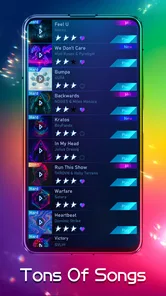
Choose a track, then tap the tiles in time with the music as they move across the screen. Accuracy and timing matter: missed or late taps can interrupt a run, while keeping up with the beat helps you complete a song and improve your result. The controls are simple to learn, but faster sections may take practice. Headphones can make it easier to follow the rhythm, though they are not required.
No. The game uses piano-themed tiles and melodies, but its main purpose is rhythm-based entertainment rather than piano instruction. It does not replace lessons in reading sheet music, learning finger placement, or practicing on a real keyboard. Players who want a music game can enjoy matching taps to songs, while anyone seeking structured piano training should look for an app specifically designed for lessons and musical skills.
The game is generally offered as a free download, but availability, pricing, advertisements, and optional in-app purchases can vary by platform, country, and version. Check the current Google Play or App Store listing before installing to see the exact terms and any purchase options. If the game includes ads or paid content, those may affect the experience, but you should not assume that every song or feature is included at no cost.
Check that your device meets the requirements shown on its store listing, since compatibility and operating-system support can change over time. Also review the app’s permissions, privacy information, age guidance, and any details about ads or in-app purchases. Music games may be less enjoyable on a small screen or with audio muted, so consider your device and listening setup. Download from an official app store to reduce the risk of installing an unsafe copy.
On Android, Piano Fire: Edm Music & Piano asks for these permissions.
Piano Fire: Edm Music & Piano is also available in 2 other languages on our site.
4.6 out of 5
732,890 reviews
Music · Adaric Music

Music4.3 out of 5
Music4.6 out of 5
Music3.1 out of 5
Music4.5 out of 5

Music4.2 out of 5
Music3.7 out of 5
Music4.8 out of 5
Music4.0 out of 5

Music4.3 out of 5
Music4.3 out of 5

Music3.7 out of 5
Music4.4 out of 5

Music4.1 out of 5

Music4.6 out of 5
Music4.5 out of 5

Music4.8 out of 5

Music4.6 out of 5

Music4.0 out of 5
Music4.8 out of 5



Gamesive reviews games on its own and is not paid by developers for scores. We do not host game files: the download buttons open the official Google Play and App Store pages. Names, icons and screenshots belong to their owners.