
Piano Game: Classic Music Song
Music4.0 out of 5

For Android · Cobby Labs

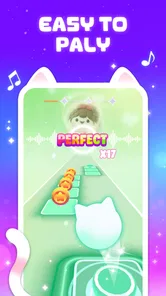
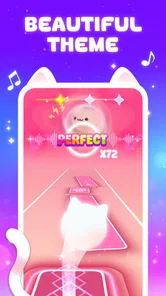


 Analysis by Gamesive
I like rhythm games that make their main idea clear within seconds, and Dancing Cats 2: Music Games has an appealing hook: follow the music by tapping through cat-themed tiles. Its charm is immediate, but the more useful question is whether that simple setup stays enjoyable once the novelty wears off. In my view, it works best as a light, focused music game for short breaks, rather than as a deep rhythm challenge or a substitute for listening to a favorite song.
The central pleasure is matching your taps to a song while the cute cat imagery keeps the screen playful. That combination gives the game a different feel from a plain piano-key rhythm title: the musical task still matters, but the presentation is deliberately friendly rather than formal. I found that contrast useful when I wanted a quick game that felt cheerful without asking me to learn a complicated control scheme.
The game is in the music game category, and its design is built around popular piano-style songs and cat tiles. That focus gives it an easy point of entry for people who already enjoy tapping along to music, while the bright theme can make the format less intimidating for younger players. The content rating is Everyone, so it is suitable for a broad audience, though that alone does not tell you whether the pace or musical challenge will suit every player.
What matters is the connection between the sound and the visual cue. When I stay focused on the beat rather than trying to admire every animation, the tile sequence becomes a simple test of timing and attention. The cats are part of the appeal, but they do not replace the core rhythm task. If you enjoy games where a short run of well-timed taps feels satisfying, that balance is the reason to try it.
In practice, I recommend treating each run as a listening exercise first and a visual one second. Watch the incoming tiles long enough to understand their rhythm, then let the music guide your taps. This is a small adjustment, but it helps avoid the common mistake of reacting to each tile at the last instant. A rhythm game can feel unfair when you are always scrambling; listening for the pattern makes the same sequence feel more manageable.
There is also a useful distinction between a song that feels familiar and one that is easy to play. Recognizing a melody may help you anticipate its phrasing, but it does not guarantee that your fingers will keep up with the tile pattern. I would not choose a song solely because I know it well. Instead, I would start with a comfortable pace and use a familiar tune as a way to settle into the timing, not as proof that the run will be effortless.
One practical tip is to keep your hands relaxed and use small taps rather than striking the screen hard. That makes it easier to respond repeatedly without tiring your fingers, particularly during a longer stretch of concentrated play. It also helps when playing on a phone held in one hand: a steady grip and light touches are less likely to interrupt your attention than shifting your hold to reach every cue.
If you are new to this kind of game, give yourself a few attempts before deciding whether the rhythm feels natural. Early mistakes can come from looking at the wrong part of the screen or tapping too early because you recognize the music. I find it more helpful to notice whether my timing improves once I listen closely than to judge the game from a single stumble. That tells you whether the basic interaction is clicking for you.
The strongest everyday use case is a short pause: waiting for a ride, taking a quick break between tasks, or sitting down for a few minutes when you want something more active than scrolling. The cat theme makes the game feel casual, while the music gives each session a clear focus. I would use it when I want a small burst of concentration, not when I need a game that can carry a long evening with a narrative or a steadily unfolding world.
It can also work as a shared, low-pressure activity. A parent and child could take turns trying a song and comparing how the rhythm feels, without needing to explain complex rules first. The child-friendly presentation is a natural advantage here, though an adult should still consider whether a particular child enjoys quick visual reactions. A suitable age label does not mean every young player will find timing games easy or relaxing.
For a commute or another noisy setting, the experience depends on whether you can hear the music clearly enough to use it as a guide. If the environment is loud, you may find yourself relying more on visual cues, which removes part of the musical pleasure. I would choose a quieter moment when possible, or use an appropriate listening setup if that suits the situation. This is not the best pick for playing while you need to keep your attention on traffic, walking through a busy place, or another task that demands awareness.
Compared with a standard piano-tile game, the cat presentation gives this one a softer personality, but the basic appeal remains rhythm and timing. Compared with a music player, it asks you to participate rather than simply enjoy a track. And compared with a full rhythm-action game that emphasizes complex patterns, it is better approached as an accessible, snack-sized challenge than as a serious test of musical precision. That distinction helps set expectations before you install it.
The focused design is also its main limitation. If you want detailed music practice, instrument lessons, or a way to play melodies freely, tapping tiles is not a replacement for those things. Likewise, a player who wants a long-term progression system, intricate mechanics, or extensive control over how music is played may find the central interaction too narrow. The game’s appeal depends on whether repeating a rhythm challenge is enjoyable in itself.
Another tradeoff is that timing games can become frustrating when your attention slips. A brief distraction is enough to break the flow, and a song you like does not automatically make a missed sequence feel forgiving. I suggest playing when you can focus for a few minutes, keeping the phone stable, and avoiding sessions when you are already tired or trying to multitask. That is not a flaw unique to this title, but it matters especially in a game whose main activity is precise tapping.
The cat visuals may be a strong draw for some players and a minor detail for others. If you are looking for a serious music tool, the playful styling may not be what you want. If you mainly want a demanding rhythm game, you may prefer an option whose identity is built around complexity rather than cute presentation. I would skip this one if the thought of repeating short timing challenges sounds tedious, even if you like cats or piano music.
Cobby Labs developed the game, which is free to play, and it has an average rating of 4.4 from around 19,000 ratings. It has also passed 10 million installs, a sign that the cat-and-rhythm combination has reached a wide audience. Those figures are useful context, but they cannot tell you whether the songs, visual style, or timing feel right for you; a few minutes of play will answer that better than popularity alone.
The current version is 0.4.7, and the game runs on Android 7.0 or later. It was released on September 17, 2025. I would check that your device meets the operating-system requirement before downloading, particularly if you use an older phone. Since the game is free, trying it is a relatively easy decision for someone who already likes casual rhythm games, but free access does not make it the right choice for every taste.
For a practical first session, I would begin with a song that feels familiar, keep the volume clear enough to hear its rhythm, and concentrate on relaxed, accurate taps. If that feels satisfying, try a less familiar track and see whether the visual sequence alone keeps you engaged. This simple comparison helps separate two kinds of enjoyment: playing because the music is pleasant and playing because the timing challenge is fun. Knowing which one you value will make it easier to decide whether to keep the game installed.
I would recommend Dancing Cats 2: Music Games to anyone who wants a cheerful rhythm game that is easy to understand and suited to short sessions. It is especially likely to appeal to players who enjoy piano-style song challenges, cute cat artwork, and a light test of concentration. The game’s biggest strength is that its theme and central action are easy to grasp together: listen, follow the tiles, and tap in time.
Dancing Cats 2: Music Games is a rhythm game built around guiding playful cat characters through music-themed levels. Players tap or otherwise follow on-screen prompts in time with the beat, aiming to keep their cat moving along the course and reach the finish. Its appeal comes from pairing simple rhythm challenges with colorful characters and lively presentation. Exact songs, modes, and features may vary by version or update.
The core gameplay is designed to be easy to pick up: listen to the music, watch the prompts, and tap the screen at the right moments to guide your character. Timing matters, so reacting too early or too late can affect how well you perform. Later stages may feel more demanding as the pace and patterns change. Check the tutorial and control instructions in the game, since details can differ between releases.
Offline availability can depend on the game version and the feature you want to use. Some rhythm-game levels may be playable without a connection after they have been downloaded, while advertisements, online rewards, events, or other network-based features generally require internet access. If offline play is important, test the game with your connection disabled after installation and before relying on it during travel. The store listing may also describe current connectivity requirements.
The app may be available to download without an upfront charge, but that does not necessarily mean every part of the experience is free. Games in this category can include advertisements, optional purchases, or paid items such as rewards and customization. Availability and pricing can change by region and update. Before downloading or making a purchase, review the current Google Play or Apple App Store listing and check the purchase settings on your device.
Its cheerful cat characters and straightforward rhythm gameplay may appeal to younger players, but parents should check the current age rating and store description before installing it. Also review whether the game contains advertising, in-app purchases, online features, or links to external services, as these can affect a child's experience. Consider using device-level purchase controls and, where appropriate, playing together first to see whether the difficulty and content suit your child.
On Android, Dancing Cats 2: Music Games asks for these permissions.
Dancing Cats 2: Music Games is also available in 1 other languages on our site.
4.4 out of 5
18,743 reviews
Music · Cobby Labs

Music4.3 out of 5

Music4.6 out of 5

Music3.1 out of 5

Music4.5 out of 5

Music4.2 out of 5

Music3.7 out of 5

Music4.6 out of 5

Music4.6 out of 5

Music4.2 out of 5
Music4.0 out of 5

Music4.6 out of 5

Music4.3 out of 5

Music4.3 out of 5

Music3.7 out of 5

Music4.4 out of 5

Music4.1 out of 5
Music4.6 out of 5

Music4.5 out of 5

Music4.8 out of 5

Music4.6 out of 5

Music4.0 out of 5



Gamesive reviews games on its own and is not paid by developers for scores. We do not host game files: the download buttons open the official Google Play and App Store pages. Names, icons and screenshots belong to their owners.