Word Collect - Word Games Fun
Word4.7 out of 5
For Android · Astrasen Global
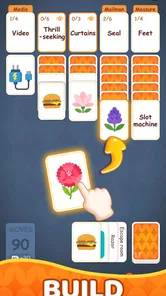
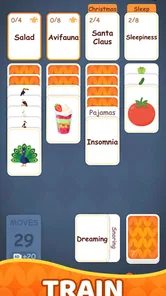
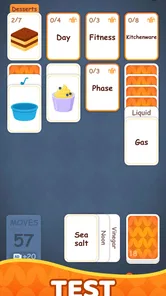
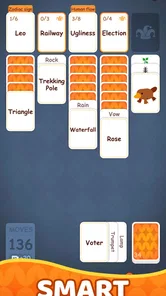
 Analysis by Gamesive
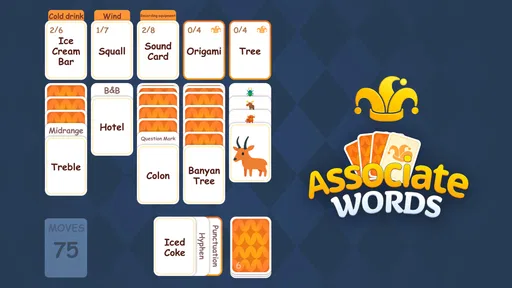
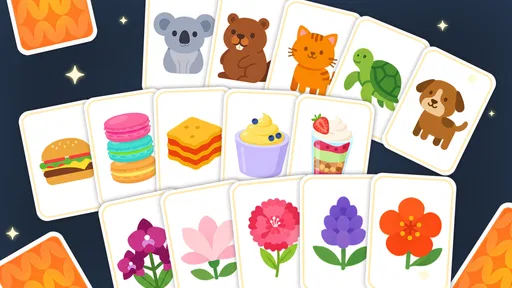
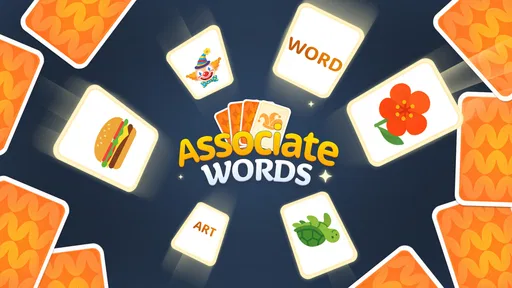
I like word games that make a quiet few minutes feel pleasantly absorbing, and Associate Words: Solitaire aims at exactly that sort of session. It combines card-game framing with word association: instead of racing through a conventional word search, you look for relationships between words and make connections as you play. That gives it a more reflective feel than a spelling test, though it still asks you to stay attentive.
My first impression is that this is best approached as a small, focused puzzle rather than a sprawling word-learning course. Astrasen Global made it for people who enjoy spotting links between ideas and want a game they can pick up without committing to a long story or a complicated rule set. If you already like word puzzles but find grids repetitive, the solitaire angle gives the activity a different rhythm.
The central appeal is the change in thinking the format invites. Many familiar word games reward vocabulary recall, spelling accuracy, or rapid pattern matching. Here, the satisfying moment is recognizing how one word can connect to another. That shift makes each decision feel more like a small act of interpretation than a simple test of whether you know a particular word.
The solitaire framing also suggests a more measured pace than head-to-head word games. I would choose it when I want to concentrate alone, not when I am looking for a social challenge or a timer-driven contest. The game’s short store description is brief, but its core idea is clear: associate words while playing a solitaire-style word game. That combination is specific enough to stand apart from a standard crossword or letter-grid puzzle.
It is still a word game, so the experience will depend on how comfortable you are making associations. A clue or pairing that feels obvious to one person may not immediately click for another. I see that as part of the appeal, but it can also be the point where a relaxing session turns into a stubborn one. If you prefer puzzles with a single unmistakable answer and little room for interpretation, a traditional crossword may suit you better.
I would expect the game’s pace to come more from the player than from a frantic design. The basic concept is easy to understand, so there is little reason to spend a long time learning what kind of activity it offers. The actual solving, however, can slow down when a word has several plausible associations or when you are trying to see a connection from a different angle.
That makes it a useful choice for brief breaks: you can settle into a puzzle without needing to set aside a whole evening. A practical way to keep the experience enjoyable is to pause when you feel yourself cycling through the same possible links. Looking at the words again after a moment often helps more than clicking around impatiently. The game’s premise rewards attention, not just speed.
I would not pick it as my first choice for a fast, competitive burst. If I wanted to race a clock, compare scores with friends, or get the immediate pressure of a timed challenge, I would look for a word game built explicitly around that kind of competition. Associate Words is more appealing when I can take a breath and work out why two ideas belong together.
The most useful habit is to treat each word as a set of possible meanings rather than as a single definition. Think about common associations, familiar phrases, and broader categories before settling on the first link that comes to mind. That approach is especially helpful when a connection feels indirect. It turns a stuck moment into a small reasoning exercise instead of a reason to abandon the puzzle.
Another sensible workflow is to play when you have enough attention to read carefully. On a bus ride or during a quiet coffee break, a single puzzle can be a pleasant focus. In the middle of a noisy conversation, the same task may feel more irritating because the challenge depends on holding words and possible relationships in mind. It is not a demanding game in the physical sense, but it does ask for a little mental space.
For heavy use, I would take breaks rather than try to turn every spare moment into another round. Repeated word association can become mentally tiring even when the game itself is calm. If you start making random guesses just to move forward, that is a good sign to put it down and return later. The format works best when curiosity is doing the work, not when you are grinding through puzzles without paying attention.
One trade-off of association-based play is that your own vocabulary and experiences shape what seems natural. A familiar phrase or category may jump out for one player and stay hidden for another. When that happens, I would avoid assuming that a slow solve means poor skill; sometimes it simply takes a different angle. That flexibility is a strength for thoughtful play, but it is less satisfying for anyone who wants every puzzle to feel purely objective and instantly checkable.
For an app like this, reliability matters mostly because an interrupted puzzle can break concentration. I would judge the experience by whether it lets me return to the same kind of calm, focused play consistently, rather than by expecting elaborate presentation or a demanding feature set. I cannot infer specific load times or stability guarantees from the game’s description, so I would not promise that every device or session behaves identically.
If you are choosing it for a regular routine, try it during the sort of break when you would normally open a quick puzzle. That gives you a better sense of whether its pace and word choices suit you than a long first session would. The game is free to download, which makes that trial straightforward, while optional in-app purchases range from $0.99 to $99.99 per item. I would check the purchase screen carefully before confirming anything, especially if you share a device or let a younger player use it.
The audience rating is Everyone, which makes the game broadly suitable from an age-label perspective. That does not mean every child will find the associations easy, or that every adult will enjoy the style. For a younger player, it may work best as a casual word activity alongside an adult who can discuss possible links. For someone who wants a more structured vocabulary lesson, I would choose an app designed around definitions and learning goals instead.
The game supports Android devices running version 6.0 or later, so it is not limited to the newest phones. That is useful if you keep an older handset as a backup or want a word game that does not require a recent operating system. Still, compatibility alone does not tell me how much storage, battery, or memory it uses, so I would avoid assuming that every older device will feel equally responsive.
Because the core activity is word-focused rather than based on elaborate action, I would expect the game to be easier to fit into ordinary phone use than a graphically intense game. That is a practical expectation, not a measured performance claim. If your phone is already short on storage or tends to slow down with many apps open, close unused apps before playing and see how it feels on your own device.
Current version 1.340 indicates that the game has a numbered release history, but a version number by itself does not tell me what changed or how reliably it runs. I would keep the app updated through the app store and judge performance through normal use. For most people, the key question is less about raw power and more about whether the text and puzzle interaction are comfortable on their screen.
I would recommend it to someone who likes quiet solo puzzles, enjoys finding links between ideas, and wants a change from crosswords or word searches. It may also suit a person who wants an easy activity to open during a waiting period, provided they are happy to focus on one puzzle rather than scroll through a stream of quick distractions.
I would steer away from it if you need a strong competitive hook, prefer action and visual spectacle, or find open-ended word associations frustrating. It is also not my pick for a structured study session: the pleasure is in making connections, not necessarily in following a carefully organized lesson. If your main goal is to practice spelling, learn definitions, or compete against other players, a more specialized alternative would be a better match.
The usual alternatives each serve a different mood. Crosswords offer more familiar clues and a clear grid to fill; word searches are better when you want a low-pressure visual hunt; anagrams reward rearranging letters; and timed word games bring urgency. Associate Words occupies a more contemplative corner, where the challenge is to interpret relationships. That is its clearest distinction, and also the reason it will not be everyone’s favorite.
The game has a 4.8 average from around 43,000 ratings, with more than 1 million installs and 569 written reviews. Those figures suggest that many players have tried it and that the rating is strong, but I would treat them as context rather than proof that the style will suit me. Word association is personal: enjoyment depends on whether making conceptual links feels satisfying or vague.
With a free download and optional purchases, it is easy to try without paying upfront. I would still make a deliberate choice about any purchase rather than treating the free entry point as a reason to buy extras. The game is developed by Astrasen Global, and its appeal rests on a simple, distinctive mix: card-game pacing paired with the mental work of connecting words.
My overall take is favorable, with a clear caveat. This is a good fit when I want a calm word puzzle that asks me to think sideways, and a weaker fit when I want strict clues, head-to-head play, or rapid-fire scoring. Its best use is a short, attentive break—one where you can consider a connection, step away if you get stuck, and come back with fresh eyes. If that sounds like your kind of puzzle, Associate Words: Solitaire is worth trying; if you prefer a more concrete or competitive word challenge, another style will probably keep you engaged longer.
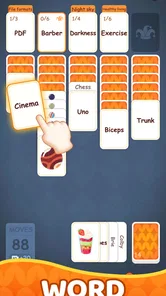
Associate Words: Solitaire is a word puzzle game that combines familiar solitaire-style play with word association challenges. Rather than simply arranging cards, you use clues and related words to work out which answers belong together and progress through the puzzles. The precise rules and available modes can depend on the app version, so check the in-game instructions when you start. It is generally suited to players who enjoy vocabulary games and casual brain teasers.
The main goal is to solve each puzzle by identifying words connected by meaning or another shared association, then making the selections required by the game’s solitaire-inspired rules. Read the clues carefully and consider how each word relates to the others before committing to an answer. If a level includes unfamiliar mechanics, the opening tutorial or help screen should explain them. Taking time to spot patterns can be more useful than making quick guesses.
The app may be available to download without an upfront purchase, but that does not necessarily mean every part of the experience is free. Depending on the current release and platform, it may include advertisements, optional purchases, or limits that encourage players to wait or spend in-game resources. Store listings can change, so review the Google Play or Apple App Store page for the latest pricing, purchase details, and any subscription information before downloading.
Whether the game works without an internet connection can vary by version and by feature. Basic puzzles may be available offline after installation, while advertisements, cloud saves, leaderboards, daily challenges, or other connected services may require a connection. If offline access matters to you, test the game in airplane mode after it has loaded and check its store listing for connectivity requirements. Avoid assuming progress will sync across devices unless the app confirms it.
The word-puzzle format may appeal to children and adults, but suitability depends on the game’s vocabulary, difficulty, advertising, and available purchases. Before installing it for a child, check the age rating and content disclosures on the relevant app store, as well as the privacy information and parental-control options. Also review whether ads or in-app purchases are present. The game can be a casual way to practise word associations, but it is not a substitute for structured learning.
On Android, Associate Words: Solitaire asks for these permissions.
Associate Words: Solitaire is also available in 2 other languages on our site.
4.8 out of 5
42,584 reviews
Word · Astrasen Global
Word4.8 out of 5
Word4.7 out of 5

Word4.9 out of 5

Word4.9 out of 5
Word4.8 out of 5
Word4.8 out of 5

Puzzle4.8 out of 5
Word4.7 out of 5

Word4.5 out of 5

Word4.9 out of 5
Word4.7 out of 5
Word4.8 out of 5
Word4.7 out of 5
Word4.9 out of 5
Word4.9 out of 5
Word4.9 out of 5
Word4.5 out of 5

Word4.1 out of 5

Word4.6 out of 5



Gamesive reviews games on its own and is not paid by developers for scores. We do not host game files: the download buttons open the official Google Play and App Store pages. Names, icons and screenshots belong to their owners.