Ball Sort Puzzle - Color Game
Puzzle4.9 out of 5
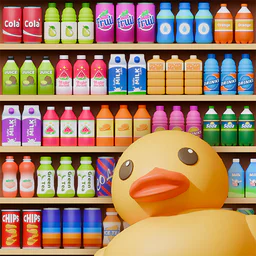
For Android · Guru Puzzle Game
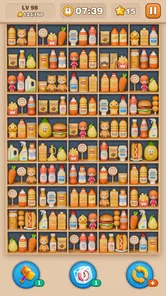
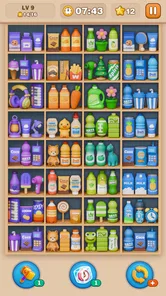
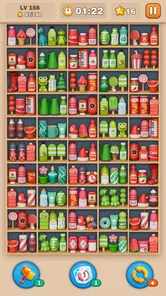
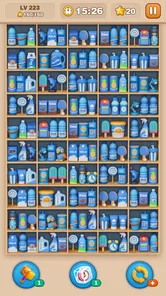

 Analysis by Gamesive
I judge a sorting puzzle by a simple test: does it make a short break feel satisfying without turning every move into busywork? Goods Puzzle: 3D Sorting Games is aimed squarely at that kind of play. It is a free puzzle game from Guru Puzzle Game, built around arranging goods and matching items in a three-dimensional scene. My impression is that its appeal is less about deep strategy and more about spotting a tidy solution, making a few deliberate moves, and enjoying the visual order that follows.
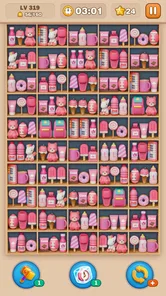
The core idea is easy to understand: look over the goods, identify items that belong together, and sort them into matches. That makes the game approachable even if you do not usually play puzzles. The three-dimensional presentation gives the task a more hands-on feel than a flat grid, while the match-three element adds a familiar goal to the sorting. It is a combination that can feel pleasantly absorbing without requiring a long explanation before you start.
There is a useful distinction here between this game and a traditional match-three board. In a conventional puzzle, you often focus on swapping pieces within a fixed grid. Here, the goods themselves are the visual focus, so I find the challenge easier to read as an organising task: scan what is available, notice a promising group, then decide what to move first. If you enjoy arranging objects as much as making matches, that shift is likely to be the main draw.
The game is listed as a puzzle, and that is the right expectation. I would not approach it looking for a sprawling story, character progression, or a competitive experience. Its strongest use is as a compact mental diversion: something to open while waiting for an appointment, taking a breather between chores, or unwinding for a few minutes before bed. The satisfaction comes from working through the arrangement, not from a complicated narrative surrounding it.
I can see this working especially well for players who like visual sorting challenges, matching games, and low-pressure tasks with a clear immediate objective. It should also suit someone who finds ordinary match-three boards too abstract but enjoys having recognisable goods to organise. Because the basic premise is straightforward, it is easy to recommend to a casual player who wants a puzzle that does not demand a gaming background.
It is a less natural fit if you want a puzzle that rewards long-term planning above all else. The sorting-and-matching concept encourages attention and sensible choices, but its broad appeal depends on enjoying repeated, self-contained tasks. If you prefer intricate logic problems, a campaign with a strong sense of advancement, or a puzzle where every move has a deeply layered consequence, a dedicated logic game may hold your interest longer.
The three-dimensional view is more than a decorative label in a sorting game: it changes how I approach the screen. Rather than treating the puzzle as a row of interchangeable symbols, I pay attention to the goods as objects and look for groups that are visually easy to recognise. That can make the activity feel more intuitive, but it also means a quick scan is worthwhile before acting. A moment spent surveying the scene can help prevent the kind of impulsive move that leaves the remaining goods harder to organise.
One practical habit I would use is to check the whole arrangement before focusing on the first obvious match. The clearest group is not always the best one to deal with immediately; noticing what else is available can help you avoid sorting yourself into an awkward position. This is a small but useful way to make the game feel more thoughtful without turning a casual session into homework.
Another good approach is to play in short, attentive bursts rather than while your eyes are constantly shifting elsewhere. A sorting puzzle asks you to compare objects and keep track of what you have already moved. If you are interrupted, take a second to re-scan the scene when you return instead of relying on a half-remembered plan. That is particularly helpful on a phone, where a notification or a change in surroundings can break concentration.
Compared with standard match-three games, Goods Puzzle puts more emphasis on sorting goods in a three-dimensional space than on simply making combinations across a flat board. That difference matters if you enjoy object-based organisation. If your favourite part of match-three is a fast rhythm of swaps and chain reactions, another game in that familiar style may feel more immediately energetic. If you would rather inspect a collection and arrange it into order, this one has a more fitting premise.
It also occupies a different space from classic tile-matching games, where the central challenge is often finding pairs among exposed pieces. Here, the matching idea is tied to sorting goods, so the experience is better suited to someone who wants an organising task rather than a pure memory or pair-finding test. Neither approach is inherently better; the right choice depends on whether you prefer scanning for pairs, planning a board, or grouping objects through a sorting-focused puzzle.
For players who want a demanding logic game, I would choose an alternative designed around explicit rules and multi-step deductions. For someone who wants a relaxed visual puzzle, that may be unnecessary intensity. The useful question is not whether Goods Puzzle replaces every other puzzle category, but whether its particular mix of matching and arranging is the kind of small challenge you will willingly return to.
A realistic moment for this game is a short wait when you have enough time to focus but not enough to settle into a longer activity. I would use it for a brief break between tasks, rather than opening it in the middle of work that needs sustained concentration. The clear sorting premise makes it easy to understand what you are doing, while the three-dimensional goods give your attention a concrete target.
If you tend to play in fragmented sessions, make the first moments of each return a quick visual reset. Look at the full scene, identify the goods that seem easiest to group, and then decide whether that move also helps the rest of the arrangement. This is more reliable than tapping the first familiar-looking items you notice. It is a simple workflow, but it helps preserve the sense that you are solving the puzzle rather than merely reacting to it.
I would also treat the game as a casual habit, not as a productivity tool. The sorting can provide a satisfying change of pace, but it is still entertainment. If you are already tired of repetitive matching games, a new presentation alone may not be enough to change your mind. On the other hand, if you like bringing order to a cluttered-looking puzzle, the goods-based theme gives you a specific reason to try this one rather than another generic board.
The game is free to download, with in-app purchases ranging from $0.99 to $99.99 per item. I would start with the free experience and decide whether the core sorting loop holds my attention before spending anything. The range means it is sensible to check purchase details in the app store and use device-level purchase controls if you share a phone or tablet with someone who might tap through prompts unintentionally.
Its content rating is Everyone, which makes it broadly suitable as a casual puzzle choice for different ages. That does not mean every household will want the same approach to purchases, so I would still make sure younger players understand that optional in-app spending is separate from downloading the game. For an adult choosing a simple shared puzzle, the accessible premise is a point in its favour.
The current version is 4.13.0, and the minimum operating-system requirement is 7.0. Before installing, I would check that the device meets that requirement and has enough room for another game. Those are ordinary practical checks, but they matter if you are considering it for an older device or a phone already crowded with apps.
There is also a modest switching cost if you are moving from another sorting game: the basic idea is familiar, so you do not need to learn an entirely different puzzle language. The real adjustment is deciding whether this version’s focus on goods and three-dimensional sorting feels more enjoyable than your usual alternative. I would give it a few short sessions, because the first impression may depend on whether you like inspecting objects and arranging them rather than chasing a faster board rhythm.
Goods Puzzle has an average rating of 4.9 from around 515,000 ratings, with about 5,500 written reviews and more than 10 million installs. Those figures suggest that the game has reached a large casual audience and that many players rate it highly. I would treat that as a useful sign of broad appeal, not a guarantee that its particular sorting loop will suit everyone; taste in puzzle pacing is personal.
The developer, Guru Puzzle Game, has positioned it as a straightforward sorting-and-matching puzzle rather than a specialist logic challenge. That focus is part of the appeal: you can understand the basic activity quickly and decide for yourself whether you enjoy it. The trade-off is that players looking for a wide range of puzzle mechanics may prefer a collection of different puzzle types instead of one game built around this central idea.
Goods Puzzle: 3D Sorting Games is worth trying if you like arranging familiar-looking goods, making visual matches, and filling small gaps in your day with a clear puzzle task. I especially recommend it to casual players who want something more object-focused than a standard match-three grid, but who are not looking for a demanding strategy game. Starting free gives you a straightforward way to see whether the sorting rhythm clicks before considering any optional purchases.
I would skip it if your idea of a satisfying puzzle depends on intricate logic, a substantial story, or constant variety between very different mechanics. I would also choose a conventional match-three game instead if rapid board play is what you enjoy most. But if the pleasure of scanning a scene, spotting a sensible grouping, and bringing order to the goods sounds appealing, this is a friendly, easy-to-understand choice. Its strongest recommendation is not that it suits every puzzle fan; it is that it knows exactly what kind of small, visual sorting break it wants to offer.
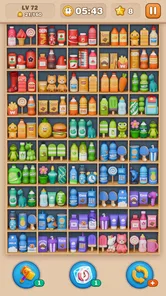
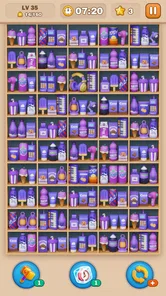
Goods Puzzle: 3D Sorting Games is a casual sorting game built around organizing product-style objects in a 3D display. You look over the available items and match or group the required goods to complete each level. The basic idea is easy to understand, but later stages can ask you to manage more objects and limited space, so planning your moves becomes more important.
The game can generally be downloaded and played without an upfront purchase, but free-to-play games may include advertisements, optional in-app purchases, or both. These can be used to support the developer or offer extras such as hints and other convenience features. Check the current store listing for the latest pricing and purchase details, and review your device’s purchase settings if children may play.
Whether the game works offline can depend on its current version and which features you want to use. Core puzzle play may be available without a connection, while advertisements, online events, rewards, or purchases typically require internet access. If you plan to play while travelling, try launching a level with your device offline first, and consult the store listing for any stated connectivity requirements.
The sorting puzzles are generally straightforward and do not rely on complex controls, which can make the game approachable for a broad audience. However, suitability also depends on the current version’s advertising, in-app purchase options, and any other online features. Parents should check the app’s age rating and privacy information in the relevant app store, and consider using device-level controls to manage purchases or screen time.
Before downloading, confirm that the game is available for your Android or iOS device, that your operating system meets its requirements, and that you have enough storage space. Read the current store listing for details about ads, in-app purchases, permissions, and privacy practices. Also check recent user reviews, since performance, level content, and available features can change as the developer updates the game.
On Android, Goods Puzzle: 3D Sorting Games asks for these permissions.
4.9 out of 5
514,625 reviews
Puzzle · Guru Puzzle Game
Puzzle4.8 out of 5
Puzzle4.9 out of 5

Puzzle4.7 out of 5

Puzzle4.8 out of 5

Puzzle4.8 out of 5

Puzzle4.9 out of 5
Puzzle4.9 out of 5
Card4.9 out of 5
Puzzle4.9 out of 5

Puzzle4.3 out of 5

Puzzle4.4 out of 5

Puzzle4.7 out of 5

Puzzle4.8 out of 5
Puzzle4.8 out of 5

Puzzle4.1 out of 5
Puzzle4.9 out of 5

Puzzle4.9 out of 5
Puzzle4.8 out of 5

Puzzle4.9 out of 5

Puzzle4.9 out of 5



Gamesive reviews games on its own and is not paid by developers for scores. We do not host game files: the download buttons open the official Google Play and App Store pages. Names, icons and screenshots belong to their owners.