Ball Sort Puzzle - Color Game
Puzzle4.9 out of 5
For Android · Ivy
 Analysis by Gamesive
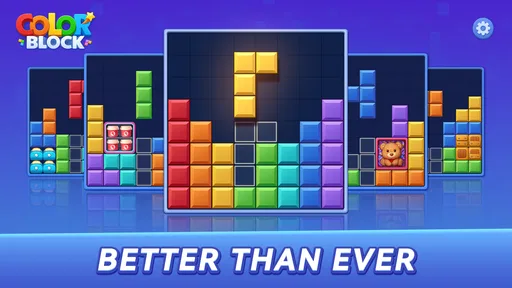
The appeal of Color Block: Combo Blast is easy to understand: it takes the familiar idea of fitting blocks into a puzzle space and makes color the clearest part of the experience. I like that straightforward starting point. There is no elaborate premise to learn before playing; the interest comes from looking at the board, judging where a piece will fit, and deciding whether a move helps now or leaves better choices for later. It suits the small, quiet gaps in a day when I want something engaging without committing to a long session.
This is a free puzzle game from Ivy, rated for Everyone, and it has reached over 50 million installs. Its average rating is 4.3 from around 85,000 ratings, with about 1,400 written reviews. Those figures suggest broad appeal, but they do not tell me whether it suits a particular player. The more useful question is whether you enjoy a clean, repeatable block-placement challenge and are comfortable with a game whose mood is shaped more by color and rhythm than by characters or a story.
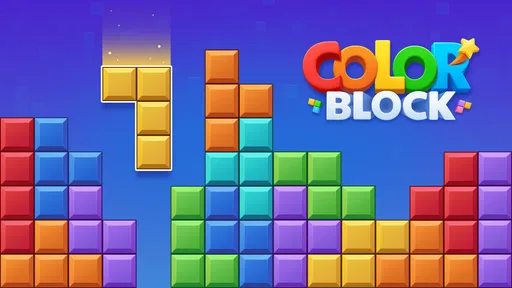
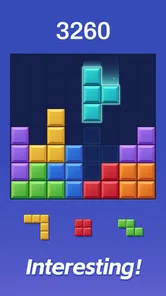
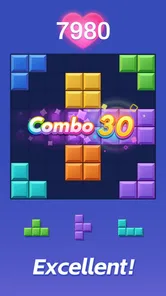
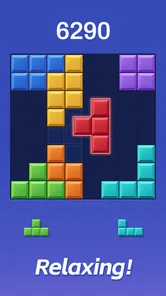
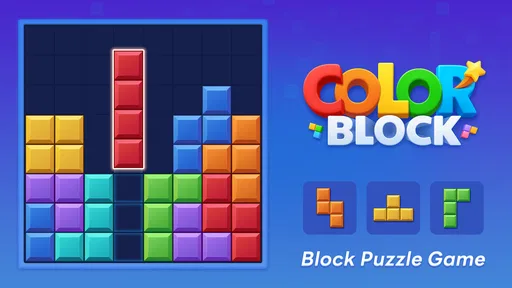
The game’s visual language is built around making blocks easy to read. That matters more than it might seem: in a placement puzzle, a moment of uncertainty about a piece’s shape or color can turn a thoughtful decision into a guess. Here, the color-block framing gives the board a direct, approachable feel. I can focus on the puzzle rather than deciphering a setting, tracking a cast, or learning a complicated interface.
That simplicity is also a deliberate trade-off. Players who like expressive worlds, animated characters, or a strong narrative hook may find the presentation spare. The color theme gives the play a recognizable identity, but it is not the same as a detailed visual world. I see that as a strength for quick play, while also understanding why someone seeking a more immersive game might prefer a story-driven puzzle or a richly illustrated matching game.
The game’s setting is best understood as a focused play space rather than a place to explore. That helps keep attention on the board, and it makes a session easy to pick up without needing to remember plot details. It also means the board has to carry the experience: each placement should feel legible, and each developing arrangement should invite another look. If you enjoy reading a puzzle state at a glance, that focused presentation is a good fit.
One practical way to get more from the visuals is to pause briefly before placing a piece. Instead of choosing the first spot that looks open, scan the board for the spaces that would become awkward if filled. In block puzzles, a move can look tidy while quietly closing off useful room. Treating the colors as a quick visual map—not merely decoration—helps me compare possible placements and avoid playing on autopilot.
Color is useful here because it gives the play a coherent mood without demanding much interpretation. It can make the board feel lively while the underlying task remains orderly. I find that combination appealing when I want a little concentration but not a stressful, story-heavy experience. The visual simplicity also makes it easier to return after a distraction: I can look at the board and work out what matters without reconstructing a complicated chain of events.
The limitation is that a restrained visual identity cannot make every puzzle moment feel fresh on its own. If you need new scenery, changing characters, or a sense of progression through a fictional world to stay interested, this approach may wear thin. Color Block is a better match for players who find satisfaction in the board itself and in making a more considered move than they did a moment ago.
Sound and pacing matter in a puzzle game even when the board is the main attraction. The right audio can make placements feel settled and help a short session develop a gentle rhythm; a distracting presentation can make a simple task feel busier than it needs to be. Color Block’s strongest mood is one of easy access and focused play, rather than dramatic tension. I would approach it as a game to dip into, not as an experience that depends on building suspense through a long sequence.
That makes it useful in everyday situations. If I have a few minutes before an appointment, I can open a puzzle, concentrate on the arrangement in front of me, and put the phone away when it is time to go. It also suits a quiet break when I want to occupy my hands and attention without starting a demanding game session. The key is to treat it as a small mental activity, rather than expecting a deep narrative payoff or a large change of pace from one sitting to the next.
For a better rhythm, I recommend deciding in advance whether you are playing casually or trying to make a careful run. In a casual moment, a quick placement is part of the appeal. When I want to play thoughtfully, I slow down and check how a move affects the remaining open space. That simple change in approach gives the same board a different feel: one session is a light distraction, while another becomes a compact exercise in planning.
There is a trade-off for people who use games as background entertainment. A puzzle that rewards attention can be awkward if you are also trying to follow a conversation, watch something, or handle another task. The board may look simple, but a careless placement can leave fewer useful options. I would not choose it when I need a game that can be ignored for long stretches and resumed without thinking. It works better when I can spare at least a little focused attention.
Because this is a self-contained block puzzle rather than a narrative adventure, the natural unit of play is a run of decisions, not a chapter. That is a useful distinction for deciding when to open it. A commute, a waiting room, or a short rest can be a good fit if you have enough attention to consider the board. For a long evening, the experience may feel repetitive unless you genuinely enjoy refining your placement choices.
If a sound or visual element feels too prominent for your surroundings, check the game’s available in-game and device controls before settling into a routine. I avoid assuming that every player will want the same presentation: some people like audio as a cue that makes play feel tactile, while others need a quieter experience in public. The practical point is to make the game comfortable for the situation rather than letting its mood dictate where and when you can play.
Compared with the usual alternatives in the puzzle category, Color Block is closer to spatial planning than to swapping matching tiles or solving a word clue. The basic attraction is deciding how shapes occupy a board. That gives it a different kind of satisfaction: instead of searching for a hidden answer, I weigh a few placements and try to preserve room for what may come next. If you like visual reasoning and small decisions with visible consequences, this is a more natural choice than a word game or a match-three puzzle.
The main strategic lesson is to protect flexibility. A large empty area may look inefficient, but breaking it into awkward pockets can be worse than leaving it open. I try to notice narrow gaps early and ask whether a placement will make them harder to use later. This is more useful than simply filling the nearest open space, because the immediate move is only part of the decision: the board left behind determines how many sensible choices remain.
A second helpful habit is to compare pieces against the board before committing, rather than deciding from color alone. The shape and available space are what determine whether a move is safe. When several placements seem possible, I look for one that keeps more than one area of the board usable. That does not guarantee a perfect run, but it reduces the number of moves that rely on hope. This sort of deliberate scan is a small, practical improvement for a game whose pleasure comes from placement choices.
There is also a useful difference between making a board look neat and keeping it playable. A tidy arrangement can still leave a difficult gap, while a less symmetrical board may preserve room for future pieces. I try not to treat visual order as the goal. The better question is whether the next set of choices will remain manageable. That distinction is easy to miss when the colors make a placement feel satisfying in the moment.
Players who want fast reflexes, competition, or a constantly changing set of mechanics may prefer another kind of puzzle. This game’s appeal is quieter and more deliberate. Likewise, if you enjoy a puzzle with a clearly stated solution that can be reached through clues, block placement may feel open-ended rather than conclusive. I would skip it if I find repeated board-based challenges dull, or if I want every session to introduce a new rule or setting.
Color Block is free to download, with in-app purchases listed at $4.99 per item. That matters if you prefer games with no optional spending at all. I would go in with a simple boundary: enjoy the core puzzle on its own terms and decide for yourself whether any purchase is worth it, rather than treating spending as part of the expected routine. The game is rated for Everyone, which makes its broad, accessible presentation easy to understand, though parents should still make their own choices about purchases on a shared device.
The game was released on April 17, 2019, and its current version is 5.9.0. It supports Android 7.0 and later. Those details make it easier to judge basic compatibility before installing, but they do not change the central decision: whether this particular style of spatial puzzle is the kind you will return to. A large audience can indicate that the format is approachable; it cannot substitute for your own preference for careful, repeatable play.
I would recommend Color Block to someone who likes having a puzzle ready for short breaks, enjoys fitting shapes into limited space, and appreciates a clean visual focus. It is especially suitable for players who want an uncomplicated way to practise looking ahead without learning a large set of systems. Ivy’s game keeps its identity centered on blocks and color, which helps it feel approachable when I only have a little time and attention to give.
I would be less likely to recommend it to someone who needs a strong story, elaborate scenery, or an ever-changing challenge to stay engaged. It is also not my first choice when I want to play entirely on autopilot: the board rewards attention, and a rushed move can make later decisions less comfortable. For those preferences, a narrative puzzle, a word game, or a faster arcade-style option may be a better fit.
My overall impression is that the game’s atmosphere and mechanics work best when they stay modest. The color-led presentation keeps the board approachable, while the block-placement decisions provide the substance. Its limitation is the same as its strength: it concentrates on one kind of puzzle pleasure rather than constantly reinventing itself. If that focused rhythm sounds relaxing rather than repetitive, Color Block: Combo Blast is worth trying as a free, low-commitment addition to your puzzle rotation.
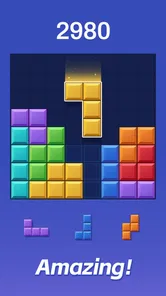
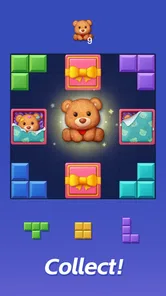
Color Block: Combo Blast is a casual puzzle game built around placing colored block shapes on a board and clearing them to score points. Its simple controls make it easy to pick up, while planning where each shape goes adds a layer of strategy. The exact game modes, features, and presentation can vary between versions, so check the store listing and in-game menus for the current details.
You generally drag or tap to place the available block shapes onto the grid, aiming to complete rows or columns and clear space for more pieces. Look ahead before placing a shape: filling a line can create room, while awkward gaps may limit your next moves. The game’s own tutorial or instructions explain its specific scoring rules, combo effects, and any special pieces.
Whether the game works without an internet connection can depend on its version and the feature you want to use. Core puzzle play may be available offline, but features such as ads, online rankings, daily challenges, events, or cloud saving may require connectivity. If offline access matters to you, try launching the game with your connection disabled and review its store-page requirements before downloading.
Check the Google Play or Apple App Store listing for the latest price and monetization details, because these can change by region or update. A game may be free to install while showing advertisements or offering optional purchases, such as extra items or ad removal. Review the listed in-app purchases and your device’s purchase settings, especially if children may use the device.
Compatibility depends on the developer’s current requirements, your operating system version, and the particular device. Check the app listing for supported platforms and minimum system requirements before installing. Progress may be stored locally or linked to an account, depending on the version; look in the game’s settings for backup or sign-in options, and avoid deleting the app until you know whether your progress is saved.
On Android, Color Block: Combo Blast asks for these permissions.
Color Block: Combo Blast is also available in 2 other languages on our site.
4.3 out of 5
85,449 reviews
Puzzle · Ivy
Puzzle4.8 out of 5
Puzzle4.9 out of 5

Puzzle4.7 out of 5

Puzzle4.8 out of 5

Puzzle4.8 out of 5

Puzzle4.9 out of 5

Racing4.5 out of 5
Puzzle4.9 out of 5

Puzzle4.4 out of 5

Puzzle4.7 out of 5

Puzzle4.8 out of 5
Puzzle4.8 out of 5

Puzzle4.1 out of 5
Puzzle4.9 out of 5

Puzzle4.9 out of 5
Puzzle4.8 out of 5

Puzzle4.9 out of 5

Puzzle4.9 out of 5

Puzzle4.9 out of 5



Gamesive reviews games on its own and is not paid by developers for scores. We do not host game files: the download buttons open the official Google Play and App Store pages. Names, icons and screenshots belong to their owners.