
Ball Sort Puzzle - Color Game
Puzzle4.9 out of 5

For Android · Leap Game Studios







 Analysis by Gamesive
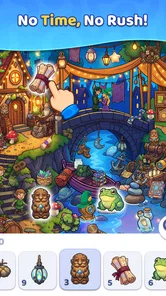
I tend to judge a hidden-object game by what happens after its first few scenes: does searching remain pleasant, or does it start to feel like a chore? Search It - Hidden Objects makes a clear case for the quieter side of puzzle games. Its appeal is the simple act of looking carefully through a scene, which can fit into a short break without demanding the commitment of a long strategy game. I’d consider it when I want something low-pressure, though its staying power depends on how much I enjoy repeating that kind of visual search.
As a puzzle game from Leap Game Studios, Search It puts observation at the center rather than asking me to learn a complicated set of rules. That makes the first session approachable: I can focus on the objects in front of me instead of juggling a tutorial’s worth of systems. The store’s brief description captures the basic premise, but the more useful question is whether this kind of focused looking suits the moment I’m in.
It works best for small pockets of attention. I can imagine opening it while waiting for an appointment or winding down after a busy day, when I want a task that occupies my eyes without turning into a demanding project. A hidden-object puzzle gives a simple goal—scan the scene, notice what stands out, and keep going—so it can feel satisfying even when I only have a little time.
The game is free to download, with optional in-app purchases listed from $0.99 to $54.99 per item. That range is worth noticing before settling in, even if a player’s experience may not involve buying anything. I’d approach the free version first and decide whether the core search loop is enjoyable before spending. A broad price range can make optional purchases feel more consequential, so it’s sensible to check each item in the app store rather than assume every purchase is small.
Its audience is also broad: the content rating is Everyone, and the minimum operating-system requirement is version 8.0. That makes it a plausible casual choice for a range of players, though an age rating is not a promise that every person will enjoy the pace or visual demands. If someone finds scanning detailed images tiring, a more tactile puzzle or a game with clearer, faster feedback may be a better fit.
One practical way to try a hidden-object game is to treat each visit as a short attention break rather than a daily obligation. I’d play a scene when I have enough focus to look closely, then stop when I catch myself tapping around without really studying the picture. That stopping point matters: a relaxed search can become frustrating if I keep going after my attention has run out.
For a commute or another place where concentration is interrupted, I would choose a moment when I can look at the screen comfortably. Searching relies on visual attention, so it is less suitable than an audio game when I need to keep my eyes elsewhere. It is also not the best choice for a quick, reflex-driven burst; the pleasure comes from noticing, not reacting at speed.
Hidden-object puzzles have a natural early appeal: the first few searches invite me to inspect a scene and test whether I can spot details quickly. The longer-term question is whether that same basic activity continues to feel restful. Search It’s 4.9 average from around 221,000 ratings and more than 10 million installs suggest that it has reached a large audience, but popularity alone cannot tell me whether its particular rhythm will hold my attention.
For me, recurring value would come from using it as a dependable, low-effort option rather than expecting it to become a deep hobby. It can occupy the gap between more involved games and doing nothing on a screen. That niche is useful: if I already have demanding games for longer sessions, a simple object hunt can provide a different kind of mental activity without asking me to remember a build, storyline, or complex plan.
A helpful personal test is to notice how I feel after a session. If I finish more settled and satisfied, the game is earning a place in my rotation. If I feel impatient or start searching mechanically, I would leave it alone for a while instead of forcing a streak. This is a better measure of lasting value than the number of times I open it in a week, especially for a game whose appeal rests on taking time to observe.
The version currently listed is 1.4.13. For a player deciding whether to keep it installed, that is a useful practical detail when checking compatibility, but I wouldn’t treat a version number by itself as proof of a particular update schedule or future content plan. My advice is simple: install it, try the basic experience at your own pace, and keep it only if its search sessions remain enjoyable after the initial curiosity fades.
There is little upkeep involved in a game built around short puzzle visits: I don’t need to plan a long session or maintain a complicated strategy between visits. Still, “easy to pick up” does not mean “effortless.” The main resource it asks for is visual concentration, and that can be surprisingly tiring after a full day of reading, work, or screen time.
I’d also keep an eye on whether optional purchases are changing how I use the game. The stated in-app purchase range extends from $0.99 to $54.99 per item, so I would avoid tapping through purchase screens casually. If I’m enjoying the puzzles, I can decide deliberately whether any paid option is worthwhile; if I’m only playing because I feel pushed to spend, that is a good reason to step away. The game’s free entry point makes it easier to test its appeal before making that decision.
For a shared device, the Everyone rating makes the game more approachable as a general family option, but I would still set purchase expectations in advance. A child may understand the puzzle without understanding that an in-app purchase costs real money. That small bit of household guidance is more useful than assuming the age rating settles every question about how the app will be used.
The main risk is not that the premise is difficult to understand; it is that looking for objects can feel repetitive if I want every session to introduce a new kind of challenge. Players who prefer evolving mechanics, character progression, or a story that pulls them through a campaign may find a search-focused puzzle too narrow. I would choose a broader puzzle adventure if variety across different kinds of tasks is my priority.
Another source of fatigue is the mismatch between a player’s mood and the game’s pace. When I want instant feedback, a fast arcade game is a better choice. When I want to relax but my eyes are already tired, listening to a podcast or choosing an audio-first game makes more sense. Search It is most convincing when I’m willing to pause, inspect the scene, and enjoy the act of noticing.
Compared with match-three puzzles, it asks for a different sort of attention: rather than planning moves across a board, I’m scanning an image for specific details. Compared with word puzzles, it is more visual and less dependent on vocabulary. Neither alternative is universally better. I’d pick a word game for language practice, a match-three game for a more rhythmic loop, and Search It when I want to slow down and examine a picture.
I’d recommend giving it a try if hidden-object puzzles already appeal to you, or if you want a casual game that can sit alongside more involved titles. Its straightforward premise and free download lower the barrier to testing it, and the broad audience reflected in its rating and install figures shows that this style has considerable reach. That doesn’t mean it will suit everyone; it means the format is easy to understand and worth a personal trial.
I would skip it if I dislike visually scanning scenes, need frequent mechanical changes to stay engaged, or want a game that rewards fast reactions. I’d also avoid making it my default wind-down choice on days when my eyes need a break. A good casual game should fit the player’s energy, not become another routine to maintain.
In the end, Search It - Hidden Objects earns lasting space only if its quiet search loop continues to feel pleasant in ordinary moments. I like the idea of keeping it available for a waiting room, a short pause, or a low-key evening, while resisting the urge to turn it into a daily chore. Its strongest long-term quality is that it asks for attention without demanding a complicated commitment; its limitation is that the same focused activity may eventually feel too familiar. I’d install it, try a few sessions, and let that balance—not the download count—decide whether it stays.
Search It - Hidden Objects is a casual puzzle game built around finding specified items in illustrated scenes. Each level asks you to scan a detailed picture and locate objects that may be tucked among other decorations or characters. The appeal comes from careful observation rather than fast reflexes, making it suitable for short play sessions. Exact features and level content can vary by version.
You typically receive a list or set of objects to find, then tap the matching items in the scene. Take your time to inspect the whole image, including crowded corners and areas where objects overlap visually. If you get stuck, check whether the game offers hints or other assistance in your version. Controls are generally straightforward, though small items may require precise taps.
Whether the game works without an internet connection may depend on the version and the features you use. Previously loaded levels may be playable offline in some releases, while advertisements, optional rewards, updates, or online services can require a connection. Check the store listing and test the game before relying on offline access, especially if you plan to play while traveling.
The game may be available to download without an upfront payment, but that does not necessarily mean every feature is free. Some versions of hidden-object games show advertisements or offer optional purchases, such as hints or other game-related items. Availability and pricing can change by platform, region, and update, so review the current app-store listing before downloading or making a purchase.
The hidden-object format is generally easy to understand and does not depend on complex controls, which can make it approachable for a range of ages. However, suitability depends on the specific version, its advertising, purchase options, and privacy practices. Parents should check the age rating, permissions, and store description, and consider using device settings to manage purchases or restrict access to ads where available.
On Android, Search It - Hidden Objects asks for these permissions.
Search It - Hidden Objects is also available in 2 other languages on our site.
4.9 out of 5
221,332 reviews
Puzzle · Leap Game Studios
Puzzle4.8 out of 5

Puzzle4.9 out of 5

Puzzle4.7 out of 5

Puzzle4.8 out of 5

Puzzle4.8 out of 5

Puzzle4.9 out of 5
Puzzle4.9 out of 5
Puzzle4.3 out of 5

Puzzle4.4 out of 5

Puzzle4.7 out of 5

Puzzle4.8 out of 5

Puzzle4.8 out of 5

Puzzle4.1 out of 5

Puzzle4.9 out of 5
Puzzle4.8 out of 5

Puzzle4.9 out of 5

Puzzle4.9 out of 5

Puzzle4.9 out of 5



Gamesive reviews games on its own and is not paid by developers for scores. We do not host game files: the download buttons open the official Google Play and App Store pages. Names, icons and screenshots belong to their owners.