Trivia Master - Word Quiz Game
Trivia4.5 out of 5
For Android · Unico Studio
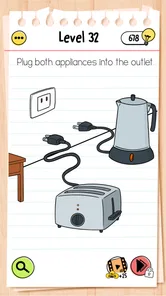
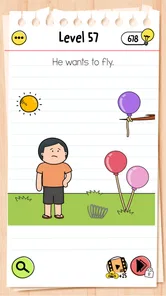
 Analysis by Gamesive
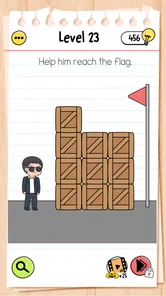
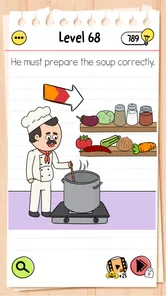
I like trivia games that make me question my first answer, and Brain Test X: Hard Challenge is built around that small but satisfying moment. It is a free puzzle game from Unico Studio, aimed at players who enjoy looking beyond the obvious rather than simply recalling facts. In my experience, its appeal is less about knowing a lot and more about slowing down enough to notice what a question is really asking.
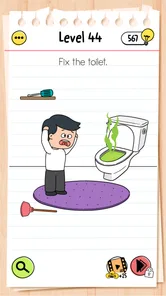
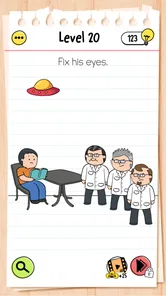
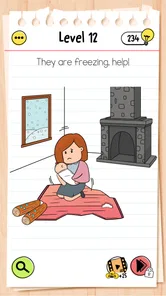
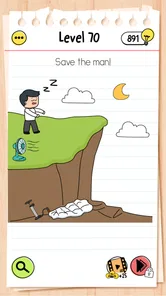
The useful way to approach a Brain Test puzzle is to read the prompt, inspect the whole screen, and resist tapping the first answer that seems sensible. A task may hinge on wording, an unexpected interpretation, or something in the illustration. That makes each turn feel closer to a playful logic test than a conventional quiz with a fixed set of subject-area questions.
I would start with a short session and treat each puzzle as a fresh problem, not as a race. Read the instruction twice, then check whether the image contains a clue that changes the meaning. If I get stuck, I try one deliberate alternative before tapping around randomly. This habit keeps the challenge enjoyable and helps me understand why a solution works instead of merely stumbling onto it.
That approach is especially handy in everyday gaps: a few minutes while waiting for a ride, a quiet break between tasks, or a casual round shared with someone nearby. It is easy to explain the basic idea to another person, and comparing interpretations can be more fun than solving alone. The game suits quick bursts better than a long, uninterrupted session if you prefer to give each tricky prompt proper attention.
Brain Test X: Hard Challenge is listed in the trivia category, though its brainteasers are not the same as a standard knowledge quiz. You do not need to arrive with a store of facts about history, science, or geography. The challenge is to interpret the task creatively. That distinction matters when choosing it: I would recommend it to someone who likes lateral thinking, but not to a player looking specifically for timed general-knowledge rounds.
Experienced players can get more consistent without relying on any special shortcut. I use a simple sequence: identify the exact request, look for visual details that might matter, test the most literal reading, and then question any assumption that made that answer seem obvious. The point is not to overthink every screen; it is to have a calm fallback when a puzzle initially feels opaque.
A second useful habit is to notice what kind of mistake you are making. If I keep tapping an answer that matches the prompt too literally, I remind myself to consider a less conventional interpretation. If I am ignoring the picture, I pause and inspect it again. This turns a wrong guess into a clue about my own approach, which is more satisfying than repeating random taps until something works.
When playing with a friend, I would have each person explain their reasoning before anyone touches the screen. That keeps the conversation focused on the puzzle rather than on rapid guessing. It is also a good way to see whether the wording invites more than one interpretation. For a solo session, saying the question aloud can produce a similar benefit: emphasis sometimes reveals which part deserves attention.
Before handing the game to a child or starting a longer session, I would check the device’s sound and notification settings and decide whether interruptions matter. These are ordinary practical checks, not a claim that the game has a particular menu option or special control. The game carries an Everyone age rating, which makes it broadly accessible, but an adult should still use their own judgement about a child’s screen time and in-app spending.
It is free to download, with in-app purchases priced from $0.99 to $24.99 per item. I would treat that as a reason to keep purchase controls in mind, especially on a shared device. You can begin without paying, but the existence of optional purchases is worth discussing with younger players before they use the game. Checking the device’s purchase authentication is a sensible precaution for any free game with paid items.
The current version is 1.3.1, and the minimum operating-system requirement is Android 7.0. If you are considering it for an older device, check that the device meets that requirement before expecting to install it. The practical decision is straightforward: a compatible phone or tablet and a willingness to think through unusual prompts are more important here than a high-end gaming setup.
Compared with conventional trivia apps, this game puts less weight on stored knowledge and more on how you frame a question. That makes it a better fit for mixed-age groups or for players who feel shut out by quizzes dominated by specialist facts. It is also different from a pure word puzzle: the visual presentation can be part of the reasoning, so reading alone may not be enough.
The trade-off is that lateral-thinking puzzles can feel subjective. A player who expects every prompt to have an immediately obvious, neatly signposted answer may find the intended interpretation frustrating. I would not choose it as my main option for competitive quiz nights or for systematic learning in a school subject. A traditional quiz is better when you want clear topic coverage; a word game may be better when you want vocabulary practice. This one is for the pleasure of testing assumptions.
That difference also changes how I would play it with children. Rather than turning each screen into a test of who is quickest, I would ask what detail they noticed and why they think it matters. The game can then become a conversation about reasoning, not just whether someone guessed the expected answer. If a child becomes annoyed by ambiguity, though, I would switch to a more direct puzzle format instead of insisting they push through.
The central limitation is built into the format: a surprising solution is fun when it feels discoverable, but irritating when the prompt seems to hide its logic. If I am stuck, I take a short pause rather than making a long string of taps. Returning with fresh eyes is often a better use of time than treating the screen like a slot machine. I also avoid assuming that every puzzle must use the same trick; repeating one favourite strategy can make the next task harder.
There is a balance between hint-seeking and independent solving. I would first restate the task in my own words and inspect the full screen, then try a different interpretation. If I still have no useful idea, getting help may be preferable to draining the fun out of a short break. The best experience comes from using assistance sparingly and remembering the reasoning behind a solution, rather than treating every level as something to clear as quickly as possible.
Another limit is that this is not necessarily the right game for someone who wants a predictable difficulty curve or a conventional score-driven contest. A quirky puzzle can challenge one player and feel easy to another, depending on how they interpret its wording. If your ideal trivia session means answering questions from familiar categories and comparing knowledge, choose a standard quiz instead. If you enjoy being surprised by your own assumptions, this format makes more sense.
Unico Studio’s game has attracted over five million installs, with an average rating of 4.8 from around 74,000 ratings and 202 written reviews. Those figures suggest broad interest, but they do not tell me whether every puzzle will suit every player. My recommendation is more specific: try it if you enjoy short, playful challenges and are happy to reconsider an answer when the obvious interpretation fails.
I would skip it if you mainly want trivia that teaches factual material, a strict competitive format, or puzzles with only one immediately apparent reading. I would also be cautious about handing a free-to-start game to a child without checking purchase safeguards on the device. For adults who like brainteasers, and families who enjoy talking through solutions together, it can be a pleasant change from quiz apps built around memorised facts.
The store summary frames the game as a challenge for the brain, but what I find more useful is the small routine it encourages: read carefully, inspect the scene, test an assumption, and pause before guessing again. That routine is what makes the game feel rewarding when a solution clicks. It is not a replacement for every kind of trivia or puzzle app, and its deliberately tricky style will not land for everyone. For the right player, though, Brain Test X: Hard Challenge is an entertaining way to make a few spare minutes feel a little more thoughtful.
My verdict: I would give it a try if you like lateral-thinking puzzles and do not mind occasionally being misled by your own first impression. The free entry makes that an easy experiment, while sensible purchase controls and a patient approach help keep the experience enjoyable. It works best as a compact, conversation-friendly brainteaser, not as a serious quiz course or a test of general knowledge.
Brain Test X: Hard Challenge is a puzzle game built around short questions and visual challenges that ask you to think beyond the most obvious answer. Rather than relying only on logic, some levels may test observation, wordplay, or creative problem-solving. The exact difficulty varies from puzzle to puzzle, so expect to experiment and reconsider the question when a straightforward answer does not work.
You do not need previous experience with puzzle games to start playing, and the basic idea is easy to understand: examine a challenge and work out what the game expects. However, the “hard challenge” focus means some answers can feel deliberately unexpected, which may frustrate players who prefer clear rules or steadily increasing difficulty. It is best suited to people who enjoy trying different approaches and do not mind getting stuck occasionally.
Whether the game can be played offline may depend on the version and how it handles advertisements, updates, or other online features. Check the store listing and test the game without a connection before relying on offline access, particularly if you plan to play while travelling. Even when puzzles work offline, features that depend on ads or an internet connection may not be available.
Check the current Google Play or App Store listing for the latest pricing and in-app purchase details, since these can vary by region and change over time. Free puzzle games commonly use advertisements, and some may offer optional purchases or paid ways to remove ads or obtain help. Review the listing before downloading, and check your device’s purchase settings if children will be playing.
Confirm that the app is available for your device and operating-system version, and review its current store rating, developer information, permissions, and privacy details. Puzzle games can be a good fit for brief play sessions, but ads, optional purchases, and difficulty preferences are worth considering first. Download from the official Google Play or Apple App Store listing, and make sure you have enough storage for installation and updates.
On Android, Brain Test X: Hard Challenge asks for these permissions.
Brain Test X: Hard Challenge is also available in 2 other languages on our site.
4.8 out of 5
74,385 reviews
Trivia · Unico Studio

Trivia4.7 out of 5

Trivia4.8 out of 5

Trivia4.4 out of 5

Trivia4.7 out of 5
Trivia4.6 out of 5

Trivia4.4 out of 5
Trivia4.7 out of 5
Trivia4.7 out of 5

Trivia4.7 out of 5

Trivia4.8 out of 5
Trivia4.5 out of 5
Trivia4.7 out of 5

Trivia4.8 out of 5
Trivia4.8 out of 5
Trivia4.8 out of 5

Trivia4.8 out of 5

Trivia4.7 out of 5

Trivia4.5 out of 5

Trivia4.8 out of 5

Trivia3.8 out of 5
Trivia4.1 out of 5
Trivia4.6 out of 5



Gamesive reviews games on its own and is not paid by developers for scores. We do not host game files: the download buttons open the official Google Play and App Store pages. Names, icons and screenshots belong to their owners.