Brain Test 4: Tricky Friends
Trivia4.7 out of 5
For Android & iOS · Unico Studio
 Analysis by Gamesive
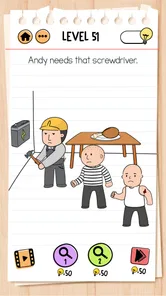
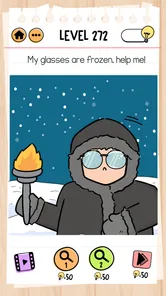
When I want a quick puzzle that makes me question my first answer, I’m more interested in a clever twist than a long list of trivia facts. Brain Test 2: Tricky Stories takes that approach through short, story-framed brain teasers. Its appeal is the moment a puzzle nudges me away from literal thinking and toward an unexpected interpretation. That makes it a lively choice for a spare few minutes, though it is not the best fit if you want a traditional quiz or a serious, uninterrupted logic challenge.
This is a free trivia game from Unico Studio, rated Everyone 10+. It has a 4.7 average from around 1.7 million ratings, and more than 100 million installs. Those figures suggest a broad audience, but the important question for a new player is whether you enjoy playful, sometimes deliberately misleading puzzles. The game’s premise is more about testing how you interpret a scene than recalling dates, definitions, or general-knowledge facts.
The story format gives each puzzle a small context, so I can focus on the situation instead of facing a bare question with four familiar answer choices. That helps the game feel conversational and approachable. It also means that the humor and the wording are part of the challenge: if I take every prompt literally, I can miss what it is inviting me to notice.
I’d choose it when I want an easy-to-start game that rewards curiosity and flexible thinking. I’d look elsewhere if I specifically wanted a competitive quiz, a structured course in logic, or puzzles that consistently require careful multi-step deduction. The key decision is whether a surprise answer feels satisfying to you or merely arbitrary.
Many trivia games ask what I already know. Brain Test 2 instead asks me to inspect what is happening and consider whether the obvious response is a trap. That distinction is useful if standard quiz rounds have started to feel repetitive: the fun here comes less from being well-read and more from spotting a clue or rethinking the question.
The stories make the puzzles feel less like a worksheet, but they also set expectations. I’m not approaching each screen as a formal test with one neatly signposted rule. The game’s playful logic is part of its identity, and I have to be willing to experiment with interpretations rather than assume the first reasonable answer will work.
A practical way to play is to pause before tapping and ask two things: what detail in the scene might be easy to overlook, and what assumption does the prompt encourage me to make? I find that this small routine makes the experience more enjoyable than rapid guessing. It also helps me tell the difference between a puzzle I have not yet understood and one where I am simply clicking around without a plan.
Its short-puzzle style suits the gaps that appear in an ordinary day: waiting for someone, taking a brief break, or sitting down for a little entertainment before moving on to something else. I can play without needing to prepare, remember a complicated rule set, or commit to a lengthy session. That makes it easier to share casually, too: one person can suggest an answer while another looks for a different interpretation.
For example, on a bus ride I might try a puzzle, get stuck, and put the phone away when my stop arrives. Later, I can return with fresh eyes instead of feeling that I have abandoned a long match. The same stop-and-start quality works well for a relaxed break with a friend or family member, particularly when the goal is to laugh at an unexpected solution rather than keep score.
There is a useful trade-off here. A puzzle that hinges on a visual detail can invite a satisfying “I should have seen that” reaction, but it can also become frustrating if I do not understand what the game expects me to notice. When that happens, I recommend taking a short pause and rereading the prompt before trying more answers. Repeated random taps can turn a clever riddle into a guessing session.
Compared with conventional multiple-choice quiz games, Brain Test 2 is a better pick when I want to challenge my assumptions instead of retrieving facts. Compared with a book of formal logic problems, it is a lighter, more casual option: I can dip in without treating every puzzle as a serious exercise. Those are different kinds of fun, and neither format is automatically better.
The story framing is its clearest strength. It gives a riddle a little personality and encourages me to read the whole situation, not just hunt for a keyword. That can make it a good choice for someone who finds standard trivia too dependent on memorized knowledge, but still wants something more engaging than an ordinary tap-and-wait pastime.
On the other hand, people who prefer a transparent rule system may find the trick-question approach less satisfying. A traditional quiz is usually the better choice when you want to know exactly what subject matter is being tested. A dedicated logic puzzle collection may suit you more if you want consistency and carefully reasoned deductions. I would not choose this game as a substitute for either when those specific qualities are the main reason you play.
When I get stuck, I try not to assume that more tapping will uncover the answer. Instead, I look at the wording again, then scan the scene for an element that the prompt might be drawing attention to indirectly. The story context can be a clue in itself, so it is worth asking why the characters or objects are presented in that particular situation.
I also find it helpful to set a personal limit on guessing. After a couple of thoughtful attempts, I step away or let someone else take a look. A second person may notice a detail I have stopped seeing, and a brief break can restore the sense of discovery. This approach keeps the game fun without turning every riddle into a test of patience.
That advice matters because trick puzzles can produce uneven reactions. When I understand the intended twist, the answer feels playful; when I do not, the same design can feel like it is asking me to guess the author’s intention. If you strongly dislike that sort of uncertainty, there is no need to force yourself through it. A more direct quiz or a puzzle with explicit rules will likely be a better match.
The game is free to download, with in-app purchases ranging from $0.99 to $8.99 per item. I would start without buying anything and decide whether the puzzle style suits me first. If you are setting it up for a younger player, remember its Everyone 10+ age rating and consider whether playful trick questions are the kind of challenge you want them to spend time on.
The current version is 1.26.13, and the minimum operating system listed for the game is Android 7.0. That is useful to check before installing, especially on an older device. The version number alone does not change the central decision: whether you enjoy story-based riddles and are comfortable with answers that depend on looking beyond the obvious.
Switching from another casual game is easy in the sense that this one asks little commitment to try. The more important cost is mental expectation. If you arrive expecting standard trivia, you may judge its unusual answers by the wrong standard; if you arrive ready to question the prompt, you are more likely to appreciate what it is doing. I would treat it as a distinct flavor of puzzle game, not as a replacement for every quiz or brain teaser on your phone.
I’d recommend Brain Test 2: Tricky Stories to people who like short, playful riddles, enjoy comparing answers with someone nearby, and do not mind being led toward a misleading first impression. It is particularly well suited to casual sessions when I want a little mental variety without a long setup or a commitment to a full quiz round.
I’d skip it if I want fact-based trivia, a calm sequence of strictly logical problems, or puzzles whose solution method is always obvious from the rules. I would also be cautious about playing while distracted: these riddles reward attention to the prompt and scene, so a rushed session can make them feel more irritating than entertaining.
Overall, I see it as a distinctive casual trivia game whose strongest point is the change of perspective it asks from me. Its story-led riddles offer a welcome alternative to memorization-heavy quizzes, while the intentionally tricky style will not suit everyone. If you enjoy that kind of playful misdirection, it is an easy free download to try; if you prefer clear, conventional questions, another puzzle or quiz format will probably serve you better.
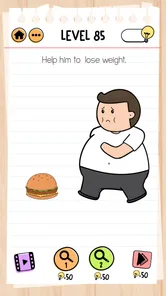
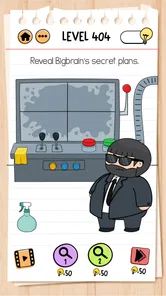
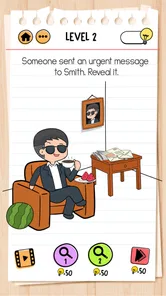
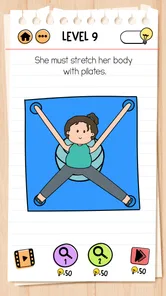
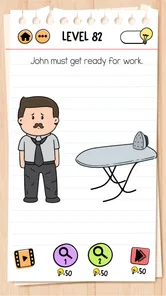
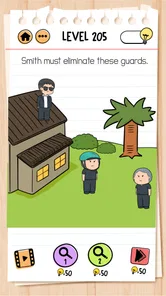
Brain Test 2: Tricky Stories is a casual puzzle game built around short, humorous brain teasers and story-driven levels. Rather than relying only on standard logic questions, many puzzles ask you to inspect a scene, tap objects, or try an unexpected action to help a character. Each level presents a new situation, so the solutions often depend on noticing details and thinking creatively.
The game is generally available as a free download, and you can play through puzzles without buying the app upfront. It may include advertisements and optional in-app purchases, such as items that can help when you are stuck. Availability, pricing, and purchase options can vary by device, country, and app-store listing, so check the Google Play Store or Apple App Store before downloading.
Many of the game’s puzzle levels can be played without a continuous internet connection, which makes it convenient for short sessions while travelling. However, some features—such as loading advertisements, making in-app purchases, or accessing online services—may require a connection. Offline access can also depend on whether the relevant content has already been downloaded, so it is worth opening the game online before relying on it offline.
The game uses colorful cartoon scenes, simple controls, and playful humor, making it accessible to many younger players. Its puzzles can encourage observation and creative problem-solving, though a few solutions may be deliberately silly or unconventional. Parents should also consider the possibility of advertisements and optional purchases, review the store’s age rating, and use available device settings to manage screen time and spending.
Start by examining the entire scene, including objects that may not look important, and try tapping, dragging, or moving items rather than choosing an obvious answer immediately. The game often rewards lateral thinking, so consider whether an object can be combined with something else or whether the character’s situation can be changed. If hints are available in your version, use them when needed and check their requirements before spending anything.
On Android, Brain Test 2: Tricky Stories asks for these permissions.
Brain Test 2: Tricky Stories is also available in 2 other languages on our site.
4.7 out of 5
1,744,085 reviews
Trivia · Unico Studio

Trivia4.8 out of 5

Trivia4.4 out of 5

Trivia4.7 out of 5
Trivia4.6 out of 5

Trivia4.4 out of 5
Trivia4.5 out of 5
Trivia4.7 out of 5
Trivia4.7 out of 5

Trivia4.8 out of 5

Trivia4.8 out of 5
Trivia4.7 out of 5

Trivia4.8 out of 5
Trivia4.8 out of 5
Trivia4.8 out of 5

Trivia4.8 out of 5

Trivia4.7 out of 5

Trivia4.5 out of 5
Trivia4.8 out of 5

Trivia3.8 out of 5
Trivia4.1 out of 5
Trivia4.6 out of 5
Trivia4.8 out of 5



Gamesive reviews games on its own and is not paid by developers for scores. We do not host game files: the download buttons open the official Google Play and App Store pages. Names, icons and screenshots belong to their owners.