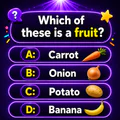
Trivia Master - Word Quiz Game
Trivia4.5 out of 5

For Android & iOS · Unico Studio
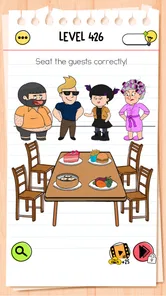
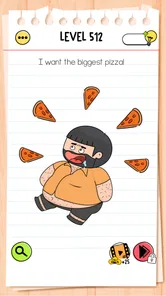
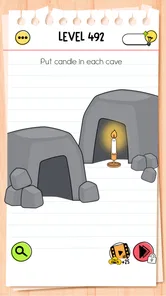
 Analysis by Gamesive
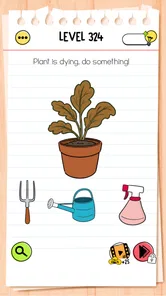
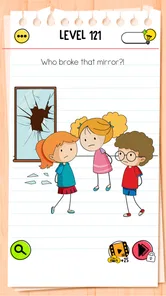
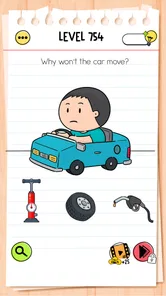
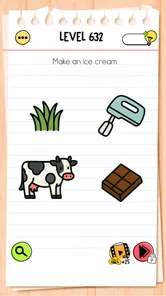
I can see Brain Test All-Star: IQ Boost working best as the game someone opens while the rest of the household is waiting for dinner, riding in a car, or taking a quiet break. It is a trivia game built around tricky puzzles, so the fun is less about memorizing facts and more about noticing what a question is really asking. I like that kind of challenge: a quick answer can feel obvious until the puzzle nudges me to look again.
That shared setting also brings a practical question: is it enjoyable when more than one person is looking at the screen? In my view, yes, especially when players take turns suggesting answers. It naturally invites a little discussion, although it is still a game on one device rather than a dedicated family activity with roles or shared progress tools. If your group likes talking through a riddle, that is a strength; if everyone wants a separate, private game, it is less suited to that purpose.
Unico Studio has made a trivia game that can work as a small social diversion without needing a long session. I would use it in the gaps of the day rather than plan an evening around it: pass the phone to another person, read a puzzle aloud, and see who spots the trick first. That approach makes the questions more of a conversation starter than a solitary test.
There is a useful trade-off here. A puzzle can be entertaining for a group because people bring different assumptions, but the same format can become frustrating if one person keeps the answer to themselves or rushes ahead. I would agree on a simple turn-taking rule before starting, particularly with children. It keeps the game light and avoids turning a casual round into an argument over who gets to tap the screen.
For a realistic everyday example, imagine two people waiting for a takeaway order. One person can hold the phone and read each prompt, while the other suggests a solution before the answer is entered. If a puzzle catches both of you out, that shared “wait, what?” moment is the appeal. It is not the right pick when you need a quiet background activity that asks for no attention; its puzzles are the point, so even a short session asks you to think.
When a game is shared, it helps to distinguish access to the device from access to a person’s other accounts or personal information. I would hand over the phone only when I am comfortable with the other player using the game on that device, and I would stay nearby if a child is playing. That is ordinary shared-device care, not a special feature of the game.
I would also set expectations about purchases before passing it around. The game is free to download, and it offers in-app purchases priced from $0.99 to $14.99 per item. That makes it sensible for the device owner to review purchase settings and explain that a free game can still present paid options. I would not treat a child’s access to the game as permission to spend, and I would avoid leaving a young player to make purchase decisions unsupervised.
There is no need to make the game sound more complicated than it is: if several people share one phone, the main boundary is who is using the device and who can approve spending. I would not assume that separate players automatically get separate progress or settings. If preserving individual records matters to your household, check how the game behaves on your own device before making it a shared routine; otherwise, take turns casually and avoid treating the session as a personal competition.
For coordination, I find it helps to decide whether the group is solving together or playing in turns. Solving together is more welcoming for mixed ages and confidence levels: each person can offer an idea, and nobody has to feel slow. Taking turns adds a challenge, but it can put pressure on someone who needs more time to interpret a tricky prompt. The game’s central appeal—questions that make you reconsider your first answer—works better when people are allowed to pause and think.
A small practical tip is to let the person who has not touched the screen make the next guess. That gives the quieter player a way into the activity and prevents one fast tapper from deciding every answer. Another is to read a prompt exactly as it appears before offering hints. With trick questions, paraphrasing can accidentally remove the wording that matters, so a clear read-aloud helps everyone work from the same clue.
This is also where the game differs from a conventional quiz app. A standard trivia quiz often rewards a bank of factual knowledge or rapid recall; this one is aimed at lateral thinking and catching misleading assumptions. If your household enjoys debating interpretations, that distinction is valuable. If you want questions about geography, history, or a topic you are studying, a subject-focused quiz will be a better fit than a collection of brain teasers.
The game has an Everyone 10+ content rating, which gives families a helpful starting point, but I would still consider the child rather than relying on a label alone. A ten-year-old who enjoys puzzles may be comfortable with the challenge, while a younger child might need an adult to explain a question or keep the mood encouraging. The best shared experience is one where a wrong guess is treated as part of the puzzle, not as a reason to tease someone.
Its scale is reassuring in a different way: it has more than 10 million installs and an average rating of 4.8 from around 809,000 ratings. Those figures suggest broad interest, but they do not tell me whether a particular child will like its style or whether a household will enjoy sharing one screen. I would use them as context, not as a substitute for trying a few puzzles together.
For a family that wants a structured learning tool, I would look elsewhere. Brain teasers can exercise attention and flexible thinking, but I would not present this game as a lesson plan or a reliable measure of intelligence. Its value is entertainment with a mental twist. That is enough for a break, but it is a different promise from curriculum-based practice, a word-learning app, or a quiz that focuses on a specific school subject.
The store summary describes a broad collection of tricky puzzles and brain games, and that is the right expectation to bring. I would approach each prompt as something to inspect rather than a question with an obvious textbook answer. The most useful habit is to read the whole wording, look for an assumption you have made, and only then commit. That turns a frustrating “gotcha” into a small reasoning exercise.
It is also worth knowing what this style is not. It does not replace a deep strategy game or a long-form trivia competition; its appeal is a succession of compact challenges. If you prefer transparent rules and answers based strictly on learned facts, some trick questions may feel arbitrary. I would stop when the game stops feeling playful rather than forcing a long session. A short burst is a better match for this kind of puzzle than trying to prove you can solve everything at once.
The current version is 1.6.9, and the game was released on August 3, 2024. It is free, with the paid items mentioned earlier, so the sensible starting point is to try it without treating optional spending as part of the experience. It supports Android 7.0 and later. Those basics make it straightforward to consider for an older device, though I would still check the app store on the actual phone or tablet before installing.
I would recommend it to people who like wordplay, visual misdirection, and the satisfaction of changing their mind after spotting a clue. It is particularly easy to share with a friend or family member who enjoys talking through a problem rather than silently racing to an answer. As a casual trivia game, it offers a different kind of challenge from fact-heavy quizzes, and that difference is the main reason I would choose it.
I would skip it if you want a calm, predictable game, an educational course, or a highly competitive multiplayer experience. A person who dislikes trick questions may find the style irritating instead of clever. Likewise, if your household needs distinct personal profiles, carefully separated progress, or a way to coordinate multiple players inside the game, do not assume those needs are covered; the safer choice is a game specifically built around those features.
Overall, I think Brain Test All-Star: IQ Boost earns its place as a casual puzzle to share, provided everyone understands what it is: a playful test of attention and assumptions, not a formal quiz or a family-management tool. Unico Studio’s game is most enjoyable when people take turns, read carefully, and keep the stakes low. For a household that likes a quick riddle during an ordinary wait, I would give it a try; for families seeking separate accounts, structured learning, or a more conventional trivia contest, I would choose something designed for that job instead.
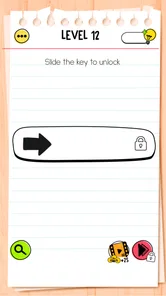
Brain Test All-Star: IQ Boost is a casual puzzle game built around short challenges that ask you to think beyond the obvious. You may need to spot a detail, interpret a question in an unexpected way, or use objects on the screen to find a solution. Its light presentation makes it easy to pick up, while the trick wording and surprising answers are designed to test observation, logic, and flexible thinking.
The game can generally be downloaded and played without an upfront purchase, but the experience may include advertisements and optional in-app purchases. These can vary by version, region, or platform, so check the current Google Play or App Store listing before installing. If ads or spending are a concern, review the available purchase controls and device settings, particularly if a child will be playing.
Some puzzle content may be playable without an internet connection, but features such as watching ads for hints, receiving certain rewards, or accessing online services may require connectivity. Offline availability can also depend on whether the game has already downloaded the required content. For the most reliable experience, open the game while connected before travelling, and check its store listing for current network requirements.
The game focuses on solving puzzles rather than realistic violence or complex controls, which can make it approachable for younger players. However, difficulty and tricky wording may occasionally frustrate children, and advertisements or optional purchases may be present. Parents should check the age rating and privacy details for their region, supervise younger players, and use device-level purchase restrictions where appropriate.
Hints are intended to nudge you toward a solution without immediately giving away every puzzle, and some versions may offer them through in-game resources or rewarded ads. If a challenge seems impossible, reread the wording, inspect the full screen, and try interacting with objects rather than relying only on the obvious answer. Hint availability and costs can change between updates, so consult the in-game information.
On Android, Brain Test All-Star: IQ Boost asks for these permissions.
Brain Test All-Star: IQ Boost is also available in 2 other languages on our site.
4.8 out of 5
809,010 reviews
Trivia · Unico Studio

Trivia4.7 out of 5

Trivia4.8 out of 5

Trivia4.4 out of 5

Trivia4.7 out of 5
Trivia4.6 out of 5

Trivia4.4 out of 5
Trivia4.7 out of 5
Trivia4.7 out of 5

Trivia4.7 out of 5

Trivia4.8 out of 5
Trivia4.5 out of 5
Trivia4.7 out of 5

Trivia4.8 out of 5
Trivia4.8 out of 5
Trivia4.8 out of 5

Trivia4.8 out of 5

Trivia4.7 out of 5

Trivia4.5 out of 5

Trivia3.8 out of 5
Trivia4.1 out of 5
Trivia4.6 out of 5
Trivia4.8 out of 5


Gamesive reviews games on its own and is not paid by developers for scores. We do not host game files: the download buttons open the official Google Play and App Store pages. Names, icons and screenshots belong to their owners.