Text or Die
For Android & iOS · Rollic Games
- 4.1 out of 5Rating
- 285.38KReviews
- 10.00M+Downloads
- TriviaGenre
Game details
- Version
- 30.2.2
- Updated
- Requires
- 7.0
- Price
- Free
- Age rating
- Everyone 10+
- In-app purchases
- $0.99 - $24.99 per item
Screenshots
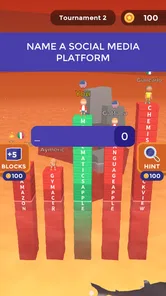
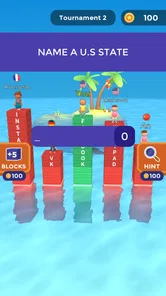
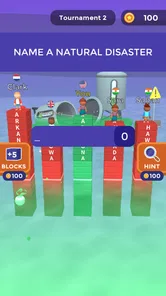
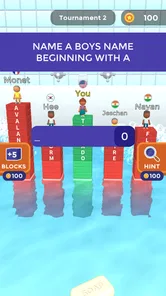
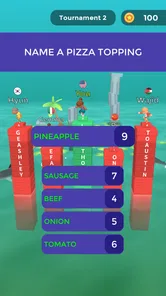
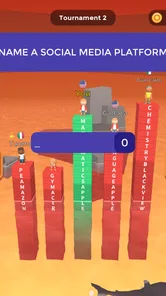
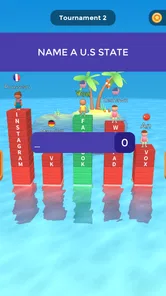
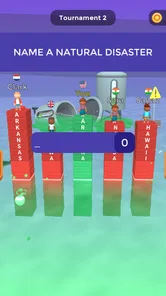
Text or Die review
 Analysis by Gamesive
I went into Text or Die expecting a quick word game, and its central idea is easy to grasp: answer trivia prompts by typing the longest word you can think of, then try to stay safe from sharks. That simple hook gives each question a little urgency. It is not just a matter of knowing an answer; the challenge is finding a longer one before the danger catches up. If you enjoy casual trivia with a playful survival theme, this game has an immediately understandable appeal.
How the word challenge works
Text or Die is a free trivia game from Rollic Games, built around a familiar but effective word-length challenge. A prompt asks for an answer, and the aim is to enter a long word that fits. The shark premise gives that familiar exercise a more dramatic frame: your word choice is tied to the feeling of trying to save yourself. It turns spelling and general knowledge into a quick test of recall under pressure.
The appeal is that the basic task does not require a lengthy tutorial to understand. You read a prompt, search your memory for a suitable answer, and think about whether you can come up with a longer one. That makes the game approachable for short sessions, while still leaving room for those satisfying moments when a less obvious word comes to mind. It is a light format rather than a deep trivia course, and that distinction helps set expectations.
The game belongs to the trivia and word game space, but its premise gives it a different flavor from a straightforward quiz. A conventional trivia question rewards getting the answer right; here, the store’s description emphasizes typing the longest word. That changes how I approach a prompt. I am not only asking, “What is a correct answer?” but also, “What valid answer can I think of that uses more letters?” The result is a small mental puzzle wrapped around each question.
Simple rules, lively pressure
The shark theme supplies the tension without making the concept hard to follow. Even a familiar prompt can feel more engaging when the game presents it as a race to come up with a strong answer. I like that the premise works at a glance: the word is your way to save yourself, and a longer response is the goal. For players who want a casual game they can pick up without learning a complicated set of systems, that clarity is a real strength.
At the same time, the fun depends on how much you enjoy stretching your vocabulary. Players who like word association, quick recall, and searching for a more precise answer may find the format naturally engaging. If you prefer trivia that focuses on detailed explanations or learning facts after each question, this is a different kind of experience. Its hook is the challenge of producing a long answer, not a promise of in-depth lessons.
Progress, repetition, and the pressure to answer
The store summary frames the game around typing long words and avoiding sharks, so the sense of pressure is central to its identity. That framing can make even a simple prompt feel like a small contest against the clock or the situation the game presents. I find that kind of urgency works best in short bursts: it gives an ordinary word-recall task a clear purpose, while keeping the rules easy to remember between sessions.
As with many casual word games, the core activity can become familiar once you understand the format. The variation then comes from the prompts and from your own ability to think of a better answer. Sometimes a common word will come to mind first, and a moment later a longer alternative appears. That little flash of recognition is part of the appeal. The game encourages you to look beyond the first obvious response, which is a pleasant nudge for anyone who likes language puzzles.
There is also an element of pressure in choosing an answer quickly. A player who pauses too long to search for the perfect word may lose the spontaneity that makes the challenge enjoyable. I would approach it as a casual test of quick thinking rather than a place to deliberate over every possible answer. That keeps the shark scenario playful and helps the simple premise stay breezy instead of turning into a stressful spelling exam.
The game is listed as free, while optional in-app purchases range from $0.99 to $24.99 per item. That is useful context for anyone deciding whether to try it: there is no upfront price listed for the game, but purchases are available inside it. The range is broad, so it is worth checking the purchase details in the app store and being mindful of spending, particularly if children use the device. I would not assume that paying is necessary to enjoy the basic word-game idea, nor would I assume what any individual purchase provides without checking its description.
Fairness and spending
For a game built around answers and word length, fairness matters. The essential question is whether players feel that success comes from their own recall and choices. The premise points toward a skill that is easy to understand: identify a fitting answer and aim for a longer word. That gives the challenge an intuitive basis, because the player can see what they are trying to do rather than having to master a complicated collection of rules first.
Still, the existence of in-app purchases alone does not establish how purchases affect play or competition. I would avoid treating optional spending as proof that a match is easier for paying players, just as I would avoid assuming that purchases have no effect. The responsible approach is to check what an item offers before buying it. From a player’s perspective, the free entry point is attractive, while the purchase range is a reminder to keep an eye on spending and device-level purchase controls.
That distinction is especially relevant for families. The game carries an Everyone 10+ content rating, and parents may want to review the game and its purchase settings before handing over a device. The rating offers a useful age signal, but it does not replace a family’s own judgment about the child, the content, or spending habits. I would treat the game as a casual word challenge and make sure purchases are handled deliberately rather than accidentally.
Who is likely to enjoy it?
I would recommend giving Text or Die a look if you like quick trivia prompts, wordplay, and the satisfaction of finding a longer answer than the obvious one. It may also suit people who want a lightweight game that is easy to explain to someone else. The shark setup gives the word task a memorable theme, while the simple objective means new players can understand the basic attraction without needing a long introduction.
It is less suited to someone looking for a traditional quiz with detailed explanations, a serious vocabulary curriculum, or a highly strategic game. The available description centers on typing long words and trying to avoid sharks; that is the promise to judge it by. Keeping expectations close to that premise makes the experience easier to appreciate. It is a casual word challenge first, with trivia as the prompt and survival as the playful framing.
The game has an average rating of 4.1 from around 285,000 ratings, with roughly 22,000 written reviews. It has passed 10 million installs, which suggests that the straightforward premise has found a sizeable audience. Those figures can provide a broad sense of its reach, but they are not a substitute for trying the game yourself. Word games are personal: one player’s favorite kind of quick challenge may feel repetitive to another.
What to keep in mind
The game was released on August 14, 2021, and its current version is 30.2.2. It requires operating system version 7.0 or later. Those details are practical checks before downloading, especially if you are installing it on an older device. The game is free to download, and the listed in-app purchase prices run from $0.99 to $24.99 per item, so it is sensible to confirm compatibility and review purchase settings before starting.
Beyond those practical points, I would focus on the kind of experience the premise offers rather than imagining systems that are not part of its stated hook. The verified purchase context is clear: the game is free, and paid items are available at a range of prices. The specific effect of those purchases on a player’s progress or competitive standing is not established here, so I would not make claims about advantages or disadvantages. Checking the individual purchase descriptions is the sensible way to decide whether any item is worth considering.
That restraint is useful when judging fairness, too. A game can have optional purchases without automatically becoming unfair, but the presence of purchases does make transparency and careful buying important. If you are concerned about competitive balance, look closely at the current in-game purchase descriptions and decide whether the experience meets your expectations. I would keep the verdict focused on what is clear: this is a free word-and-trivia game with optional spending, and players should make purchase decisions with care.
Final verdict
Text or Die has a concise, memorable hook: answer trivia prompts with long words and try to escape the sharks. I like how that turns a basic vocabulary challenge into a playful test of quick recall. Its appeal is strongest for casual players who enjoy word puzzles and do not need elaborate rules or a serious educational focus. The straightforward setup makes it easy to understand, while the pressure-themed premise gives each answer a little extra energy.
My overall impression is that it is worth considering if you want a free, accessible word game with a clear objective. The audience size and solid average rating show that many players have tried it, though personal enjoyment will depend on how much you like the central loop. Keep the purchase range in mind, check individual items before spending, and use the age rating as one part of your decision. If the idea of finding the longest fitting answer sounds fun, this shark-themed trivia challenge is an easy one to try.
What we like
- Simple controls make each round easy to start.
- Trivia answers reward broad general knowledge.
- Short rounds fit well into brief play sessions.
- Competing on a shared leaderboard adds replay value.
- The word-based format offers a change from fast reflex games.
What could be better
- Some prompts allow many valid answers that may not be accepted.
- Later rounds can become difficult without niche knowledge.
- Ads may interrupt the flow between rounds.
- Repeated categories can make extended sessions feel predictable.
- Progress may depend on an active internet connection.
Frequently Asked Questions
What is Text or Die, and how do you play it?
Text or Die is a word puzzle game built around quick, category-based challenges. A prompt asks for an answer that fits a topic, and you try to enter a valid word or phrase before the round ends. In its tower-building format, longer answers can help your character build higher and stay above rising danger, while shorter or invalid answers may leave you at a disadvantage. The exact modes and rules can vary by version.
Is Text or Die free to download and play?
Text or Die is generally offered as a free-to-play mobile game, so you can usually download it without paying upfront and try its core rounds. Free games may include advertisements, optional purchases, or other in-app offers, and availability can differ by country, device, and store listing. Check the current Google Play or App Store page for the latest pricing, purchase details, and any requirements before installing.
Can I play Text or Die offline?
Do not assume that every part of Text or Die works without an internet connection. Some versions or game modes may require connectivity for matchmaking, leaderboards, account features, or ad-supported content, while other activities may be available locally. Since requirements can change with updates, check the store description and test the game on your device before relying on it for offline play, such as during travel.
Is Text or Die suitable for children?
Text or Die uses word-based prompts and simple controls, which can make its basic gameplay approachable for a range of ages. However, suitability also depends on the current version’s ads, optional purchases, online features, and the topics or user interactions it may include. Parents should review the age rating and privacy information on the relevant app store, and consider using device-level purchase and screen-time controls.
What should I check before downloading Text or Die?
Before downloading, confirm that the listing is the intended Text or Die game and that it supports your Android or iOS version. Review the latest ratings, update date, permissions, privacy disclosures, and details about advertisements or in-app purchases. Make sure your device has enough storage and a reliable connection for installation. These checks can help you understand what to expect, since features and requirements may vary by platform and region.
Permissions
On Android, Text or Die asks for these permissions.
- Wi-Fi connection information
- view Wi-Fi connections
- Other
- view network connections, allow Wi-Fi Multicast reception, full network access, control vibration, prevent device from sleeping, Google Play license check
User reviews
4.1 out of 5
285,375 reviews
- 61%
- 14%
- 8%
- 4%
- 13%
Download Text or Die
Trivia · Rollic Games · Free
Games like Text or Die
View all: Games like Text or Die
Brain Test: Tricky Puzzles
Trivia4.7 out of 5

Everyday Puzzles: Mini Games
Trivia4.6 out of 5
IQ & brain test: Triviascapes
Trivia4.8 out of 5

Fluffy Drop - No Timer
Trivia4.5 out of 5
About this listing
- Game
- Text or Die
- Developer
- Rollic Games
- Package
- com.fullfat.textordie
- Version reviewed
- 30.2.2
Gamesive reviews games on its own and is not paid by developers for scores. We do not host game files: the download buttons open the official Google Play and App Store pages. Names, icons and screenshots belong to their owners.