Trivia Master - Word Quiz Game
Trivia4.5 out of 5
For Android & iOS · Unico Studio

 Analysis by Gamesive
Brain Test 4: Tricky Friends is best approached as a playful test of how you interpret a puzzle, not as a formal measure of intelligence. I like it most when I have a few spare minutes and want a question that makes me pause, reconsider what I assumed, and enjoy the answer once it clicks. It has the approachable feel of a casual brain game, but its appeal depends on being willing to try an unexpected reading rather than relying on textbook trivia.
Unico Studio’s trivia game puts the emphasis on short, tricky challenges rather than long quizzes. That distinction matters: conventional trivia usually rewards recalling facts, while this game asks you to inspect a situation and work out what the puzzle is really asking. If you enjoy lateral-thinking questions, that change of pace is the main reason to give it a try.
The strongest moments come when I stop treating the wording as a straightforward instruction. A puzzle may invite a familiar response, yet the useful move is to question the setup itself. That makes the experience feel more like a series of small reasoning exercises than a knowledge test. It can be especially satisfying to solve one without help, because the answer feels earned rather than remembered.
That style also makes the game easy to fit around ordinary routines. I can imagine opening it while waiting for a friend, taking a brief break between chores, or passing a phone back and forth during a quiet evening. The short-puzzle format suits those moments better than a game that needs a long uninterrupted session. I would treat it as a pocket-sized diversion, not something that demands a dedicated gaming setup.
A useful way to play is to read each prompt twice before acting. On the first pass, notice the obvious interpretation; on the second, look for a word, object, or assumption that could be doing more work than it seems. If the answer does not come, I find it better to pause briefly and return with fresh eyes than to tap randomly. That keeps the puzzle-solving feeling intact and makes the eventual solution more memorable.
The game is a good fit for people who enjoy sharing a puzzle aloud. One person can read the challenge while another suggests possibilities, and the disagreement over what counts as a fair answer can be part of the fun. It also works for solo play when you want a low-pressure mental reset. I would not choose it for a competitive trivia night, though: its focus is on puzzle interpretation, not on proving who knows the most facts.
Compared with standard quiz apps, Brain Test 4 asks less about what you already know and more about how flexibly you can think. That makes it easier to pick up if you do not enjoy memorizing capitals, dates, or specialist facts. The trade-off is that the solution can feel less objective than a conventional quiz answer: a player who expects familiar question-and-answer rules may find some twists surprising or frustrating.
It also sits apart from word games and number puzzles. Those often offer a clear system to learn and steadily apply; here, the challenge is more about spotting what kind of trick a particular prompt may contain. I find that variety refreshing in small doses, though anyone who wants a predictable ladder of increasingly difficult logic problems may prefer a dedicated puzzle game. This is a more playful, less formal kind of mental workout.
The premise is easy to understand, which is helpful when sharing the game with someone who does not usually play mobile games. Its Everyone content rating also makes it broadly suitable to consider for family play, though individual comfort with tricky or occasionally counterintuitive questions will vary. For a shared session, I would let each person explain their reasoning before anyone settles on an answer; that turns a possible “gotcha” into a conversation about assumptions.
The same surprise that makes a puzzle satisfying can also make it feel arbitrary. If I have carefully followed the apparent instruction and the solution depends on noticing an unexpected angle, I may enjoy the reveal; if the clue feels too obscure, I may instead feel that the game withheld the useful hint. That is an inherent risk of trick-question design, and it means the experience will depend heavily on your tolerance for playful misdirection.
Another limitation is that this is not a deep substitute for a structured study tool. It may get you thinking, but I would not use it to learn a subject systematically, track mastery of a topic, or prepare for an exam. Players who want dependable factual questions or a clear measure of knowledge should choose a conventional quiz app. Likewise, if you dislike being caught by wording or visual assumptions, a straightforward word or number puzzle is likely to feel fairer.
There is also a difference between a quick break and a satisfying long session. The bite-sized format is convenient, but it does not automatically make every puzzle equally compelling. I would play in short bursts and stop when I start guessing mechanically. That small boundary helps preserve the pleasure of solving instead of turning the game into a sequence of taps made just to get past a challenge.
The game is free to install, with in-app purchases listed from $0.99 to $24.99 per item. I would think of the free entry point as a chance to see whether this particular style of puzzle suits you, and make any purchase decision only after you understand what you personally want from it. Those purchase prices are not a reason to assume you need to spend to enjoy a casual puzzle game.
Its audience is broad: it has an Everyone age rating, and it is available on Android from version 7.0 onward. The current version is 1.47.0. Before installing, I would check that your device meets the system requirement and consider whether you prefer short, twist-based puzzles over traditional quiz rounds. That simple expectation check is more useful than downloading it in the hope of finding a full course in trivia.
The game has an average rating of 4.7 from around 208,000 ratings, alongside roughly 2,600 written reviews and more than 10 million installs. Those figures suggest that many players have tried it, but they do not guarantee that its particular humor or puzzle logic will suit you. Unico Studio released it on February 9, 2023, and its appeal is clearest when judged by the experience it offers: compact, accessible challenges built around surprising interpretations.
I would recommend it to friends who like lateral-thinking riddles, enjoy discussing possible answers, or want something more mentally engaging than a passive phone break. It is also a reasonable choice for someone who finds standard trivia intimidating but likes noticing patterns and questioning assumptions. For a parent or family member considering it, the broad age rating is reassuring, while playing together offers a natural way to help younger players talk through a confusing prompt instead of simply giving them the answer.
I would steer away from it if your main goal is factual learning, a rigorous logic curriculum, or a puzzle system with consistent rules that become progressively more demanding. It is also not my first pick when I want a calm game that never tries to mislead me. In those cases, a conventional quiz, a word puzzle, or a more structured logic game will probably deliver a better match.
My practical recommendation is to try it when you have a little time and an open mind, rather than expecting every question to have an obvious clue. Read carefully, give yourself a moment to challenge your first assumption, and share the puzzle if you get stuck. If that process makes you smile, the game is doing what it does best; if it feels like arbitrary trickery, there is no need to force it.
Brain Test 4: Tricky Friends succeeds as an approachable collection of short, twist-driven brain teasers, especially for players who enjoy the moment when a hidden interpretation suddenly makes sense. Its biggest strength is also its main limitation: the puzzles reward flexible thinking, but their misdirection will not feel satisfying to everyone. I recommend it as a free-to-start casual game for curious minds and shared puzzle breaks, not as a serious trivia resource or a guaranteed fit for fans of strict, predictable logic.
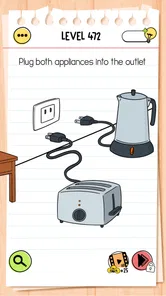
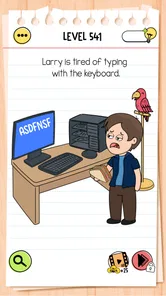
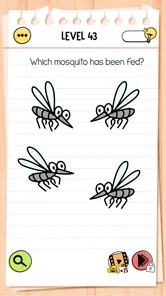
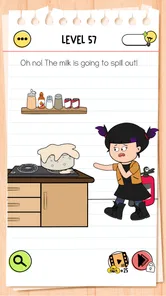
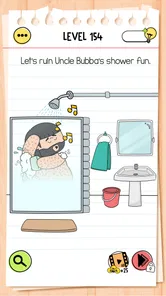
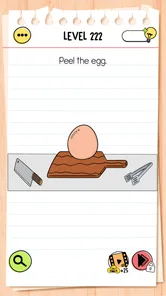
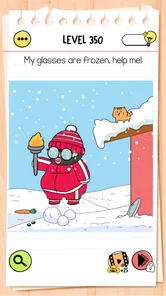
Brain Test 4: Tricky Friends is a casual puzzle game built around short, humorous brain teasers. Each level presents a scene or question that may require more than a straightforward answer: you might need to inspect the picture, move objects, or think beyond the obvious wording. Its playful characters and trick-based solutions make it approachable for brief play sessions, though some puzzles are deliberately surprising.
The game uses colorful cartoon artwork and lighthearted humor, so it can appeal to younger players as well as adults. However, puzzle difficulty varies, and children may occasionally need help understanding a trick or interpreting a clue. As with many free-to-play mobile games, check the store listing and device settings for details about ads, in-app purchases, and parental controls before letting a child play.
Many puzzle levels may be playable after they have loaded, but features such as advertisements, optional hints, updates, or other online services can depend on an internet connection. Offline availability may also vary by version and device. If you plan to play while traveling, install and open the game beforehand, then test it in airplane mode rather than assuming every feature will work without a connection.
The game may be available to download for free, while offering advertisements and optional in-app purchases. Purchases can relate to hints or other game content, and the exact options may change with updates or differ between Android and iOS. Review the current store page before downloading, and use purchase authentication or parental controls if you want to avoid accidental spending.
Start by rereading the prompt and examining every detail in the scene, including objects that may be moved or combined. These puzzles often reward experimentation rather than a literal answer, so try dragging, tapping, or repositioning items when appropriate. If you still cannot solve a level, the game may provide a hint option; availability and any cost or ad requirement can depend on the current version.
On Android, Brain Test 4: Tricky Friends asks for these permissions.
Brain Test 4: Tricky Friends is also available in 1 other languages on our site.
4.7 out of 5
207,778 reviews
Trivia · Unico Studio
Trivia4.7 out of 5

Trivia4.8 out of 5

Trivia4.4 out of 5

Trivia4.7 out of 5
Trivia4.6 out of 5

Trivia4.4 out of 5
Trivia4.7 out of 5
Trivia4.7 out of 5

Trivia4.8 out of 5

Trivia4.8 out of 5
Trivia4.5 out of 5

Trivia4.8 out of 5
Trivia4.8 out of 5
Trivia4.8 out of 5

Trivia4.8 out of 5

Trivia4.7 out of 5

Trivia4.5 out of 5
Trivia4.8 out of 5

Trivia3.8 out of 5
Trivia4.1 out of 5
Trivia4.6 out of 5
Trivia4.8 out of 5



Gamesive reviews games on its own and is not paid by developers for scores. We do not host game files: the download buttons open the official Google Play and App Store pages. Names, icons and screenshots belong to their owners.