
Piano Game: Classic Music Song
Music4.0 out of 5

For Android & iOS · SAMFEN LIMITED







 Analysis by Gamesive
Beat Cats is a music game I’d reach for when I want a quick rhythm challenge rather than a long session or a full music-learning tool. Its appeal is easy to understand: follow a tune, tap along, and enjoy the playful cat theme. The important question is how that simple idea feels in everyday use. For me, the best way to approach it is as a light, focused game for short breaks—not as a demanding rhythm simulator with lots of customization.
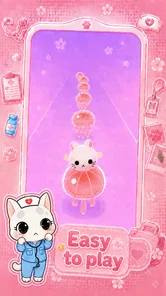
Beat Cats is a free music game from SAMFEN LIMITED, rated for Everyone. The basic premise puts the rhythm first: you need to pay attention and respond at the right moment, so even a brief play session asks for more focus than a passive music app. The cat presentation keeps the mood light, which helps the challenge feel welcoming rather than stern.
I would expect the game to feel most satisfying when I can give it a little attention instead of tapping while distracted. A short round during a break, while waiting for a friend, or between tasks is a natural fit. If I’m trying to relax with no interaction at all, though, this is the wrong kind of music experience; its fun comes from actively keeping up.
The current version is 0.0.32, and the game was released on May 23, 2024. Those details are useful context, but they don’t tell me how smoothly it will run on every device or what each session will contain. I’d judge the experience by how responsive the taps feel on my own phone and whether I enjoy repeating a section when my timing slips.
In a tile-based music game, perceived speed is about more than how quickly a screen loads. The key is whether the visual cues and the beat feel aligned closely enough for a tap to make sense. A rhythm game can look lively and still feel unfair if I can’t read the next cue in time; when that happens, I’m more likely to blame the timing than my reflexes.
My practical tip is to begin a session when I can listen and watch without competing distractions. If a round feels unexpectedly difficult, I’d first try again with the phone held steadily and my attention on the cues before deciding that the game is too demanding. That small change is especially useful in a noisy room, where it’s harder to follow a musical pattern by sound alone.
The cat theme also gives the game a softer personality than a bare timing exercise. That’s a real advantage for younger players or anyone who finds stark score-chasing games a little severe. At the same time, players who want a serious instrument trainer, detailed practice controls, or a deeper music-editing experience should look elsewhere; this is entertainment built around rhythm, not a substitute for lessons.
The most demanding moments in a rhythm game tend to arrive when I’m trying to process several visual cues while staying with the music. Beat Cats is best treated as a game that rewards a clear screen and a steady grip. I wouldn’t use it while walking near traffic, carrying something, or trying to follow a conversation. A game that depends on quick reactions is much less enjoyable when my attention is split.
For an everyday use case, imagine a few minutes on the sofa after work. I can play one short session, notice whether I’m reacting to the beat or merely guessing, and stop before the challenge turns into frustration. That makes it a better fit for small gaps in the day than for a long commute where movement, interruptions, or limited attention could make precise tapping awkward.
Repeated attempts can be part of the appeal, but they also expose a trade-off: if I keep replaying a difficult moment without changing how I approach it, the session can start to feel like busywork. I’d pause, reset my attention, and try again rather than tap faster in a panic. Rhythm play is usually about catching the pattern, not forcing speed, and that mindset makes a missed beat less annoying.
Compared with a conventional music player, Beat Cats asks for active participation and offers a game-like focus instead of simply playing songs in the background. Compared with music games that emphasize extensive settings or practice tools, its straightforward cat-and-rhythm identity is easier to approach but may feel limited to players seeking fine control. That is the central choice: quick, playful interaction or a more configurable musical challenge.
I would assess reliability through the details that matter during play: do taps register consistently, does the rhythm remain readable, and can I return to a session without feeling that the controls have become unpredictable? A single awkward round doesn’t prove a broader problem. If something feels off, closing other demanding apps and trying again in a calmer setting is a sensible first step before deciding whether the game suits the device.
Recovery matters because rhythm games can be unforgiving when a moment is interrupted. If a notification or a brief pause breaks my concentration, I’d rather restart with a clear head than keep tapping while unsure of the beat. I can’t assume every interruption will be handled the same way, so I’d avoid beginning a particularly focused run when I’m expecting calls or messages.
Beat Cats has an average rating of 4.5 from around 18,000 ratings, with 243 written reviews and over 10 million installs. That broad audience suggests the premise has found plenty of players, but popularity doesn’t guarantee a perfect fit for my phone or my taste. I’d treat those figures as context, then make the decision based on whether the timing feels fair and the sessions stay enjoyable.
The listed minimum operating system is 7.1, so I’d check my device’s software compatibility before trying to install it. Meeting a minimum requirement doesn’t guarantee that every older phone will feel equally responsive, especially in a game where timing is the point. On a device that already struggles with touch response or visual smoothness, a rhythm challenge may feel harder than intended.
The game is free to download, with in-app purchases listed from $5.99 to $39.99 per item. I’d go in expecting optional purchases to be part of the experience and pay attention to what I’m choosing before confirming anything. If I’m looking for a completely purchase-free game, or I know that optional spending makes it harder for me to stay within a budget, I’d consider that before installing rather than letting a playful theme make the decision for me.
For a family, the Everyone age rating makes the game broadly approachable, but I’d still supervise younger children around in-app purchases. A child may understand the tapping quickly while not recognizing that a purchase prompt involves real spending. Keeping device purchase controls in mind is more useful than assuming that a friendly art style means every part of the experience is automatically suitable for unsupervised use.
To keep the game feeling responsive, I’d close anything else that is visibly slowing the phone, avoid playing while the device is overheating, and use a comfortable grip that leaves my tapping hand free. These are general ways to make a timing game easier to judge, not special requirements. If the game still feels uncomfortable or inconsistent, it may simply be a poor match for that device or for the way I prefer to play.
I’d recommend Beat Cats to someone who likes cute presentation, quick music-based challenges, and the satisfaction of improving through attention. It can work well for a short break when I have a few uninterrupted minutes and want something more engaging than scrolling. Its approachable theme may also make rhythm play less intimidating for a casual player who isn’t looking for a serious score-attack experience.
I’d skip it if I want music to run in the background, if I dislike repeating a challenge after a missed cue, or if I need a detailed practice tool. I’d also choose a different option if I’m sensitive to touch-timing games and find that small delays make play frustrating. A music player is better for passive listening; a dedicated rhythm trainer is a better match for structured practice. Beat Cats sits between those expectations as a light game, not a universal music app.
My verdict: Beat Cats sounds most worthwhile when I treat it as a cheerful, compact rhythm diversion and give it enough attention to follow the beat. Its free entry point makes it easy to try, while the listed purchases and the demands of precise tapping are worth keeping in mind. I’d give it a chance for casual play, but I wouldn’t choose it for deep music training or sessions that need to survive constant interruptions. If the timing feels comfortable on your device, the playful concept has a clear everyday use; if not, a less timing-sensitive music game will be a better fit.
Beat Cats is a rhythm-focused mobile game in which you guide or interact with cat characters while following music and on-screen cues. The core appeal is pairing simple touch controls with songs and playful visuals, so it can suit quick sessions as well as attempts to improve your performance. Check the store listing for the exact modes and features available in the version offered for your device.
The cost and payment options can depend on the app-store listing, your region, and the version currently available. Before installing, review the listing for the download price, in-app purchases, subscriptions, and any advertised trial offers. If purchases are available, consider enabling purchase authentication on your device, especially if children may play. Do not assume that every song, feature, or customization option is included at no extra cost.
Offline availability may vary by feature and by the version you install. A game might allow some previously downloaded content to play without a connection while still requiring internet access for initial setup, updates, account features, or online rankings. Check the store description and any in-game notices, then test the game before relying on it during travel. Downloading updates or optional content may also use mobile data.
The cat-themed presentation may look child-friendly, but parents should check the age rating and content details on the relevant app store before downloading. Also review whether the game contains advertisements, in-app purchases, online features, or links to external services, since these can affect a child’s experience. Device-level parental controls can help restrict purchases and screen time. The available rating and features may differ between regions and versions.
Compatibility depends on the operating system version, device model, and current requirements set by the app publisher. Check the Google Play or Apple App Store listing on your own device for supported software versions and whether the game is available in your region. Storage needs can change after updates or additional content downloads, so leave some free space beyond the initial download size and use a stable connection when installing.
On Android, Beat Cats asks for these permissions.
Beat Cats is also available in 2 other languages on our site.
4.5 out of 5
18,192 reviews
Music · SAMFEN LIMITED

Music4.3 out of 5

Music4.6 out of 5

Music3.1 out of 5

Music4.5 out of 5

Music4.2 out of 5

Music3.7 out of 5

Music4.6 out of 5
Music4.0 out of 5

Music4.6 out of 5

Music4.3 out of 5

Music4.3 out of 5

Music3.7 out of 5

Music4.4 out of 5

Music4.1 out of 5

Music4.6 out of 5

Music4.5 out of 5

Music4.8 out of 5
Music4.6 out of 5

Music4.0 out of 5



Gamesive reviews games on its own and is not paid by developers for scores. We do not host game files: the download buttons open the official Google Play and App Store pages. Names, icons and screenshots belong to their owners.