
Chess - Play and Learn Online
Board4.7 out of 5
For Android & iOS · Bluetile






 Analysis by Gamesive
Some tile games are best when they leave your mind quieter than they found it. Mahjong Voyage: Tile Matching aims for that kind of low-pressure break: match tiles, settle into a familiar board-game rhythm, and enjoy a gentle sense of progress as you shape a peaceful paradise. I find its appeal less about novelty than about how comfortably it fits into spare moments. It is a good pick if you want a calm puzzle to dip into, though players looking for deep strategy or constant challenge may want a more demanding Mahjong game.
This is a free board game from Bluetile, with an Everyone age rating. Its central activity is easy to understand: find matching tiles and clear the board. That straightforward premise makes it approachable even if you have not played a tile-matching game recently. The zen-paradise framing gives the routine a softer identity than a bare succession of boards, but the core pleasure still comes from spotting pairs and thinking a little ahead.
In my experience, the strongest reason to choose this particular game is its blend of recognizable Mahjong-style matching and an unhurried atmosphere. You do not need to learn a complicated rule set before getting started, and the basic loop suits short sessions. When I have a few minutes between errands or want something quieter than a competitive game, a board like this can feel satisfyingly complete without demanding a long commitment.
The game has a 4.8 average from around 215,000 ratings, and it has passed five million installs. Those figures suggest a broad audience for its accessible approach, though popularity alone does not tell you whether its pace will suit you. The more useful question is whether you enjoy visual pattern recognition and a relaxed routine. If you do, the game’s simple premise has a clear everyday use; if you need a new mechanic around every corner, familiarity may become repetition.
Tile matching rewards attention in a small, understandable way. Rather than rushing through a complicated sequence of actions, I can scan the board, compare symbols, and decide which pair to remove. That makes it easy to play while taking a break, but it still offers a modest mental task: a pair that looks obvious now may not be the best choice if it exposes less useful tiles or leaves awkward matches later.
A practical tip is to pause for a quick scan before tapping the first pair you recognize. Look for matches that open access to more of the board, not just pairs that are easy to spot. This habit is useful in Mahjong-style puzzles generally, and it helps keep a simple board from turning into a sequence of impulsive moves. I would not describe that as deep strategy, but it does give attentive play more texture than merely clearing whatever is visible.
That makes the game a reasonable companion for a lunch break, a quiet wait, or a few minutes winding down at home. I would choose it over a fast arcade game when I want to stay mentally engaged without chasing a score or reacting under pressure. On the other hand, it is not my choice when I want a strong competitive hook, a demanding logic challenge, or a session that feels dramatically different from the one before.
The dream-paradise theme gives the matching a destination beyond simply finishing a board. That framing can make progression feel more pleasant, especially for players who like a calm visual goal alongside a puzzle. The important trade-off is that this kind of atmosphere is part of the appeal, not a substitute for varied puzzle rules. If you mostly care about difficult tile layouts and finely tuned strategic decisions, the setting may matter less to you than the design of each board.
One useful way to approach the game is to treat the paradise-building element as a gentle reward rather than the reason every session must be productive. That keeps the experience relaxing: you can enjoy a completed board without turning the game into another task list. Players who prefer a clear narrative or a detailed building simulator should temper expectations; this is a tile-matching board game first, with a tranquil theme shaping its mood.
Compared with a traditional Mahjong solitaire app focused purely on clearing layouts, this game’s distinctive draw is the combination of matching and a zen-paradise goal. Compared with competitive board games, it asks less of your schedule and social energy, but it also offers less head-to-head tension. That positioning is appealing if you want a solo-style puzzle mood rather than an opponent to outplay. If your usual alternative is a very stripped-back tile app, the theme may make this one feel more inviting; if you value minimal presentation, it may be unnecessary decoration.
The same simplicity that makes the game easy to pick up can also narrow its appeal. Tile matching depends on repeated visual decisions, and once you understand the rhythm, a long run of similar boards can feel familiar rather than surprising. I would not recommend it as your only puzzle game if you quickly tire of repeating a core loop. It is better as a relaxed option to keep alongside games with more varied rules or stronger difficulty curves.
There is also a difference between relaxing and effortless. A board can still require careful scanning, and choosing pairs without thinking ahead may leave you with a frustrating arrangement. That small planning element is welcome, but it does not necessarily satisfy someone who wants layered tactics or a story-driven reason to continue. For that audience, a dedicated strategy game or a more complex Mahjong variant is likely a better fit.
The game is free to download, with in-app purchases ranging from $0.99 to $2.99 per item. That is worth knowing before you start if you prefer games with no optional spending at all. I would decide in advance whether the free experience is enough for you and avoid treating any purchase as necessary simply because it is available. The best reason to keep playing should be that the matching itself is enjoyable, not a feeling that you need to spend to make the game worthwhile.
Its current version is 3.7.1, and it requires Android 7.0 or later. That makes the stated Android requirement relatively clear for anyone checking compatibility before installing. If you are choosing between this and another tile game, I would also consider the size of the sessions you prefer: this one is most compelling when you want a calm, self-contained puzzle break, not an elaborate game to occupy an entire evening.
I would recommend it to casual puzzle fans who like matching symbols, want a gentle pace, and enjoy having a peaceful theme around a familiar board-game activity. It can also suit someone returning to Mahjong-style games after a long break because the premise is easy to grasp. The age rating is Everyone, so its general tone is suited to a broad audience, though a child’s interest will still depend on whether they enjoy visual matching and repeated puzzles.
It is a weaker fit for players who want multiplayer competition, a demanding strategic campaign, or constant mechanical surprises. It may also disappoint anyone who expects the paradise element to turn the game into a full-scale decorating experience. I would choose a more intricate puzzle app if I wanted to wrestle with complex rules, and a competitive board game if I wanted another person’s decisions to shape each round.
For the best experience, I suggest playing in short, unhurried stretches and scanning the board before each move. That makes the game’s small decisions more satisfying and reduces the chance that a quick tap creates trouble later. If you find yourself enjoying the rhythm, it can become a handy wind-down routine; if the repetition sets in, there is little reason to force longer sessions.
My overall view is positive but specific: Mahjong Voyage: Tile Matching succeeds as an approachable, soothing tile game, not as a deep strategy experience. Bluetile has a clear audience in mind—people who want familiar matching with a peaceful sense of progress—and the game’s strong reception reflects how well that uncomplicated appeal can work. Its best quality is that it makes a small break feel purposeful without asking for much preparation.
I would try it if you enjoy scanning for pairs, prefer calm solo play, and like a theme that softens the usual puzzle routine. I would skip it if you need high difficulty, competitive play, or a steady stream of new mechanics. As a free board game with optional in-app purchases, it is easy to sample, but its lasting value depends on whether you enjoy repeating the central matching loop. For me, that makes it a pleasant choice for quiet moments—not a universal Mahjong recommendation, but a solid one for the right kind of player.
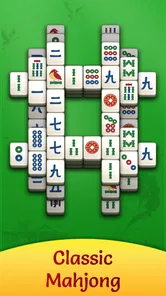
Mahjong Voyage: Tile Matching is a casual puzzle game built around finding and matching identical mahjong-style tiles. It is intended for players who enjoy a relaxed pace, visual pattern recognition, and bite-sized challenges. Before downloading, check the store listing for the current feature set, screenshots, and device requirements, since available modes and presentation can vary by version or platform.
The core idea is to select matching tiles and clear them from the board, usually while following the game’s rules about which tiles are available to pick. Boards become more manageable as pairs are removed, but a move can also leave awkward tiles behind, so looking ahead is useful. Read any in-game tutorial carefully, as the exact matching and accessibility rules may depend on the current version.
Whether the game works without an internet connection can depend on its current build and which features you want to use. Basic puzzle play may be available offline, while ads, optional purchases, account services, or online events typically require connectivity. If offline access matters to you, test the game after installation with Wi-Fi and mobile data turned off, and review its store-page details for any stated requirements.
Check the Google Play or Apple App Store listing for the price and monetization information in your region. A game may be free to install while offering advertising or optional in-app purchases, and these details can change with updates. If you are downloading it for a child or want to avoid accidental spending, review purchase controls and parental settings before starting.
Confirm that your phone or tablet meets the operating-system and storage requirements shown on the official store page, and make sure you choose the correct Android or iOS version. It is also worth checking the developer name, recent reviews, permissions, and privacy information. These details help you assess compatibility and understand how the app may handle data before you install it.
On Android, Mahjong Voyage: Tile Matching asks for these permissions.
Mahjong Voyage: Tile Matching is also available in 2 other languages on our site.
4.8 out of 5
214,685 reviews
Board · Bluetile

Board4.1 out of 5

Board4.8 out of 5

Board4.6 out of 5
Board4.6 out of 5

Board4.6 out of 5

Board4.8 out of 5

Word4.8 out of 5

Board4.7 out of 5

Board4.8 out of 5

Card4.8 out of 5
Board4.7 out of 5

Board4.9 out of 5

Board4.5 out of 5

Board4.6 out of 5

Board4.8 out of 5
Board4.7 out of 5
Board4.8 out of 5

Board4.9 out of 5

Board4.6 out of 5

Board4.7 out of 5

Board4.5 out of 5

Board4.9 out of 5



Gamesive reviews games on its own and is not paid by developers for scores. We do not host game files: the download buttons open the official Google Play and App Store pages. Names, icons and screenshots belong to their owners.