Vita Mahjong
For Android & iOS · Vita Studio.
- 4.9 out of 5Rating
- 6.50MReviews
- 100.00M+Downloads
- BoardGenre
Game details
- Version
- 3.44.0
- Updated
- Requires
- 7.0
- Price
- Free
- Age rating
- Everyone
- In-app purchases
- $0.99 - $49.99 per item
Screenshots

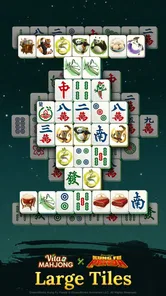
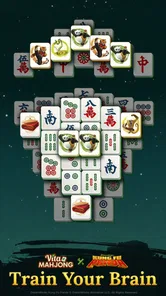
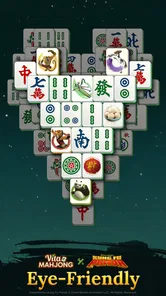
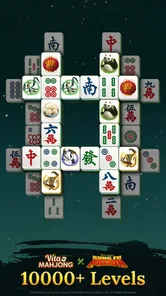
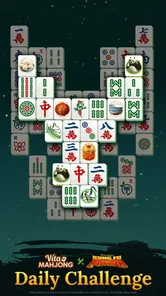
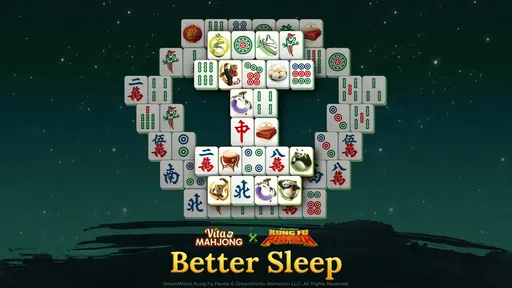
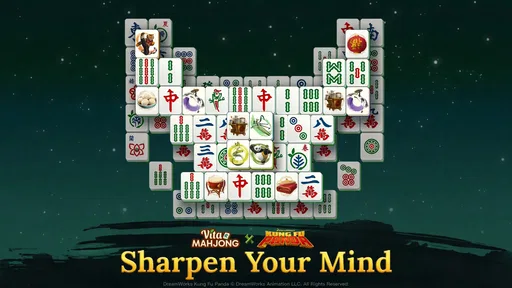
Vita Mahjong review
 Analysis by Gamesive
The first thing I notice about Vita Mahjong is how easily it fits into a small break. I can settle into a board, look for matching tiles, and make a little progress without needing to learn a complicated ruleset. The familiar mahjong solitaire format is approachable, while the Kung Fu Panda theme gives the game a more playful identity than a plain set of tiles. My overall impression is of a relaxed puzzle that works best when I want a quiet, self-contained activity rather than a demanding game with a long-term plan.
Small goals that make it easy to begin
As a board game from Vita Studio, Vita Mahjong centers on the basic pleasure of spotting and matching available tiles. That simplicity is useful: I can start without studying instructions or setting aside a long session. The immediate goal is clear, and each move asks me to pay attention to the board rather than juggle several kinds of tasks.
The Kung Fu Panda presentation helps distinguish the experience, but the central appeal remains the puzzle itself. If you already enjoy tile matching, the theme adds personality without changing the familiar rhythm. If you are new to this style, the straightforward objective gives you room to learn by playing. I would recommend it to someone who wants a gentle introduction to mahjong solitaire, not to someone expecting a deep strategy game or a narrative adventure.
One useful way to approach a board is to resist making the first match you see. I try to scan for tiles that appear to open up other choices, especially when a move could leave a less flexible part of the layout untouched. That small habit makes the puzzle feel more deliberate without turning a casual round into homework. It is also a practical way to keep the game engaging after the matching rules themselves become familiar.
There is a trade-off in that simplicity. Players who want explicit objectives beyond clearing a board, a complex campaign, or a strong sense of character development may find the core loop too modest. Vita Mahjong is better suited to short, focused play than to someone seeking a board game with layers of rules and strategic systems.
What progress feels like during a session
In a tile-matching game, progress is often most satisfying when it is visible right on the board: choices open, crowded areas become manageable, and a once-busy layout starts to resolve. That kind of feedback can make even a brief session feel complete. I find it more useful to judge a round by whether I made thoughtful choices than by how quickly I moved. A slower scan can reveal a better route through the available matches.
The game’s broad reach suggests that this accessible format works for many players: it has over 100 million installs and a 4.9 average from around 6.5 million ratings. Those figures are impressive, but they should not be mistaken for a promise that every player will enjoy the pace. A fan of quick visual puzzles may settle in immediately; someone who prefers competition or frequent mechanical surprises may want a different kind of board game.
For everyday use, I can imagine opening it while waiting for an appointment or unwinding after dinner. In the first situation, I would treat a round as a small concentration break and avoid starting when I know I must stop at a precise moment. In the second, I could play more patiently and take time to inspect the board. This is a practical distinction: the game’s simple premise makes it easy to pick up, but a puzzle still asks for attention if I want to make considered moves.
It is also worth treating each board as a visual puzzle rather than a race. Looking over the layout before matching can help me notice which choices preserve options. If I play while distracted, I am more likely to make a move just because it is obvious, then feel less in control of what remains. For a relaxed title, that is not a major flaw, but it does explain why the quality of a session depends partly on how much attention I bring to it.
Challenge, pacing, and the limits of the loop
The familiar matching format has a naturally calm pace. It gives me time to inspect the board, choose a move, and adjust to what becomes available. That makes Vita Mahjong an easy alternative to more urgent puzzle games, where timers or rapid input can turn a short break into a test of reflexes. Here, the challenge comes from reading the arrangement and avoiding careless choices, not from having to react instantly.
That calmness can also become repetition. Once the basic pattern is comfortable, players who need a steady stream of new mechanics may find that the central activity feels similar from session to session. I would not choose it when I want a strong difficulty curve, a story that keeps unfolding, or a competitive reason to return. Its best use is as a familiar puzzle routine, not as a game that constantly reinvents itself.
A useful compromise is to set a personal goal for a session, such as slowing down to inspect each section of a board or making fewer impulsive matches. This adds a little challenge without assuming that the game offers a specific mode or progression system. It also keeps the experience within its natural strengths: attention, pattern recognition, and a low-pressure sense of completion.
Compared with a traditional physical mahjong game, this is a different sort of experience. The focus here is matching tiles in a solo puzzle format, rather than learning the rules and social decisions of a table-based game. Compared with generic digital tile-matching puzzles, the Kung Fu Panda identity is the distinguishing flavor. If you primarily want authentic multiplayer mahjong, a dedicated game built around that style would suit you better; if you want an approachable solo matching puzzle, Vita Mahjong is more relevant.
How to keep it enjoyable without forcing a routine
I would use the game as an option for a spare moment rather than make it another daily obligation. A short session can provide a clean mental change of pace, while a longer one may expose the limits of a loop built around tile matching. The sensible approach is to stop when the puzzle stops feeling absorbing. That keeps the gentle format pleasant instead of turning repetition into a chore.
For parents considering it, the Everyone age rating is a helpful starting point, and the simple matching premise is easy to understand. The game is free to download, with in-app purchases ranging from $0.99 to $49.99 per item. I would keep that in mind when handing a device to a child: the free entry point does not mean every optional purchase is free, so normal purchase controls and family expectations still matter.
Offline play is part of the game’s stated identity, which makes it appealing for moments when a connection is unavailable. I would still avoid assuming that every surrounding app feature behaves the same way without a connection; the practical reason to choose it is that the core puzzle is intended for offline use. That makes it a reasonable companion for travel or a place with unreliable service, provided I have installed and opened the game beforehand.
The game is free and rated for Everyone, but the optional purchases are a real consideration, particularly for families sharing a device. I would decide in advance whether purchases are allowed rather than rely on a child to distinguish a puzzle session from a spending prompt. The paid items do not change my view of the core appeal, but they do mean that “free” describes getting started, not necessarily every possible part of the experience.
Who should choose it—and who should pass
I would recommend Vita Mahjong to players who like familiar tile puzzles, prefer a calm pace, or want something that can be approached in short bursts. The Kung Fu Panda theme may also appeal to people who enjoy that setting and want it wrapped around a straightforward matching activity. Its status as a free game makes it easy to try, though optional purchases are available. It runs on Android 7.0 or later, and version 3.44.0 is the current version.
I would point a competitive player toward a game with head-to-head play, and a strategy fan toward a title with deeper choices and more varied systems. Someone who tires quickly of repeated matching should also think carefully before making this a regular habit. The most honest recommendation is conditional: choose it for an easygoing solo puzzle, not for a broad progression journey or a substitute for the social rules of traditional mahjong.
Vita Mahjong has been available since January 9, 2024, and its large audience shows how appealing a clear, familiar puzzle can be. What matters more to me is whether its rhythm fits the moment. When I want a low-pressure way to focus on a board and unwind, it makes sense; when I want novelty, competition, or a dramatic increase in challenge, I would choose something else.
My verdict: Vita Mahjong is a pleasant, accessible tile-matching game whose strongest quality is how little effort it takes to begin. Its theme gives the familiar format a recognizable character, and its calm pace suits small breaks. The limitation is the same simplicity that makes it welcoming: players who need varied goals or a pronounced sense of advancement may find the loop too restrained. If that trade-off sounds right to you, it is an easy puzzle to keep on hand.
What we like
- Tile layouts offer a relaxing way to unwind.
- The familiar rules make it easy to start playing.
- Short rounds suit quick breaks.
- The visual design keeps tiles easy to distinguish.
- It provides a quiet single-player experience.
What could be better
- Some layouts may feel repetitive over time.
- The game offers limited social interaction.
- Ads may interrupt play in the free version.
- Small tiles can be difficult to see on some screens.
- Players looking for fast-paced action may find it slow.
Frequently Asked Questions
What is Vita Mahjong, and how is it different from traditional Mahjong?
Vita Mahjong is a mobile puzzle game built around matching identical tiles and clearing them from the board. Unlike traditional Mahjong, which is usually a four-player game with turn-taking and scoring, this is a single-player tile-matching experience. Boards, tile layouts, and objectives can vary, so check the in-game instructions for the rules and conditions of each level.
Is Vita Mahjong free to download and play?
Vita Mahjong is generally offered as a free download, but availability, pricing, and optional purchases can depend on your platform and region. The game may also include advertisements or in-app purchases, such as options related to hints, boosters, or other extras. Review the store listing and purchase settings before installing, and use parental controls if someone playing should not be able to make purchases.
Can I play Vita Mahjong without an internet connection?
Some mobile puzzle games allow previously loaded levels to be played offline, but features such as advertisements, cloud saves, events, or account syncing may require an internet connection. Offline access can also differ by version or device. If you plan to play while travelling, open the game and test a level with your device disconnected before relying on it; check the current app listing for any stated requirements.
Is Vita Mahjong suitable for beginners and older players?
The basic tile-matching idea is easy to understand, making Vita Mahjong accessible to people who are new to Mahjong-style puzzles. Later boards may require more planning, since a move can leave important tiles blocked or make a level harder to finish. Take time to learn which tiles are playable and how the game handles hints or reshuffling. The store listing can provide age guidance and accessibility details for your device.
What should I check before downloading Vita Mahjong on Android or iOS?
Before downloading, confirm that the app is the correct Vita Mahjong title and that it is available for your device and region. Check the developer name, supported operating-system version, app size, recent update date, and user reviews in the official Google Play or Apple App Store listing. Also review its privacy disclosures, permissions, advertising, and in-app purchases, since these details can change between releases.
Permissions
On Android, Vita Mahjong asks for these permissions.
- Photos/Media/Files
- read the contents of your USB storage, modify or delete the contents of your USB storage
- Storage
- read the contents of your USB storage, modify or delete the contents of your USB storage
- Wi-Fi connection information
- view Wi-Fi connections
- Other
- view network connections, full network access, control vibration, prevent device from sleeping, read Google service configuration
Languages
Vita Mahjong is also available in 2 other languages on our site.
User reviews
4.9 out of 5
6,496,507 reviews
- 92%
- 4%
- 1%
- 1%
- 1%
Download Vita Mahjong
Board · Vita Studio. · Free
Games like Vita Mahjong
View all: Games like Vita Mahjong
MONOPOLY GO!
Board4.6 out of 5
Color by Number:Coloring Games
Board4.6 out of 5
Mahjong Blast
Board4.8 out of 5

Chess - Play and Learn Online
Board4.7 out of 5
About this listing
- Game
- Vita Mahjong
- Developer
- Vita Studio.
- Package
- com.vitastudio.mahjong
- Version reviewed
- 3.44.0
Gamesive reviews games on its own and is not paid by developers for scores. We do not host game files: the download buttons open the official Google Play and App Store pages. Names, icons and screenshots belong to their owners.