
Chess - Play and Learn Online
Board4.7 out of 5
For Android & iOS · Easybrain




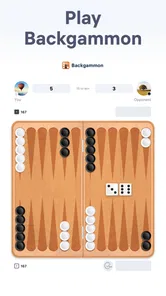
 Analysis by Gamesive
I like backgammon most when a game is easy to start but still gives me something to think about between moves. Backgammon - Board Game from Easybrain is a straightforward mobile take on the classic board game: it suits a quick match during a break, while its blend of planning and luck gives each turn a little more weight than a simple time-killer. It is free to download and rated for Everyone, so it is an approachable option for a broad range of players.
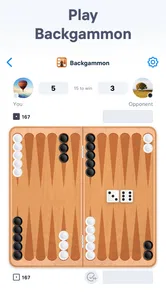
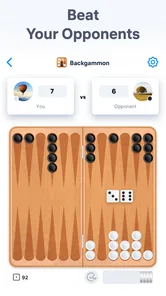
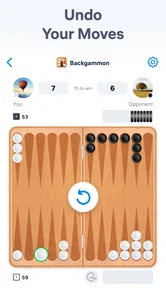
The basic appeal is the familiar backgammon loop: roll, consider how the dice shape your options, and move your checkers with both immediate safety and later turns in mind. New players can focus on learning the rhythm of a turn, while experienced players can use the same simple setup to weigh risk, protect vulnerable pieces, and think ahead. The board is the point; there is no need to learn a complicated collection of controls before making a meaningful decision.
My most useful baseline habit is to pause before moving and look at the whole board rather than reacting only to the latest roll. A move that seems efficient can leave a checker exposed, or make it harder to build a useful position later. I try to compare the safe move with the ambitious one, then ask what each choice leaves available on the next turn. That small routine makes the game feel more deliberate without slowing a casual session into a study exercise.
This is especially handy in short everyday gaps. If I have a few minutes before heading out or while waiting for someone, a single match gives me a clear beginning and end. It is also a reasonable way to introduce backgammon to someone who knows the name but has not played much: the central decisions are visible on the board, so you can talk through why a move matters as it happens. For a group that wants a shared table and conversation, though, a physical board still has a social advantage a phone cannot replace.
The game has found a substantial audience, with over 10 million installs and an average rating of 4.6 from around 202,000 ratings. Those figures suggest broad appeal, but they do not tell me whether any particular player will enjoy backgammon’s mixture of strategy and chance. The key question is whether you like making the best of an imperfect roll. If you want every outcome to be determined only by planning, a chess-style game may suit you better.
At the start, I recommend learning the consequences of a move rather than trying to memorize a supposedly perfect sequence. Notice when a checker is left alone, when several pieces can support one another, and how a move changes the routes available later. This is more useful than chasing a flashy position before you understand the risk it creates. Backgammon rewards adaptable decisions, not just a plan made before the dice are rolled.
A practical way to improve is to review one decision after a match: identify a turn where you chose between a safer position and a more aggressive one. Ask what you expected to happen and whether the resulting board matched that expectation. This quick reflection builds judgment without requiring a notebook or a long training session. It also helps separate a sound decision from a lucky result; winning does not automatically mean every move was good.
Before making this your regular backgammon app, spend a moment exploring the settings and the available controls on your device. I would check how moves are selected and whether the board presentation feels comfortable at your usual screen size. Those small preferences matter in a game where a mistaken tap can change a position. I would not assume that every edition or device offers the same options, so it is better to inspect what is actually available than to rely on advice about a feature you may not have.
It is also worth getting comfortable with the move-confirmation flow before playing quickly. When you are learning, take the extra beat to verify the destination of a checker before committing. Once the controls feel familiar, you can make decisions faster without turning every move into a guess. If a setting makes the board harder to read or encourages rushed taps, switch back to the clearest arrangement for you; visual comfort is more valuable than shaving a moment off a turn.
There is a useful distinction between settings that improve convenience and habits that improve play. A control preference can make interaction feel smoother, but it will not explain why a checker is exposed or why a position is difficult to recover from. I would treat settings as a way to reduce friction, then reserve attention for the board itself. That keeps the app useful for practice rather than giving the impression that interface tweaks alone will make someone a stronger player.
Experienced players often become faster by repeating a simple scan instead of rushing. I look at possible captures, check whether a move leaves a lone checker in danger, and then consider whether the remaining pieces can support one another. After that, I compare the candidate moves with the position I want to create. This sequence is a practical mental shortcut: it narrows the choices without pretending there is always one obvious answer.
Another useful habit is to avoid deciding from the dice alone. A roll can make one move look attractive, but the board determines whether it is actually sensible. If two moves seem close, I favor the one whose downside I understand. That does not mean playing timidly every time; sometimes a bold move is the right response. The point is to choose risk consciously rather than because the first legal-looking move caught my eye.
For a quick session, I also set a small goal before starting. I might focus on protecting isolated pieces, or on noticing how one turn affects the next. A narrow goal makes a short match more instructive and helps prevent the common frustration of judging progress only by wins. It works particularly well for returning players who remember the rules but have lost the feel for evaluating positions.
Because dice introduce chance, a short run of bad outcomes can make even sensible play feel futile. I find it helps to judge the process over several decisions rather than treating one unlucky turn as proof that the strategy failed. Equally, a fortunate result should not encourage careless moves. This perspective is one of the most valuable habits the app can support: it makes a casual game a little more thoughtful without requiring a formal lesson.
Backgammon’s depth comes partly from reading a changing board, but the phone format can make it tempting to play on autopilot. A quick tap-and-move rhythm is convenient, yet it can hide the consequences of a choice if you are distracted. I would avoid starting a match when I need to leave immediately or cannot give the board even modest attention. If you want a game that can be abandoned at any moment without losing your train of thought, a simple puzzle may be a better fit.
There is also a natural limit to what one mobile game can offer as a learning experience. Playing repeatedly helps with pattern recognition, but it is not the same as studying positions with a coach or comparing decisions with a knowledgeable opponent. If your aim is serious improvement, use each match as practice and seek a more analytical resource alongside it. If you mainly want a compact way to enjoy the classic game, that limitation is much less important.
The free price makes it easy to try, although the game includes in-app purchases at $14.99 per item. I would keep that in mind if you prefer to avoid optional spending: the presence of purchases is a reason to check prompts carefully, not a reason to assume that a purchase is necessary for a casual match. The current version is 2.0.0 and the minimum operating-system requirement is 8.0, so it is sensible to check compatibility on an older device before planning to use it regularly.
With 5.6K reviews among its store feedback, it has clearly prompted plenty of player response. I would still make my decision based on the kind of experience I want rather than popularity alone. This is a board game first, not a broad collection of unrelated activities. That focus is a strength if you came specifically for backgammon; it may feel narrow if you expect a rotating assortment of different games or a large social hub.
I would recommend it to someone who wants a familiar board game in a portable form, a beginner looking for a low-pressure way to practice, or a returning player who wants occasional matches. The blend of planning and dice makes it accessible without making every game feel identical. Easybrain’s version has the straightforward identity of a dedicated board-game app, and that focus suits players who would rather get to the board than navigate a larger game collection.
I would steer away from it if random rolls are likely to annoy you, if you want a deep tutorial-led course, or if playing on a screen makes board positions uncomfortable to inspect. A traditional board is better for face-to-face play and easier shared discussion. A strategy game with less chance is better for someone who wants outcomes to reflect planning more consistently. These are not flaws unique to this app; they are trade-offs built into choosing mobile backgammon at all.
Overall, Backgammon - Board Game is a sensible pick when I want a focused match that can fit into an ordinary day. Its strongest practical value is the way a simple, repeatable scan—check exposure, consider support, then choose a risk—can turn even a brief game into useful practice. I would start with one unhurried match, get comfortable with the controls, and pay attention to decisions rather than just the result. If that balance of luck, judgment, and portability sounds enjoyable, this free board game is well worth trying.
Backgammon - Board Game is a digital version of the classic two-player board game. Players move checkers around the board according to dice rolls, aiming to bring all their pieces into their home board and bear them off before their opponent does. The game combines chance with strategic decisions about movement, blocking, and when to take risks. Rules and available modes can vary by version, so check the in-game instructions before starting.
Whether you can play offline depends on the specific version and mode offered by the app. Many backgammon games include matches against computer-controlled opponents, while online play may require an internet connection and could pair you with other players. Look at the mode descriptions and connection requirements in the store listing or app before downloading, especially if you want to play without Wi-Fi or mobile data.
The app may be free to install, but that does not necessarily mean every feature is free. Some versions show advertisements, offer in-app purchases, or provide optional paid features such as cosmetic items or additional content. Pricing and monetization can differ between editions and platforms, so review the current Google Play or App Store listing and check the purchase settings before playing.
Backgammon - Board Game can be approachable for newcomers, particularly if it includes a tutorial, rule guide, or practice matches against an easy opponent. The basic moves are straightforward to learn, but planning around dice rolls and protecting vulnerable checkers takes practice. Beginners should check whether the app explains legal moves and scoring, and can start with lower difficulty or casual matches if those options are available.
Before downloading, confirm that the listing is for the version you want and that it supports your device and operating-system version. Check the app's storage requirements, recent reviews, update history, and whether its advertised offline or multiplayer features match your needs. It is also worth reviewing the developer's privacy information and requested permissions, along with any details about advertisements, in-app purchases, or account requirements.
On Android, Backgammon - Board Game asks for these permissions.
4.6 out of 5
201,875 reviews
Board · Easybrain

Board4.1 out of 5

Board4.8 out of 5

Board4.6 out of 5
Board4.6 out of 5

Board4.6 out of 5

Board4.8 out of 5

Puzzle4.8 out of 5
Word4.8 out of 5

Word4.8 out of 5

Board4.8 out of 5
Board4.7 out of 5

Board4.9 out of 5

Board4.5 out of 5

Board4.6 out of 5

Board4.8 out of 5

Board4.7 out of 5

Board4.8 out of 5

Board4.9 out of 5

Board4.7 out of 5

Board4.5 out of 5

Board4.9 out of 5

Board4.8 out of 5



Gamesive reviews games on its own and is not paid by developers for scores. We do not host game files: the download buttons open the official Google Play and App Store pages. Names, icons and screenshots belong to their owners.