
Vita Mahjong
Board4.9 out of 5
For Android & iOS · Gametion





 Analysis by Gamesive
I like board games that can turn a quiet few minutes into a lively bit of friendly competition, and Ludo King® is built around exactly that kind of moment. Its central idea is familiar: roll a die, move your pieces around the board, and try to bring them home before the other players do. The appeal is not deep strategy or a long campaign. It is the small suspense between a roll and the move it allows, followed by the inevitable urge to try one more round.
In my experience, the game works best when I treat it as a shared pastime rather than a serious test of skill. It is a board game from Gametion, and its broad reach—over a billion installs—makes sense for something that is easy to explain across generations. It is free to start, rated for Everyone, and has a four-point-one average from around ten million ratings. Those figures suggest a familiar, widely used game, but they do not guarantee every session will suit every player: dice luck and the pace of a group matter a lot.
The first useful thing to know is that you do not need a tutorial in board-game vocabulary to get started. The board, colored pieces, and dice make the goal legible at a glance. I can explain the basic objective to someone who has never played without asking them to learn a complicated set of controls. That accessibility is a real strength when a family group includes children, casual players, and people who simply want to join in without studying rules first.
Once the die is in motion, however, the game is not entirely mindless. A roll may leave me with more than one plausible move, and the choice is often between making progress with one piece or spreading risk across several. When another player is nearby, moving a piece into a vulnerable position can be tempting, especially if it advances my route. I have found it helps to pause briefly before tapping: look at the other pieces, consider who is close, and decide whether the immediate gain is worth the exposure.
That small decision is the most interesting part of the loop. Ludo is not a game where careful planning can control every outcome; a die roll can rescue a lagging player or frustrate someone who has been building a lead. Still, it is possible to make sensible choices with the options available. I enjoy that balance in a relaxed setting, but anyone looking for a game where skill consistently outweighs chance may find the results feel arbitrary.
A practical way to introduce it to a mixed-age group is to play a first round without turning every move into a lesson. Let new players see how a roll affects their pieces, then explain the consequence of a risky move when it becomes relevant. This keeps the opening from feeling like a rules lecture. It also gives experienced players a chance to remember that a beginner may be making decisions from the board they can see, not from a long-term plan.
The feedback arrives in a satisfying sequence: roll, inspect the available move, move a piece, then see how that choice changes the board. Because the action is simple, I can keep track of the important information without dividing my attention between many menus or systems. The tension is social as much as strategic. When a move puts a rival under pressure, the whole table can understand why it matters; when a player falls behind, the possibility of a lucky turn keeps the round from feeling settled too early.
That rhythm is also why a match can feel different from one session to the next, even though the board and objective remain familiar. Sometimes I spend a turn weighing two moves; sometimes the roll makes the next action obvious. The game’s basic design is easy to return to because I do not need to remember a complicated build, inventory, or chain of objectives. I can rejoin the flow after a distraction and understand what is happening from the positions on the board.
There is a trade-off in that clarity. The repeated roll-and-move pattern can become monotonous if I am playing alone for a long stretch or if the group is not talking. It is most engaging when people react to one another’s moves, tease out a close decision, or simply enjoy the swings of fortune. If I want a board game that rewards elaborate planning or offers a different puzzle every turn, I would choose something more tactical. This one is better at creating an easy-to-follow contest than at demanding intense concentration.
For a smoother group session, I recommend agreeing on the pace before starting. If everyone wants a quick, casual game, keep turns moving and avoid debating every possible consequence. If the group enjoys playful rivalry, take the time to look over the board together. Neither approach changes the rules; it changes the atmosphere. That flexibility is one of the reasons the game can work for a short break as well as a relaxed evening with family.
The reward is not a complex progression system that I need to maintain between sessions. It is the immediate pleasure of a useful roll, the satisfaction of bringing a piece closer to its destination, and the shared reaction when the board changes unexpectedly. A close finish can be memorable precisely because the route there involved both choices and luck. I find that modest payoff more appealing than a game that constantly demands attention to unlocks or long-term goals.
That also means expectations matter. If you enjoy collecting upgrades, completing elaborate challenges, or steadily improving through practice, the central board-game loop may feel thin. The familiar mechanics are the point, not a wrapper around a large single-player adventure. For me, the strongest use case is a casual match with people who want to play together and do not mind that fortune has a visible role in the outcome.
There is a useful social trick for groups with different experience levels: focus on the race around the board rather than on who is “good” at the game. A newcomer can make a clever move, but no one can dictate every roll. That keeps the contest friendly and helps prevent a skilled or confident player from dominating the conversation. It is a small adjustment, but it suits a game where luck is part of the fun rather than an occasional interruption.
The game is free to download, with in-app purchases listed from forty-nine cents to three hundred sixty-nine dollars and nine cents per item. I would approach optional spending deliberately: the core reason to try it is the board-game loop, so there is no need to buy anything just to find out whether that loop suits your group. If you are setting it up for a child, it is sensible to review purchase controls on the device as you would with any free-to-start game. The content rating is Everyone, which fits its broad, family-friendly premise.
A round gives the group a natural stopping point. When it is over, I can put the game away without having to remember a long sequence of unfinished tasks. Or, if everyone is still enjoying the competition, the simplicity makes another round an easy suggestion. That reset is a major part of the appeal: there is no elaborate commitment, and the next session begins with the same clear objective but a fresh arrangement of pieces and a new run of dice results.
In everyday use, I can picture opening it while relatives are waiting for dinner, or when a few friends want a shared activity that does not require everyone to learn a different control scheme. It is also a reasonable choice for a short break because the goal is obvious and the match itself provides a contained activity. I would not rely on it as a guaranteed quick game if the group tends to deliberate over every move; a simple ruleset does not automatically make every gathering fast.
Playing with people who are physically together gives the game a different feel from playing in silence. The board supplies a common focus, while conversation supplies much of the entertainment. If you expect the app itself to provide all the excitement, the repeated turns may feel plain. If you bring your own banter, reactions, and friendly competition, its straightforward structure gives the group room to make the session its own.
Compared with other casual board games, Ludo King leans more on immediate familiarity than on varied mechanics. A word game asks players to search for answers; a strategy board game may reward careful planning across many turns. Ludo’s appeal is that almost everyone can understand what a roll does, and a lucky turn can keep a player in contention. I would pick it for a mixed group seeking a low-pressure race. I would pick a more skill-driven board game for players who want every outcome to feel earned through planning, or a richer digital game for someone playing solo and expecting lots of changing objectives.
I would recommend Ludo King to anyone who wants a familiar board-game contest that is easy to explain and enjoyable in company. It is especially suited to households or friend groups that like simple rules, visible progress, and a little unpredictability. The game has been available since December seventeenth, two thousand sixteen, and supports devices running Android seven point zero or later. Its longevity and scale are notable, with around thirteen thousand written reviews alongside its large audience, but I would still judge it by whether your own group enjoys the basic loop.
I would skip it if random outcomes reliably annoy you, if you want a deep solo challenge, or if you prefer games where a stronger player can consistently demonstrate an advantage. I would also look elsewhere if repetitive turns are a deal-breaker. Those are not small caveats: they describe the core experience, not edge cases. On the other hand, if your goal is to get a group playing quickly without a complicated setup, the uncomplicated board and dice give it a strong starting point.
My verdict is that the game succeeds by keeping the cycle clear: roll, make a choice, watch the board respond, enjoy the result, then decide whether the group wants another round. The reward is a lively shared moment, not a deep progression path, and the reset makes it easy to return without a big commitment. For a casual, social board-game session, I think it earns a place on the device; for serious strategy or a varied solo experience, I would choose something else.
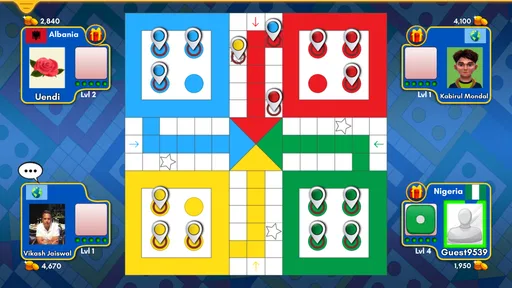
Ludo King® recreates the classic board game in which players race their tokens from the starting area to the home column. On your turn, roll the die and move a token according to the number shown; you generally need a six to bring a token onto the board. Landing on an opponent’s token can send it back to its start, while safe squares offer protection. Rules and options can vary by mode, so check the selected game before beginning.
Yes. The game offers ways to play with other people, including local play on one device and online matches, though the available options may depend on the version and current settings. It also includes play against computer-controlled opponents, which is useful when friends are unavailable or you do not have a connection. Online multiplayer requires internet access, and a stable connection helps prevent interruptions. Review the mode details in the app to confirm which options are available on your device.
Ludo King® is generally available as a free download, but that does not necessarily mean every feature or item is free. The app may display advertisements and offer optional in-app purchases, such as items or ways to personalize the experience. Pricing, offers, and purchase options can differ by platform, region, and time. Check the Google Play Store or Apple App Store listing before installing, and use device-level purchase controls if you want to prevent accidental spending.
Ludo King® has offered online multiplayer across supported devices, but cross-platform availability can depend on the current app versions, game mode, and account or connection requirements. If you plan to play with someone using a different operating system, make sure both players have the latest compatible version and can access the same online mode. The most reliable confirmation is the game’s current store information or its in-app multiplayer options, since features and compatibility may change over time.
As with any mobile game, review the privacy information and permissions shown in the app store before downloading. Online play and optional social features may involve transmitting information needed to provide those services, while advertising or analytics practices can depend on the app version and your region. You can also check the developer’s privacy policy and adjust relevant permissions through your device settings. Avoid sharing personal details in chat or with other players, and use available privacy controls where appropriate.
On Android, Ludo King® asks for these permissions.
Ludo King® is also available in 2 other languages on our site.
4.1 out of 5
10,341,090 reviews
Board · Gametion

Board4.8 out of 5

Board4.6 out of 5

Board4.6 out of 5

Board4.6 out of 5

Board4.8 out of 5

Board4.7 out of 5
Board4.9 out of 5

Board4.5 out of 5

Board4.6 out of 5

Board4.8 out of 5

Board4.7 out of 5

Board4.8 out of 5

Board4.9 out of 5

Board4.6 out of 5

Board4.7 out of 5

Board4.5 out of 5

Board4.9 out of 5

Board4.8 out of 5



Gamesive reviews games on its own and is not paid by developers for scores. We do not host game files: the download buttons open the official Google Play and App Store pages. Names, icons and screenshots belong to their owners.