
Solar Smash
Simulation4.6 out of 5
For Android · Unicorn Studio Official
 Analysis by Gamesive
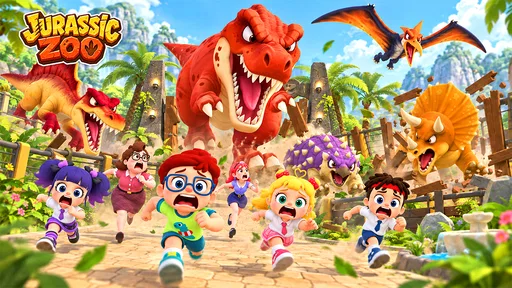
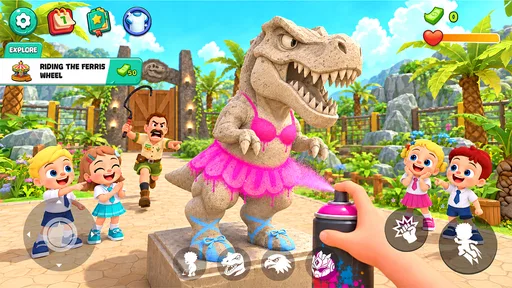
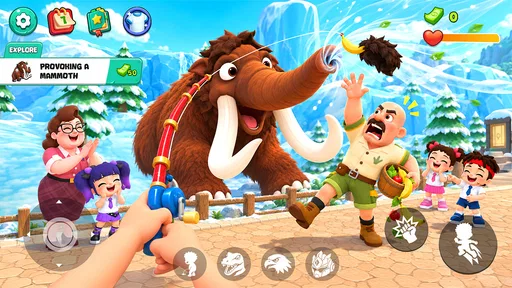
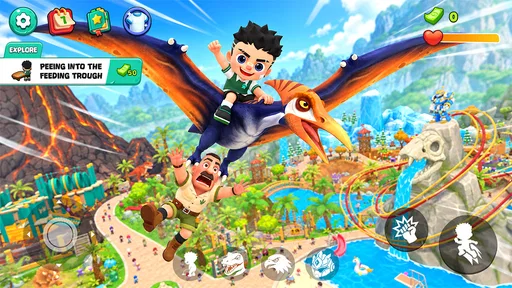
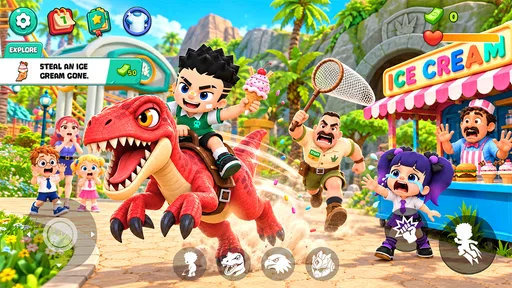
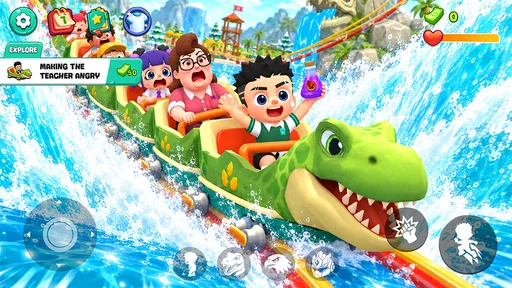
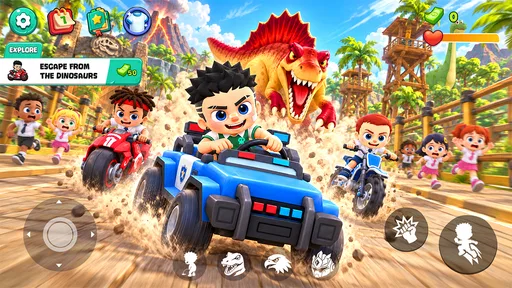
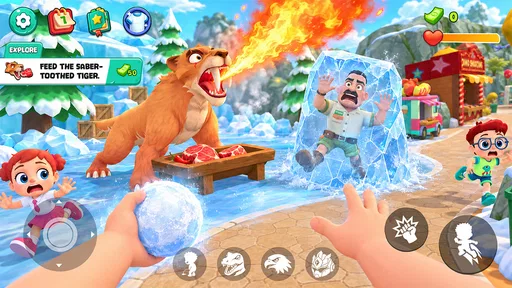
Zoo Prank 2: Jurassic Animals is a dinosaur-zoo simulation built around mischief rather than careful management. Its central appeal is easy to grasp: spend time in a zoo full of prehistoric animals, find ways to bother or surprise visitors, and enjoy the comic reactions. I’d recommend it to someone who wants a light, playful game to dip into, not to a player expecting a deep zoo-building strategy or a realistic dinosaur simulator.
The distinction matters because “simulation” can mean very different things on mobile. Some games ask you to balance budgets, plan enclosures, and keep guests satisfied. Zoo Prank 2 points in a sillier direction: the visitor is part of the joke, and the dinosaurs provide the setting and spectacle. That makes the premise a good fit for short sessions when I want something more mischievous than methodical.
Unicorn Studio Official develops the game, which is free to download and aimed at Teen players. It has a 4.5 average from around 4,600 ratings and has passed 1 million installs. Those figures suggest that the idea has found an audience, though they don’t tell me whether its particular style of humor will suit you. If you enjoy slapstick and playful disruption, the premise is promising; if you prefer calm animal care, the prank angle may wear thin.
The game’s current version is 1.1.0. That gives prospective players a useful point of reference, but a version number alone doesn’t establish how much has changed or how extensive the content is. I’d treat the game as the experience it is now rather than assume a particular update history or wait for promised additions.
The strongest use case is an uncomplicated break: open a game, focus on a goofy zoo situation, and leave without needing to maintain a long chain of management decisions. The dinosaur theme also gives the pranks a different flavor from ordinary playground or city mischief. It frames the comedy around a place where visitors and prehistoric animals share the same space, which is a neat setup for cartoonish trouble.
That setup is best approached with modest expectations. A store description can establish the broad premise, but it does not explain how many situations there are, how interactions are controlled, or how quickly the jokes repeat. I wouldn’t choose it on the assumption that it offers a sprawling campaign. I’d choose it because the basic idea sounds fun, then judge whether its particular scenarios keep that fun going.
Compared with conventional zoo simulations, the emphasis here is not on building an efficient attraction or nurturing animals as the main goal. The visitor-facing joke is the hook. Compared with action games, the draw is not necessarily combat or reflex mastery; it is the comic premise of turning a dinosaur zoo visit into a source of chaos. That middle ground can be appealing if management games feel too much like work and action games feel too intense.
There is a trade-off, though. A traditional zoo-management game gives players a clear long-term project: improve the grounds, organize habitats, and keep the operation running. A prank-focused simulation needs variety in its funny moments to provide the same reason to return. If the humor lands for you, the smaller-scale premise can feel refreshing. If you are looking for layers of progression, detailed animal systems, or a meaningful planning challenge, a more management-heavy alternative is likely a better match.
Think about the moments when you actually play mobile games. If you often have a few spare minutes between tasks, this concept may suit that stop-and-start rhythm better than a game that expects you to oversee a complex zoo. I’d also consider whether you enjoy games where the fun comes from causing harmless fictional trouble rather than completing a serious simulation objective. That preference is more important here than whether you happen to like dinosaurs in general.
A useful first-session approach is to pay attention to the rhythm of each prank rather than rush through the premise. Notice whether you enjoy setting up a gag, watching the visitor’s response, and moving on to another situation. That gives you a better test of the game’s core appeal than simply asking whether the dinosaurs look appealing. If you find yourself wanting more control over the zoo or more substantial goals, that is a sign the concept may be too light for your taste.
It may also work as a casual game to share the screen with a friend or family member, especially if you enjoy reacting together to silly situations. I’d keep the Teen age rating in mind when choosing it for younger players, and I wouldn’t assume that its cartoon premise makes it suitable for every child. The rating is a more sensible guide than the dinosaur theme alone.
For someone already playing, the current version is the practical baseline for deciding whether to keep going. I would assess it by asking whether the prank scenarios still surprise me and whether I want another short session after finishing one. Those are more useful personal checks than reading a version label as proof of a major overhaul. The available release details establish the current version, but not a specific list of changes, so I wouldn’t attribute new mechanics or content to this update.
For a returning player, that means there is no reason here to expect a particular reset, new feature, or changed progression. Open the game and see how it feels in its current state; if its core joke still works for you, the version number need not be a concern. If you left because the prank loop felt repetitive, it is safer to wait until you can see a concrete change in the app itself rather than assume the update addresses that issue.
New players face a simpler decision: the game is free to start, while optional in-app purchases range from $0.99 to $2.99 per item. I’d treat those purchases as optional spending, not as a reason to expect that paying is necessary to understand the basic premise. Before buying anything, spend time deciding whether you like the way the game handles its central prank idea. That is the part that determines whether the experience is worth keeping installed.
The biggest limitation of a prank-led simulation is that its appeal depends heavily on comic variety. A dinosaur setting can make a gag memorable, but it cannot by itself make repeated interactions feel fresh. If you prefer games with clear strategic choices, a detailed collection to build, or a strong sense of long-term achievement, this may feel thin next to a dedicated zoo-management game. If you want a serious dinosaur experience focused on realistic animal behavior, the playful premise points in a different direction.
There is also a difference between enjoying the concept and enjoying the execution. The core idea sounds lively, but the details that determine long-term satisfaction are how the scenarios unfold, how much freedom the player has, and whether there is enough variation to keep the jokes from becoming predictable. I’d recommend trying it with that distinction in mind: liking the premise is a reason to give it a chance, not a guarantee that the gameplay will stay engaging for you.
For players sensitive to spending, the free entry point is convenient, but it is still worth checking purchase prompts before tapping through them. The listed item prices are modest, yet small optional purchases can add up if you buy repeatedly. I’d set a personal limit and only spend if a specific item clearly adds something you value. If you would rather avoid in-app spending altogether, the simplest choice is to play without purchasing and see whether the free experience satisfies you.
If you are deciding whether to install now or revisit later, focus on evidence you can see directly: whether the current experience holds your attention, whether the humor feels varied, and whether the game gives you enough reason to return. Future updates could change that assessment, but I would treat any hopes for expanded content as expectations rather than facts. A new version number by itself is not a promise of a particular feature.
I’d also watch how well the game serves different kinds of players. The prank premise is distinct, but the strongest case for continued play would be a satisfying balance between quick laughs and enough variety to make another visit worthwhile. If that balance works for you, the game can fill a cheerful niche between deeper simulations and more demanding action titles. If it does not, there is little reason to force it simply because you like dinosaurs.
I’d give Zoo Prank 2: Jurassic Animals a try if you want a free, lighthearted simulation where the fun comes from causing comic trouble in a dinosaur-zoo setting. Its unusual focus on prank humor helps it stand apart from routine animal-care games, and the low-cost purchase range lets interested players decide for themselves whether any optional spending is worthwhile.
I would skip it if your ideal simulation means designing habitats, managing a full zoo, or building toward a deep long-term goal. I’d also look elsewhere if repeated slapstick is not your kind of humor. For everyone else, my advice is to start with the free experience, judge the variety of the situations for yourself, and keep expectations tied to the current version rather than imagined future changes. Its appeal is specific, and that is exactly why it may be a fun change of pace for the right player.
Zoo Prank 2: Jurassic Animals is a casual game centered on playful animal-themed pranks and interactions. Its Jurassic setting brings prehistoric creatures into the experience, while the straightforward play style is aimed at quick sessions rather than a complex simulation. Specific activities and available content can vary by version, so check the current store listing and screenshots to see what is included before downloading.
The game’s animal and prank theme may appeal to younger players, but suitability depends on the child and the content shown in the current version. Review the store’s age rating, screenshots, and any content notices before installing, and consider trying the game together first. Also check whether it contains advertising, in-app purchases, or links to external pages, since these can affect a child’s experience.
Whether the game works fully offline can depend on its current release and how it handles features such as ads, purchases, or online services. The store description may indicate if a connection is required, but it is not always clear about which parts remain available without one. If offline play matters to you, test the game after installation with connectivity disabled and avoid assuming that every feature will work.
The price and monetization details can differ between the Android and iOS versions, and may change over time. Check the relevant app store listing for the download price, in-app purchase information, and advertising disclosures before installing. A free download does not necessarily mean that every feature is free or ad-free, so review purchase prompts carefully, especially if children will be using the device.
Check that your device meets the app store’s listed operating-system and compatibility requirements, and make sure you have enough storage for the download and any later updates. Read the current privacy information and requested permissions, since these details can change with updates. It is also sensible to confirm the developer and version in the official store, rather than relying on unofficial download sites.
On Android, Zoo Prank 2: Jurassic Animals asks for these permissions.
4.5 out of 5
4,610 reviews
Simulation · Unicorn Studio Official

Simulation4.3 out of 5

Simulation4.2 out of 5
Simulation4.4 out of 5
Simulation4.6 out of 5
Simulation4.7 out of 5

Simulation4.5 out of 5

Arcade4.8 out of 5
Casual4.7 out of 5
Strategy4.6 out of 5

Music4.0 out of 5
Simulation4.6 out of 5

Simulation4.5 out of 5

Simulation4.4 out of 5

Simulation4.5 out of 5

Simulation4.1 out of 5

Simulation4.4 out of 5
Simulation4.5 out of 5

Simulation2.9 out of 5

Simulation4.5 out of 5

Simulation4.5 out of 5

Simulation4.8 out of 5

Simulation4.3 out of 5



Gamesive reviews games on its own and is not paid by developers for scores. We do not host game files: the download buttons open the official Google Play and App Store pages. Names, icons and screenshots belong to their owners.