
Vehicle Masters
Simulation4.5 out of 5
For Android & iOS · Ludia Games Inc.
 Analysis by Gamesive
Jurassic World™: The Game makes a particular promise: you can build a dinosaur park and spend time with its creatures, not just watch them on screen. What kept me interested is the way that park-building, collecting, and battles share the same setting. The game is a simulation, but it also leans into creature collecting and combat, so it suits players who like several connected activities more than those looking for a quiet, open-ended builder.
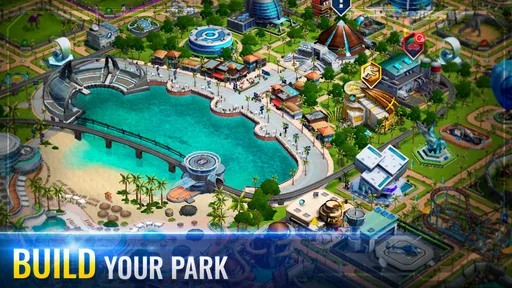
The visual appeal comes from the contrast between a planned attraction and animals that feel powerful enough to disrupt it. I found that tension gives the park more character than a simple grid of buildings: the point is not only to arrange a place, but to make it feel like a destination built around dinosaurs. The Jurassic World setting does a lot of work here, giving the collection a recognizable identity from the outset.
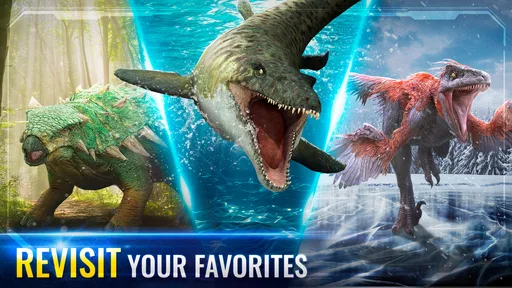
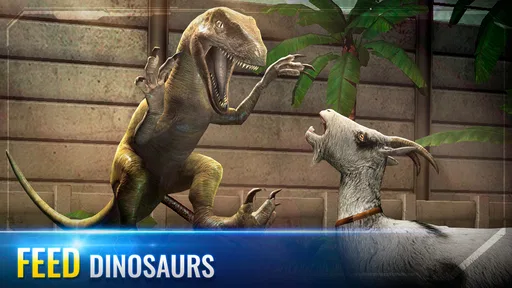
The art direction favors readable, theatrical creatures. That matters when collecting is part of the routine: a dinosaur should feel like more than another entry in a menu. The park setting also gives the game a reason to move between management and battles. You are looking after a themed attraction, then taking the creatures associated with it into a more direct contest.
I would not choose it primarily for realistic park-management depth. Its stronger appeal is the combination of familiar franchise atmosphere and a steady loop of building, collecting, and fighting. If you want a detailed sandbox where you can freely design every aspect of a theme park, a dedicated construction game may give you more room. Here, the park is one strand of a broader dinosaur game.
The park is more than decoration because it makes the collection feel purposeful. Gathering dinosaurs has a clear thematic payoff: the creatures belong in a living attraction, and battles add a sense of spectacle to the same roster. In my view, this cohesion is the game’s best atmospheric achievement. Its activities may differ, but they all point back to the same fantasy of running a dinosaur-filled destination.
That same focus can be limiting if you do not care about the Jurassic World premise. The game’s identity is closely tied to dinosaurs and the park concept, rather than offering a broad collection of unrelated animals or a neutral city-building theme. I think that specificity is a strength for fans and a reason to skip it for players who want a more general simulation.
Sound helps the world feel like a game about creatures and spectacle rather than a spreadsheet with dinosaur artwork. The overall mood is playful and dramatic, which suits the shift from tending a park to staging a battle. I prefer that kind of tonal consistency: even when the activity changes, the setting still feels like the same place.
The rhythm is better suited to short visits than to a single uninterrupted stretch of deep management. I can imagine opening it during a break, checking the park, making a small bit of progress, and returning later for a battle or another collection goal. That cadence is useful on a phone, but it also means players who want a continuous, carefully paced campaign may find the experience more stop-and-start than they prefer.
A practical tip is to decide what you want from a session before opening the game. If you only have a few minutes, focus on one clear task rather than trying to advance every part of the park and collection at once. Switching goals constantly can make a game built around several linked activities feel busier than it needs to be.
Calling it a simulation is accurate, but incomplete. The appeal is not solely about constructing an attraction; collecting dinosaurs and using them in combat are central parts of the package. That mix gives the game more momentum than a pure park builder, while making it less suited to someone who wants management to be the entire experience.
The collection loop gives battles a reason to matter beyond the moment. New creatures can make the roster feel like a project you are gradually shaping, and the park provides a home for that project. My main reservation is that the more systems a game asks you to care about, the easier it is for progress to feel divided. If you prefer one deep mechanic over several connected ones, this balance may not work for you.
For a useful everyday routine, I would treat the park as the slower, long-term side and battles as the more active choice when I have time to focus. That distinction helps set expectations: a quick check-in can still feel worthwhile, while combat is a better fit when I want to engage rather than simply tend to the broader game. It is a small approach, but it makes the blend feel more deliberate.
I would recommend Jurassic World: The Game to players who enjoy dinosaurs, like collecting goals, and want a park setting wrapped around battles. It is also a natural pick for someone who wants a mobile game that can be revisited in short sessions without requiring every visit to become a long building project. The combination is more distinctive than choosing either a basic zoo-style builder or a battle-focused creature game alone.
It is less compelling for players who dislike combat, would rather make a park their own without another central activity, or do not enjoy collecting as a long-term pursuit. The game is free to play, but it includes in-app purchases ranging from $0.99 to $499.99 per item. I would approach those options cautiously: decide on a spending limit before playing, and do not treat a purchase as necessary simply because a goal takes time.
There is also a Teen content rating to keep in mind when choosing it for a younger player. That does not make it unsuitable for every family, but it is worth checking the rating in the app store and considering whether the battle element fits the person who will play. For adults looking for a calm, noncompetitive park toy, the combat-focused side may be a mismatch.
Ludia Games Inc. is the developer, and the game has been available since May 11, 2015. Its reach is substantial, with more than 100 million installs, around 1.9 million ratings, and an average rating of 4.3. Those figures suggest a well-established mobile game, though popularity alone cannot tell you whether its mix of management and battles matches your taste.
The current version is 1.94.18, and it requires Android 7.0 or later. It is free to install, with optional in-app purchases. If you are comparing it with other simulation games, I would weigh the dinosaur theme and battle element more heavily than the category label: a traditional city or park builder may offer a more focused construction experience, while a creature battler may put less emphasis on maintaining a themed destination.
One useful question to ask yourself is whether you want a game that gives you several reasons to return or one that concentrates on a single activity. This one is built around the former. That variety can keep the experience fresh, but it also asks you to enjoy the whole ecosystem rather than just one part. If the dinosaurs are the main attraction for you, the setting helps each activity feel connected; if they are not, the shifts between park care, collection, and combat may feel like distractions.
My overall impression is that the game’s mood is coherent because its visuals, setting, and activity all serve the same dinosaur-park fantasy. The strongest reason to try it is not any one feature in isolation, but the way the park gives context to collecting and battles. It has a lively, theatrical identity that makes short visits easy to understand and gives long-term goals a clear theme.
The trade-off is that it is not a pure builder, a quiet animal simulator, or a combat game with no management layer. I would choose it when I wanted a recognizable dinosaur world and a mix of things to do, and pass on it when I wanted unrestricted design or a single, focused gameplay style. For the right player, that blend is exactly what makes the game appealing; for everyone else, a more specialized simulation is likely a better fit.
As a free game from a long-running franchise, it is easy to try without committing to a purchase. I would install it for the atmosphere and the connected park-and-battle loop, then judge it by whether that rhythm suits my routine. If a dinosaur-themed collection that doubles as a playable attraction sounds fun, it is an inviting choice; if you want slow, uninterrupted park planning, its more active mix may not be the right match.
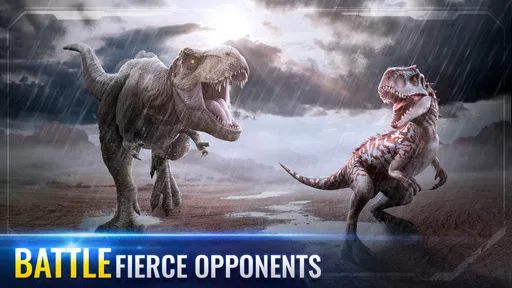
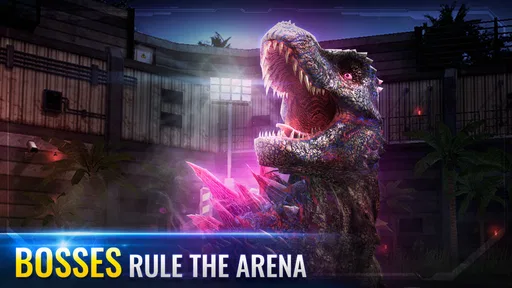
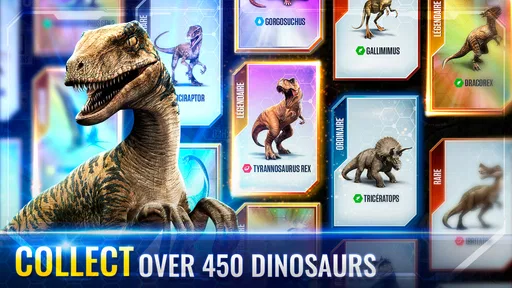
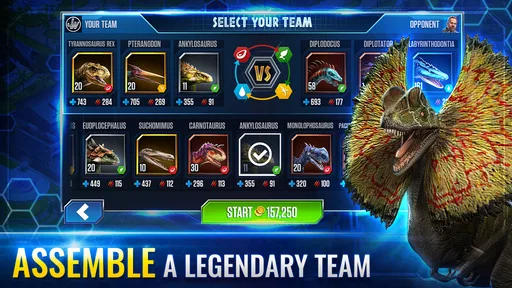
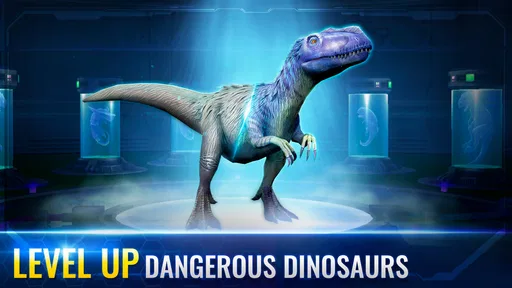
Jurassic World™: The Game is a dinosaur park-building and battle game. You collect and hatch dinosaurs, raise them by feeding and leveling them up, and arrange habitats and attractions across your park. You can also form teams of dinosaurs and take them into turn-based battles. Progress involves balancing park development with creature upgrades, so expect a mix of management, collection, and combat rather than a dinosaur exploration game.
The game is free to download, but it includes in-app purchases and may offer optional items or currencies for purchase. You can make progress without paying, although waiting for timers, gathering resources, and upgrading a large collection can take time. Before downloading, check the purchase settings on your device, especially if children will be playing, and review the current store listing for details about available purchases.
Do not assume the game can be played fully offline. Features such as saving progress, accessing events, and using online services may require an internet connection, and connectivity requirements can change with updates. If you plan to play while traveling or away from Wi-Fi, check the game’s current store description and test which features remain available without a connection. A reliable connection is recommended for the full experience.
The game is presented as a dinosaur-themed park and battle experience, but suitability depends on the child and the family’s preferences. It includes combat between dinosaurs, timed progression, and in-app purchases. Parents should review the age rating and content information for their region, supervise younger players, and use device-level purchase controls. The game may also include online features, so check its current privacy and safety information before letting a child play.
Progress transfer may depend on the game’s current account and platform support, so it is wise to connect or sign in using an available supported method before changing devices. Do not rely on an unlinked local save to carry over automatically. Because transfer options can vary between Android and iOS and may change after updates, consult the in-game support or the latest store information, and contact the publisher’s support if your progress does not appear.
On Android, Jurassic World™: The Game asks for these permissions.
4.3 out of 5
1,913,783 reviews
Simulation · Ludia Games Inc.

Simulation4.2 out of 5

Simulation4.4 out of 5

Simulation4.6 out of 5

Simulation4.7 out of 5

Simulation4.5 out of 5

Simulation4.6 out of 5

Trivia3.4 out of 5
Simulation4.5 out of 5

Simulation4.4 out of 5

Simulation4.5 out of 5

Simulation4.1 out of 5

Simulation4.4 out of 5

Simulation4.5 out of 5

Simulation2.9 out of 5

Simulation4.5 out of 5

Simulation4.5 out of 5

Simulation4.8 out of 5
Simulation4.3 out of 5

Simulation4.5 out of 5



Gamesive reviews games on its own and is not paid by developers for scores. We do not host game files: the download buttons open the official Google Play and App Store pages. Names, icons and screenshots belong to their owners.