Solar Smash
For Android & iOS · Paradyme Games
- 4.6 out of 5Rating
- 1.74MReviews
- 100.00M+Downloads
- SimulationGenre
Game details
- Version
- 2.7.5
- Updated
- Requires
- 7.0
- Price
- Free
- Age rating
- Everyone 10+
- In-app purchases
- $1.99 - $14.99 per item
Screenshots
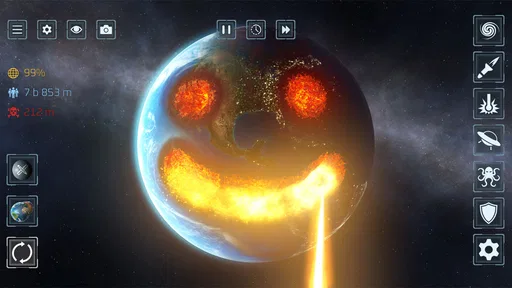
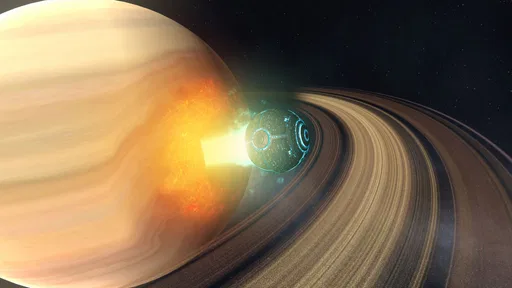
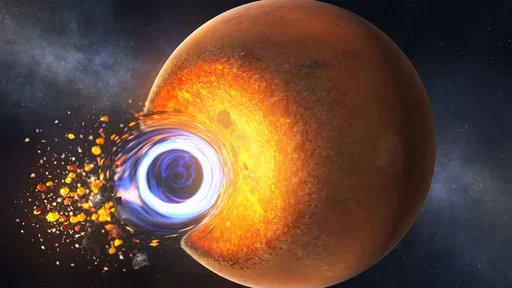
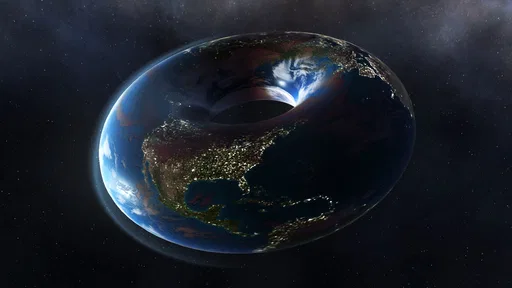
Solar Smash review
 Analysis by Gamesive
The first thing I notice about Solar Smash is how quickly it turns a familiar view of a planet into something I can experiment with. This is a space-themed simulation game from Paradyme Games, but it is less about managing a civilization or following a campaign and more about treating a planet as a target for imaginative destruction. That makes it easy to understand in a spare moment: choose a world, try an attack, and watch the result.
That simple premise has broad appeal. The game is free, rated Everyone 10+, and has reached over 100 million installs, with an average rating of 4.6 from around 1.7 million ratings. Those figures suggest a lot of people enjoy its immediate, visual kind of play, but they do not mean it will suit every player. I would recommend it to someone who likes tinkering and spectacle; I would not choose it for a deep simulation with long-term goals.
Why the first impression works
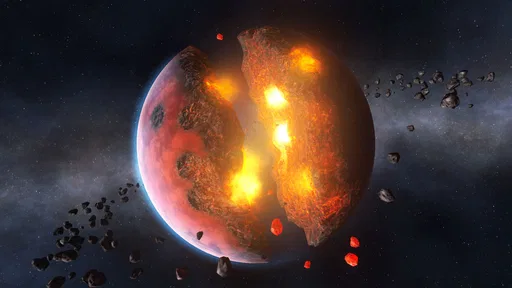
The presentation makes the basic idea clear without asking me to learn a complicated setup first. A planet sits at the center of the experience, and the visual feedback makes it easy to connect an action with its impact. That direct relationship is the game’s strongest design choice: I can focus on what I want to try rather than spending my first session decoding a dense interface or a lengthy story.
It also gives the game a particular kind of freedom. I can approach a session as a quick visual experiment, testing how a different attack changes the scene, or simply as a playful way to make an otherwise calm planet look dramatically altered. I do not need to be in the right mood for a demanding campaign. The trade-off is that players who want explicit objectives, character development, or a steady chain of unlocks may find the open-ended setup less motivating.
The useful question is not whether there is enough destruction to watch, but whether watching and experimenting is enough for you. For me, the appeal comes from trying variations rather than treating any one result as a final achievement. If I expect every session to introduce a new layer of strategy, the loop can feel thin. If I am happy to set my own small challenge, it has a much easier time holding my attention.
A space setting built around contrast
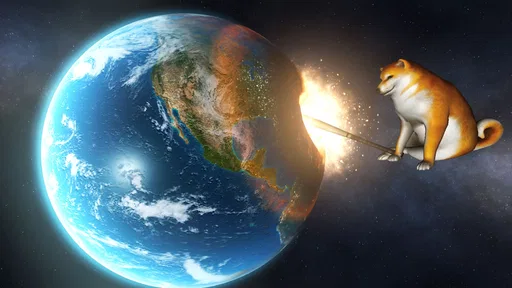
The game’s setting gives its destruction a readable frame. A planet is recognizable and visually calm before an attack, so a change to its appearance carries immediate impact. That contrast matters more than a complicated fictional backstory would here: the world is a clear canvas, and the action is the event. It keeps the focus on cause and effect rather than asking me to absorb lore before I can enjoy a session.
That clarity is also why the experience can feel surprisingly meditative between bursts of action. I can look at the planet, decide what kind of result I want, and then watch the scene change. There is a small creative pleasure in choosing a direction instead of following a prescribed route. A practical tip is to give yourself a specific aim before starting—such as creating a visually striking result—because that makes the sandbox feel more intentional than repeatedly tapping without a plan.
There is a limit to this kind of atmosphere. The setting supports spectacle, but it does not automatically create emotional stakes. A player who wants to protect a world, build a society, or make decisions that affect characters may find the premise detached. The destruction is the point, not a moral dilemma or a story about consequences. I see that as a deliberate fit for a playful sandbox, though it narrows the audience.
Sound, pacing, and the shape of a session
The game’s mood depends on how its visual changes and sound work together. Rather than carrying a narrative through dialogue or scenes, the presentation keeps attention on the planet and the effect of an action. That makes the experience easy to dip into: there is no need to remember a plot thread from the previous session to make sense of what is happening now. I can open it, experiment, and leave when I have had enough.
This quick-entry quality is useful in an everyday situation. If I have a short break and want something more interactive than scrolling but less demanding than a long strategy game, I can use a session to test a couple of ideas and enjoy the visual payoff. It is also suitable for showing someone the basic premise without a long explanation. The pace is strongest when I treat each attempt as a small experiment, not when I expect the game to provide a structured evening of progression.
Because the experience is so visually focused, repeated sessions can start to blur together if I use the same approach every time. My best way around that is to vary the goal rather than simply repeat an action: try for a different kind of visual result, compare how two approaches change the scene, or stop once the experiment has answered the question I had in mind. That self-imposed structure makes the sandbox more satisfying, but it also reveals a limitation: players who need the game itself to keep setting fresh objectives may prefer a mission-based alternative.
Where the mechanics fit—and where they do not
As a simulation game, it is unusual in that the pleasure is not in accurately running a complex system. It is closer to a hands-on space playground: the player chooses an action and watches a planet respond. That makes it approachable for people who are curious about cause and effect but do not want spreadsheets, resource chains, or a long tutorial. It is a good match for short, self-directed play and for anyone who enjoys visual experimentation more than optimization.
The main trade-off is depth. The central loop is intentionally easy to grasp, so it may not provide the layered planning that fans of city builders, management games, or more detailed space simulators expect. Those alternatives are better when I want a persistent world, difficult choices, or a clear sense of improving a system over time. Here, I get a more immediate payoff, but I need to supply some of my own reasons to keep experimenting.
It also helps to set realistic expectations about the word “simulation.” I would not approach this as a scientific tool or a lesson in planetary physics. Its appeal is visual and playful, not a promise of precise real-world modeling. That distinction is worth knowing before installing it, particularly if the space theme is what attracts you but you are specifically looking for educational explanations or scientifically grounded scenarios.
For players who like to share a phone or tablet casually, the premise is easy to explain: choose a planet and see what happens when you experiment. That makes it a natural fit for brief turns with a friend or family member, especially when nobody wants to learn a complicated control scheme. The age rating is Everyone 10+, so it is positioned for a broad audience while still being more appropriate for older children than for very young ones. I would still consider whether a child is comfortable with a game whose central theme is planetary destruction.
There is also a practical cost consideration. The game is free to start, with in-app purchases listed from $1.99 to $14.99 per item. I would decide whether the core sandbox already suits me before spending anything; the purchase range is a reason to check what an item offers in the app rather than assuming I need it to enjoy the basic idea. If I am looking for a completely goal-driven experience, paying for additional content would not solve the more fundamental mismatch in play style.
Who should try it, and who should move on
I would point a curious friend toward Solar Smash if they enjoy visual cause-and-effect, open-ended play, or games that work in short visits. It is especially appealing to someone who likes making their own mini-challenges instead of being handed a checklist. A useful way to test whether it suits you is to play with one clear question in mind and see whether observing the answer feels rewarding. If it does, the sandbox has a natural hook; if you quickly want a mission marker or a progression track, that is a sign to choose something more structured.
I would skip it if I wanted a peaceful planet-building game, a realistic astronomy reference, or a campaign with characters and stakes. The same space setting can support very different experiences, and this one prioritizes dramatic visual change over exploration or management. A conventional strategy game is a better choice for long-term planning, while a dedicated space or science title is a better fit when accuracy and explanation matter more than spectacle.
Paradyme Games’ approach is clear: keep the setting legible, make the central interaction easy to grasp, and let the player decide what to test. The current version is 2.7.5, and the game supports Android 7.0 or later. Its large audience is understandable because the premise is immediately accessible, but popularity does not remove the central caveat: this is a focused sandbox, not an all-purpose space game.
A strong mood for the right kind of player
What stays with me is the contrast between the quiet view of a planet and the visual drama of changing it. The presentation supports the mechanics instead of distracting from them, and the short-session rhythm suits the game’s experimental nature. I like that I can supply my own purpose, though I also recognize that this freedom can feel like a lack of direction when I want the game to push me forward.
My recommendation is simple: try it if you want a quick, hands-on space sandbox and are content to invent your own experiments. Keep your expectations modest if you are looking for deep simulation, a story, or sustained progression. With that distinction in mind, Solar Smash offers a coherent, immediately understandable mood—one built around curiosity, visual impact, and the freedom to see what happens next.
What we like
- Detailed planetary destruction effects make impacts satisfying to watch.
- Multiple weapons and disasters offer varied ways to reshape planets.
- Sandbox play encourages experimentation without strict mission goals.
- Visual effects and sound design make destruction feel dramatic.
- Controls are simple enough for quick play sessions.
What could be better
- Frequent explosions can make effects difficult to distinguish.
- The open-ended format may feel repetitive over time.
- Some weapons require experimentation to understand their behavior.
- Small interface elements can be awkward on compact screens.
- Destruction-focused gameplay may not appeal to every player.
Frequently Asked Questions
What is Solar Smash, and what do you do in the game?
Solar Smash is a planet-destruction simulation game in which you experiment with different ways to damage or destroy celestial bodies. You can choose a planet, select weapons or other effects, and watch the results unfold in detailed visual simulations. Rather than offering a traditional story or campaign, it focuses on open-ended experimentation, letting you try different combinations and observe how each one changes the planet.
Is Solar Smash free to download and play?
Solar Smash is generally available as a free-to-download game, though availability, pricing, and optional purchases can vary by platform and region. The free experience may include advertising or in-app purchase options, so check the store listing before installing if those details matter to you. Also review the listed age rating, permissions, and current device requirements, since these can change with updates.
Can I play Solar Smash offline?
Many of Solar Smash’s core planet-destruction interactions can be enjoyed without a continuous internet connection, making it suitable for short sessions while travelling. However, some features may depend on connectivity, and ads, store purchases, updates, or other online services may not work offline. For the most reliable information, check the current app-store description and test the game on your device before relying on it without internet access.
Is Solar Smash suitable for children?
Solar Smash depicts fictional planetary destruction, including explosions and large-scale disasters, but it does not present this as realistic personal violence. Whether it is suitable for a child depends on their age and sensitivity to destructive imagery. Parents should check the game’s current age rating and store disclosures, and consider playing or reviewing it first, particularly because advertising or optional purchases may also be present.
Does Solar Smash work on every Android or iOS device?
Solar Smash is offered for mobile platforms, but that does not guarantee compatibility with every phone or tablet. Performance depends on the device’s operating-system version, available memory, graphics hardware, and the game’s current requirements. Detailed planet effects can also make the experience smoother on newer devices. Before downloading, confirm that your device meets the requirements shown on its official store page and has enough free storage.
Permissions
On Android, Solar Smash asks for these permissions.
- Photos/Media/Files
- read the contents of your USB storage
- Storage
- read the contents of your USB storage
- Wi-Fi connection information
- view Wi-Fi connections
- Other
- view network connections, full network access, prevent device from sleeping, Google Play license check
Languages
Solar Smash is also available in 1 other languages on our site.
ItalianoSolar Smash
User reviews
4.6 out of 5
1,739,123 reviews
- 80%
- 9%
- 4%
- 1%
- 5%
Download Solar Smash
Simulation · Paradyme Games · Free
Games like Solar Smash
View all: Games like Solar Smash
Kick & Break The Ragdoll Games
Simulation4.6 out of 5
Melon Sandbox
Simulation4.7 out of 5

Annoying Uncle Punch Game®
Simulation4.5 out of 5

Keyboard Escape: +1 Speed ASMR
Simulation3.4 out of 5
About this listing
- Game
- Solar Smash
- Developer
- Paradyme Games
- Package
- com.paradyme.solarsmash
- Version reviewed
- 2.7.5
Gamesive reviews games on its own and is not paid by developers for scores. We do not host game files: the download buttons open the official Google Play and App Store pages. Names, icons and screenshots belong to their owners.