
Solar Smash
Simulation4.6 out of 5

For Android & iOS · Dramaton

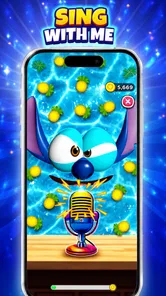
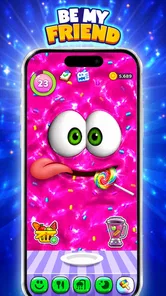
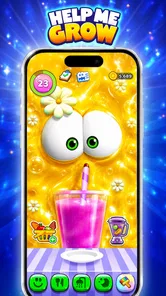
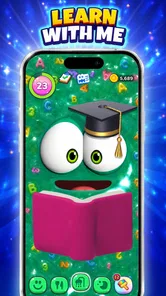
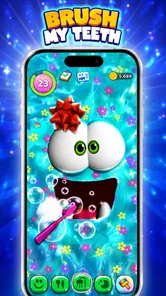
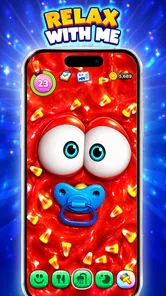
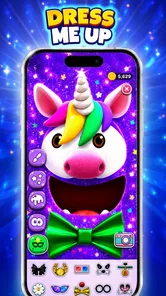
 Analysis by Gamesive
Some virtual-pet games are all about keeping a checklist moving; others make the small moments feel like the point. Bruno – My Talking Slime Pet aims for the second kind of experience, inviting you to laugh, play, care for a cute companion, learn, and relax. Its central idea is easy to grasp: spend time with Bruno and let the interaction itself set the pace. I find that a fitting approach for a casual simulation game, where a friendly mood matters as much as a clear reason to return.
Bruno is presented as a virtual friend rather than a complex world to master. That distinction shapes the experience from the start: the appeal is in having a character to engage with, not in taking on a sprawling story or a demanding series of challenges. The store’s short description is simply “Bruno,” which keeps the focus squarely on the pet. It’s a straightforward identity, and one that suits a game built around companionship.
The game’s promise brings together several gentle activities: laughing, playing, taking care, learning, and relaxing. Those verbs suggest variety without making the experience sound intense. I like that the pitch leaves room for a laid-back session, whether I want a brief distraction or a calmer break in the day. The overall mood is approachable, and the Everyone content rating supports its broad, family-friendly positioning.
As a virtual pet simulation, the game benefits from a simple emotional anchor. Bruno is the character you come back to, while the broader promise is to make that time feel pleasant and playful. This kind of setup can work especially well for people who enjoy games that are easy to pick up without first learning a complicated world. The focus stays personal: the experience is framed around a cute slime companion and the familiar appeal of spending time with a digital pet.
Character is crucial in a virtual-pet game. Without a compelling reason to care about the companion, routine interactions can feel like chores. Bruno’s identity as a cute virtual friend gives the concept a softer starting point. Rather than presenting the game as a contest or a test of skill, it invites players to approach it with curiosity and affection. That gentle framing is one of the most appealing things about the concept.
The game is also described as a place to learn and relax, so its tone is not limited to silly moments. That combination gives it a broad emotional range while keeping expectations grounded: it is a casual game built around a companion, not an elaborate simulation trying to imitate every part of real pet ownership. I appreciate that accessible framing. It makes Bruno sound suited to players who want warmth and light engagement rather than pressure to optimize every choice.
What stands out in the game’s presentation is the tight connection between its character and its purpose. A slime pet, a playful sensibility, and an invitation to care for a virtual friend all point in the same direction. That kind of consistency matters in a casual game. When the central character, activities, and mood feel aligned, the whole experience is easier to understand at a glance—and more inviting to return to.
The setting is best approached as a character-focused space, rather than as a place with a deep lore or a long narrative. Bruno is the main attraction, and the game’s appeal rests on the relationship players form with that companion. This creates a clear, welcoming world language: friendly, uncomplicated, and centered on small interactions. For me, that is more valuable here than a complicated backdrop that might distract from the pet.
Visual direction in a game like this has a practical job as well as an aesthetic one. A cute companion should be easy to recognize and emotionally approachable, and the surrounding mood should make caring and playing feel natural. The title’s focus on a slime pet gives the character a distinctive identity, while the broader promise of laughter and relaxation establishes the kind of atmosphere the game wants to create. The idea is easy to picture, even before getting into the details of individual interactions.
A small, focused world is not automatically a limitation. In a virtual-pet game, it can help keep attention on the companion and make the basic fantasy easy to enjoy. Players do not need to keep track of a sprawling cast or complicated plot to understand why they are there: they are spending time with Bruno. That clarity can make the game a comfortable option for newcomers to simulation games as well as people who already enjoy casual pet experiences.
There is also a useful tonal balance in the idea of a pet that can make players laugh while still inviting care. Humour keeps the experience from feeling too earnest, while the caring element gives interactions a sense of warmth. Those moods can reinforce one another: the companion feels more memorable when the game has room for both lighthearted play and a gentler pace. Bruno’s premise is built around that blend.
For searchers comparing cute pet games for Android or looking for a low-pressure simulation, this is the clearest point to keep in mind: the game sells companionship and a playful mood first. It is not presented as a high-stakes management challenge. If that sounds like the kind of break you want, the concept should be immediately appealing; if you prefer intricate strategy, the emphasis here is plainly different.
Sound and pacing are part of what makes a virtual pet feel present. Even a simple interaction can feel more engaging when the game’s overall mood supports it, while a relaxed rhythm gives players room to enjoy the companion rather than rush from objective to objective. Bruno’s stated focus on laughter and relaxation points toward that kind of easygoing tone. The result is a concept that feels suited to casual visits rather than marathon sessions.
That pacing is a meaningful design choice. A game about a virtual friend should leave space for small moments to land, rather than treating every interaction as a race toward a reward. The promise of play, care, learning, and relaxation gives the experience several moods to draw on, but all of them remain within a welcoming, low-pressure frame. I find that coherence more important than sheer complexity for this kind of game.
Sound can help make a character feel expressive, while a clear rhythm helps interactions remain easy to follow. Those elements work best when they support the same mood as the art and setting. The game’s central pitch is cheerful and comforting, so its overall identity is strongest when the audio and pacing feel like natural extensions of Bruno’s friendly presence. The emphasis is on a pleasant companion experience, not on audio spectacle or fast action.
There is a difference between a calm game and one that feels directionless. A virtual pet gives a casual experience a natural center: the character provides a reason to engage, while the relaxed tone makes that engagement approachable. Bruno’s pitch leans into this structure by combining play with care. That gives the game a recognizable loop in broad terms, without asking the player to approach it as a demanding task.
The learning angle adds another shade to the game’s identity. It sits alongside laughter, play, care, and relaxation, suggesting a mix of light entertainment and a more thoughtful tone. That balance can help the experience feel more rounded than a pet game that aims only for cuteness. It also broadens the audience: some players may be drawn to the comic side, while others may simply enjoy the calm of checking in with a friendly virtual companion.
As with any game that emphasizes mood, the key is whether its different elements feel like they belong together. Bruno’s central character, pet-focused premise, and relaxed invitation all point toward a consistent experience. The concept does not need a dramatic plot to make sense; it needs a companion players find pleasant to spend time with. That is a modest goal, but it is a sensible one for a casual simulation.
The most useful way to think about the gameplay is through the activities the game highlights: playing, caring, learning, and relaxing. Together, they describe a companion-focused experience with more than one emotional note. The mechanics are meant to support that relationship, keeping Bruno at the center rather than turning the game into a collection of unrelated distractions. That gives the design a clear foundation, even for players who have not tried a virtual-pet game before.
There is a practical appeal to this approach. Simulation games can sometimes feel intimidating when they come with a long list of systems to understand, but a virtual companion is an intuitive starting point. You know who the game is about and what kind of mood it is aiming for. The activities are framed in everyday terms, so the concept is easy to grasp without needing a detailed explanation of every mechanic.
The game’s free-to-play entry point also makes it straightforward to give the experience a try. It includes optional in-app purchases, with individual items priced from $0.99 to $5.99. Those purchases are part of the overall product, but the main appeal remains the pet-centered concept and its relaxed tone. For anyone browsing free simulation games, it is worth keeping that distinction in mind: the game is free to start, with optional purchases available within it.
I can see Bruno appealing to players who like cute character design, gentle interaction, and games that fit around everyday life. It should also make sense for anyone looking for a virtual pet game with a lighthearted identity rather than a heavy management focus. Because the mood is welcoming and the content rating is Everyone, the game is positioned for a broad audience, including people who simply want a cheerful mobile companion.
It is equally useful to be clear about the type of experience it is aiming to provide. The appeal is not a complex campaign or a competitive challenge; it is the relationship with Bruno and the atmosphere created around that idea. Players who want that kind of easygoing, character-led session will likely understand the game’s strengths quickly. Those who prefer intricate systems may find the concept’s simplicity less central to their tastes.
On the practical side, the game is available for devices running Android 7.0 or later. It was released on March 19, 2023, and its current version is 5.10. Bruno has earned a 4.5 average rating from 189 thousand ratings, with around a thousand written reviews, and it has passed 50 million installs. These figures show that the game has reached a large audience, though the best reason to choose it is still whether its gentle pet-focused style suits you.
What I like most about Bruno is that its central idea stays clear. It is a cute slime pet game that invites players to play, care, laugh, learn, and relax. The character, mood, and activities all serve that promise, making the experience easy to understand without dressing it up as something more complicated than it is. That consistency is the game’s strongest design feature.
Its appeal depends on the kind of mood a player wants from a mobile game. If you are after a calm, friendly distraction and enjoy having a virtual companion to return to, Bruno has a welcoming premise. If you want a demanding simulation full of intricate systems, this is not positioned as that sort of experience. I see that as a matter of taste rather than a flaw: the game knows its lane and builds its identity around a softer, more personal kind of play.
Overall, Bruno – My Talking Slime Pet comes across as a casual simulation with a coherent, cheerful personality. Its focus on companionship gives the gameplay a natural center, while the promise of laughter and relaxation shapes the wider atmosphere. For players seeking a cute virtual pet and an easygoing way to unwind, Bruno is a friendly option to consider. The lasting impression is simple and appealing: a playful companion, a gentle pace, and a game designed to make small interactions feel like a welcome break.
Bruno – My Talking Slime Pet is a virtual-pet game centered on a playful slime character. Players can interact with Bruno, keep him entertained, and explore activities such as feeding, cleaning, or dressing him, depending on the features available in their version. It is designed for casual play rather than a demanding challenge, so it may suit children and anyone who enjoys lighthearted pet-care games.
The main idea is to tap and interact with Bruno, respond to his needs, and try the activities presented in the game. Depending on the available modes, you may be able to feed or wash him, choose accessories, and play simple mini-games. The controls are generally intended to be easy to understand, but the exact activities and progression can vary by app version and device.
Its colorful virtual-pet premise and straightforward interactions may appeal to younger players, but suitability depends on the child and the particular version of the app. Before handing over a device, check the age rating, privacy information, and whether the game includes advertisements, in-app purchases, or links to external content. Adult supervision is sensible, especially if children can make purchases through the device.
Whether the game works offline and whether all of its content is free can depend on the version, platform, and updates. Some mobile games let players use basic features without a connection while relying on the internet for ads, downloads, or other services. Check the store listing for current pricing, in-app purchases, and connection requirements, and review purchase settings before letting a child play.
Look at the official Google Play or App Store listing to confirm that the app is available for your device and operating-system version. Review the developer name, recent update date, permissions, privacy details, age rating, and user reviews. These details can change over time, so relying on an older description may give an inaccurate picture of compatibility, costs, or how the app handles data.
On Android, Bruno – My Talking Slime Pet asks for these permissions.
4.5 out of 5
188,721 reviews
Simulation · Dramaton

Simulation4.3 out of 5

Simulation4.2 out of 5

Simulation4.4 out of 5

Simulation4.6 out of 5

Simulation4.7 out of 5

Simulation4.5 out of 5
Simulation4.6 out of 5

Simulation4.5 out of 5

Simulation4.4 out of 5

Simulation4.1 out of 5

Simulation4.4 out of 5

Simulation4.5 out of 5

Simulation2.9 out of 5

Simulation4.5 out of 5

Simulation4.5 out of 5

Simulation4.8 out of 5

Simulation4.3 out of 5

Simulation4.5 out of 5



Gamesive reviews games on its own and is not paid by developers for scores. We do not host game files: the download buttons open the official Google Play and App Store pages. Names, icons and screenshots belong to their owners.