
Vehicle Masters
Simulation4.5 out of 5
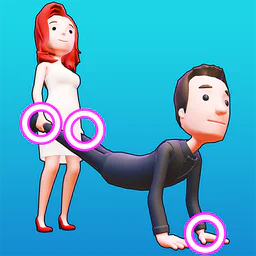
For Android & iOS · Supersonic Studios LTD

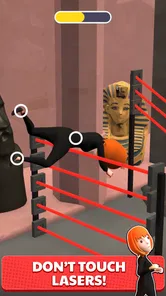

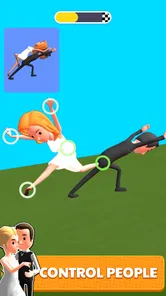

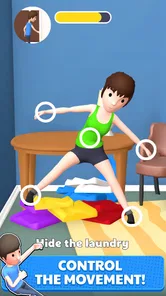
 Analysis by Gamesive
I like simulation games best when they give me a small, clear problem to solve rather than a long list of chores. Move People builds its appeal around that simple idea: make sense of a situation by moving people into the right positions. It is easy to understand at a glance, but the real question is whether each new challenge gives me a reason to keep thinking—or whether the routine starts to feel too familiar.
Made by Supersonic Studios LTD, this free simulation game is built for short bursts of play. Its premise is direct enough that I can open it without needing to study a tutorial or remember a complicated set of rules. That makes it a natural fit for a spare moment: I can try a puzzle, see how it goes, and decide whether I want another.
The early appeal comes from having an immediate task in front of me. Instead of managing a sprawling virtual world, I focus on moving people and working out how the scene should come together. That narrow focus is a strength on a phone, where interruptions are common and a game has to make its purpose clear quickly.
My practical tip is to treat each attempt as a little observation exercise. Before moving anything, look at the positions and consider what the goal seems to demand. Acting immediately may work, but pausing to read the arrangement can make the interaction feel more deliberate and less like random trial and error. That small change in approach gives the basic premise more staying power.
The game has attracted a broad audience: it has more than 100 million installs, with an average rating of 4.2 from around 317,000 ratings. Those figures suggest that its straightforward format reaches many players, though they do not mean it will suit everyone. If you enjoy quick, visual tasks, the premise is inviting; if you want detailed simulation controls or a deep story, this is a much lighter proposition.
In a game built around repeated movement challenges, progress is most satisfying when I can feel myself reading situations better. A successful attempt can be a small signal that I have understood the setup, not just tapped through it. I would approach the game with that mindset: pay attention to what a scene asks of me, and let the satisfaction come from making the arrangement work.
Unlocks and new goals can help a simple loop stay fresh, but they work best when they change the kind of thinking required. A new scene is more meaningful than a cosmetic sense of advancement if it asks me to reconsider the positions or sequence of my actions. That distinction matters here because the core interaction is intentionally uncomplicated. The game’s momentum depends on whether its challenges continue to feel like problems rather than repetitions.
One useful way to keep the experience from becoming automatic is to avoid rushing through every stage just to reach the next one. If I make a move and the result is not right, I can use that outcome to reassess the arrangement instead of repeating the same gesture. This is a modest but practical approach to a game whose appeal rests on understanding how people should be moved, rather than on mastering a complicated control scheme.
The game is currently at version 9.0, and its Teen content rating gives families a quick indication of the intended age guidance. I would still make the usual choice for a younger player based on their maturity and the household’s preferences. The important point for a prospective player is that this is positioned as a casual simulation experience, not a detailed management game or a competitive test of skill.
The challenge in a compact puzzle-like simulation should rise through the situations themselves, not through unnecessary complexity. I enjoy a game more when I can understand the goal but still need to think about how to achieve it. If the tasks remain too easy for too long, my attention drifts; if they become confusing without a clear reason, the simple premise loses its charm.
That balance is the main thing I would watch for while playing. The most engaging moments are likely to be the ones where a quick glance is not enough and I have to reconsider the arrangement before acting. The less engaging moments are those where I feel I am repeating a familiar motion without learning anything new. Because the central activity is so accessible, variation in the challenges carries more weight than elaborate controls would in a different game.
For a realistic everyday use, I can see myself opening it while waiting for a friend or taking a short break between errands. I would play a little, stop when I need to, and return later without needing to reconstruct a complicated plan. That makes the format convenient, though it also means the game is not necessarily the best choice for someone seeking a long, absorbing session with a strong sense of narrative or world-building.
Compared with management simulations, which often ask me to balance resources, schedules, and long-term decisions, this is a much more immediate kind of play. Compared with conventional puzzle games, its people-moving premise gives the tasks a more physical, scene-based feel. That difference is its specific appeal: I am responding to where people are and where they need to go, rather than optimizing an economy or solving a word or number grid.
Simple controls do not automatically make every stage satisfying. A repeated central action can start to feel thin if the goals do not offer enough variety, and players who like to plan several steps ahead may want more depth than this format is designed to provide. I would not choose it as my main game if I were looking for extensive customization, a complex simulation model, or a story that unfolds over time.
There is also a difference between a gentle challenge and friction. If a level’s intended solution is not obvious, retrying can be enjoyable when each attempt teaches me something. It becomes less pleasant when I cannot tell what the game expects me to notice. In those moments, I recommend slowing down and examining the whole scene before making another move; if the interaction still feels opaque, this may simply not be the style of puzzle that clicks for you.
The game is free to download, with in-app purchases listed at $2.99 to $4.99 per item. I would treat those as optional spending rather than assume they are necessary to enjoy the core idea. If you are sensitive to purchase prompts or prefer a one-time purchase with everything clearly included, check the app store’s current details before installing and decide whether that model fits your habits.
Its audience size is another useful clue, but not a guarantee of personal fit: the game has more than 2.7 thousand written reviews alongside its large rating pool. I would read player feedback for clues about the parts that matter to me—especially whether the challenge stays engaging and whether the pace suits short sessions—rather than treating popularity as proof that every player will enjoy it.
I would recommend Move People to someone who likes bite-sized visual challenges, wants a low-commitment game for waiting rooms or breaks, and enjoys the satisfaction of arranging a scene into a workable solution. Its free entry point makes it easy to sample, and the premise does not demand that I invest in a long session before I know whether it suits me.
I would steer a player toward a deeper management sim if they want to build systems, make long-range decisions, or watch a world evolve because of their choices. Someone who prefers action, competition, or a continuous story may also find the repeated focus on moving people too narrow. Those are not flaws so much as clear boundaries around what this particular experience is trying to offer.
For anyone deciding whether to install it, I would ask one simple question: do you enjoy looking at a small scene and figuring out how to make it work? If yes, the game’s direct approach is a good reason to give it a try. If you need layered mechanics to stay interested, it is wiser to choose another simulation or puzzle game rather than expect this one to become something more elaborate.
Move People is at its best when a clear goal meets a situation that makes me stop and think for a moment. Its strength is accessibility: I can grasp the basic idea quickly and fit a session into an ordinary day. Its limitation is the same simplicity, since the challenge has to keep earning my attention through the situations rather than through a broad set of simulation systems.
I would try it for casual, short-session play, especially if I enjoy solving visual arrangements at my own pace. I would not rely on it for deep progression or a highly demanding challenge. The game’s lasting appeal comes down to whether its goals and unlocks keep changing how I approach each scene; when they do, the compact format feels refreshing, and when they do not, I am ready to put it down. That makes it an easy recommendation for the right kind of player, but not a universal substitute for a fuller simulation.
Move People is a casual puzzle game built around short, character-focused challenges. In each level, you interact with people or objects to help a character reach a goal, complete a task, or get through a humorous situation. The puzzles typically rely on tapping, dragging, or moving items, so the main appeal is experimenting with the scene rather than mastering complex controls. The exact challenge and difficulty can vary from level to level.
Move People is generally offered as a free-to-download mobile game, but availability and pricing can differ by platform, region, or listing. Free access may include advertising, and the game may offer optional purchases or other monetized features. Check the Google Play Store or Apple App Store page before installing for current pricing, in-app purchase details, and any age or device requirements. Avoid unofficial download sites, since they may provide modified or unsafe files.
Many simple puzzle levels in games like Move People can be played without a constant connection, but access to ads, rewards, updates, or other online features may require internet. Offline behavior can also change between versions, so it is best to test the game before relying on it during travel. If a level or feature does not load, check your connection and confirm that the app is up to date through the official store.
Move People uses an accessible, cartoon-style presentation and straightforward interactions, which may make it approachable for younger players. However, suitability depends on the child and the particular version available in their region. Review the current store listing for its age rating, advertising disclosures, data practices, and in-app purchase information. Parents may also want to try a few levels first and use device-level purchase controls if children will be playing unsupervised.
Ads may appear because advertising supports a free game, and their frequency can depend on the version or region. If the app freezes, crashes, or fails to load a level, first close and reopen it, check your connection, and install any available update. Restarting the device or freeing storage may also help. If the problem continues, contact the developer through the official store listing; avoid deleting the app before checking whether your progress is backed up.
On Android, Move People asks for these permissions.
Move People is also available in 2 other languages on our site.
4.2 out of 5
316,674 reviews
Simulation · Supersonic Studios LTD

Simulation4.3 out of 5
Simulation4.4 out of 5

Simulation4.6 out of 5

Simulation4.7 out of 5

Simulation4.5 out of 5

Simulation4.6 out of 5

Sports4.5 out of 5

Role Playing4.2 out of 5

Action4.6 out of 5
Simulation4.5 out of 5

Simulation4.4 out of 5

Simulation4.5 out of 5

Simulation4.1 out of 5

Simulation4.4 out of 5

Simulation4.5 out of 5

Simulation2.9 out of 5

Simulation4.5 out of 5

Simulation4.5 out of 5

Simulation4.8 out of 5

Simulation4.3 out of 5

Simulation4.5 out of 5



Gamesive reviews games on its own and is not paid by developers for scores. We do not host game files: the download buttons open the official Google Play and App Store pages. Names, icons and screenshots belong to their owners.