Block Craft 3D:Building Game
Arcade4.5 out of 5
For Android & iOS · SayGames Ltd
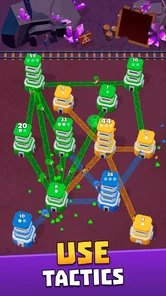
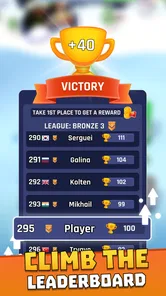
 Analysis by Gamesive
I like arcade strategy games best when the main decision is easy to understand but hard to time well. Tower War - Tactical Conquest builds its appeal around that balance: you send groups across a map and try to take control of it, with each move affecting what you can do next. It is quick to grasp, yet the changing flow of a battle gives me reasons to pause before committing. That makes it a better fit for short bursts of tactical thinking than for players seeking a deep, long-form strategy campaign.
Developed by SayGames Ltd, this free arcade game turns map control into its central decision. The basic attraction is not simply having a larger force; it is choosing where that force should go and when to redirect attention. A tower that looks like an easy target may be less useful than one that improves your position elsewhere. I found that the most satisfying moments come from noticing those relationships before the map gets crowded.
The premise is straightforward enough for a casual game, but the tactical question changes as a battle develops. You are weighing immediate progress against the chance to build a stronger position. If I focus everything on one objective, I may leave other parts of the map exposed. If I spread my attention too thinly, I may fail to make meaningful progress anywhere. That push and pull is what gives the game its identity within the arcade strategy category.
Its reach suggests the format has found a broad audience: it has passed 100 million installs, and players have given it a 4.2 average from around 700,000 ratings. Those figures do not tell me whether every match will suit a particular player, but they do put it among games many people have tried. I would treat that popularity as a reason to look closer, not as a promise that its pace or decisions will fit everyone.
In practice, I approach each map as a set of choices rather than a simple line from my starting point to an opponent. The first useful habit is to look at the available routes and consider which target could change the rest of the fight. Taking a nearby position may be sensible, but it is not automatically the best move if it leaves a more important route open. This small pause before sending units can be the difference between a deliberate plan and a string of reactions.
A second helpful habit is to keep checking the whole board after making a move. It is tempting to watch the group currently travelling and forget that the situation elsewhere may have changed. I try to divide my attention into two questions: what needs action now, and what might become a problem if I ignore it? That approach makes the tactical side feel more readable without pretending that every battle can be solved in advance.
The game’s appeal depends on adapting, not repeating one opening by habit. A first move that seems efficient in one layout may be awkward in another, and chasing every available target can leave a plan without a clear purpose. I get more from choosing a priority, watching how the map responds, then adjusting when the initial idea stops making sense. That is a practical way to make short sessions feel thoughtful instead of random.
One trade-off is that map-focused strategy can make the experience feel abstract. Players who want character stories, a richly explained world, or a complex tactical simulation may find that the central appeal is too narrow. Here, the pleasure comes from reading positions and managing pressure. If that loop does not interest you, a more traditional strategy game with longer planning and broader systems will probably be a better use of your time.
I can see this working well during a short break when I want to concentrate on something without settling in for a long session. For example, if I have a few minutes between errands, I can focus on a map, make a plan, and respond as the balance shifts. It gives that pause a small tactical puzzle, rather than asking me to remember a sprawling campaign or manage a long sequence of tasks. The key is to play when I can give the board at least some attention; distracted tapping undermines the part that makes it interesting.
That also makes it useful for someone testing whether they enjoy strategy games at all. The basic objective is easy to follow, while the choices around territory offer more than pure reflex play. I would recommend it to a friend who enjoys quick arcade sessions but wants a little more decision-making than dodging hazards or chasing a score. It is less suitable for someone who wants a relaxed game that can be played entirely on autopilot.
Compared with many arcade alternatives, the draw here is not just speed or repeated attempts at a high score. The map gives each move a purpose, and it asks you to think about how one position affects another. Compared with deeper strategy games, though, the experience is intentionally more immediate. I would not choose it when I want elaborate long-term planning, a large roster of systems to master, or a campaign that rewards extended study. Its strength is a compact tactical loop, not breadth.
For a useful first session, I would resist trying to capture everything at once. Pick one objective that looks strategically valuable, observe what happens after committing to it, and then reassess the rest of the map. This makes it easier to learn from a poor decision: was the target not important, did I move too much attention toward it, or did I fail to notice another route? That kind of self-check is more valuable than treating every loss as bad luck.
The same focus that makes the game approachable can also limit its staying power for some players. If you want every session to introduce a radically different kind of challenge, a map-control loop may begin to feel familiar. I also would not recommend it to someone who dislikes having to monitor several positions at once. The game asks for attention even when the controls are simple, and that can make it feel tense rather than casual if you are trying to play while doing something else.
There is also a difference between being easy to start and being satisfying for every mood. When I want a game that rewards careful planning, the territorial choices are appealing. When I want something soothing, the need to keep track of changing positions may feel like work. I would choose a slower puzzle or a calmer casual game in that situation. This is not a criticism of its core idea; it is a reminder that the fast, map-centred format has a particular kind of energy.
The game is free to download, with in-app purchases ranging from $0.99 to $99.99 per item. I would make a simple decision before playing: enjoy the core experience on its own terms, and do not treat optional spending as a requirement for having fun. The wide gap between the lowest and highest listed item prices is worth knowing if you prefer to avoid purchases entirely. Families may also want to account for that when deciding whether a younger player should use the game.
Its age rating is Everyone 10+, which gives parents a useful starting point when considering it for a child. I would still make the decision based on the child’s habits and the household’s approach to in-app purchases. The game’s tactical premise may suit someone who enjoys thinking ahead, but a rating alone cannot answer whether the pace or spending prompts are right for a particular family.
I would point first to players who like seeing a simple plan become complicated in a satisfying way. If you enjoy deciding whether to seize an opportunity now or protect your position for later, the focus on controlling territory gives you a clear reason to keep looking at the map. It is also a sensible choice for people who want a strategy-flavoured game without committing to a lengthy campaign every time they open it.
On the other hand, I would steer away anyone expecting a large, story-driven strategy experience or a purely reflex-based arcade game. The game sits between those tastes: its presentation and format are approachable, but the useful part is the decision-making. If that middle ground sounds appealing, the free entry point makes it easy to try without deciding in advance that you will stick with it.
The current version is 1.30.1, and it supports Android 8.0 or later. I would check that your device meets that minimum before looking for it in the app store. The game has been available since June 24, 2021, so it is not a brand-new release; that can be reassuring if you prefer an established title, though the real test is still whether its central loop suits you.
Overall, I recommend Tower War - Tactical Conquest to someone who wants a compact arcade game built around choices that matter from one part of the map to another. My advice is to play attentively, avoid spreading your effort across every target, and treat each match as a chance to improve how you read the board. If you prefer deep campaigns, a calmer pace, or action that needs almost no planning, I would look elsewhere. For short sessions where a clear objective can still demand a little thought, this is a straightforward game with a distinctive tactical hook.
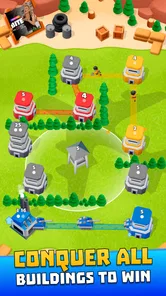
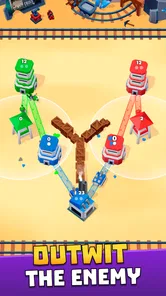
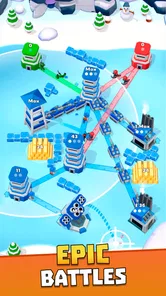
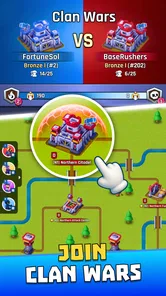
Tower War - Tactical Conquest is a strategy game centered on capturing towers and expanding across a battlefield. You send units from your towers toward neutral or opposing structures, aiming to take control before your rivals do. Its central challenge is balancing offense and defense: a tower sending troops elsewhere may become vulnerable. The exact stages, modes, and mechanics can vary by version, so check the game listing for current details.
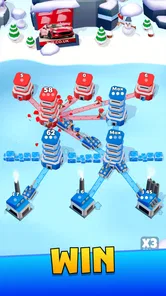
The basic approach is to select one of your towers and direct its units toward another structure, then keep making decisions as the map changes. Capturing useful towers can strengthen your position, while sending too many units away may leave your territory exposed. Pay attention to the number of units at each structure and to rival movements. If the game offers tutorials or guidance, use them to learn its controls and any special rules.
The cost and monetization can depend on the platform, region, and current store listing. Before downloading, check whether the listing marks the game as free and review its in-app purchase information. Free-to-download games may offer optional purchases, such as currency or items, and ads may also be present. Read the store details and purchase prompts carefully, especially if children may use the device or if you want to avoid unexpected spending.
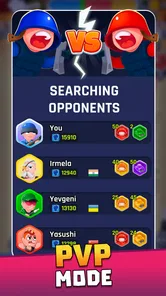
Offline availability should be confirmed in the current app listing, since some games allow solo play without a connection while others require internet access for core features, updates, or progress syncing. If you plan to play while traveling, try launching the game with connectivity disabled after installation and check which modes remain available. Also consider that advertisements, online competition, and cloud saves generally need a connection even when some gameplay can run offline.
Suitability depends on the game's current age rating, content, advertising, and purchase options, so review the relevant store listing before installing it for a child. Strategy gameplay involves competition and may include ads or optional purchases. Check the permissions requested during installation and whether parental controls or purchase authentication are enabled on the device. It is also sensible to confirm that your phone or tablet meets the listed compatibility and storage requirements.
On Android, Tower War - Tactical Conquest asks for these permissions.
Tower War - Tactical Conquest is also available in 2 other languages on our site.
4.2 out of 5
700,088 reviews
Arcade · SayGames Ltd

Arcade4.6 out of 5

Arcade4.5 out of 5

Arcade4.2 out of 5

Arcade4.4 out of 5

Arcade4.7 out of 5
Arcade4.3 out of 5

Arcade4.5 out of 5

Simulation4.5 out of 5
Racing4.6 out of 5

Action4.5 out of 5
Arcade4.5 out of 5
Arcade4.4 out of 5
Arcade4.6 out of 5

Arcade4.2 out of 5
Arcade4.5 out of 5

Arcade4.7 out of 5

Arcade4.5 out of 5

Arcade4.4 out of 5

Arcade4.4 out of 5

Arcade4.2 out of 5
Arcade4.7 out of 5

Arcade4.8 out of 5



Gamesive reviews games on its own and is not paid by developers for scores. We do not host game files: the download buttons open the official Google Play and App Store pages. Names, icons and screenshots belong to their owners.