
Block Craft 3D:Building Game
Arcade4.5 out of 5
For Android & iOS · 1SOFT



 Analysis by Gamesive
When I pick up a space shooter for a quick break, I want the action to be understandable almost immediately: see the incoming threats, move, fire, and learn from a mistake without studying a manual. Galaxiga: Galaxy Arcade Game aims at that familiar arcade rhythm. It is a free game from 1SOFT, built around retro-style space battles, and its appeal is less about elaborate storytelling than the simple pleasure of reacting to a busy screen. I find it easiest to recommend to someone who enjoys brisk, repeatable arcade play and is comfortable with a game that asks for attention while it is running.
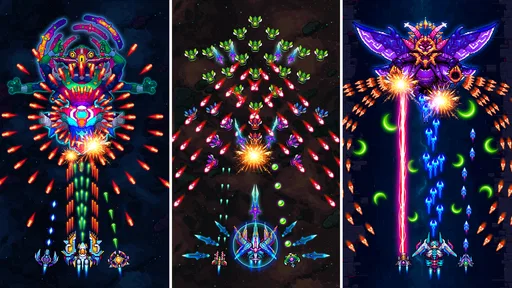
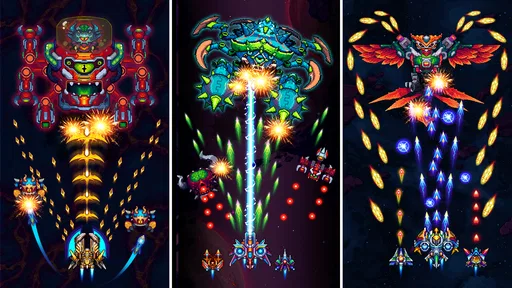
Galaxiga belongs to the arcade-shooter tradition: the central task is to steer a ship through encounters with hostile craft and keep attacking. That clear premise is helpful for newcomers. You do not need to decode a large fictional world before playing, and the familiar space-shooter imagery makes the basic goal easy to grasp. In my view, this is one of its strongest points for casual players: the game communicates its identity quickly.
That simplicity should not be confused with a calm or uncluttered experience. Arcade battles depend on noticing movement and responding promptly, so the screen can demand more visual attention than a casual puzzle or turn-based game. If you play on a small phone, hold it at a comfortable distance and check that the action is easy for you to follow before settling into a longer session. A quick first run is a useful way to judge whether the visual pace feels exciting or tiring.
The game has a broad audience in practice: its average rating is 4.7 from around 454,000 ratings, and it has passed 100 million installs. Those figures suggest that the straightforward arcade format has found many players, but popularity is not a substitute for personal fit. I would use a short trial to decide whether the busy, reactive style suits your eyes and hands rather than assuming that a familiar genre will work equally well for everyone.
Navigation matters in an arcade game because time spent searching through menus can interrupt the mood. Galaxiga’s central idea is easy to understand, but I would still take a moment before a serious session to explore the screens and identify where play begins and where any optional purchases are presented. This small habit is especially useful if you are handing the phone to a younger player or someone who has not used mobile games much: let them get comfortable with the controls and choices before the action gets hectic.
The game is rated Everyone 10+, a useful signal for families deciding whether to look at it together, rather than a promise that every player will enjoy its intensity. I would not treat an age label as a substitute for checking how a particular child responds to animated combat, quick movement, or repeated attempts. A parent can watch a short session first, then decide whether the pace and theme are suitable for that player.
Space shooters put a particular demand on the hands: the player has to guide movement while keeping track of threats and timing. That can feel satisfying when the response becomes familiar, but it may be frustrating for someone who finds repeated touch gestures uncomfortable or has limited fine-motor control. I would suggest trying the opening play with the phone supported on a stable surface and the device held in the posture that feels most natural. If the necessary movement still feels awkward, this is probably not the right arcade game for that player.
There is a useful trade-off here. A responsive, active shooter rewards quick corrections, while a slower game gives more room to pause and plan. Galaxiga’s retro arcade identity points toward the former kind of attention. If you prefer to make a move and then take time to consider the next one, a turn-based game or a slower puzzle is likely to be a more comfortable alternative. Choosing that instead is not missing out; it is matching the play style to your needs.
Sensory comfort is personal, and the pace of a space battle can be energizing for one person and overwhelming for another. I would try the game in a quiet moment first, rather than opening it for the first time in a crowded place or when already tired. Notice whether the movement and visual activity remain easy to follow after a few minutes. If you start losing track of what is happening, take a break instead of pushing through; arcade games are most enjoyable when the pressure feels playful, not exhausting.
For a practical everyday test, imagine waiting for a friend at a café. Galaxiga can suit that gap if you have a few uninterrupted minutes and can give the screen your attention. It is less suitable while walking, watching a child, or listening closely to someone beside you, because reacting to arcade action competes with those tasks. I would save it for a seated pause rather than treating it as something to play safely in every setting.
The best use case is a short, focused break: a commute after you are seated, a quiet wait, or a few minutes at home when you want an active game rather than scrolling. The arcade format makes it easy to understand why you are playing, without requiring the sort of long story recap that some adventure games need. Still, a quick-to-start game can become absorbing. I recommend deciding in advance when you want to stop, especially if you are using it during a break that has a clear end.
Galaxiga is free to download, but it includes optional in-app purchases ranging from $0.49 to $339.99 per item. That wide range makes it sensible to check purchase prompts carefully, particularly if a child uses the device or if you prefer to avoid spending inside games. I would not treat the free entry point as a reason to assume that every item is free. If you share a phone or tablet, agree on purchase rules beforehand and use the device’s purchase safeguards where appropriate.
Compared with many mobile arcade alternatives, Galaxiga’s draw is its direct connection to classic space-shooter play: immediate action, a clear enemy-and-ship setup, and a retro mood. It is a better fit than a deep strategy game when you want fast reactions rather than long-term planning. It is a worse fit than a low-pressure casual game when you need something that can be paused mentally at any moment, or than a more contemplative shooter if you want tactical choices to matter more than reflexes.
That comparison is also useful for deciding whether to install it. If you enjoy repeating an arcade challenge and gradually getting more comfortable with the action, the format has an obvious appeal. If you mainly want exploration, a character-driven story, or a social game to play with conversation happening around you, Galaxiga is unlikely to be your best choice. Its strengths depend on giving the screen focused attention, so the right alternative depends on what you want a game to do for you.
The main limitation I would consider is the genre itself. Fast visual action and ongoing hand input can exclude players who need generous pauses, simplified movement, or a low-stimulation screen. I cannot assume that the game provides a particular accessibility option, so I would not recommend it on the expectation that a setting will solve those barriers. Instead, try a brief session and judge directly whether the pace, visibility, and physical interaction feel manageable.
Context can create barriers even for someone who enjoys the game. Bright surroundings may make a phone screen harder to read, while a noisy environment or frequent interruptions can make it difficult to stay oriented. A seated, well-lit spot is a better first test than a rushed session outdoors. If the screen is hard to follow, increasing general device text size may not help with action that is primarily visual; choosing a less visually demanding game may be the more practical answer.
There is also a difference between being easy to start and being easy for every ability. The simple premise lowers the learning burden, but it does not remove the demands of tracking motion and coordinating input. For someone with limited stamina, I would keep play sessions short and stop when concentration dips. For someone who wants a game that can be enjoyed while multitasking, I would choose something less reactive. Those are genuine fit questions, not faults that every player will experience in the same way.
The game’s release date is July 15, 2019, and it supports Android 7.0 or later. That makes the platform requirement straightforward for people checking an older compatible Android device, though compatibility alone does not tell you whether the screen or controls will feel comfortable. Before recommending it to a friend or family member, I would check their device’s software version and, more importantly, let them try the play style themselves.
I would recommend Galaxiga to fans of classic arcade shooters, players who like a clear action loop, and anyone looking for a compact burst of focused play. It is also a reasonable choice for a newcomer curious about the genre, because the space-battle premise is easy to understand. The developer, 1SOFT, has made a game with a recognizable arcade identity rather than an experience that depends on a complicated setup or a long explanation.
I would advise skipping it if you are sensitive to rapid visual activity, want a game that can be played almost entirely without hand movement, or need a title that never competes with your surroundings. Someone with limited dexterity may prefer a slower game with fewer continuous corrections. A player seeking elaborate narrative or careful strategic planning should look elsewhere too. The point is not that those preferences are unusual; they simply call for a different kind of mobile game.
My practical recommendation is to approach it as an arcade test, not a commitment: install it if the classic space-shooter idea sounds appealing, play in a comfortable setting, and pay attention to how your hands and eyes feel. Keep optional purchases in mind, and decide whether the action is enjoyable before spending anything. That gives you a fair sense of the game without confusing a high overall rating with a guarantee of personal comfort.
Overall, Galaxiga: Galaxy Arcade Game is most successful when you want uncomplicated space-shooter action and can give it your attention. Its familiar premise, free starting point, and wide audience make it easy to consider, while its reactive pace and touch demands make it a more selective recommendation than the simple concept might suggest. I would happily point an arcade fan toward it, but for someone who needs slower, quieter, or more adaptable play, I would choose a different kind of game. The inclusive verdict is therefore a qualified one: accessible to approach, not automatically comfortable for every ability or situation.
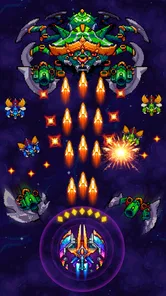
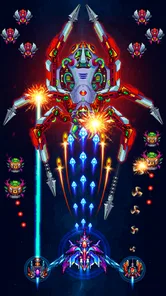
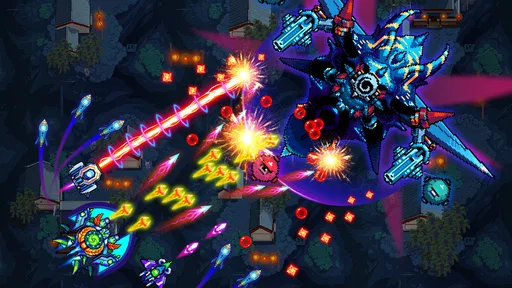
Galaxiga is an arcade-style space shooter in which you control a spacecraft and fight waves of enemy ships. Its familiar shoot-’em-up format focuses on dodging incoming attacks, firing continuously, collecting upgrades, and taking on more challenging opponents as you progress. It is suited to players who enjoy quick action and classic arcade-inspired gameplay rather than a story-heavy or simulation-focused experience.
Galaxiga is primarily a single-player arcade game, and many of its core stages can generally be played without a constant internet connection. However, some features—such as online events, rankings, rewards, or other connected services—may require internet access, and availability can depend on the current version. Check the game’s listing and in-game prompts, and expect to connect when using online features or downloading updates.
The game is commonly offered as a free download, but that does not necessarily mean every item or feature is free. Galaxiga may include advertisements and optional in-app purchases, such as resources or upgrades, depending on the version and platform. You can usually make progress through play, though purchases may offer extra convenience. Review the store listing and your device’s purchase settings before downloading, especially if children use the device.
As you clear stages and defeat enemies, you can earn resources and improve your ship’s capabilities, while certain pickups may temporarily strengthen your attacks during a run. Stronger equipment can make later encounters more manageable, but success still depends on positioning, timing, and avoiding enemy fire. The pace of progression and the upgrades available may vary with game updates, so check the current version for its latest systems.
Check that your device meets the operating-system and storage requirements shown on its official Google Play or App Store page, since requirements can change with updates. Also consider the game’s online features, advertisements, optional purchases, and any permissions requested during installation. Download it from an official store where possible, and make sure you have a stable connection for the initial download and updates, even if some gameplay is available offline.
On Android, Galaxiga: Galaxy Arcade Game asks for these permissions.
4.7 out of 5
453,584 reviews
Arcade · 1SOFT

Arcade4.6 out of 5

Arcade4.5 out of 5

Arcade4.2 out of 5

Arcade4.4 out of 5

Arcade4.7 out of 5

Arcade4.3 out of 5

Arcade4.6 out of 5

Arcade4.8 out of 5

Adventure4.3 out of 5
Arcade4.5 out of 5
Arcade4.4 out of 5
Arcade4.6 out of 5

Arcade4.2 out of 5

Arcade4.5 out of 5

Arcade4.7 out of 5

Arcade4.5 out of 5

Arcade4.4 out of 5

Arcade4.4 out of 5

Arcade4.2 out of 5
Arcade4.8 out of 5

Arcade4.6 out of 5



Gamesive reviews games on its own and is not paid by developers for scores. We do not host game files: the download buttons open the official Google Play and App Store pages. Names, icons and screenshots belong to their owners.