
Block Craft 3D:Building Game
Arcade4.5 out of 5
For Android & iOS · Madbox








 Analysis by Gamesive
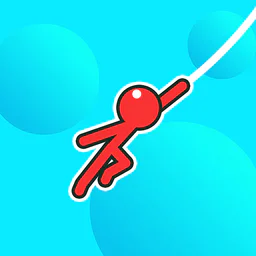
The first thing I notice about Stickman Hook is how much of its appeal rests on a simple promise: aim a swinging stick figure through a course and try to keep the movement flowing. It is an arcade game from Madbox, and its quick, readable premise makes it easy to understand before I have to commit much time. The feel is deliberately light, but getting a clean run still takes attention. A mistimed release can turn a smooth arc into a stumble, which gives each short attempt a small, satisfying problem to solve.
The stick figure is more than a minimalist character choice; it keeps the action easy to read. When the character is swinging, launching forward, or approaching a landing, the central movement remains the focus rather than competing with elaborate scenery. That clarity matters in a game where my attention needs to stay on the changing arc and the moment to let go. The look gives the action a playful tone without asking me to study a busy screen.
The setting feels designed around motion rather than a detailed fictional world. I read the courses as a sequence of physical challenges, not as places with a story I need to follow. That makes the game convenient for brief visits: I can return after a break and get back to the core task without remembering plot, equipment, or a complicated objective. If you want a strong narrative or a richly layered environment, this spare approach may feel thin. If you mainly want a clear arcade challenge, it is a useful fit.
There is also a practical advantage to the uncomplicated presentation: it helps me notice the shape of a run. I can concentrate on where the swing is taking me and whether my timing is carrying momentum in a useful direction. A helpful habit is to watch the movement as a whole rather than reacting only to the character’s position at one instant. That shift makes attempts feel less like random taps and more like small timing decisions.
Minimal art can sometimes make a game feel anonymous, but here the stickman’s exaggerated motion gives the courses their personality. The character’s movement supplies much of the comedy and energy: success looks fluid, while a poor release makes the run visibly lose its rhythm. I like that the mood comes from what I am doing instead of from a long setup. The game can feel breezy even when I am repeating a section to improve my timing.
That tone is a good match for casual play, though it also means the atmosphere is not the main reason to stay. I would not choose it for exploration or visual storytelling. Its appeal is the contrast between a very simple figure and the satisfying spectacle of getting a swing to carry through a course. When the timing works, the plain presentation makes the movement easier to appreciate.
The game’s overall mood is brisk and playful, and its sound belongs to that compact arcade presentation rather than trying to create a dramatic world around each run. I find the pacing more important than any individual flourish: the action invites another attempt quickly, so there is little downtime between trying a different release and seeing whether it works better. That quick loop is a strength when I have a short break, but it can also make a session blur together if I keep replaying without a goal.
To avoid that blur, I recommend giving each attempt a small purpose. I might focus on releasing later through a particular swing, or on keeping the character’s path controlled rather than chasing a perfect-looking run. This turns repetition into practice and makes the game’s rhythm feel more intentional. If you prefer games where music, dialogue, or a changing setting leads the experience, this is a more mechanics-first choice.
The brisk cadence suits the simple control idea: observe the movement, make a timing choice, and learn from the result. It is easy to pick up while waiting or unwinding, but the same immediacy can encourage “one more try” longer than planned. I find it best in short bursts, especially when I am not expecting a deep story or a substantial session structure.
At its heart, Stickman Hook is about managing swings and releases. The basic interaction is approachable, but consistent movement asks me to judge when to let go instead of treating every moment as interchangeable. A release that feels too early may send the character on an awkward path; waiting can preserve a more useful arc, though it takes practice to develop that sense. The satisfaction comes from learning the timing through play, not from mastering a complicated control scheme.
One useful approach is to resist tapping simply because the character is moving quickly. Speed alone does not tell me whether the next release will be helpful. I get more reliable results by watching the direction and shape of the swing, then making a deliberate choice. This is a small but meaningful distinction: the game looks like a reflex test at first, yet it rewards reading movement as well as reacting to it.
The other trade-off is repetition. Short runs make it easy to retry after a mistake, which lowers the cost of experimenting. They can also make failure feel frequent if I expect immediate consistency. I would treat a missed swing as information about timing rather than proof that the controls are unfair. That mindset is especially useful for players who enjoy improving through small adjustments, and less appealing to anyone who wants a predictable, low-friction result every time.
Compared with arcade games built around constant dodging or rapid-fire reactions, this one puts more emphasis on swinging momentum and choosing a release. It is still easy to understand quickly, but its central pleasure is less about scanning a crowded screen and more about finding a clean trajectory. That gives it a distinct place among casual arcade options: it can be more focused than a busy action game, yet it does not offer the breadth of a large platform adventure.
For everyday use, I can see it working well in a short wait between errands or during a quiet break when I want something tactile without starting a long campaign. It is also a reasonable choice for someone curious about timing-based arcade play who does not want to learn a complex ruleset first. A player seeking strategic variety, extended exploration, or a narrative to follow would likely be better served by a different kind of game.
The game is free to download, with in-app purchases ranging from $0.99 to $20.99 per item. I would begin with the free experience and decide whether the core swinging loop holds my attention before spending anything. Since the appeal depends so strongly on whether I enjoy repeating runs and refining timing, paying is not necessary to understand what kind of game it is. Purchases are worth considering only if I personally find the game’s style of play compelling.
I would recommend it to players who like a clear objective, quick retries, and the feeling of improving a movement skill by trial and error. It is also a sensible pick for casual arcade fans who prefer a screen that keeps attention on the character and the course. The age rating is Everyone, which reflects its broadly accessible presentation. Its popularity is substantial: it has passed 100 million installs, with an average rating of 4.2 from around 558,000 ratings and roughly 54,000 written reviews.
Those figures suggest that the simple premise has reached a wide audience, but they do not mean the rhythm will suit everyone. If repeated attempts frustrate you, or if you want each session to introduce new story or strategic systems, the core loop may feel too narrow. I would also skip it when I want a calm game that asks almost nothing of my timing; even a light arcade title can become demanding when I am trying to make every swing land cleanly.
On Android, the current version is 9.9.61 and requires Android 8.0 or later. The game was released on November 2, 2018, and that long-running presence helps explain why it feels like a focused, established arcade concept rather than an experimental one. Madbox keeps the identity centered on the swinging stickman, so I would approach it for that specific action rather than expecting a broader collection of modes or a changing fictional setting.
What stays with me is the coherence between the art, the sound, and the pacing: the uncluttered stickman presentation keeps the action legible, while quick attempts make the timing loop easy to revisit. The setting does not need to tell a large story because movement itself provides the personality. That is also the central limitation. Once I understand the basic pleasure of swinging and releasing, the experience depends on how much I enjoy refining that skill.
My practical advice is to play attentively in short sessions and give each run a small timing goal. That makes the repetition feel purposeful and helps reveal whether the movement is satisfying to you. If you want a lightweight arcade game with a clear visual focus and a skill curve built around timing, Stickman Hook is an easy one to try. If you need deeper progression, a substantial world, or more varied mechanics to hold your interest, I would choose another game instead.
Stickman Hook is a physics-based arcade game built around swinging a stickman through obstacle-filled levels. You tap and hold to attach to a hook, then release to let momentum carry your character forward. Timing matters: release too early or late and you may miss a platform, hit an obstacle, or lose speed. The controls are simple, but mastering the swing takes practice.
Stickman Hook is generally offered as a free download, so you can try its core swinging gameplay without paying upfront. The experience may include advertisements, and some versions or storefront listings may offer optional purchases or ad-related options. Availability and payment details can vary by device, region, and current store listing, so check the Google Play Store or Apple App Store page before installing.
The main level-based gameplay in Stickman Hook may be playable without a continuous internet connection, which can make it suitable for short sessions while travelling. However, features such as advertisements, online events, rankings, or store content may require connectivity, and availability can differ between versions. If offline play is important to you, launch the game once while connected and test it before relying on it without internet.
Stickman Hook has straightforward controls and cartoon-style stick-figure action, with no complicated story required to enjoy it. Its quick levels can appeal to younger players, though difficulty may rise as obstacles become trickier and precise timing becomes more important. Parents should also review the current store listing and in-game settings for advertising, optional purchases, and age guidance, since these details can vary by platform and region.
Before downloading, confirm that the app is listed by a trusted publisher in the official Google Play Store or Apple App Store, and check its current compatibility requirements, permissions, age rating, and recent reviews. Also consider whether you are comfortable with possible ads or optional purchases. The game focuses on timing and momentum rather than a complex campaign, so it is best suited to players who enjoy brief, replayable arcade challenges.
On Android, Stickman Hook asks for these permissions.
4.2 out of 5
558,370 reviews
Arcade · Madbox

Arcade4.6 out of 5

Arcade4.5 out of 5

Arcade4.2 out of 5

Arcade4.4 out of 5

Arcade4.7 out of 5

Arcade4.3 out of 5
Arcade4.5 out of 5
Arcade4.4 out of 5

Arcade4.6 out of 5

Arcade4.5 out of 5

Arcade4.7 out of 5

Arcade4.5 out of 5

Arcade4.4 out of 5

Arcade4.4 out of 5

Arcade4.2 out of 5

Arcade4.7 out of 5

Arcade4.8 out of 5

Arcade4.6 out of 5



Gamesive reviews games on its own and is not paid by developers for scores. We do not host game files: the download buttons open the official Google Play and App Store pages. Names, icons and screenshots belong to their owners.