
Block Craft 3D:Building Game
Arcade4.5 out of 5

For Android & iOS · SayGames Ltd
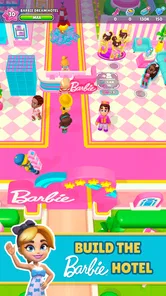
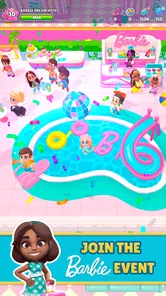
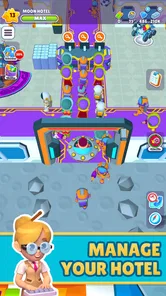
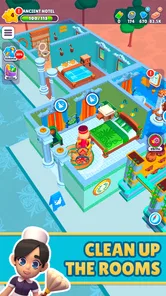
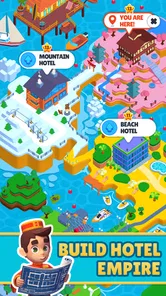
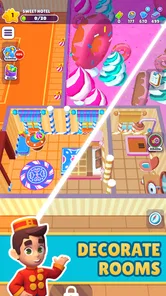
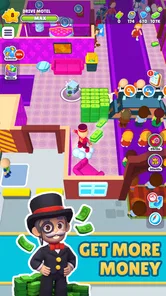
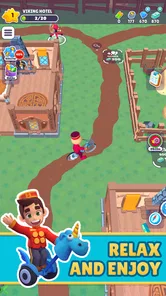
 Analysis by Gamesive
The first thing that stands out in My Perfect Hotel is how quickly it turns a simple hotel job into a stream of small decisions. I move through the property, attend to guests and tasks, and watch the place change as I work. It is an arcade game from SayGames Ltd, but its appeal is less about reflex tests than about keeping a busy little business moving. I find that makes it easy to start during a short break, while the steady chain of improvements gives me a reason to keep going.
The basic fantasy is immediately clear: I am responsible for making a hotel function, not just decorating a static room. Guests need attention, facilities need upkeep, and the operation feels more rewarding when I stay active rather than stand still. The early appeal comes from seeing a small property become more capable through a succession of practical jobs.
That hands-on approach is the game’s strongest hook. Instead of asking me to plan a complicated business strategy before anything happens, it puts action first. I can understand what needs doing by looking at the hotel and responding to the next visible need. For casual play, that clarity matters: I do not need a long tutorial session or a quiet hour to get oriented.
The moment-to-moment work also gives the hotel a sense of movement. A guest arriving is not merely a number on a dashboard; it is a prompt to act. Completing tasks creates a visible rhythm of activity, and I can feel the difference between a property that is being looked after and one where I have let things pile up. That physical, task-led quality is what separates this game from a more menu-heavy management simulator.
There is a trade-off, though. Anyone hoping to design a hotel from scratch, study detailed finances, or make deep strategic choices may find the emphasis too immediate and hands-on. The game is built around doing the work and enjoying the response, not around giving me a complex management toolkit. I would choose it for quick, active progress, not as a substitute for a detailed tycoon game.
The satisfying part is the short distance between an action and its result. I take care of a need, the hotel benefits, and the next task becomes apparent. That tight feedback loop makes even ordinary chores feel purposeful. Rather than waiting through long stretches for a result, I am usually doing something that contributes to the property’s momentum.
This is also why the game works well in brief visits. I can open it, make progress, and leave without needing to remember a complicated plan. In a realistic everyday scenario, I might have a few minutes while waiting for a ride or taking a break between errands. The hotel gives me a clear place to resume: look at what needs attention, handle the immediate work, and enjoy the improvement.
My practical tip is to treat each visit as a focused pass through the hotel. Deal with the tasks that are visibly slowing things down before wandering toward less urgent activity. That makes the session feel more coherent and helps me notice how one completed job feeds into the next. It is a small approach, but it turns the game from aimless movement into a satisfying checklist without making it feel like a chore list.
The pace can also become repetitive. The same general pattern of responding, completing work, and moving on is part of the appeal, but it is also the main limitation. If I want varied puzzles, precise timing challenges, or a story that changes the stakes from one session to another, this loop may feel too familiar. The game is at its best when I enjoy repetition as a calming routine rather than expect each visit to reinvent itself.
Progress feels tangible because it is tied to the hotel I am helping run. Improvements make the property feel more established, and that visual sense of development gives routine tasks a purpose beyond simply clearing them. I like that the reward is connected to the setting: I am not just collecting an abstract score, I am helping a hospitality business become more capable.
That structure suits players who enjoy incremental progress. A small amount of effort can make the next stretch of play feel more productive, and the promise of a better-running hotel gives me a reason to return. At the same time, the reward is mainly about continued development within the game’s own loop. If I need a strong narrative payoff or a competitive goal to stay invested, I may not find the same pull here.
The game is free to download, with in-app purchases ranging from $0.99 to $99.99 per item. I would approach those purchases as optional conveniences rather than as a requirement for understanding the core appeal. A useful rule is to play long enough to decide whether the routine itself is enjoyable before spending anything. If the basic cycle of hotel work and visible improvement is already satisfying, there is a reason to continue; if it feels repetitive, paying is unlikely to change that underlying fit.
My Perfect Hotel has an average rating of 4.5 from around 1.9 million ratings, with about 18,000 reviews and over 100 million installs. Those figures suggest it has reached a large audience, but they do not tell me whether it matches a particular player’s taste. The more useful question is whether you like short, clear tasks and a steady stream of small rewards. For that kind of player, the hotel setting gives the routine a pleasant sense of purpose.
The reset between visits is less about starting over and more about returning to an ongoing job. I come back because there is still a hotel to keep moving forward, and a fresh session lets me pick up the next round of practical work. That makes the game easy to fit around a day rather than demanding a dedicated block of attention.
One non-obvious strength is that this loop can suit different moods. If I want something active, I can move through tasks with intent; if I want a low-pressure distraction, I can simply focus on the next visible need. The same design can feel brisk or relaxing depending on how deliberately I play. That flexibility is useful for casual sessions, though it does not turn the game into a deep strategic experience.
There is another trade-off in that convenience: the game may encourage me to keep going because each task naturally points toward another. I try to set my own stopping point rather than assume the next job will provide a dramatically different experience. A good moment to pause is after finishing a clear chunk of work or reaching a point where the hotel feels noticeably improved. That way, I leave with a sense of completion instead of tapping onward simply because the next task is there.
Compared with typical arcade games built around a single reflex challenge, this one is more about maintaining a flow of small responsibilities. Compared with conventional hotel-management games, it feels less concerned with spreadsheets and long-term planning and more interested in making the player an active worker on the floor. That middle ground is its identity: approachable management flavor with the immediacy of an arcade game.
I would recommend My Perfect Hotel to players who like visible progress, simple tasks, and games that are easy to pick up between other activities. It is especially appealing if the idea of improving a hotel through direct, repeated work sounds more satisfying than choosing options from menus. The Everyone age rating also makes it broadly accessible, while its free entry point lets curious players try the core experience before deciding whether it suits them.
I would skip it if I were looking for complex business simulations, extensive customization, demanding skill tests, or a story-driven campaign. I would also be cautious if repetitive tasks quickly wear on me: repetition is not an occasional detour here, but the foundation of the play. A deeper tycoon game is a better fit for careful planners, while a focused puzzle or action game is likely to offer more variety for someone who wants each round to feel different.
The game was released on April 13, 2022, and its current version is 1.39.4; it requires Android 8.0 or later. Those details make it straightforward to check basic device compatibility before installing. It remains a simple proposition: take action, see the hotel respond, enjoy the reward of progress, and return when another short burst of activity sounds appealing.
For me, the strongest reason to keep playing is the neat connection between action and feedback. A task gives me something concrete to do, the hotel’s progress makes that effort feel worthwhile, and the next visit begins with an easy-to-understand purpose. The loop is not especially deep, and its repeated chores will not suit everyone, but it is clear about what it offers.
If you want an approachable arcade game with a hotel-management theme and satisfying incremental progress, I think it is worth trying. If you want intricate strategy or constant novelty, you will probably be happier elsewhere. I would describe My Perfect Hotel as a dependable short-session game: rewarding when I want a small job to finish, and easy to put down when the routine has done its job.
My Perfect Hotel is a casual hotel-management game where you build and upgrade a hospitality business. You guide a character around the hotel to welcome guests, clean rooms, collect payments, and keep services running. As your earnings grow, you can add facilities, improve rooms, and hire staff to handle some routine tasks. The main appeal is steady progress through short, straightforward management sessions.
My Perfect Hotel is generally available as a free download, with optional in-app purchases. The game may also display advertisements, and some versions or offers can let you watch ads for rewards or faster progress. You can usually play without paying, but upgrades and expansion may take time as you earn currency. Check the store listing on your device for current purchase details and regional availability.
Basic gameplay may be available offline in some situations, but features such as advertisements, cloud saving, purchases, or other online services can require a connection. Offline behavior can vary by game version and device, so it is best not to assume that every feature will work without internet access. If you plan to play while traveling, test the game beforehand and confirm that your progress is saved.
The game uses simple controls and approachable hotel-management tasks, which can make it accessible to a broad audience. However, suitability depends on the current app version, including its advertising, in-app purchases, and data practices. Parents should review the age rating and privacy information on the relevant app store, and consider device-level purchase controls if children will play. Ads and optional spending may be worth discussing before downloading.
My Perfect Hotel is built around repetitive tasks and gradual upgrades, so it may suit players who enjoy casual progression more than deep simulation. Expect to manage several hotel duties and expand the business over time; ads or optional purchases may also appear, depending on the version. Check your device’s storage requirements, compatibility, age rating, and the developer’s privacy disclosures on the official app-store page before installing.
On Android, My Perfect Hotel asks for these permissions.
My Perfect Hotel is also available in 2 other languages on our site.
4.5 out of 5
1,872,913 reviews
Arcade · SayGames Ltd

Arcade4.6 out of 5

Arcade4.5 out of 5

Arcade4.2 out of 5

Arcade4.4 out of 5

Arcade4.7 out of 5

Arcade4.3 out of 5

Arcade4.2 out of 5

Simulation4.5 out of 5

Racing4.6 out of 5

Action4.5 out of 5
Arcade4.5 out of 5

Arcade4.4 out of 5

Arcade4.6 out of 5

Arcade4.2 out of 5

Arcade4.5 out of 5

Arcade4.7 out of 5

Arcade4.5 out of 5

Arcade4.4 out of 5

Arcade4.4 out of 5

Arcade4.2 out of 5

Arcade4.7 out of 5

Arcade4.8 out of 5



Gamesive reviews games on its own and is not paid by developers for scores. We do not host game files: the download buttons open the official Google Play and App Store pages. Names, icons and screenshots belong to their owners.