Block Craft 3D:Building Game
Arcade4.5 out of 5

For Android & iOS · RobTop Games
 Analysis by Gamesive
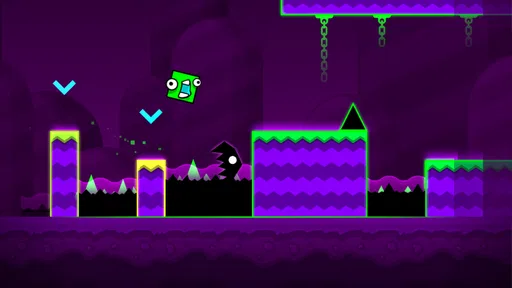
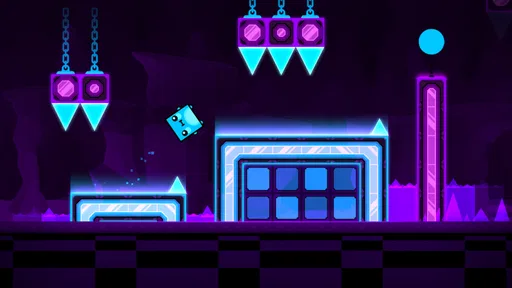
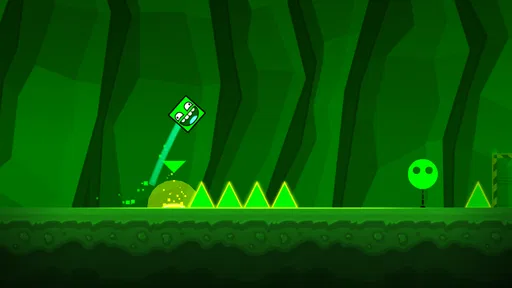
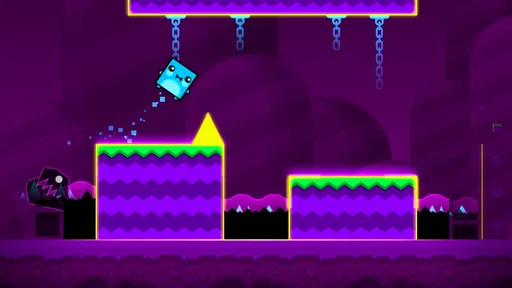
I find Geometry Dash World most appealing when I want a game that turns a spare minute into a focused little test of timing. It is an arcade platformer built around rhythm: my job is to guide a geometric character through hazards, jumping or flying at the right moment while the music gives the action its pulse. The idea is easy to grasp, but getting through a section cleanly takes attention and practice. That contrast is the game’s main hook—and the reason a quick session can easily become several attempts.
Made by RobTop Games, this free game has a 4.5 average from around 1.3 million ratings, with more than 100 million installs. Those figures suggest broad appeal, but the more useful question is whether its particular kind of challenge suits you. I’d recommend it to players who enjoy precise inputs, repetition, and the satisfaction of learning a level. If you want a gentle platformer where mistakes barely matter, its unforgiving rhythm may feel more like pressure than fun.
The early appeal is wonderfully direct: watch the hazards, listen to the beat, and try to make it farther. There is no need to absorb a long explanation before playing. In practice, the first goal is simply to understand how the game’s movement lines up with the patterns in front of you. That gives a new player a clear task from the start, even before they know what kind of run they can manage.
The movement is deliberately simple, but that does not make the timing trivial. A jump that looks obvious while standing still can be surprisingly easy to mistime once the level is moving and the next obstacle is approaching. I found it useful to treat an early attempt as reconnaissance rather than a serious performance: notice where the rhythm changes, which visual shapes signal danger, and where I tend to react too late. That small shift in attitude makes failure feel informative instead of pointless.
The music matters as more than background. It helps me anticipate the rhythm of an obstacle sequence, but I would not rely on sound alone. The screen still carries important visual cues, and a player who is distracted or listening at low volume may need to pay closer attention to what is ahead. When I was uncertain about a passage, watching the geometry and hearing the beat together worked better than trying to react to either one in isolation.
One practical habit is to make a deliberate pause after a failed run, even if only long enough to recall the point where timing went wrong. Repeating the same input immediately can become a reflexive cycle that teaches very little. If I instead identify one specific mistake—jumping early, responding late, or losing the rhythm during a transition—the next attempt has a purpose. This is a small but useful way to keep a demanding arcade game from feeling random.
Geometry Dash World’s strongest progress signal is the player’s own growing familiarity with a level. A section that once seemed too fast can become readable after several attempts; a jump that used to surprise me starts to feel expected. That shift is satisfying because it comes from learning the pattern, not from simply waiting for a character to become stronger. The game asks for sharper execution rather than a more powerful avatar.
This style of advancement suits players who like visible improvement in their own skill. It is less attractive if you expect every session to unlock a clear reward or move a character through a long narrative. I would not approach it as a conventional role-playing progression system. The central payoff is being able to handle more of the challenge consistently, and that can be compelling—but it is a personal measure rather than a big external milestone after every attempt.
For a practical example, imagine opening the game while waiting for a friend at a café. A short session can have a sensible goal: get past the first troublesome sequence, or work out why one jump keeps failing. If the wait ends before I complete a level, the practice still has value because I have learned something specific. By contrast, someone who needs a session to end with a neat completion screen may find these stop-and-start attempts unsatisfying.
The game is rated for Everyone 10+, which gives families a useful indication of its intended age range. In my view, the more important consideration for younger players is temperament: the challenge can demand patience, and repeated failure can be frustrating. It may be a good fit for a child who enjoys practicing a difficult task, while a player who becomes upset by frequent retries may be happier with a more forgiving platformer.
The challenge comes from timing and consistency, not from juggling a large set of controls. That makes the game accessible to understand but demanding to master. The difference matters: a newcomer can begin without learning a complicated move list, yet still struggle to complete a sequence because a tiny delay can carry the character into danger. The simplicity keeps the focus on execution, which is both the game’s clearest strength and its sharpest limitation.
I think the best way to judge the difficulty is by whether each attempt gives you something to work with. When a mistake shows me where my timing went wrong, I am willing to try again. When I am tired or rushing, however, the same short section can become a string of errors that all feel alike. The game rewards concentration, so playing while half-distracted is a poor match for its design. It is more enjoyable when I can give the level my full attention for a few minutes.
Compared with a typical arcade game built around quick reactions and a changing stream of obstacles, this one feels more pattern-driven. The beat and level layout encourage learning a sequence, not merely improvising as things appear. That can make retries feel fair once I understand what I am supposed to do. It also means that players who prefer variety from moment to moment may prefer an arcade alternative where each run changes more and memorizing a route matters less.
A useful trade-off is that straightforward controls make repeated practice easy to understand, but they leave little room to recover from a bad input. I cannot compensate for a mistimed jump with a complex defensive move; the main answer is to improve the timing. If I am stuck, taking a brief break can be more productive than immediately launching another attempt. Returning with a clearer head often helps me notice a visual cue I was overlooking.
Repeated attempts are central to the experience, and the game is at its best when I see them as short lessons. The rhythm encourages a loop of observe, attempt, adjust, and try again. That loop creates a satisfying feeling of control once I can predict a difficult passage. It is also easy to lose track of time when a near-success makes one more run seem irresistible, so I find it helpful to decide in advance whether I am playing for a few minutes or settling in for longer practice.
This is not the ideal choice for someone looking for a relaxed activity to play while watching a show or answering messages. The action requires attention, and interruptions can make it harder to maintain a sense of rhythm. It is also a weak fit if failure itself spoils the mood. I would choose a casual puzzle or a softer platformer instead when I want low-stakes progress, a slower pace, or room to make mistakes without restarting my focus.
There is a useful distinction between persistence and stubbornness here. If I can name the obstacle that ended the last run, I have a reason to continue. If I am no longer paying attention and am repeating the same mistake, continuing is unlikely to be satisfying. A short break is not giving up; it is often the better way to return to a timing-based challenge with patience intact. This is especially helpful when a level’s music has become so familiar that I stop actively listening to its cues.
The pacing is strongest for players who enjoy concentrated bursts. A quick attempt can fit into a break, but the game does not automatically make every short session feel complete. Some sessions will end with a personal breakthrough; others will end with the same difficult passage still ahead. I appreciate that honesty, but it is worth knowing before installing: the reward is often improvement rather than a guaranteed, tidy finish on demand.
Geometry Dash World runs on Android 7.0 or later, and its current version is 2.2.148. It is free to play, so trying the basic experience does not require a purchase. The release date was December 22, 2016, which makes it a long-running entry rather than a brand-new arcade experiment. I would choose it for a phone or tablet when I want a compact game that depends on timing and practice, rather than a long story or a large set of systems to manage.
The title is also a sensible pick for players who enjoy music-led action but want the challenge to come from their own execution. A useful approach is to start with the aim of learning a route, not proving how good you are. Give your attention to the shape of the obstacles, notice how the rhythm supports your timing, and treat a failed attempt as feedback. If that process feels rewarding, the game has a strong chance of holding your interest.
I would steer away from it if you mainly want exploration, narrative choices, forgiving checkpoints, or a calm game to play with one hand while doing something else. It is a focused arcade experience, and its simplicity is not the same as softness. A more flexible platformer is better if you want multiple ways to solve a challenge; a more casual arcade game is preferable if you dislike repeating a section until the timing clicks.
My overall verdict is that Geometry Dash World earns its appeal through clear goals and skill-based progress. It makes the next useful step easy to understand—try again with better timing—while leaving the player responsible for deciding when practice is satisfying and when it has become frustrating. I recommend it to patient arcade fans who enjoy learning a demanding rhythm, especially in short, focused sessions. For everyone else, the same precise pacing may be the reason to choose a different game.
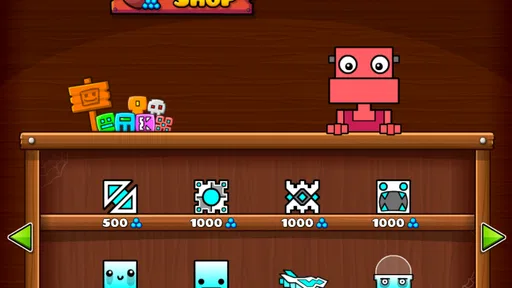
Geometry Dash World is a rhythm-based platform game in which you guide a small geometric character through obstacle-filled levels. Each stage combines music, precise jumps, and hazards such as spikes and moving platforms. The controls are simple, but the timing can be demanding, so expect to replay sections while learning their patterns. It is a standalone entry in the Geometry Dash series, rather than simply a collection of levels from the original game.
Geometry Dash World is generally offered as a free download on supported mobile platforms, though availability and store details can vary by region and over time. The game may include advertising or optional purchases, so check its current store listing for the latest information before installing. You can play its available stages without paying upfront, but free access does not necessarily mean every feature or item is available without restrictions.
Many core gameplay activities in Geometry Dash World can be enjoyed without an internet connection, which makes it suitable for short sessions while travelling. However, online features—such as accessing community content, sharing or browsing user-created levels, and certain account-related functions—may require connectivity. Availability can also depend on the current app version and device. If you plan to play offline, it is worth opening the game and checking which features are accessible before you lose your connection.
The game is easy to understand because its basic action is straightforward, but completing the levels can take practice. Obstacles are closely timed to the music, and a small mistake may send you back to the beginning of a section or stage. Beginners can learn by replaying levels and memorizing their patterns, but players who prefer a relaxed, forgiving experience may find the challenge frustrating. Its quick retries make it easier to keep trying.
Geometry Dash World includes access to online user-created levels, giving players more challenges beyond the built-in stages when the relevant services are available. Browsing and loading this community content generally requires an internet connection, and the selection may change as players publish new levels. Custom stages can vary widely in difficulty and quality, so newcomers may want to start with easier options. Check the game’s current version and store description for details about supported online features.
On Android, Geometry Dash World asks for these permissions.
Geometry Dash World is also available in 2 other languages on our site.
4.5 out of 5
1,301,986 reviews
Arcade · RobTop Games

Arcade4.6 out of 5

Arcade4.5 out of 5

Arcade4.2 out of 5

Arcade4.4 out of 5

Arcade4.7 out of 5

Arcade4.3 out of 5
Arcade4.4 out of 5
Arcade4.5 out of 5
Arcade4.5 out of 5
Arcade4.4 out of 5

Arcade4.6 out of 5

Arcade4.2 out of 5
Arcade4.5 out of 5

Arcade4.7 out of 5

Arcade4.4 out of 5

Arcade4.4 out of 5

Arcade4.2 out of 5

Arcade4.7 out of 5

Arcade4.8 out of 5
Arcade4.6 out of 5



Gamesive reviews games on its own and is not paid by developers for scores. We do not host game files: the download buttons open the official Google Play and App Store pages. Names, icons and screenshots belong to their owners.