Block Craft 3D:Building Game
Arcade4.5 out of 5
For Android & iOS · RobTop Games
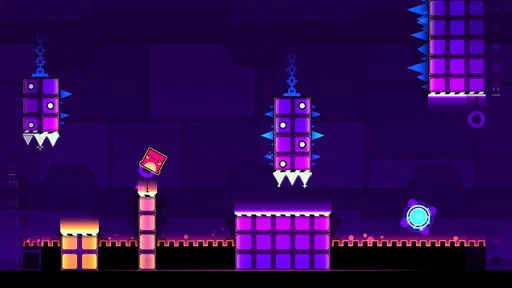
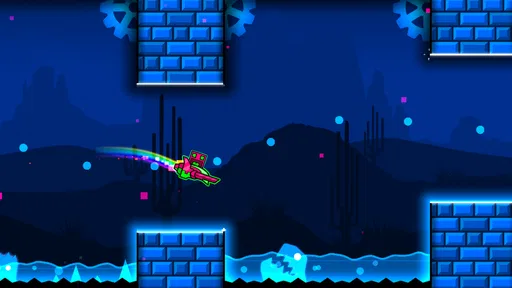
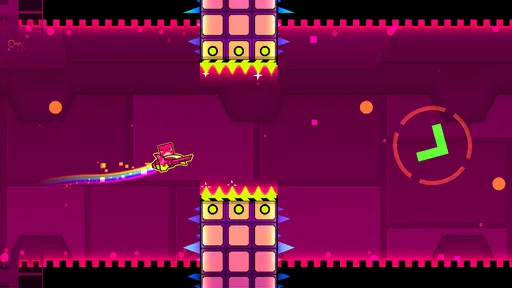
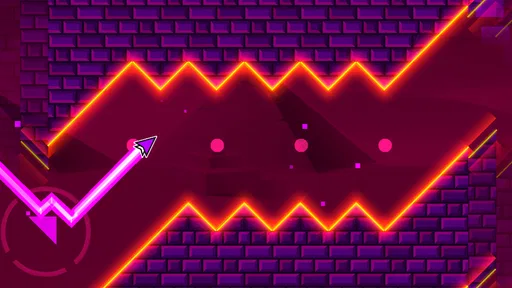
 Analysis by Gamesive
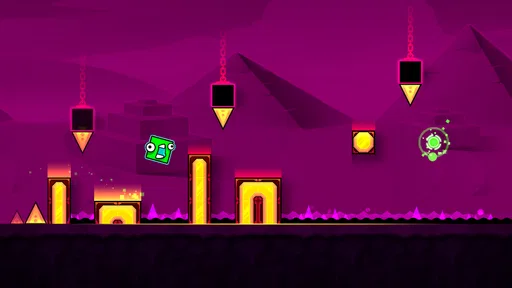
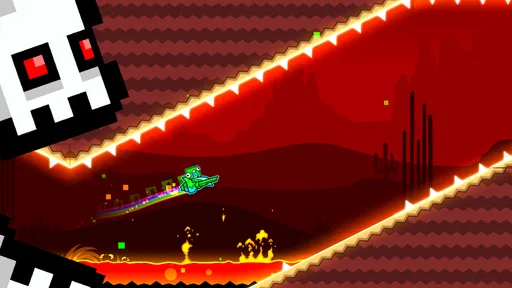
I like arcade games that turn a spare minute into a focused little challenge, and Geometry Dash SubZero is built around exactly that kind of attention. It is a rhythm-driven platform game from RobTop Games: you guide a geometric character through hazards, with movement that has to line up with the music and the level’s changing layout. The premise is easy to understand, but getting through a section cleanly takes practice. That gap between “I know what to do” and “I can do it on time” is the game’s main appeal—and its main source of frustration.
The controls are deliberately simple: tap to make your character jump or react to the course. The challenge comes from learning when to act, not from juggling a complicated control scheme. Obstacles arrive in patterns, and the music gives those patterns a strong sense of rhythm. I found it more useful to listen as well as watch; treating the soundtrack as a timing cue can make a sequence feel less like a blur of hazards.
This is an arcade game in the concentrated, restart-and-try-again sense rather than a sprawling adventure. A run asks for attention immediately, so it suits a short break better than a session you want to play while distracted. A brief interruption can break your rhythm, and a casual tap at the wrong moment can end a promising attempt. I would not call it relaxing, even though each attempt is short.
The game is free, and its age rating is Everyone. Those details make it approachable for a broad audience, but the difficulty still deserves a realistic expectation: simple controls do not mean easy progress. If you are choosing a game for someone who dislikes repeated failure, the friendly presentation may not outweigh the demanding timing.
My most useful adjustment was to stop treating every failure as proof that I needed quicker reflexes. Often I had reached a new obstacle without yet recognizing its pattern. Watching the approach, noticing where the music accents a change, and then making a deliberate attempt helped more than tapping frantically. When the same section appears again, that small bit of learned context can turn a surprise into a timing problem you can actually solve.
There is a practical way to play when you have only a few minutes: focus on understanding one difficult passage instead of expecting to clear the whole level every time. A failed run can still teach you where your timing slips. If you are getting annoyed, take a short pause rather than repeating attempts on autopilot. The game rewards attention, and tired or impatient play makes its tight timing feel harsher than it needs to.
That approach also explains why the game can be satisfying without constant unlocks or a long story. The immediate reward is personal: a section that once felt impossible becomes familiar, then manageable. I enjoy that kind of progress, but players who want steady narrative development or a large set of relaxed activities may find the narrow focus limiting.
I would recommend it to players who like music-led action, short attempts, and learning by repetition. It works well when you can give a level your full attention for a few minutes, such as during a quiet break or while waiting somewhere with your phone in hand. The compact play style makes it easy to pick up, but the concentration required means it is not ideal for every waiting-room moment or a noisy commute where you cannot focus on the timing.
It is a weaker fit if you want an arcade game that lets you improvise, explore freely, or make progress while half-watching something else. The course demands precise responses, so a mistake can send you back to try again rather than letting you muddle through. Players who are sensitive to repeated setbacks should know that the friction is part of the experience, not an occasional inconvenience.
Compared with more forgiving arcade games, this one puts more emphasis on memorizing patterns and repeating a sequence until your timing settles. A casual endless runner may be a better alternative if you prefer movement that feels less exact or a run where each attempt can unfold differently. If you like the satisfaction of mastering a fixed challenge, however, SubZero’s focused design is a better match than a game built around variety alone.
RobTop Games has a substantial audience for this release: it has over 100 million installs, an average rating of 4.5 from around 969,000 ratings, and roughly 39,000 written reviews. Those figures suggest broad interest, but they do not tell me whether every player will enjoy its difficulty. The more useful question is whether you like the particular loop of listening, timing, failing, and refining your next attempt.
Because the game is free, trying it does not require an upfront purchase. That is a meaningful part of the decision: you can find out whether its rhythm and retry-heavy structure suit you before committing money. I would not infer from the free price alone that every optional purchase or spending detail is settled; the purchase information established here is simply that the game itself is free. If spending is a concern, check the app store’s current purchase details before installing rather than assuming how the game handles extras.
On fairness, the central challenge feels like a test of execution and familiarity with the level, not a contest that requires spending to make a tap land at the right moment. That is an important distinction for a skill-based arcade game. Still, I would avoid making broader promises about competitive balance, online play, or purchase effects without confirmed details. If your priority is a verified, structured head-to-head competition, this may not be the right game to choose on that expectation alone.
The game’s progress can feel fair in a personal sense: when you improve, you can usually point to a better-timed input or a clearer understanding of the sequence. It can also feel severe. A near miss does not necessarily soften the next attempt, and repeating a hard passage can be tiring. I think that trade-off is honest to the format, but players who prefer frequent checkpoints or a gentler difficulty curve should look for a more forgiving alternative.
The release date is December 21, 2017, and the current version is 2.2.148. It requires Android 7.0 or later. For an Android player on a compatible device, that gives a clear baseline for deciding whether installation is possible. I would still check the app store page on the device for current compatibility details, particularly if the operating system is older or the phone is managed by someone else.
One point worth keeping separate is the game’s broad audience rating and its actual play experience. Everyone is the listed content rating, but that does not mean the timing challenge is gentle or that every child will enjoy retrying a level. I would let a younger player try a short session and see whether they find the repetition motivating or upsetting. The right answer depends more on temperament than on the rating label.
Another useful expectation is that the game’s simplicity is both a strength and a boundary. You do not need to learn a large command set before beginning, which makes the first moments accessible. But the same focused design leaves little room to switch to a different kind of activity when you tire of the central challenge. I would install it for its specific rhythm-platforming loop, not as an all-purpose arcade collection.
I can judge the free entry point and the core skill-based appeal, but I would not claim that a particular purchase model, privacy practice, or online feature works in a certain way without clear confirmation. That matters most if you are choosing for a child, limiting in-app spending, or looking for a game to play with friends. Check the current app store information for those practical decisions instead of relying on assumptions based on the game’s age rating or its popularity.
Likewise, popularity is useful context, not a guarantee of fit. Around 100 million installs show that many people have tried it, and the 4.5 average reflects a strong overall reception, but neither tells you whether the retry loop will feel satisfying to you. If you usually enjoy precision challenges, those signals may encourage a try. If repeated failures quickly spoil a game for you, they should not override your own preference.
For me, the best way to approach SubZero is with a small goal: learn a section, enjoy the music-led timing, and stop when concentration starts to fade. That makes a failed attempt feel informative instead of simply wasted. It also keeps the game in its proper lane: a compact, demanding arcade experience rather than a casual distraction that plays itself while your attention is elsewhere.
My verdict: I would recommend Geometry Dash SubZero to anyone who enjoys precise rhythm-based platforming and does not mind earning progress through repetition. Its free entry point makes trying that style straightforward, while the demanding timing is a genuine limitation for players seeking a relaxed or highly varied game. I would skip it if you need forgiving play, confirmed head-to-head competition, or a broad activity menu. If mastering a tricky sequence sounds rewarding rather than exhausting, it is an easy one to try; if that sounds like work, a gentler arcade alternative will probably suit you better.
Geometry Dash SubZero is a free, standalone rhythm-based platform game from the Geometry Dash series. You guide an automatically moving icon through obstacle-filled levels, tapping or holding the screen to jump and avoid hazards in time with the music. Its three main levels offer a short introduction to the game’s demanding timing and colorful visual style, while practice mode lets you place checkpoints and work through difficult sections.
Geometry Dash SubZero is generally available as a free download on supported mobile platforms, so you can try its core levels without buying the full Geometry Dash game. The free version may include advertising, and availability or monetization details can vary by platform, region, and app-store version. Check the current store listing before downloading, and review its purchase information if you want to know whether any optional transactions are offered.
The main levels can generally be played without an internet connection once the game has been installed, which makes Geometry Dash SubZero suitable for short offline sessions. An internet connection may still be needed for store access, updates, or any features that communicate with online services. Offline availability can also depend on the device and app version, so it is sensible to launch the game once while connected before relying on it during travel.
Beginners can learn the basic controls quickly, but the game is intentionally challenging: a single mistimed tap can send you back to the start of a level. Practice mode is helpful because checkpoints let you repeat tricky passages without replaying the entire stage each time. The experience suits players who enjoy improving through repetition and precise timing; anyone looking for a relaxed game with forgiving difficulty may find it frustrating.
Geometry Dash SubZero is designed for mobile devices, but supported operating-system versions and device requirements may change as the app is updated. Check the Google Play or Apple App Store listing for compatibility with your particular phone or tablet before installing. The game is controlled through the touchscreen and relies heavily on audio cues, so working speakers or headphones can improve play. Review the store’s current privacy and permissions details as well.
On Android, Geometry Dash SubZero asks for these permissions.
Geometry Dash SubZero is also available in 2 other languages on our site.
4.5 out of 5
969,289 reviews
Arcade · RobTop Games

Arcade4.6 out of 5

Arcade4.5 out of 5

Arcade4.2 out of 5

Arcade4.4 out of 5

Arcade4.7 out of 5
Arcade4.3 out of 5
Arcade4.4 out of 5
Arcade4.5 out of 5
Arcade4.5 out of 5
Arcade4.4 out of 5
Arcade4.6 out of 5
Arcade4.2 out of 5
Arcade4.7 out of 5
Arcade4.5 out of 5

Arcade4.4 out of 5

Arcade4.4 out of 5
Arcade4.2 out of 5

Arcade4.7 out of 5

Arcade4.8 out of 5
Arcade4.6 out of 5



Gamesive reviews games on its own and is not paid by developers for scores. We do not host game files: the download buttons open the official Google Play and App Store pages. Names, icons and screenshots belong to their owners.