
Solar Smash
Simulation4.6 out of 5
For Android · Patane Global


 Analysis by Gamesive
I’d approach Block World – Craft City as a flexible building game for the moments when I want to make something at my own pace rather than chase a demanding objective. Its appeal is the open-ended idea of shaping a block-based world, which leaves room for quick experiments as well as longer creative sessions. That freedom can be relaxing, but it also means the enjoyment depends on whether you like inventing your own projects instead of being guided through a tightly defined campaign.
As a simulation game from Patane Global, it sits in a familiar block-building space: the main attraction is creating a place of your own, not following a detailed story. I find that kind of premise most useful when I have a loose idea—perhaps a small home, a street corner, or a setting inspired by somewhere I know—and want to see it take shape. The blocks make the creative goal easy to understand, even if deciding what to build is up to me.
The key question before installing is whether self-directed play suits you. If you enjoy looking at an empty area and planning a structure piece by piece, the open format can be a strength. If you prefer clear missions, step-by-step instructions, or a constant stream of new objectives, an open building game may feel aimless. I would choose it for creative tinkering, not as a substitute for a story-led game.
The store description is brief, so I would keep expectations grounded: the central promise is a block world to build in. Rather than assuming a particular set of tools or activities, I’d treat the game as a chance to test whether its building feel clicks with me. A useful first session is to choose one small project and see whether placing blocks feels satisfying enough to keep going. That tells you more than starting with an ambitious city plan.
For a casual visit, I would pick a compact task with a visible finish line: sketch a simple building, make a recognizable entrance, or give one structure a consistent shape. Small goals reduce the risk of wandering around without a plan, which is a common weakness of creative games with no fixed route. If I return later, I can add one deliberate change rather than trying to redesign everything at once.
A practical trick is to decide on the silhouette before filling in details. A clear outline makes a build easier to read and helps prevent a small project from turning into a pile of disconnected blocks. I’d also pause occasionally to look at the whole construction rather than focusing only on the next placement. Those habits are useful even without assuming that the game offers advanced building tools: they make the creative process more manageable through planning alone.
For a realistic everyday example, imagine having a few minutes while waiting for a ride or winding down after work. I’d use that time to add one feature to an existing idea, such as extending a wall or refining the overall shape, instead of beginning a huge project I cannot finish. That makes the game easier to pick up casually and gives each short visit a purpose.
Longer sessions are a different test. A larger construction asks for more planning and more repeated placement, and the simple freedom that makes the game inviting can become a source of friction: there may be no obvious next step unless I make one. I’d break a big idea into sections—overall outline first, then major forms, then smaller touches—so progress remains visible. This is a general building workflow, not a claim about a particular in-game feature.
That approach also helps when I lose momentum. Rather than abandoning a project because it looks unfinished, I can choose one small improvement and stop when it is complete. Creative games often reward patience more than speed, and I think this is a better fit for Block World than expecting a polished result in a single sitting. If repetitive construction is what you dislike, however, the open-ended format may not overcome that drawback.
I would not judge perceived speed from a single loading moment or a short visit. The confirmed details do not establish measured performance, so I would describe speed as something to assess on your own device: does the game respond comfortably while you build, and does it remain pleasant as your project grows? That is more useful than assuming it is either especially lightweight or demanding.
For a creative game, reliability is not only about whether it opens. It is also about whether I feel comfortable investing time in a build and whether returning to play fits my routine. I would make a modest first project, leave the game normally, and then check that the experience of returning suits me before spending a long session on a detailed design. This is sensible practice for any game where personal effort is the main reward.
I would avoid treating a large project as a safe place to experiment with every possible interruption or device change. Instead, I’d build in stages and take a moment to confirm that my progress is where I expect it to be when I resume. That is a cautious workflow, not a claim about a specific save system. If keeping a long creative project intact is essential to you, test your own routine early rather than discovering your comfort level after hours of work.
When a session feels slow or unstable, I’d first try a simple comparison: return to a smaller build, close other demanding activity on the device, and see whether the experience changes. This does not identify the cause, but it helps distinguish a general comfort issue from one that appears only during heavier use. If the game remains frustrating on a small project, it may simply not be a good fit for that device or for your expectations.
The minimum operating system is Android 7.0, and the game is free to install. It is rated for Everyone, which makes its stated age suitability broad, though that rating does not by itself tell me whether the creative style will appeal to every player. I would still check that the device has enough available space and that its system is supported before downloading, as I would with any game.
Performance can vary from one device to another, so I would not promise a particular frame rate, battery impact, or memory demand. A useful test is to begin with a small build and pay attention to responsiveness, heat, and battery use during the length of session you actually expect to play. If those feel comfortable, gradually try a more involved project. If they do not, shorter sessions and simpler builds may be more enjoyable than pushing the device through extended play.
The current version is 9111. That number is useful when checking whether the installed copy is current, but it should not be read as a performance guarantee. The more practical point is to install through your usual app store and keep the game aligned with the version offered there. I would not make plans around an assumed update schedule or rely on a version label to predict how it will behave on a particular phone or tablet.
Compared with a mission-driven simulation, the broad building premise gives you more room to decide what counts as progress, but less built-in direction. Compared with a block-building game chosen mainly for elaborate systems or competitive play, I would approach this one first as a casual creative outlet and see whether its core building experience is enough. I would not assume that another game’s crafting, multiplayer, survival, or sharing options are present here; those are separate reasons someone might choose an alternative.
If you want a guided sequence of tasks or a clear finish line, a level-based building game is probably the safer choice. If you want to collaborate with friends, compare the options carefully and choose a title whose social features are explicitly suited to that. If what you want is to shape a place freely without needing a complicated premise, this game’s straightforward focus is more appealing. The right comparison is not which title has the most features, but which one makes you want to start building.
I’d recommend it to players who enjoy visual experimentation, can invent their own goals, and like seeing a rough idea become a recognizable structure. It may also suit someone looking for a low-pressure game to dip into between other activities, provided the device handles it comfortably. A child or family deciding whether to try it can note its Everyone rating, while still remembering that age suitability and personal interest are different questions.
I’d skip it if you need detailed instructions, a strong narrative, or a steady sequence of rewards to stay engaged. I would also look elsewhere if the main reason you play building games is a feature set that another title clearly provides and this game does not establish. Even a generous creative premise cannot make every player enjoy planning their own entertainment.
There is encouraging audience interest: the game has a 4.5 average from around 59 thousand ratings and over 10 million installs. Those figures suggest many players have tried it, but they do not tell me how it will perform on your device or whether its open building style matches your taste. Patane Global’s game is free, so it is easy to consider, but I would still start with a small project and judge the feel for myself.
My overall take is that Block World – Craft City is worth trying when you want a block-based creative space and are happy to supply your own plans. Its strongest practical advantage is that a project can be scaled to the time and imagination you have: a quick adjustment can be enough for one visit, while a larger construction gives you something to return to. Its trade-off is equally clear: without a goal you care about, open-ended building can feel repetitive or directionless.
For the best first impression, begin with one compact design, check how comfortably the game runs during ordinary play, and expand only if both the building and the device feel good to use. That gives you a fair performance check without turning a casual game into a technical project. If you like shaping your own setting, I think it is a sensible free experiment; if you need structure or a proven specialized feature, another simulation may fit you better.
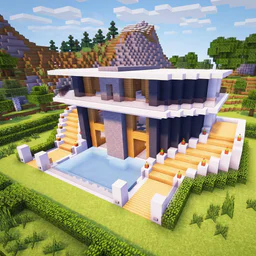
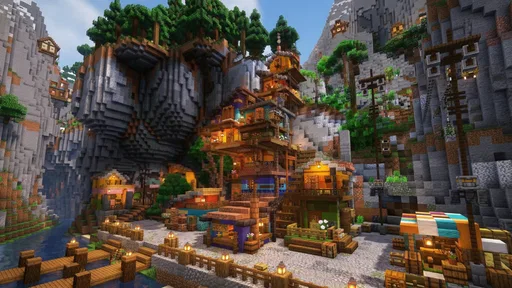
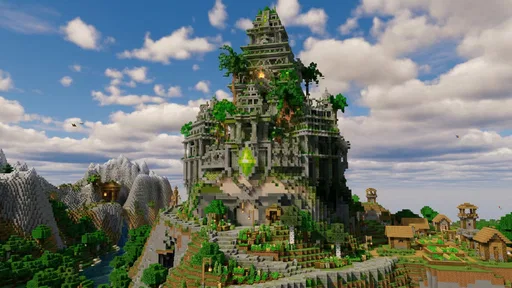
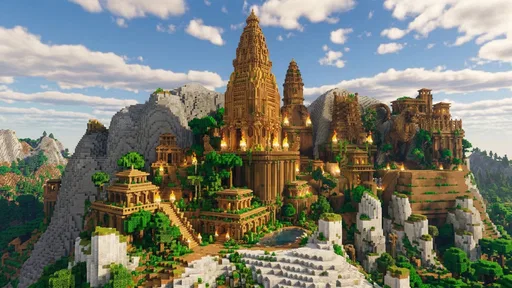
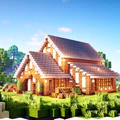
Block World - Craft City is a block-based game centered on building and exploring a world made from cubic pieces. Players can use blocks to shape structures and surroundings, with the experience appealing to people who enjoy creative sandbox gameplay. The exact activities, available modes, and progression can vary by version, so check the app listing and in-game menus for the features offered in the release you install.
Whether the game works without an internet connection may depend on the version and the feature you want to use. Some basic building or exploration may be available offline, while online play, ads, updates, or other connected features generally require a connection. If offline access matters to you, try launching the game with your device disconnected after installation and review its store listing for any stated network requirements.
The block-building theme may be appealing to younger players, but suitability depends on the content, advertising, and online features included in the version available in your region. A parent or guardian should review the store’s age rating, permissions, and privacy information before installation. It is also worth checking whether the game includes purchases, external links, chat, or other features that may need supervision.
Monetization can differ between releases, platforms, and regions, so do not assume that every version is ad-free or completely free of purchases. Check the Google Play or Apple App Store listing for disclosures about advertising and in-app purchases, then look for purchase prompts inside the game. If children use the device, consider enabling purchase authentication or parental controls to help prevent unintended spending.
Compatibility and storage requirements depend on the specific Android or iOS release and may change as the game receives updates. Before downloading, check the current store listing for supported operating-system versions, device requirements, and the app’s download size. Keep additional free space available for installation and updates, and use a stable connection if the download is large or your device has limited storage.
On Android, Block World - Craft City asks for these permissions.
Block World - Craft City is also available in 2 other languages on our site.
4.5 out of 5
58,942 reviews
Simulation · Patane Global

Simulation4.3 out of 5

Simulation4.2 out of 5

Simulation4.4 out of 5

Simulation4.6 out of 5

Simulation4.7 out of 5

Simulation4.5 out of 5
Simulation4.3 out of 5
Simulation4.6 out of 5

Simulation4.5 out of 5

Simulation4.4 out of 5

Simulation4.5 out of 5

Simulation4.1 out of 5

Simulation4.4 out of 5

Simulation4.5 out of 5

Simulation2.9 out of 5

Simulation4.5 out of 5

Simulation4.5 out of 5

Simulation4.8 out of 5
Simulation4.3 out of 5



Gamesive reviews games on its own and is not paid by developers for scores. We do not host game files: the download buttons open the official Google Play and App Store pages. Names, icons and screenshots belong to their owners.