
Offline Games No WiFi internet
Casual4.7 out of 5

For Android · Tripledot Studios Limited







 Analysis by Gamesive
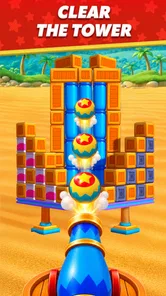
I like casual games that make their main idea clear before I have time to overthink it, and Angry Smash is built around that kind of immediate invitation. You fire a cannon, watch obstacles break, and try to work your way through levels on an island. The appeal is easy to understand: aim, act, see what happens, and decide whether to try again. In my view, that makes it a natural fit for short breaks rather than a game that demands a long stretch of concentration.
Angry Smash is a free casual game from Tripledot Studios Limited, rated Everyone. It has a 4.9 average from around 57,000 ratings, and has been installed over a million times. Those numbers suggest that its simple premise has found an audience, though they cannot tell you whether its particular rhythm will suit you. I’d approach it as a compact option for players who enjoy physical, visible results from each move, not as a deep strategy game or a substitute for a longer campaign.
The first action is also the clearest explanation of the game: launch a shot and see how it interacts with the obstacles in front of you. That immediate cause and effect is more inviting than a puzzle that begins with several rules to memorize. I can imagine opening it while waiting for a coffee or taking a brief pause between tasks, because the premise does not ask me to learn a complicated setup before I can start playing.
What makes this sort of action satisfying is not simply that something gets destroyed. The shot is a small decision: where to direct it, what it may hit, and whether the result is enough to move the level forward. A useful habit is to watch the arrangement before firing rather than treating every cannon shot as an automatic tap. Even without turning the game into a serious tactical exercise, a moment of observation can make the action feel more deliberate.
The island setting gives the levels a shared identity, while the cannon and obstacles keep the focus on the immediate task. That combination helps the game feel like more than a generic tap-to-advance menu. At the same time, its premise is deliberately narrow. If you want a story, character development, exploration, or a range of very different activities, the central act of firing at obstacles may feel repetitive sooner than it does to someone who enjoys polishing a simple skill.
That is an important distinction when choosing a casual game. Angry Smash is aimed at a player who wants an understandable objective and visible action, not someone looking for a large collection of modes. I would pick it over a word puzzle when I wanted something more kinetic, but I would choose a richer physics puzzler if I were specifically looking for layered experimentation and long-term planning. Its strength is directness; the same quality also sets a ceiling on how varied the experience can feel.
The most useful way to approach a level is to treat each shot as feedback. A cannon launch is not just an input; the resulting collision tells you whether your aim and timing matched the obstacle layout. When a shot clears a path, the result feels earned because the action is visible. When it does not, the miss gives you a reason to reconsider the next attempt rather than blindly repeating the same move.
This makes the game easier to dip into than a puzzle with a long chain of hidden rules, but it does not mean every level will be effortless. A simple control idea can still leave room for a little judgment, especially when the player wants to understand why one attempt worked better than another. I find that kind of small-scale problem solving useful in short sessions: I can focus on one immediate decision without needing to keep track of a large inventory or a complicated plot.
There is also a practical trade-off in the feedback rhythm. Destruction is satisfying when the result is easy to read, but a game built around repeated shots needs enough variation in its obstacles and level layouts to keep that pleasure fresh. I would pay attention to whether I’m still making small adjustments or merely tapping through familiar actions. If the latter becomes the pattern, the loop may no longer be rewarding for me, even if the individual impacts remain appealing.
For a better play session, I’d avoid rushing through a level just because the controls seem straightforward. Taking a beat to notice what remains after a shot can turn a quick retry into a useful adjustment. That is a small but meaningful difference between playing reactively and learning from the game’s response. It also gives the action a satisfying rhythm: choose, fire, inspect, and then decide whether another attempt is worthwhile.
The core reward is the sense of progress that follows a successful shot and the opportunity to continue through the island’s levels. This is a modest kind of payoff rather than a promise of elaborate progression: the immediate pleasure comes from watching an obstacle give way and seeing the task move closer to completion. For me, that can be enough during a short break. I don’t need every casual game to attach a complex reward system to a satisfying action.
The loop works best when the reward feels connected to the decision that produced it. Clearing an obstacle is more gratifying when I can see how my shot caused the result, rather than feeling as though progress happened automatically. That connection also gives a retry a purpose. If a level does not go as planned, another attempt can be a chance to change the approach and test what I noticed, not merely a repetition for its own sake.
Angry Smash is free to download, with in-app purchases listed from $0.99 to $99.99 per item. I’d keep that range in mind if I were choosing it for a child or trying to keep spending predictable. The game’s basic premise is easy to understand, but paid items can still change the practical experience of a free title. I would check the purchase controls on the device before handing it to a younger player, and decide in advance whether I’m comfortable with optional spending.
That is not a reason to dismiss the game; it is a sensible part of assessing any free mobile game with purchases. If you want a completely purchase-free experience, a paid game with one upfront cost may be a better fit. If you are comfortable downloading for free and choosing whether to spend, Angry Smash lets you make that decision on your own terms. The key is to treat optional purchases as a budget choice, not as part of the basic cannon-and-obstacle appeal.
The game’s action seems particularly suited to small pockets of downtime. Imagine having a few minutes before a ride arrives: a level gives you a focused goal, a shot gives immediate feedback, and progress offers a natural point to stop. That kind of session has a clear beginning and an easy stopping place, which I find more convenient than a game that expects me to remember a long sequence of objectives when I return.
The reset is part of the appeal. After finishing or failing to make the progress I wanted, I can decide whether to take another run or put the phone away. A short loop is useful only if stopping feels reasonable, and the level-based premise makes that decision easier than an open-ended activity with no obvious break. Still, if I know I’m prone to chasing one more attempt, I’d set my own limit before opening it; the quick feedback can make another try tempting.
On Android, the listed minimum operating system is version 7.1, so I would check the device’s software compatibility before expecting to install it. The current version is 1.11.3. Those details matter most when choosing an older phone or checking whether an existing installation is up to date; they do not change the basic question of whether you enjoy aiming a cannon at obstacles.
The game is rated for Everyone, which makes its general audience broad, but that rating is not a substitute for a parent’s own judgment about a child’s screen time or in-app purchases. For adults, the more relevant question is whether the simple action stays enjoyable. Players who like short, concrete challenges are likely to get more from it than players who want elaborate controls or a strong narrative reason to keep going.
Compared with match puzzles or word games, Angry Smash puts the emphasis on a visible physical action rather than arranging symbols or finding answers. That makes it a better pick when I want something energetic and immediate, and a weaker pick when I want a quiet challenge I can solve at my own pace. Compared with deeper physics games, it appears more approachable because the central idea is so easy to grasp, though players seeking intricate chain reactions may prefer a title built around more complex experimentation.
It also differs from endless runners and idle games in the kind of attention it asks for. Instead of relying on continuous movement or gradual accumulation, the appeal here is a sequence of decisions around firing at obstacles and seeing what happens. That gives a session a more task-focused feel. If I have only a brief window and want a goal I can understand right away, that is a useful distinction. If I want to keep a game running in the background or build progress over time, I would look elsewhere.
The game’s strong average rating is encouraging, but personal fit matters more than popularity. A person who enjoys the crisp satisfaction of breaking through a level may find the loop immediately appealing; someone who needs frequent changes in mechanics may find its central action too repetitive. I would use the first few sessions to judge not just whether the impacts look satisfying, but whether I still care about making a better shot after the initial novelty wears off.
I’d recommend Angry Smash to casual players who like a clear objective, quick feedback, and the option to make a small improvement on a retry. It may also suit someone who wants a low-commitment game to open during a commute or a short wait, provided they have a compatible device and are comfortable with optional purchases. Its broad age rating makes it accessible to many players, though families should still consider purchase settings and how much screen time fits their routine.
I’d skip it if your ideal mobile game depends on a deep story, a large variety of mechanics, or extended strategic planning. I’d also look for a different option if you specifically want an experience with no in-app purchases at all, or if repeating a central action tends to lose your interest quickly. Those are not flaws for every player; they are the points where this particular design may not match what you want from a game.
My verdict is that Angry Smash has a tidy, understandable loop: make a shot, read the impact, enjoy the progress, and decide whether another attempt sounds fun. Tripledot Studios Limited has built the game around that direct rhythm rather than around a complicated premise. I like it most as a brief, hands-on distraction, with the caveat that its narrow focus and optional purchases deserve a little thought. If breaking through obstacles sounds satisfying to you, it is an easy casual game to try; if you need deeper variety, your next session is probably better spent elsewhere.
Angry Smash is a casual action game built around smashing objects and causing destruction. Its straightforward gameplay makes it easy to understand, while the appeal comes from aiming your attacks, breaking items, and working through the challenges presented in each stage. Exact mechanics, level designs, and available modes can vary by version, so check the app listing and screenshots to see what is included in the release offered for your device.
Whether Angry Smash is free, and whether it includes optional purchases or advertising, depends on the version and store listing available in your region. Before downloading, review the price, in-app purchase information, and recent user feedback on Google Play or the App Store. If the game offers purchases, check what they provide and whether your device’s purchase controls are enabled, particularly if children may use the device.
Offline availability can depend on the game’s version and how it handles features such as ads, account services, or online events. Some basic gameplay may work without a connection, but store pages and certain functions may still require internet access. If playing offline matters to you, check the developer’s description and recent reviews, then test the game without a connection after installing it rather than assuming every feature will work.
Suitability depends on the game’s content, advertising, and any purchase options in the version you download. The smashing theme may depict cartoon-style destruction, but that alone does not establish an age rating. Check the rating and content descriptors shown in your app store, and review whether the game includes ads, online features, or in-app purchases. Parents should also consider their child’s age and comfort with the game’s visual style.
Confirm that the app is published by the expected developer and is available through an official store, then check its compatibility with your Android or iOS version. Review the required permissions, privacy details, storage needs, age rating, and recent reviews. These details can change between updates or regional releases, so rely on the current listing rather than older descriptions, and avoid unofficial download files that could pose security risks.
On Android, Angry Smash asks for these permissions.
4.9 out of 5
57,120 reviews
Casual · Tripledot Studios Limited

Casual4.2 out of 5

Casual4.3 out of 5

Casual4.6 out of 5

Casual4.8 out of 5

Casual4.6 out of 5

Casual4.7 out of 5
Card4.7 out of 5

Puzzle4.8 out of 5
Card4.5 out of 5
Card4.8 out of 5
Casual4.7 out of 5

Casual4.6 out of 5

Casual4.2 out of 5

Casual3.2 out of 5

Casual4.7 out of 5

Casual4.7 out of 5

Casual4.3 out of 5

Casual4.7 out of 5
Casual4.5 out of 5
Casual4.8 out of 5

Casual4.6 out of 5

Casual4.9 out of 5

Gamesive reviews games on its own and is not paid by developers for scores. We do not host game files: the download buttons open the official Google Play and App Store pages. Names, icons and screenshots belong to their owners.